Tag: Shark Tank India

  • RehabVeda Secures Rs 1 Crore Deal on Shark Tank India

    RehabVeda Secures Rs 1 Crore Deal on Shark Tank India

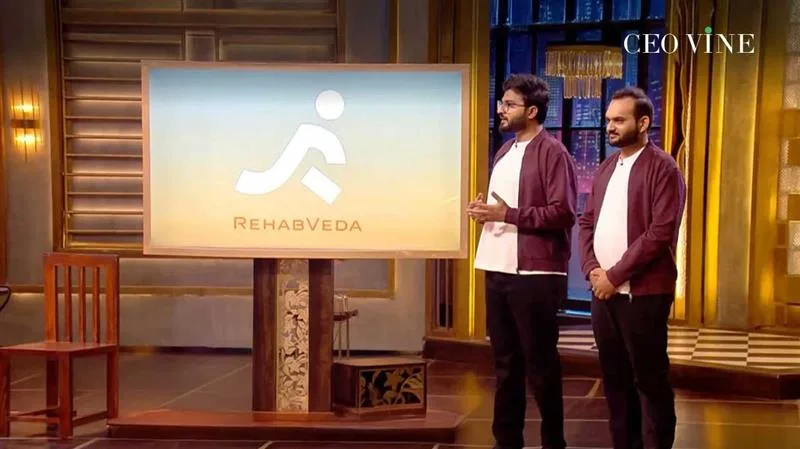
    Neurotech startup RehabVeda featured on Shark Tank India, where founders Shyam Parmar and Neel Patel pitched their innovative solution designed to improve brain-hand connection for stroke recovery.

    During the pitch, the founders highlighted that India records 18 lakh new brain stroke cases annually. Standard neuro-rehabilitation monthly costs can start at ₹2 lakhs, making long-term care inaccessible for many.

    RehabVeda addresses this with their R1 Kit, a home-use neurofeedback system that requires no professional supervision. The innovation centers on a 2-sensor EEG system featuring a headband with gold-plated dry sensors and ear clip sensors, paired with an AI interface. While traditional neurofeedback systems can cost between ₹50 lakhs to ₹1 crore, RehabVeda offers their B2B solution at ₹2 lakhs and an at-home 4-month subscription for ₹60,000.

    Entering the Tank, the founders sought ₹1 crore for 2.5% equity, valuing the company at ₹40 crores.

    Product development began in December 2024, and the company has already secured a CDSCO test license and filed for a patent. Their go-to-market strategy is a B2B2C model driven by doctor referrals; they have already onboarded 5 doctors, including three neurologists and two physiotherapists. The R1 Kit boasts an 89% B2B gross margin with a COGS of Rs 22,000. To date, the founders have supported a lifetime of 70+ patients.

    The therapy protocol involves 30–45 minute sessions performed twice daily. Initial signs of recovery are typically observed within 3–4 weeks, with complete recovery depending on severity taking between 4–6 months. The at-home subscription includes a personalized therapy plan and weekly progress tracking.

    After discussions, Namita Thapar and Mohit Yadav closed the deal by investing ₹1 crore for 3% equity, valuing RehabVeda at ₹33.33 crores.

    The founders shared that the capital raised will be used to further their mission of making advanced neuro-rehabilitation affordable and accessible, transitioning stroke recovery from expensive clinical settings to the comfort of the patient’s home.

  • Pragyan Child Development Centre Raises Rs 1 Crore on Shark Tank India

    Pragyan Child Development Centre Raises Rs 1 Crore on Shark Tank India

    Neurodevelopment-focused therapy chain Pragyan Child Development Centre featured on Shark Tank India, where founders Srikant Hindupur, Laxmi Bijapur, and Shreya Batra pitched their vision of building a multidisciplinary care platform for children with special needs.

    During the pitch, the founders highlighted that Pragyan operates therapy centres focused on neurodevelopmental disorders, offering speech and language therapy, physiotherapy, occupational therapy, special education, and behavioural therapy.

    The centres are supported by paediatric neurologists and developmental paediatricians, following a multidisciplinary care model designed to deliver structured, protocol-led interventions. In addition to child-focused therapies, the company also provides after-school support, shadow teacher services, and parental counselling.

    Entering the Tank, the founders sought ₹1 crore for 5% equity, valuing the company at ₹20 crore.

    Currently operating 11 centres in Bengaluru, each spanning approximately 1,200 sq ft, the company serves around 50 children per centre every month, translating to nearly 500–550 children across all locations. The team comprises 60 members, including around 50 therapists. Average pricing stands at ₹650 per session, with monthly sales of approximately ₹35 lakh across centres, or ₹2.5–3 lakh at the individual centre level.

    On the financial front, Pragyan reported sales of ₹20 lakh in FY21–22 with two centres in operation. Revenue grew to ₹94 lakh in FY22–23 with four centres and further scaled to ₹1.6 crore in FY23–24 as the network expanded to seven centres. In FY24–25, with 11 centres operational, the company recorded ₹3.4 crore in revenue. Year-to-date revenue stands at ₹2.4 crore, with an EBITDA of ₹58 lakh. The founders project sales of ₹5 crore in FY25–26 and expect EBITDA to reach ₹1 crore in the same period.

    The company shared that its price at launch was ₹900 per session at other centres, while Pragyan positioned itself at a more accessible, ₹300 at select locations. The brand is available via Android and iOS applications, as well as through its website.

    After discussions, Namita Thapar and Mohit Yadav closed the deal by investing ₹1 crore for 5% equity, valuing Pragyan Child Development Centre at ₹20 crore.

    The founders shared that the capital raised will be used to expand to 60 centres over the next five years, with a focus on improving capacity utilisation, strengthening therapist deployment across centres, and scaling access to structured, affordable neurodevelopmental care across India.

  • CurryIT Secures Rs 1.5 Crore Deal on Shark Tank India

    CurryIT Secures Rs 1.5 Crore Deal on Shark Tank India

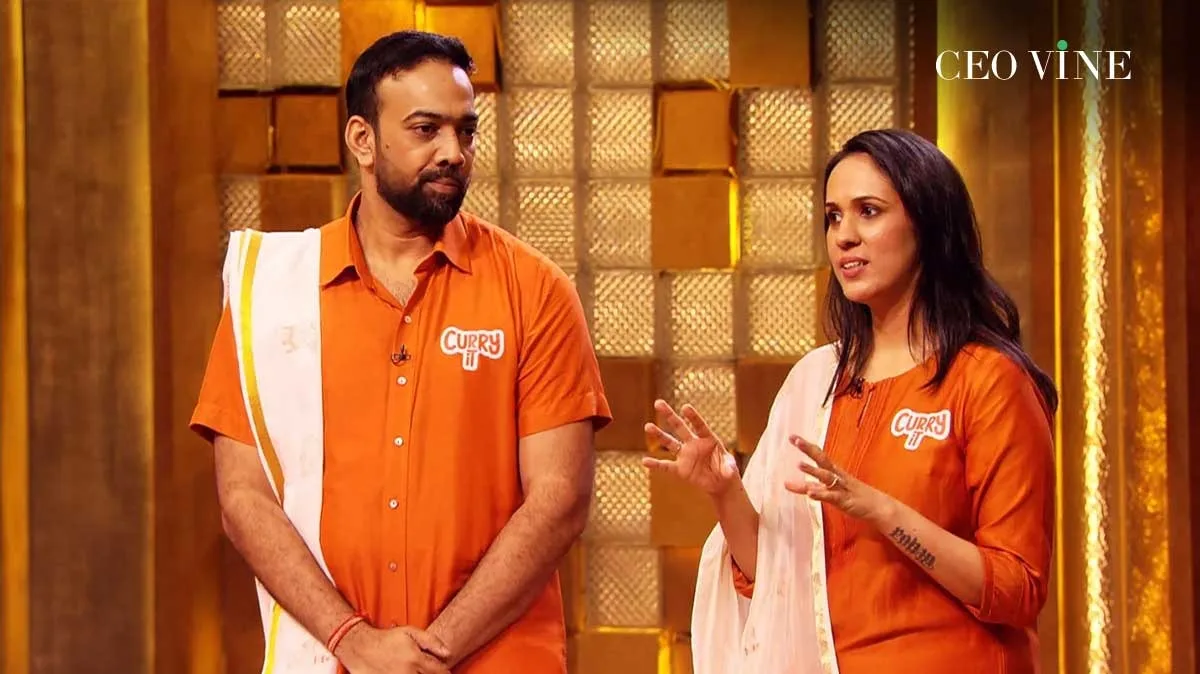
    Clean-label ready-to-cook food startup CurryIT featured on Shark Tank India, where founders Nischal Kandula and Richa Sharma pitched their vision of building a health-first Indian cooking brand focused on convenience, taste, and trust.

    During the pitch, the founders shared that CurryIT operates in the packaged food and quick commerce space, targeting everyday Indian households. The brand offers curry and biryani pastes, soups, dals, and daily cooking pastes, made with no dehydrated ingredients, no preservatives, and no additives, while maintaining a one-year shelf life.

    CurryIT highlighted its focus on quick commerce, which contributes nearly 90% of its total sales. The company follows a refill-friendly packaging approach and is priced at a 15–20% premium compared to incumbent brands, supported by a trade margin of around 35%.

    Entering the Tank, the founders sought ₹60 lakh for 1% equity, valuing the company at ₹60 crore.

    On the financial front, the company reported ₹54 lakh in gross sales and ₹41 lakh in net sales in FY22–23. This grew to ₹98 lakh in gross sales and ₹89 lakh in net sales in FY23–24. In FY24–25, CurryIT scaled significantly, recording ₹5.7 crore in gross sales and ₹3.3 crore in net sales. Year-to-date revenue stands at ₹4.8 crore gross and ₹2.8 crore net. EBITDA remains negative, with losses of ₹2.3 crore in FY24–25, though the founders expect EBITDA to turn positive by January 2027.

    The startup shared key unit economics, including 24% cost of goods sold, 7% taxes, 4% shipping, 15% marketplace fees, 15% discounts, and close to 30% spent on marketing and operations. The company currently operates at a 34% gross margin, with a customer acquisition cost of ₹88 as of April 2024.

    After negotiations, Mohit Yadav closed the deal by investing ₹1.5 crore for 4.5% equity, revising CurryIT’s valuation to ₹45 crore.

    The founders shared that the capital raised will be used to strengthen brand positioning, expand quick commerce distribution, and drive trust-led growth through content, as CurryIT aims to become a daily cooking staple in Indian kitchens.

  • Misfits Secures Rs 1 Crore Deal on Shark Tank India

    Misfits Secures Rs 1 Crore Deal on Shark Tank India

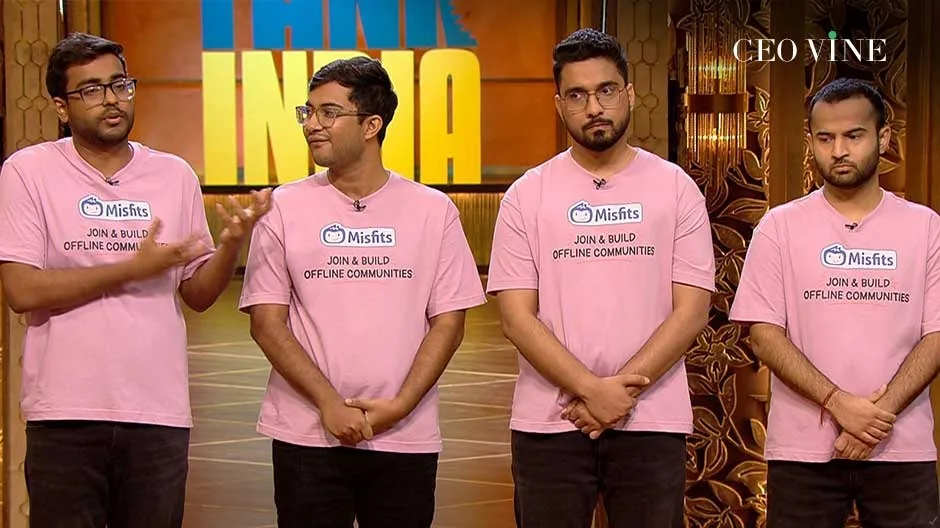
    Community-building and offline social networking brand Misfits featured on Shark Tank India, where founders Shashwat NarhatiyarShaswat KarSaurabh Sharma, and Chaitanya Dhawan presented their vision of building a “third space” beyond home and work to bridge the gap between digital networking and real-world connections.

    During the pitch, the founders shared that Misfits operates in the hyper-local community space, with a strong focus on “hobby clubs” where members meet offline for activities like sports, board games, hiking, and music jams.

    The brand’s core offerings include a platform that connects venue owners, club leaders, and users, all managed through an in-app ecosystem designed for simplicity and safety. Misfits highlighted that they offer features like “Leader Mode,” which allows users to start their own clubs; currently, 150 leaders have been approved from over 1,500 applications. Among its offerings, sports meetups have emerged as a hero category, contributing nearly 30-40% of total meetups.

    Entering the Tank, Misfits sought ₹1 Crore for 1.25% equity, valuing the company at ₹80 Crore.

    On the financial front, the company reported a monthly Gross Booking Value (GBV) of ₹20–22 Lakh, with platform sales standing at ₹7 Lakh. Monthly metrics for November 2025 showed an average of 700 meetups in Delhi NCR with 5,000 unique monthly attendees.

    The company shared key operational metrics, including an Average Booking Value of ₹270 per meetup. The platform’s revenue share averages ₹60 per attendee, though this varies between sports meetups (₹40) and non-sports meetups (₹75). Misfits currently operates with a monthly burn of ₹23 Lakh and maintains a team of 24 full-time employees.

    https://app.ceotrail.com/heizen-secures-rs-90-lakh-deal-on-shark-tank-india/

    The company has significant digital traction with 95,000+ app downloads since its July 2024 launch and 25,000 Monthly Active Users (MAU).

    After negotiations, Kanika Tekriwal closed the deal by investing ₹1 Crore for 3% equity, revising the company’s valuation to ₹33.33 Crore.

    The founders shared that the capital raised will be used to scale their presence beyond the Delhi NCR region, strengthen their team, and further develop their event management and venue booking tools.

  • Heizen Secures Rs 90 Lakh Deal on Shark Tank India

    Heizen Secures Rs 90 Lakh Deal on Shark Tank India

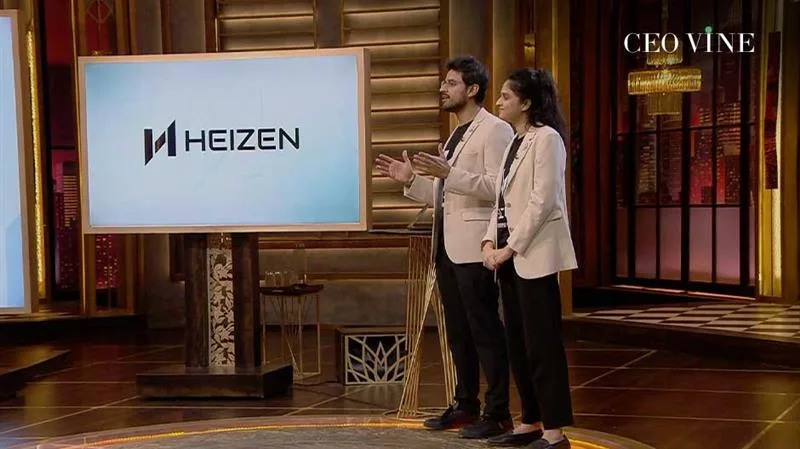
    AI-led enterprise software delivery startup Heizen featured on Shark Tank India, where founders Aman Arora and Abhilasha Mohania pitched their vision of building an AI-native, human-orchestrated software delivery company focused on speed, efficiency, and enterprise-grade quality.

    During the pitch, the founders shared that Heizen operates in the IT and IT-enabled services space, targeting India’s ₹20 lakh crore market opportunity. The startup combines AI-assisted requirement gathering, automated execution, and engineer-governed quality review to deliver scalable enterprise solutions at lower costs and faster turnaround times.

    Heizen highlighted its outcome-based weekly pricing model, with average contract values ranging between ₹10 lakh and ₹9 lakh across approximately 10 sprints. The company positions itself as an AI-automated yet human-validated enterprise software partner, ensuring both efficiency and reliability.

    Entering the Tank, Heizen sought ₹90 lakh for 1% equity, valuing the company at ₹90 crore.

    On the financial front, the company reported ₹75 lakh in revenue for FY24–25 and ₹3.15 crore year-to-date revenue. Monthly sales stood at ₹50 lakh in October 2025 and ₹62 lakh in November 2025. The founders projected ₹7.5–8 crore in revenue for FY25–26, backed by a 25% month-on-month growth rate.

    The company shared key operational metrics, including 58 lifetime clients with 30 active as of December 2025. Average revenue per client (ARPC) stands at ₹2.5 lakh. Revenue contribution is split at 66.67% from the US market and 33.34% from India, with supply chain clients contributing less than 8% of total sales. Heizen maintains a 90% monthly retention rate and 84% quarterly retention.

    On unit economics, 34% of revenue is allocated to people costs, 8% to operational expenses, 8% to salaries, 2% to marketing, and 15% toward taxes and other expenses, resulting in a 33% PAT margin. EBITDA for November 2025 stood at ₹20 lakh.

    https://app.ceotrail.com/gappu-secures-rs-30-lakh-deal-on-shark-tank-india/

    The company has a 27-member engineering team, with average monthly salaries of ₹1 lakh and an allocation of 0.9 resources per project.

    After negotiations, Amit Jain closed the deal by investing ₹90 lakh for 2% equity, revising the company’s valuation to ₹45 crore.

    The founders shared that the capital raised will be used to scale operations, strengthen engineering capabilities, and deepen its focus on supply chain as a strategic domain, as Heizen looks to expand its footprint across global enterprise clients.

  • Gappu Secures Rs 30 Lakh Deal on Shark Tank India

    Gappu Secures Rs 30 Lakh Deal on Shark Tank India

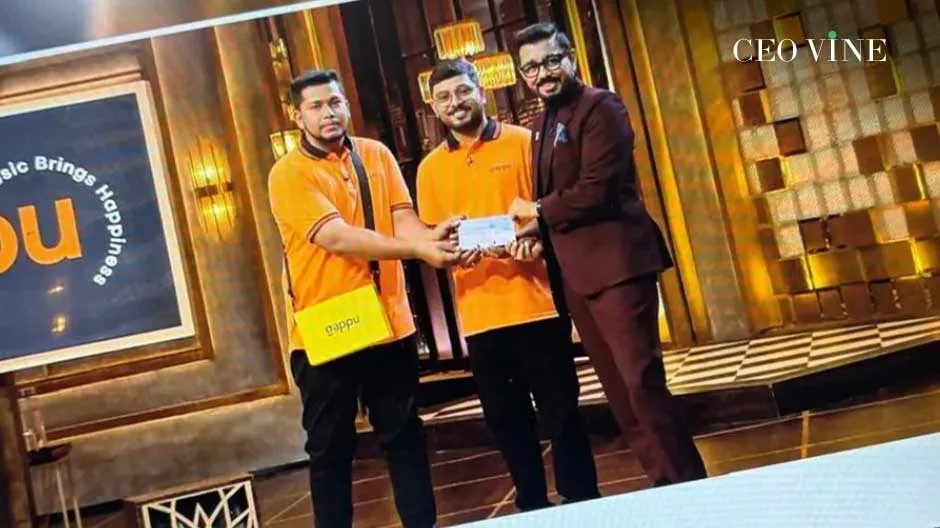
    Wooden learning toys and activity products brand Gappu featured on Shark Tank India, where founders Anirban Bhattacharya and Pallab Ghosh presented their vision of building easy-to-learn, design-led wooden products aimed at improving learning outcomes for children and professionals alike.

    During the pitch, the founders shared that Gappu operates in the educational and creative learning space, with a strong focus on hands-on, tactile products made entirely from wood. The brand’s core offerings include Jam Box, Cajon, Bongos, and Taal-based learning kits, all designed in-house with simplicity and usability at the center.

    Gappu highlighted that product design is fully done internally, while wood remains the primary raw material across its portfolio. Among its offerings, the Jam Box has emerged as the hero product, contributing nearly 45% of overall sales. The brand caters to both mass-market users through Jam Box and professionals through its Cajon range.

    Entering the Tank, Gappu sought Rs 30 lakh for 1% equity, valuing the company at Rs 30 crore.

    On the financial front, the company reported revenues of Rs 31 lakh in FY22–23, Rs 39 lakh in FY23–24, and Rs 52 lakh in FY24–25. Monthly sales stood at Rs 27 lakh in October 2025 and Rs 30 lakh in November 2025. The founders projected revenue of Rs 3 crore for FY25–26, with year-to-date sales at Rs 1.4 crore.

    The company shared key operational metrics, including an average order value (AOV) ranging between Rs 2,200 and Rs 2,500. Customer acquisition cost stands at approximately Rs 900, while company-level gross margins are around 55%. Gappu operates across multiple channels, with sales split at 45% via its own website, 35% through distributors, 15% from offline stores, and 5% from other channels.

    https://app.ceotrail.com/clean-label-snacking-brand-mama-nourish-secures-rs-2-crore-deal-on-shark-tank-india/

    After negotiations, Amit Jain closed the deal by investing Rs 10 lakh for 3% equity along with Rs 20 lakh as debt at 12% interest for three years, revising the company’s valuation to Rs 3.33 crore.

    The founders shared that the capital raised will be used to strengthen inventory, expand marketing efforts, and build the team, as Gappu looks to scale its presence in India’s growing learning and education-focused consumer products market.

  • Kelvin6K Secures Rs 1 Crore Deal on Shark Tank India

    Kelvin6K Secures Rs 1 Crore Deal on Shark Tank India

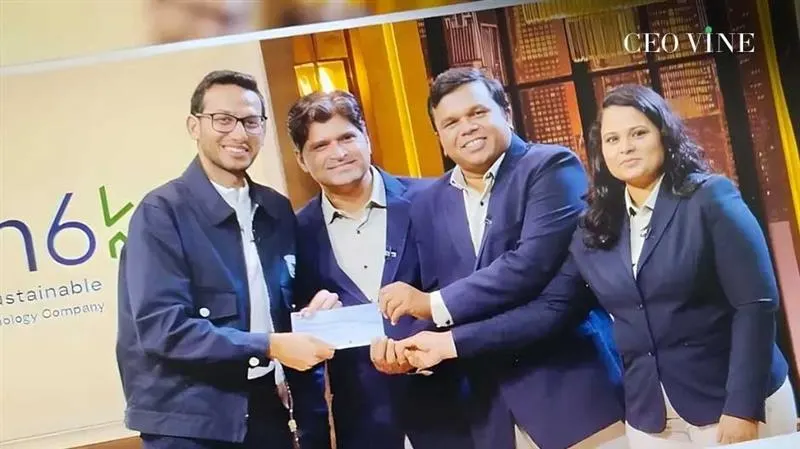
    3D construction technology startup Kelvin6K featured on Shark Tank India, where founder Dr. Pradeep Kumar SundarrajDr. Ravi Kant Upadhyay and Deepiga Sugumar presented their vision of transforming the construction industry through mobile, autonomous 3D printing solutions focused on speed, cost efficiency, and design flexibility.

    During the pitch, the founder highlighted that Kelvin6K operates in the emerging 3D-printed construction segment, offering Construction-as-a-Service (CaaS) in India while planning international sales of its 3D printers. A key differentiator is its mobile and autonomous 3D construction printer, designed for quick deployment and rapid on-site execution.

    The company manufactures its machines entirely in-house and uses concrete as the primary raw material. Kelvin6K has been granted patents in India, has filed under the Patent Cooperation Treaty (PCT), and has also applied for patents in the United States.

    So far, the company has not sold any machines but has successfully completed eight buildings and eleven bus stops using its proprietary technology. The founder shared that a two-foot pillar can be printed in just 20 minutes, while a fully 3D-printed education centre can be completed within 15 days.

    Entering the Tank, Kelvin6K sought ₹1 crore for 1.3% equity, valuing the company at ₹76.92 crore.

    Financially, the company reported revenue of ₹30 lakh in FY23–24, followed by ₹72 lakh in FY24–25. Year-to-date sales stand at ₹1.2 crore, with projected revenue of ₹2.5 crore in FY25–26. EBITDA stood at -₹39 lakh in FY23–24 and -₹20 lakh in FY24–25, with year-to-date losses at -₹10 lakh.

    To date, Kelvin6K has raised ₹1.85 crore, ₹1 crore in January 2024, ₹35 lakh in April 2024, and ₹50 lakh in September 2024. A secondary sale of ₹60 lakh was also executed involving Dr. Ravi and Dr. Pradeep Kumar.

    https://app.ceotrail.com/babyworks-by-swapnil-secures-rs-60-lakh-deal-on-shark-tank-india/

    The current equity split stands at 75.2% with Dr. Pradeep Kumar, 8.65% with Dr. Ravi, 9.62% with Deepiga, and 6.53% with investors.

    After negotiations, Ritesh closed the deal by investing ₹1 crore for 2.86% equity along with 2.14% advisory equity, revising the company’s valuation to ₹35 crore.

    The founder also outlined the long-term vision of 3D-printing structures on the Moon and Mars by 2030, along with future plans for solar-based construction using sand.

  • Clean-Label Snacking Brand Mama Nourish Secures Rs 2 Crore Deal on Shark Tank India

    Clean-Label Snacking Brand Mama Nourish Secures Rs 2 Crore Deal on Shark Tank India

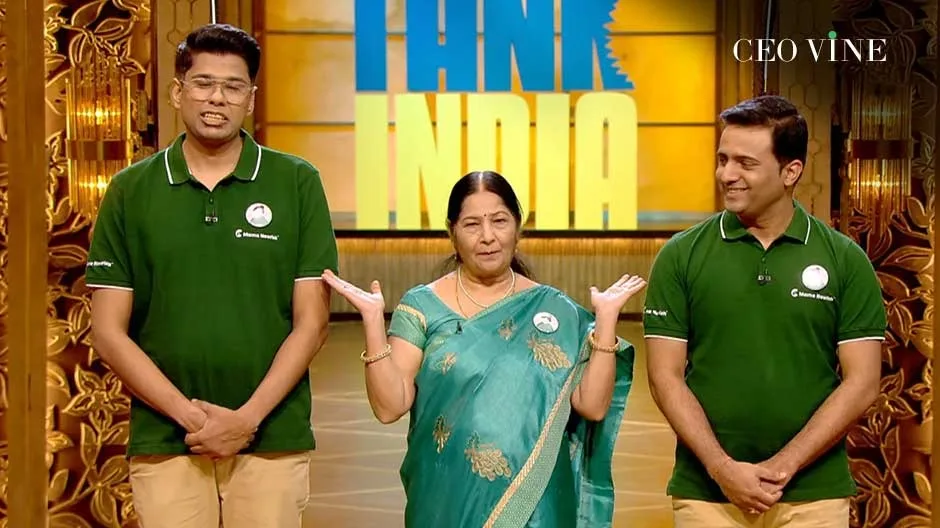
    Mama Nourish, a clean-label snacking brand, featured on Shark Tank India, where founders Usha Shrotriya, Yash Parashar, and Kunal Goel shared their journey of reviving traditional Indian recipes for the modern consumer. 

    During the pitch, the founders explained that Mama Nourish operates in the healthy snacking space, with its flagship product, LadduBar, offering a convenient twist on traditional Indian laddus. The brand’s unique model involves sourcing authentic recipes from grandmothers across India through digital contests. These products are made with kitchen-sourced ingredients, containing no preservatives, chemicals, or refined sugar. 

    Entering the Tank, the founders sought Rs 60 lakh for 1.5% equity, valuing the company at Rs 40 crore. 

    Started in 2023, Mama Nourish follows a digital-first approach, with 34% of sales coming from Quick Commerce platforms, alongside its own website and other e-commerce channels. The brand has demonstrated strong market interest, though it faces challenges with high marketing burns, which currently account for nearly 65% of its expenses.

    Financially, the company is in a high-growth but loss-making phase. Sales stood at Rs 6.64 lakh for a three-month period in FY23–24, jumping to Rs 1.2 crore in FY24–25. Year-to-date sales for the current period also stand at Rs 1.2 crore, with a projected revenue of Rs 3 crore for the full year. However, the company reported a significant EBITDA loss of Rs 2.2 crore, leaving them with a limited cash runway.

    https://app.ceotrail.com/gaming-accessories-brand-kreo-secures-rs-2-crore-deal-on-shark-tank-india/

    After a tense round of negotiations where other Sharks stepped back due to the high burn and unit economics, Aman Gupta saw potential in the brand’s heritage and the founders’ passion. He closed the deal solo, investing Rs 2 crore for 20% equity, valuing Mama Nourish at ₹10 crore. 


  • BabyWorks by Swapnil Secures Rs 60 Lakh Deal on Shark Tank India

    BabyWorks by Swapnil Secures Rs 60 Lakh Deal on Shark Tank India

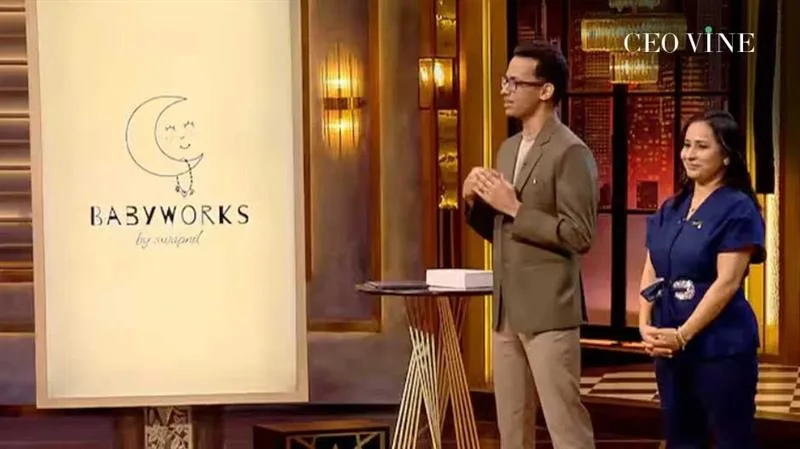
    Baby jewellery brand BabyWorks by Swapnil featured on Shark Tank India, where founders Shrey Khandelwal and Swapnil presented their vision of building a custom-first baby jewellery brand focused on design, safety, and personalisation.

    During the pitch, the founders highlighted that BabyWorks operates in a niche yet growing segment of the jewellery market, offering baby-focused products such as kadas, brooches, nazariyas, and fully customised pieces. A key differentiator is its 3D baby jewellery customisation tool, which allows parents to personalise designs before purchase.

    The brand was started in 2021 by Swapnil Anuj Gupta and Shrey Khandelwal and currently operates under a sole proprietorship structure. On the show, the founders shared their plans to restructure ownership into an equal 50:50 equity split between Shrey and Swapnil going forward.

    Entering the Tank, BabyWorks sought ₹60 lakh for 4% equity, valuing the company at ₹15 crore.

    The founders revealed that the business operates entirely through its own website. The brand reports an average selling price (ASP) of ₹4,000 and an average order value (AOV) of ₹8,000. Marketing spends currently stand at 29–30%, while COGS is 27%.

    In terms of materials, BabyWorks works with 925 silver and gold (14K, 18K, and 22K). Silver products follow a fixed pricing model, while gold jewellery is priced dynamically based on weight. Currently, silver contributes 90% of revenue, with gold accounting for the remaining 10%.

    Financially, the company reported ₹35 lakh in revenue in FY23–24 with a 16% EBITDA margin, followed by ₹75 lakh in FY24–25, with margins improving to 35%. Annual sales have crossed ₹1.02 crore, and the founders project ₹1.95–2 crore in FY25–26, while maintaining EBITDA margins of around 35%.

    https://app.ceotrail.com/kids-lifestyle-brand-rosada-secures-rs-1-25-crore-deal-on-shark-tank-india/

    The founders also outlined their expansion roadmap, including plans to launch on quick commerce platforms and open a Mumbai-based experiential store by August 2026. As per the founders’ estimates, the overall Indian jewellery market stands at ₹6 lakh crore, while the Indian baby jewellery segment is pegged at ₹18,000 crore.

    After negotiations, Aman Gupta closed the deal by investing ₹60 lakh for 6% equity, revising the company’s valuation to ₹10 crore.

  • Gaming Accessories Brand Kreo Secures Rs 2 Crore Deal on Shark Tank India

    Gaming Accessories Brand Kreo Secures Rs 2 Crore Deal on Shark Tank India

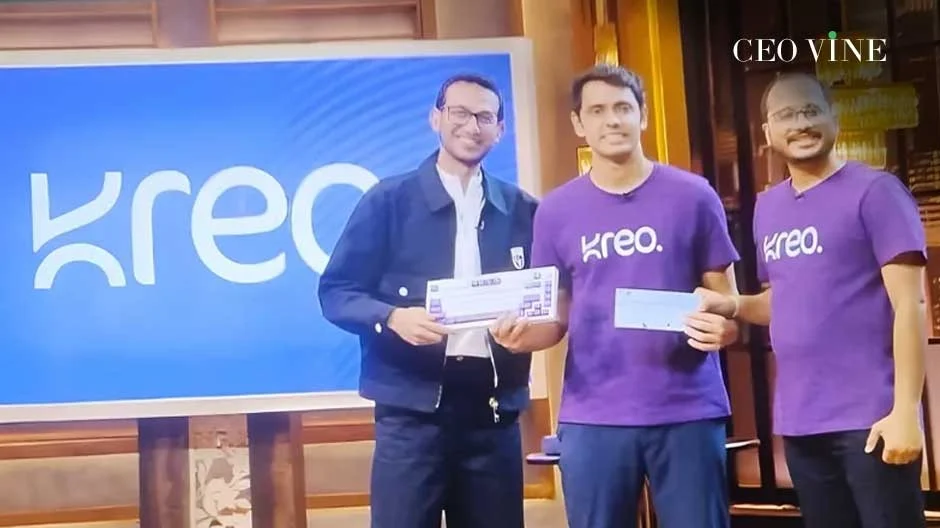
    Gaming-focused peripherals brand Kreo featured on Shark Tank India, where founder Ishan Sukul and Himanshu Gupta shared the brand’s vision of building an Indian-first gaming ecosystem catering to the fast-growing community of gamers, creators, designers, and coders.

    During the pitch, Ritesh explained that Kreo is positioned as a value-driven alternative to expensive international gaming brands. The company focuses on delivering high-performance gaming peripherals at accessible price points, targeting young Indian consumers who seek quality without premium pricing. Kreo’s entry product was keyboards, which continue to be its strongest category, supported by mice, monitors, webcams, and gaming chairs.

    Kreo entered the Tank seeking ₹2 crore for 1% equity, valuing the company at ₹200 crore. The founder highlighted that the brand has already achieved lifetime sales of ₹70 crore, with operations scaling rapidly since sales officially began in November 2022.

    The company currently manages 64 SKUs, with a category mix led by keyboards and mice, followed by chairs, monitors, and webcams. Its core audience includes gamers, content creators, designers, and coders, and marketing is driven largely through Discord communities, campus ambassador programmes, and in-game chat seeding.

    Financially, Kreo has shown strong topline growth despite being in an investment phase. In FY22–23, the company reported ₹33 lakh in revenue. This grew to ₹8 crore in FY23–24, and further scaled to ₹25.5 crore year-to-date, with projected annual sales of ₹55 crore and an EBITDA break-even outlook. The brand has raised capital across multiple rounds between 2022 and 2024 and currently maintains ₹2.8 crore in the bank, alongside managed debt used to fuel growth.

    After negotiations, Ritesh Agarwal closed the deal by investing ₹1 crore for 1% equity, along with an additional ₹1 crore as debt at 9% interest for three years, bringing the final valuation to ₹100 crore.