San Francisco-based data infrastructure startup S2.dev has raised $3.85 million in a funding round led by Accel, with participation from Uncorrelated Ventures and other investors.
With this round, the company’s total funding stands at $5.5 million.
The fresh capital will be used to accelerate product development, expand its managed cloud service into additional global regions, and support early enterprise customers adopting its platform.
S2.dev was co-founded in 2024 by Shikhar Bhushan, Stephen Balogh, and Dwarak Govind Parthiban. The startup builds a serverless datastore for real-time and streaming data, designed for use cases such as collaborative software, AI agents, and multiplayer applications.
Its platform offers durable, auto-scaling streams accessible via REST APIs, combining persistent storage with low-latency access.
The company’s core product enables developers to manage fast-moving, stateful data without handling underlying infrastructure.
It supports on-demand streams that can be appended to, read from, and controlled programmatically, positioning streams as a fundamental cloud storage primitive. In AI-driven systems, these streams can be used to handle token outputs and message exchanges across multiple agents.
S2.dev was previously backed by Y Combinator and was part of its Fall 2025 batch.
Bengaluru-based spacetech startup Ethereal Exploration Guild (EtherealX) has raised $20.5 million (₹183.4 crore) in a Series A funding round led by existing investor BIG Capital, with participation from TDK Ventures, Accel, Prosus (via MIH Ventures One B.V.), YourNest Venture Capital, BlueHill Capital, Campus Fund, Riceberg Ventures, and Kicksky Lab.
According to regulatory filings with the Registrar of Companies (RoC), EtherealX’s board approved the issuance of 9,763 Series A preference shares at an issue price of ₹1,87,920 per share to raise ₹183.4 crore. The company has already received ₹87.4 crore ($9.7 million), with the remaining funds expected to be infused shortly.
BIG Capital is leading the round with an investment of ₹53.7 crore ($6 million), followed by TDK Ventures with ₹44.7 crore ($5 million).
YourNest Venture Capital and BlueHill Capital are each investing ₹26.85 crore ($3 million), while the balance is being infused by Campus Fund, Accel, Prosus, Riceberg Ventures, and Kicksky Lab.
With this round, EtherealX’s post-money valuation has surged nearly sixfold to ₹720 crore (around $80–80.5 million), compared to a valuation of ₹120 crore when it raised $5 million in seed funding in August 2024 from YourNest, BIG Capital, and other investors.
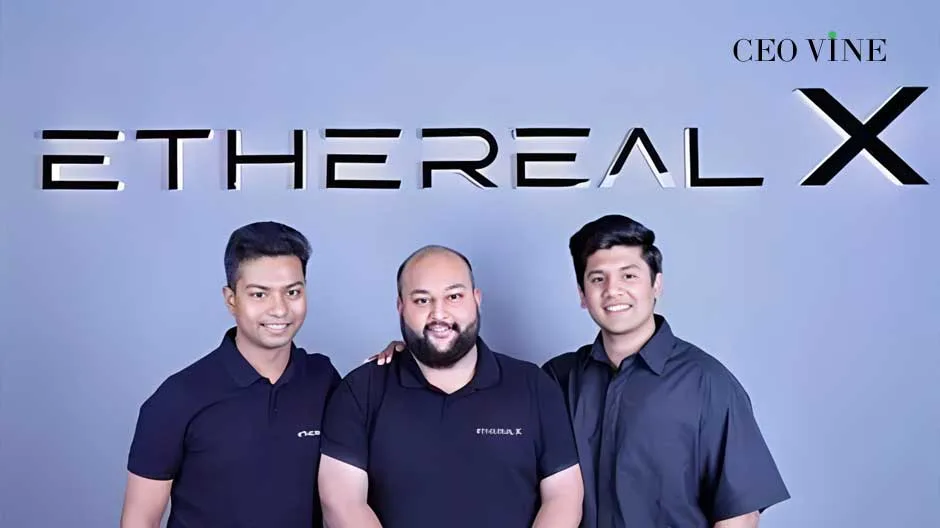
Founded in 2022 by Manu J. Nair, Shubhayu Sardar, and Prashanth Sharma, EtherealX is focused on building what it claims will be the world’s first fully reusable medium-lift launch vehicle, Razor Crest Mk-1. Designed for absolute reusability, the rocket aims to recover both the booster and upper stage, significantly reducing launch costs to an estimated $500–$1,000 per kilogram. In expendable mode, Razor Crest Mk-1 can carry up to 24.8 metric tonnes to low Earth orbit, while in fully reusable configuration it is expected to deliver around 8 tonnes, with capabilities extending to geostationary transfer and trans-lunar injection orbits.
Following the Series A allotment, BIG Capital will emerge as the largest external shareholder with a 12.11% stake, followed closely by YourNest Venture Capital at 11.64%. Campus Fund will hold 10.25%, BlueHill Capital 8.38%, and TDK Ventures 6.21%, while Accel and Prosus will each own 0.62% of the company. The founding team, Manu J. Nair (CEO), Shubhayu Sardar (COO), and Prashanth Sharma (CTO), will each retain a 13.04% stake in the company.
The startup is developing two proprietary liquid rocket engines in-house: Stallion, a 1.2-meganewton booster engine using a gas-generator cycle, and Pegasus, an 80-kilonewton upper-stage engine featuring a Full Flow Segregated Cooling Cycle. Proceeds from the Series A round will be used to accelerate the development and testing of these engines and the Razor Crest Mk-1 vehicle.
On the financial front, EtherealX remained in the pre-revenue stage for the fiscal year ended March 2025 and did not report any operating revenue. However, it recorded ₹1.1 crore in non-operating income during FY25, primarily from mutual fund gains and a government grant. The company reported a net loss of ₹4.2 crore during the same period.
EtherealX currently operates a test site in Tamil Nadu and is establishing a 150-acre manufacturing campus in Andhra Pradesh, which is expected to be operational by mid-2026. The company has also signed Memoranda of Understanding (MoUs) worth $130 million with global customers, including Japan’s SpaceBD and Taiwan’s TASA.
The funding comes amid heightened investor interest in India’s spacetech ecosystem. Over the past year, several Indian spacetech startups have raised significant capital, including Digantara ($50 million), CoreEL Technologies ($30 million), and Agnikul ($17 million). Other notable startups in the sector include Inspecity, Manastu Space, Sisir Radar, OrbitAid, Pixxel, Ulook, and Akashalabdhi, reflecting the growing momentum in the country’s private space industry.
Martech company Fibr AI has raised $5.7 million in a seed funding round led by Accel, with additional participation from WillowTree Ventures and MVP Ventures. The round also included angel investments from several Fortune 100 executives.
Fibr AI said the newly secured capital will be deployed to advance its core technology, expand product functionality, and scale enterprise adoption across global markets.
The startup has now raised a total of $7.5 million, factoring in its $1.8 million pre-seed round in 2024, which was also backed by Accel.
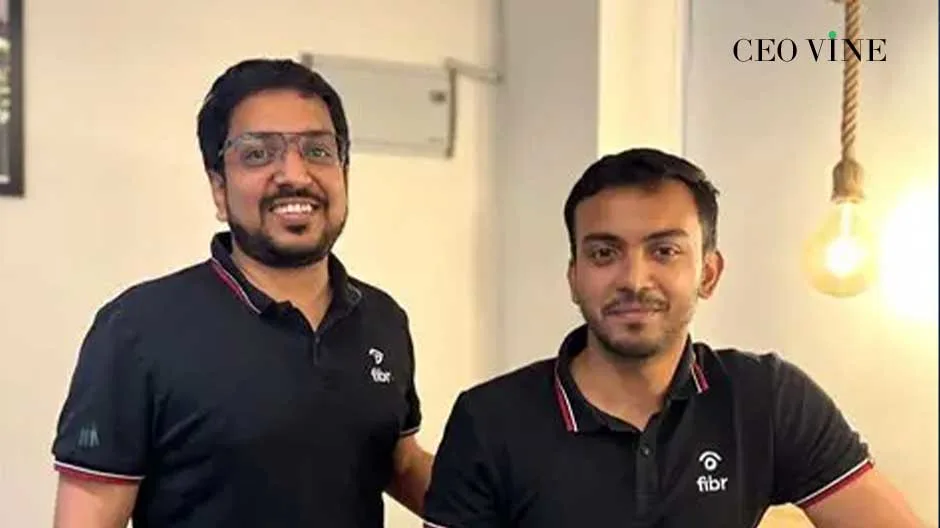
Co-founded by Ankur Goyal and Pritam Roy in 2022, the company is developing an AI-driven web experience platform designed to make websites adaptive and responsive to real-time visitor behaviour. Instead of running manual experiments or sequential A/B tests, Fibr AI’s system places autonomous agents at individual web pages, allowing continuous optimisation based on contextual signals such as user intent, channel source, and audience profile.
According to the startup, its platform helps enterprises improve engagement and conversion outcomes while lowering customer acquisition costs. Fibr AI currently serves large organisations in sectors including BFSI, telecom, and healthcare, and competes with traditional website optimisation and experimentation tools.
The company operates under FibrAI India Private Limited, is headquartered in San Francisco, and maintains its engineering operations in Bengaluru, focusing on building AI-native infrastructure for modern enterprise websites.
Bengaluru-based deep-tech startup Vimag Labs has raised $5 million (around ₹46 crore) in a funding round led by Accel, with participation from Chakra Growth Fund and Thinkuvate, as it looks to scale its next-generation electric motor technology.
The fresh capital will be used to accelerate the commercialisation of its patented Virtual Magnet Synchronous Motor (VMSM) platform and to expand its engineering and manufacturing capabilities, the company said in a statement.
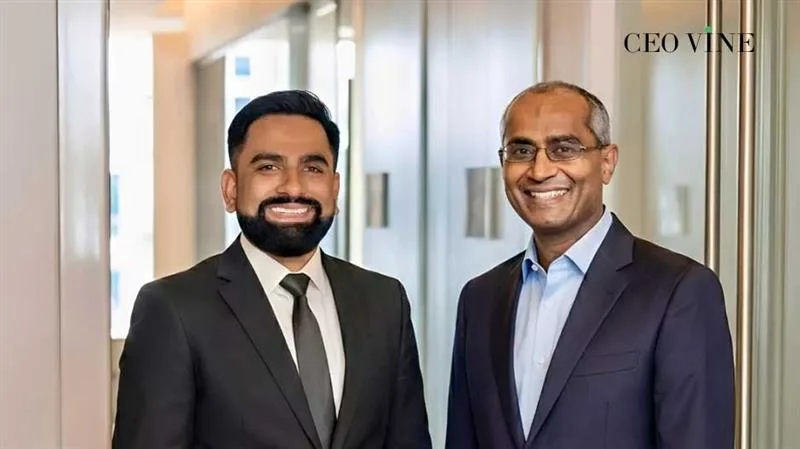
Founded in September 2025 by Manish Seth and Dr. Piyush Desai, Vimag Labs is tackling one of the electric vehicle industry’s biggest challenges, dependence on rare earth magnets, which are expensive, supply-constrained, and geopolitically sensitive. The startup is building high-efficiency, magnet-free electric motors for EVs and industrial applications, without compromising on performance.
At the core of Vimag Labs’ innovation is its software-defined motor architecture. Instead of relying on permanent magnets, the company uses advanced power electronics and control software to generate magnetic fields electronically inside the motor, delivering the benefits of magnet-based motors while avoiding their drawbacks.
The startup is currently focused on two- and three-wheeler EVs for initial commercial deployment, with additional use cases across industrial machinery, HVAC systems, refrigeration, and defence.
Its motors are designed as a plug-and-play, drop-in solution, requiring no major changes to existing vehicle platforms or manufacturing lines.
Vimag Labs’ technology is already undergoing real-world vehicle testing and has reached Technology Readiness Level (TRL) 7. The company is working with multiple large OEMs in India and overseas and has begun commercialising parts of its electronics stack.