Category: Women Leaders

  • How Mulyo Kids is Creating a Conscious Brand in Children’s Fashion

    How Mulyo Kids is Creating a Conscious Brand in Children’s Fashion

    When we think of kidswear, most of us imagine playful prints, bright colors, and tiny outfits that children quickly outgrow. What we don’t usually picture is the mountain of waste this creates. In India alone, the children’s apparel market is valued at more than ₹1.6 trillion and continues to grow but with growth comes responsibility. Every discarded garment adds to a fashion industry already under scrutiny for its waste-heavy practices.

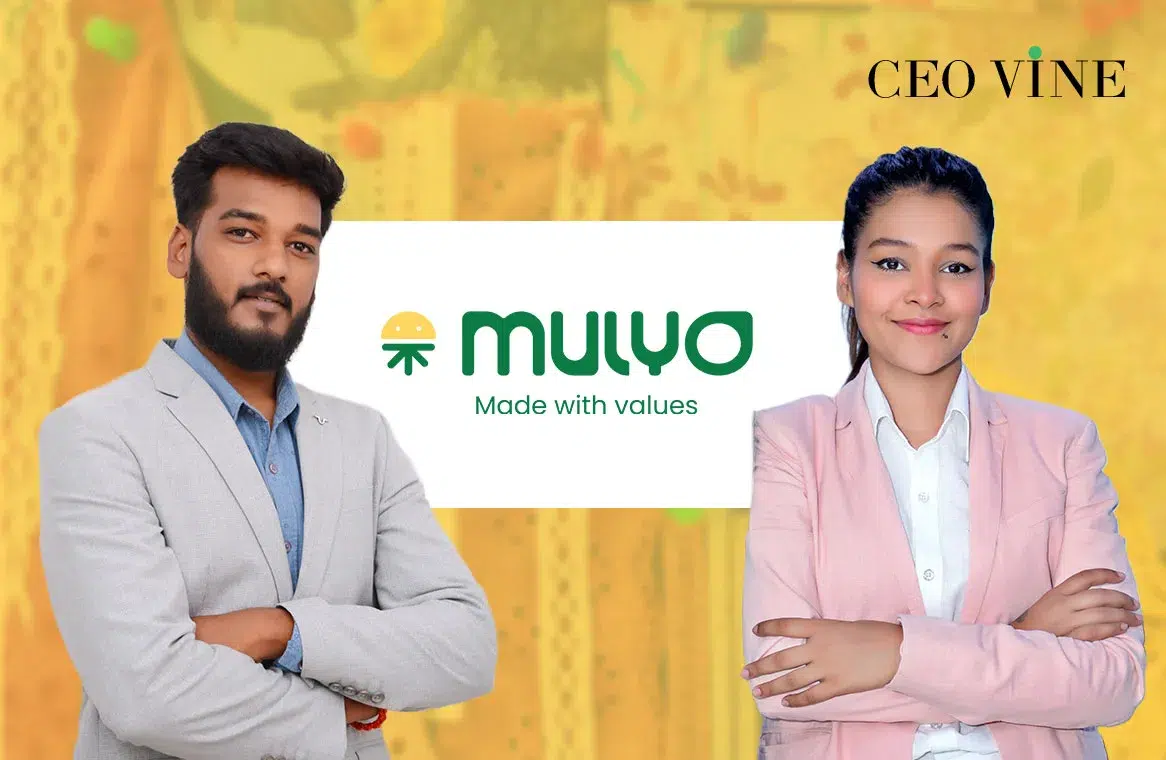
    This is where Mulyo Kids, founded in 2023 by siblings Shambhavi Jaiswal and Shivay Jaiswal, steps in with a mission: to make kidswear that is stylish, functional, and deeply sustainable. Their brand blends India’s artisanal traditions with Japanese-inspired comfort, proving that children’s fashion can be aspirational and eco-conscious at the same time.

    The Founders Behind the Brand

    Shambhavi Jaiswal, a fashion industry professional, saw firsthand the inefficiencies of fast fashion. A period of post-COVID recovery gave her time to reflect on her values, drawing inspiration from her grandparents’ simple, waste-free lifestyle. But her real turning point came after a long recovery from illness. With time to pause and reflect, she found herself asking deeper questions: “What do I really want to build? What kind of impact do I want to leave?”

    Her mind wandered back to childhood memories at her grandparents’ home, where sustainability wasn’t a buzzword,  it was simply a way of life. Old bottles became lamps, clothes were repurposed, and nothing ever went to waste. Those values, deeply ingrained, shaped the foundation of Mulyo Kids.

    Originally set on launching a women’s wear label, Shambhavi’s research revealed a surprising blind spot on kidswear that contributes disproportionately to textile waste because children outgrow clothes so quickly. That insight changed everything.

    Her sibling and co-founder, Shivay Jaiswal, brought a complementary skill set in finance and business management. While Shambhavi dreamed in fabrics, embroidery, and silhouettes, Shivay mapped out cost structures, systems, and scalability. Their synergy became clear: one would lead the creative vision, while the other built the backbone to make it sustainable as a business.

    “We don’t just want to exist because we’re ‘sustainable.’ We want Mulyo to compete with mainstream brands in quality and efficiency while staying true to our values,” says Shivay.

    Names carry stories, and for Mulyo, the name itself reflects its philosophy. Rooted in the Indian word Mulya (value) and inspired by the Japanese word Muryō (free of cost), it symbolizes values that are priceless yet universal. For the founders, it also carries a personal memory of their father’s lesson:

    “True value can never be bought…it is free of cost, yet priceless to those who recognize it.”

    What Makes Mulyo Kids Different?

    Mulyo Kids sets itself apart by addressing two problems at once, the waste-heavy cycles of kidswear and the lack of aspirational yet responsible clothing options for children in India.

    Here’s what makes them stand out:

    • Sustainable Materials – experimenting with innovative fabrics like coconut husk-based textiles and textile waste blends.
    • Safe & Eco-Friendly Processes – using vegetable dyes and AZO-free coloring, safe for children’s skin and better for the planet.
    • Child-Friendly Designs – silhouettes inspired by Japanese minimalism: easy to wear, comfortable, and durable.
    • Diverse Range – from affordable everyday wear to premium ethnic collections that highlight artisanal embroidery.
    • Tech Innovation – AI-powered tools (coming soon) will allow parents to virtually try outfits on their children before purchasing.

    This balance of sustainability, functionality, and innovation ensures that Mulyo Kids doesn’t just rely on the “eco-friendly” tag  but competes on quality, comfort, and storytelling.

    Beyond clothes, the startup is deeply invested in social impact. Mulyo Kids collaborates with Sewa Bharti, Noida, to train women from economically weaker backgrounds in specialized embroidery. These women are not only trained but also fairly compensated for their contributions. For them, it means financial independence and dignity. For Mulyo, it means every garment carries the story of empowerment, culture, and care.

    This approach strengthens artisanal traditions, preserves heritage, and embeds ethical production into the brand’s DNA.

    Despite being new, Mulyo Kids was recognized among India’s top 8 women-led startups under the Make in India initiative, a distinction that placed it alongside well-known names like Vineeta Singh and Ghazal Alagh. Industry media and sustainability-focused platforms have also highlighted its commitment to rethinking fashion for the better.

    Looking ahead, the brand is working on scaling innovative biomaterials like coconut husk textiles, while also integrating AI-powered shopping tools to make sustainable fashion more accessible and interactive for parents. Alongside this, it aims to strengthen its presence in India and expand into global markets, starting with the UAE.

    https://app.ceotrail.com/how-pawzndogz-quietly-built-a-brand-for-pet-play/

    The Bigger Picture: Shifting Industry Trends

    Globally, kidswear is becoming one of the fastest-growing apparel segments. Parents are increasingly conscious of what their children wear, not only in terms of safety and comfort but also values. Sustainable, toxin-free, and heritage-driven fashion is no longer niche; it’s becoming mainstream.

    In India, this shift is even more pronounced as millennial parents drive the demand for mindful consumption. Mulyo Kids ethos — sustainability, minimalism, and craftsmanship aligns perfectly with these evolving consumer values.

    Over the next five years, as technology integrates more deeply into retail, brands like Mulyo Kids that combine eco-consciousness with innovation are well positioned to lead the way.

    In a world where fast fashion often drowns out lasting value, Mulyo Kids is proving that conscious choices can be aspirational, scalable, and deeply impactful.

    For parents considering sustainable fashion, Shambhavi offers a simple but powerful reminder:

    “You’re already doing something amazing by caring about your child’s choices. Sustainable fashion doesn’t have to be complicated, it can be playful, stylish, and full of stories. Every small step matters.”
  • Shradha Sharma Success Story: The Storyteller Who Built India’s Startup Voice

    Shradha Sharma Success Story: The Storyteller Who Built India’s Startup Voice

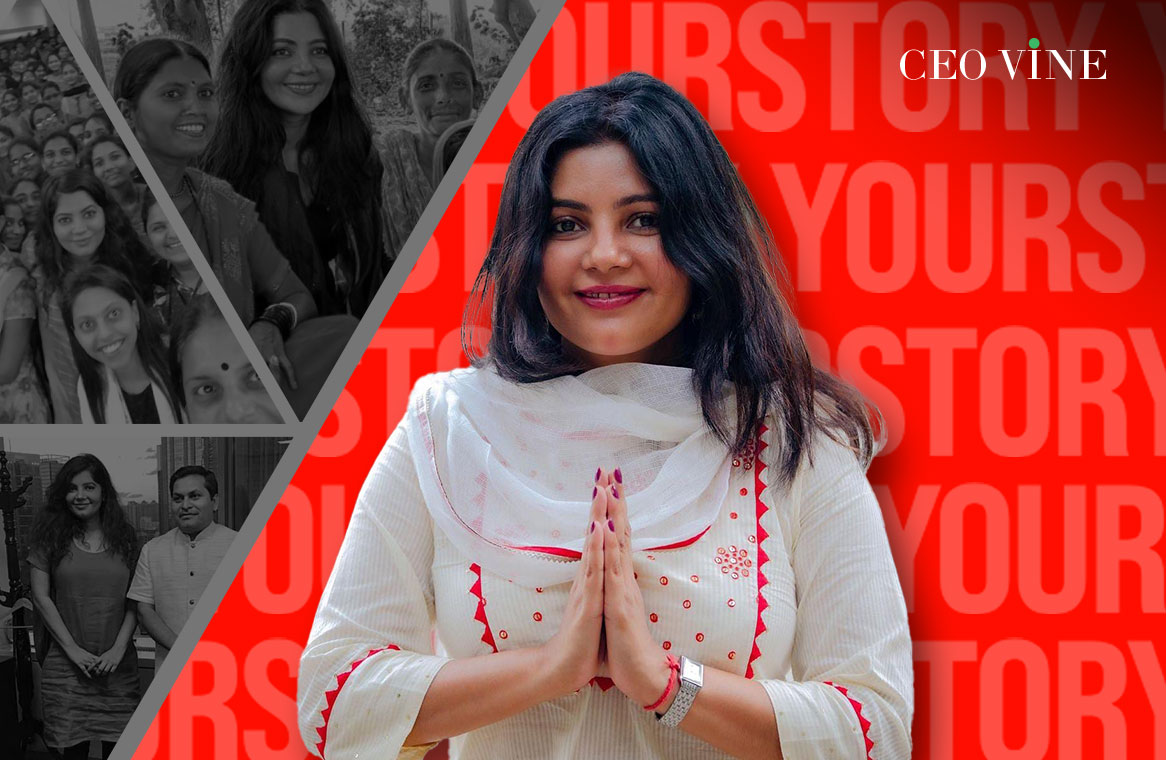
    When we talk about India’s startup revolution, one name consistently stands out—not a founder of a unicorn or a VC heavyweight, but a storyteller who gave them a stage. Shradha Sharma, the founder and CEO of YourStory, built a platform that became the voice of India’s entrepreneurial ecosystem. From a humble background in Patna to creating India’s largest startup media house, her journey is one of resilience, conviction, and unwavering belief in the power of stories.

    Shradha Sharma’s Early Life: Small-Town Dreams, Big Ambitions

    Born in Patna, Bihar, Shradha Sharma grew up in a lower-middle-class family where resources were limited but dreams were encouraged. Her father was a small businessman, her mother an anchor of strength. Education was emphasized at home, and Shradha carried that belief forward when she moved to Delhi in 1997 to study at St. Stephen’s College, where she pursued a degree and later a master’s in History.

    Her academic journey didn’t stop there—she went on to study Design Management and Digital Creative Management at MICA Ahmedabad, equipping herself with both creative and managerial skills. But beneath the academic pursuits, Shradha carried a childhood scar that shaped her resilience: as a third grader, she was humiliated by a teacher during a school competition for not having the right clothes to perform. That moment of rejection left a deep mark, fueling her determination to give a voice to those who are overlooked or dismissed.

    A Promising Career in Media

    Shradha’s first brush with the professional world was in branding and media. She worked as a Brand Advisor at The Times of India (2006–2007) and later as Assistant Vice President at CNBC-TV18 (2007–2009).

    While covering businesses, she noticed something striking: mainstream media celebrated large corporations but ignored small entrepreneurs. Countless dreamers with powerful stories of struggle and innovation had no one to amplify their voices. Shradha saw this gap not just as an opportunity but as a mission—an act of justice for those whose stories deserved to be heard.

    The Birth of YourStory

    In 2008, Shradha Sharma took the bold step of starting YourStory, a digital platform dedicated to entrepreneurs and changemakers. It wasn’t born as a commercial venture but as a heartfelt mission. She once said, “YourStory came from the heart of a third-grade child who knew what rejection felt like and wanted to ensure others’ stories were never silenced.”

    With the help of two IIT students, she built the first version of the website. A year later, in 2009, she quit her secure corporate job to focus full-time on the platform. The decision worried her mother, who cried over the uncertainty her daughter was stepping into. But Shradha reassured herself with a promise: she would succeed not just for herself, but to fulfill her mother’s dream of seeing her shine.

    Struggles, Rejections, and Early Breakthroughs

    The early days of YourStory were anything but easy. Entrepreneurs often dismissed her because her website had no traffic or visibility. Many refused to give her interviews. “No one took me seriously in the beginning,” Shradha recalls. Yet, she persisted. She kept writing, publishing stories of anyone who was willing to share their journey.

    Financial struggles loomed as well. In fact, Shradha Sharma admits that initially, YourStory had no business model—it was driven only by passion. It took an encounter with entrepreneur Bakshish Dutta, who asked her how she planned to sustain herself, to realize the importance of revenue. He invested ₹1 lakh to support her campaign, which gave her much-needed breathing room.

    The passing of her mother in 2010 was another devastating blow. At a time when her professional struggles were already weighing heavily, losing her strongest pillar of support left her shattered. But instead of giving up, she channeled her grief into building YourStory, keeping her mother’s belief alive in spirit.

    Scaling YourStory: From Blog to Ecosystem

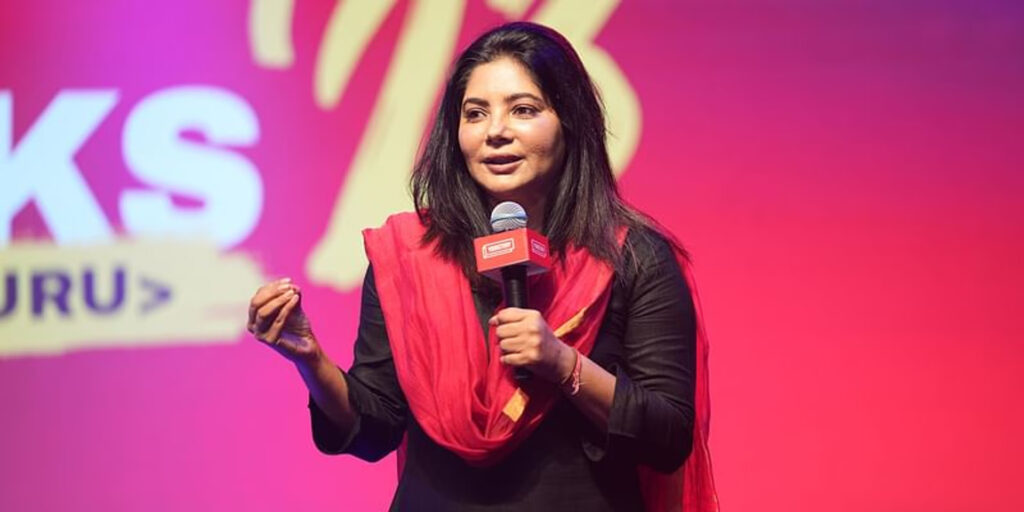
    YourStory Founder Shradha Sharma
    YourStory Founder Shradha Sharma

    By 2015, after years of relentless work, YourStory finally turned a corner. It started attracting funding and recognition. Over the years, it raised capital from marquee investors, including Ratan Tata, Kalaari Capital, and UC-RNT Fund.

    Today, YourStory has published over 100,000 stories of entrepreneurs, innovators, and changemakers. The platform reaches 10 million+ readers monthly and operates in 11 Indian languages, making it accessible to entrepreneurs in every corner of the country.

    Shradha Sharma often highlights that YourStory was profitable even during the pandemic, a feat that many startups struggled to achieve. Except for a brief expansion phase (2015–2017), the company has largely maintained operational efficiency.

    Philosophy and Impact

    At the core of YourStory is Shradha Sharma’s belief:
    “People are just as extraordinary as they believe themselves to be.”

    Her mission has always been to shine a spotlight on resilience, dreams, and triumphs over adversity. In doing so, she has democratized storytelling for entrepreneurs, ensuring that stories of women founders, small-town dreamers, and first-generation entrepreneurs find as much space as billion-dollar founders.

    YourStory has not only inspired entrepreneurs but has also played a crucial role in shaping India’s startup culture, bridging the gap between founders, investors, and ecosystem enablers.

    Shradha Sharma: The Woman Behind the Entrepreneur

    Shradha Sharma’s professional grit is complemented by her personal discipline. Based in Bangalore, she travels extensively, often taking 12–16 flights a month to meet entrepreneurs globally. She practices daily meditation and maintains a strict health routine, balancing the chaos of entrepreneurship with inner calm. She also shares a deep bond with her two cocker spaniels, Abby and Phoebe, who she calls her soulmates.

    Despite the challenges, she values her time with her husband deeply. Even if it’s a two-minute phone call, she ensures she’s fully present—an approach that defines her balance between work and relationships.

    Recognition and Legacy

    Over the years, Shradha Sharma has earned numerous accolades, including:

    Her story has also been recognized globally, with YourStory expanding its presence to Europe and becoming one of the most trusted entrepreneurial media platforms in Asia.

    Conclusion:

    Shradha Sharma’s journey from a young girl in Patna to the founder of India’s biggest entrepreneurship platform is not just about building a company—it’s about building hope.

    By choosing stories over stability, passion over profit, and persistence over rejection, she has carved her place as one of the most influential voices in India’s startup ecosystem.

    Also Read | Namita Thapar Success Story: India’s Leading Female Entrepreneurial Icon

    FAQs

    Who is Shradha Sharma?

    Shradha Sharma is the founder and CEO of YourStory, India’s largest digital platform dedicated to entrepreneurs, startups, and changemakers. She is also a former media professional who worked with The Times of India and CNBC-TV18 before starting her entrepreneurial journey in 2008.

    What inspired Shradha Sharma to start YourStory?

    During her stint in media, Shradha realized that mainstream media covered big corporations but ignored small entrepreneurs. She wanted to create a platform where every entrepreneur’s story, big or small, could be heard. This led to the birth of YourStory in 2008.

    Who are the investors in YourStory?

    YourStory has received investments from prominent names like Ratan Tata, Kalaari Capital, and UC-RNT Fund. These investors believed in Shradha’s vision to build a platform that empowers entrepreneurs.

    Is Shradha Sharma married?

    Yes, Shradha Sharma is married. She lives in Bangalore with her husband and two pet cocker spaniels, Abby and Phoebe, who she lovingly calls her “soulmates.”

    Does Shradha Sharma have children?

    As of now, there is no public information about Shradha Sharma having children. She is very private about her personal life and prefers to keep her family matters away from media attention.

    What is Shradha Sharma’s net worth?

    While her exact net worth isn’t publicly disclosed, her venture YourStory is valued in millions and continues to attract funding and expansion opportunities, making her one of the most influential entrepreneurs in India’s media-tech space.

    Where does Shradha Sharma live now?

    Shradha Sharma currently resides in Bangalore, Karnataka, where YourStory’s headquarters is also based. The city’s vibrant startup culture aligns well with her vision of building India’s biggest platform for entrepreneurs.

  • Namita Thapar Success Story: India’s Leading Female Entrepreneurial Icon

    Namita Thapar Success Story: India’s Leading Female Entrepreneurial Icon

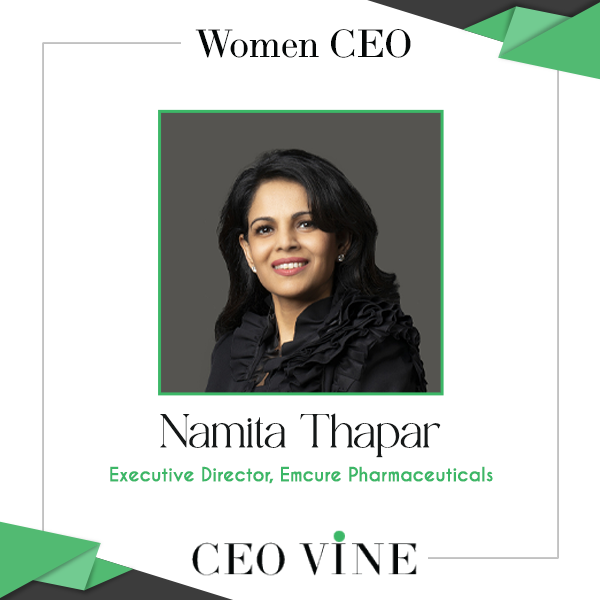
    Namita Thapar, Executive Director of Emcure Pharmaceuticals, has built her reputation on a strong foundation of academic excellence, strategic thinking, and a passion to empower others. With a net worth estimated to be around INR 600 crore, Namita stands out as an inspiration not only in the pharmaceutical industry but across India’s entrepreneurial ecosystem.

    Namita Thapar – Early Life to Corporate Leadership

    Born on March 21, 1977, in Pune, Namita’s formative years were anchored in both academic discipline and entrepreneurial thinking rooted in the family legacy of her father, Satish Mehta, founder of Emcure.

    After excelling in commerce and completing her Chartered Accountancy from ICAI, she further fortified her business acumen with an MBA from Duke University’s Fuqua School of Business. These achievements positioned her for deep strategic roles in the business world.

    Namita began her professional journey in the U.S. with Guidant Corporation before returning to India to join Emcure as CFO. She quickly rose through roles in finance, mergers, global compliance, HR, and marketing.

    Today as Executive Director for the India business, she leads operations, growth strategies, and global collaborations transforming Emcure into a force in pharma innovation and affordable healthcare.

    In 2024, under her leadership, Emcure debuted on India’s NSE and BSE with notable investor interest and listing success.

    In 2017, Namita founded Incredible Ventures, aimed at nurturing entrepreneurial skills in youth aged 11–18 across India’s major metros. She extended this mission by becoming an advisor for Fuqua School of Business India and joining elite networks like YPO and TiE Mumbai to mentor emerging founders.

    Namita Thapar’s Shark Tank India Investments

    Namita’s role as a shark on Shark Tank India elevated her profile nationally, making her one of the most recognized faces in India’s startup ecosystem. By the end of Season 4, she had invested in 100+ startups, backing founders across diverse industries.

    Her portfolio spans consumer goods, healthcare, ed-tech, retail, and sustainability-driven ventures. Some of the noteworthy investments include:

    Startup NameIndustryInvestment AmountEquity
    Rare PlanetHandicrafts / Retail₹65 lakhs3%
    Skippi Ice PopsFMCG / Food & Beverages₹20 lakhs3%
    NuutjobPersonal Care₹8.33 lakhs6.6%
    BrandsdaddyTech / Consumer Goods₹35 lakhs5%
    Auli LifestyleBeauty & Wellness₹75 lakhs15%
    GirgitFashion / Apparel₹20 lakhs20%
    MenstrupediaHealth / Education₹50 lakhs20%
    STAGEOTT / Entertainment₹50 lakhs0.2%
    Very Much IndianHandloom / Apparel₹25 lakhs5%
    AltorTech / Safety₹25 lakhs3.5%
    Beyond WaterBeverages / FMCG₹37.5 lakhs7.5%
    Kabaddi AddaSports / Media₹40 lakhs3%
    Thinkerbell LabsEdTech / Assistive Tech₹35 lakhs1%
    BummerFashion / Apparel₹37.5 lakhs3.75%
    AAS VidyalayaEdTech₹50 lakhs5%
    FardaFashion / Apparel₹15 lakhs10%
    The Renal ProjectHealthcare₹50 lakhs3%
    InACanBeverages / FMCG₹20 lakhs2%
    Sunfox TechnologiesHealthTech / Devices₹20 lakhs1.2%
    Wakao FoodsPlant-based Foods₹25 lakhs7%
    Store My GoodsLogistics / Storage₹25 lakhs + debt2%

    Beyond funding she provides strategic guidance, visibility, and credibility. As Season 4 entrant Chef Gauri put it, Namita’s transaction was prompt, collaborative, and built on mutual trust.

    Leadership with Empathy: Wellness & Women’s Health

    When the pandemic hit, Namita surprised many by launching a YouTube series titled Unconditional Yourself with Namita offering candid conversations around women’s health. She remains a vocal advocate for gender equity and partners with platforms such as NITI Aayog’s Women Entrepreneurship Platform and the Government’s Digital Health Task Force.

    Recognition & Boardroom Impact

    Namita’s consistent narrative of value-driven leadership has earned wide acclaim. She is featured in Fortune’s 40 Under 40 list, recognized by Barclays’ Hurun NextGen, and featured as a Super Achiever in various women-leadership forums. Her voice echoes across top business institutions like IIMs and Harvard.

    Summary Snapshot: Why Namita Thapar’s Story Matters

    AttributeDetails
    Business MasteryExecutive Director at Emcure; steered its IPO and global expansion.
    Shark Tank ImpactInvested ₹10 crore in startups; highest deal fulfillment rate among Shark investors.
    Social InfluenceCreated youth entrepreneurship programs and directed women’s health discourse.
    Strategic InvestorActively structured supporting deals; balancing risk and growth.
    Thought LeadershipTrusted speaker and board advisor in national and international forums.

    Final Thoughts

    Namita Thapar epitomizes the modern leader—grounded in industry, adaptive to changing ecosystems, and always attuned to legacy and impact. Whether steering Emcure, mentoring young founders, or empowering women entrepreneurs, her brand of leadership blends competence with compassion.

    Her story is not just one of business elevation—it’s a narrative of purpose, resilience, and vision. And in the shifting landscape of Indian entrepreneurship, Namita Thapar continues to lead with insight and integrity.

    Frequently Asked Questions (FAQs)

    Who is Namita Thapar?

    Namita Thapar is the Executive Director of Emcure Pharmaceuticals and a prominent angel investor on Shark Tank India, with a background in finance and strategy.

    What is Namita Thapar’s educational background?

    She is a Chartered Accountant (ICAI) and holds an MBA from Duke University’s Fuqua School of Business.

    How much is Namita Thapar worth?

    Her estimated net worth is around ₹600 crore, much of which is tied to her stake in Emcure following its successful IPO.

    What roles did Namita Thapar have before leading Emcure?

    Namita began her career as a Business Finance Lead at Guidant Corporation (now Abbott) in the U.S., later assuming roles like CFO at Emcure before becoming its Executive Director.

    How active is Namita Thapar on Shark Tank India?

    She’s appeared as a ‘Shark’ in all seasons of Shark Tank India, investing in more than 25 businesses and earning a reputation for being selective and hitting high deal fulfillment rates.

    What is Namita Thapar’s most memorable on-screen quote or persona on the show?

    Her famous line, “Yeh meri expertise nahi hai, toh I am out” (“This isn’t my expertise, so I’m out”), has become emblematic of her no-nonsense persona.

    Does Namita Thapar work with government initiatives?

    Yes—Namita actively collaborates with the Government of India on platforms like NITI Aayog’s Women Entrepreneurship Platform and the Digital Health Task Force.

    Where can entrepreneurs reach Namita Thapar for pitch opportunities?

    In the Reddit AMA, she shared that startups can reach her via ThaparVision.com for funding inquiries.

    Who are Namita Thapar’s parents?

    Namita Thapar is the daughter of Satish Mehta (Founder & MD of Emcure Pharmaceuticals) and Bhavna Mehta. Her father is a first-generation entrepreneur who built Emcure into one of India’s leading pharma companies.

    Is Namita Thapar married?

    Yes, Namita Thapar is married to Vikas Thapar, who has been part of Emcure’s management team for over 15 years. He plays a key role in Corporate Strategy, M&A, and Business Development for the company.

    Does Namita Thapar have children?

    She has two sons, Vir Thapar and Jai Thapar, interestingly named after characters from the Bollywood classic Sholay.

    Where was Namita Thapar born and raised?

    She was born on 21 March 1977 in Pune, Maharashtra, and grew up there before moving to the U.S. for her MBA at Duke University.

    Does Namita Thapar family influence her business journey?

    Yes—her father, Satish Mehta, was her biggest influence in the pharmaceutical industry. After returning from the U.S., she worked under him at Emcure, eventually leading the India business as Executive Director.

    What hobbies or interests does Namita Thapar have outside of business?

    She enjoys writing, traveling, and spending time with her family. During the pandemic, she also launched her YouTube series Uncondition Yourself with Namita to spread awareness about women’s health and mental well-being.

  • How Malavika Hegde Saves Café Coffee Day from Rs 7,000 Crore Debt

    How Malavika Hegde Saves Café Coffee Day from Rs 7,000 Crore Debt

    When Café Coffee Day (CCD), once India’s largest coffee chain, teetered on the edge of collapse, many feared the end of a legacy. Burdened with over ₹7,000 crore in debt and shaken by the tragic death of its founder, V.G. Siddhartha, the company faced one of its darkest chapters in 2019. But in the midst of grief, uncertainty, and financial turmoil, a quiet force stepped in—Malavika Hegde, Siddhartha’s wife.

    With no prior CEO experience and little public visibility before this crisis, Malavika’s leadership would go on to surprise everyone. She took over CCD not just as a business, but as a promise to her late husband, its employees, and loyal customers. Her mission: to bring the brand back from the brink without losing its heart.

    Who is Malavika Hegde?

    Malavika Hegde was born in Bengaluru in 1969, the daughter of S.M. Krishna, a seasoned Indian politician who served as Karnataka’s Chief Minister and the Minister of External Affairs. She pursued engineering from Bangalore University and married V.G. Siddhartha in 1991.

    Although Malavika maintained a low profile and wasn’t actively involved in operations during her husband’s tenure, she served as a non-executive board member for Coffee Day Enterprises Limited (CDEL) for years. This silent observation would later serve her well when she took the reins of a troubled empire.

    Rising Amid Crisis: Malavika Hegde Becoming CEO in 2020

    After Siddhartha’s death in July 2019, CCD was left reeling—financially, emotionally, and structurally. In December 2020, Malavika Hegde officially took over as CEO of Coffee Day Enterprises Ltd. With limited executive experience but unmatched emotional investment, she stepped into one of the most challenging roles in Indian corporate history.

    Her approach was different—not aggressive restructuring led by external consultants, but a deeply personal and grounded revival strategy.

    The Revival Blueprint: 6 Key Strategies by Malavika Hegde

    1. Massive Debt Reduction

    When Malavika took over, CCD’s debt stood at ₹7,214 crore. Under her leadership, through a combination of asset sales (including Global Village Tech Park) and negotiations with creditors, the debt was reduced to ₹1,363 crore by FY24. This was a staggering achievement within just three years.

    She also settled disputes like the ₹94 crore dues with IndusInd Bank, which helped terminate insolvency proceedings filed by the NCLT.

    2. Operational Streamlining

    From 1,752 outlets in FY19, CCD shrunk its physical footprint to about 450 by FY24. The move was strategic—closing loss-making outlets to focus on profitability. At the same time, she expanded CCD’s vending machine model, increasing installations to over 52,000, tapping corporate offices and institutions with a leaner cost model.

    3. Brand & Customer Focus

    Malavika chose not to hike prices—even during tough times—believing that retaining loyal customers was more valuable than short-term gains. The move helped sustain CCD’s reputation and kept the footfall steady, especially among price-conscious youth and working professionals.

    4. Digital Transformation

    She introduced CCD’s revamped mobile app, launched loyalty programs, and focused on seamless digital ordering. These changes helped the brand stay relevant amid increasing competition from tech-enabled rivals like Starbucks, Third Wave, and Chaayos.

    5. Sustainability and Innovation

    CCD began emphasizing eco-conscious operations, cutting down plastic usage and focusing on ethically sourced coffee. The company leveraged its 20,000-acre coffee estate to export premium Arabica beans—tapping into global demand and driving new revenue streams.

    6. Team Morale and Transparent Communication

    In one internal memo, she wrote: “I am resolutely committed to the future of Coffee Day as a going concern.” These words, simple yet sincere, helped rally the staff and build faith among stakeholders. Malavika focused on retaining CCD’s core team and culture while steering the company through stormy waters.

    7. Debt Turnaround: A Timeline of Impact

    PeriodDebt Level (Approx.)
    Mid 2019₹7,200 crore
    March 2020₹3,100 crore
    Early 2021₹1,731 crore
    Mid 2023₹465 crore
    https://app.ceotrail.com/10-indian-women-entrepreneurs-who-took-the-leap-and-built-success/

    The Results: CCD Back on Track

    Under Malavika’s leadership, Café Coffee Day not only survived—it is stabilizing. With reduced debt, renewed customer confidence, and a sharper business focus, CCD is poised to grow again. It continues to have a strong presence in India’s tier-1 and tier-2 cities while eyeing newer formats and digital-first expansion.

    CCD now operates more efficiently with fewer outlets but higher profitability per store. Its vending machine model and B2B coffee bean exports continue to scale steadily.

    A major victory came in September 2023, when the NCLAT quashed insolvency proceedings against Coffee Day Global Ltd, a CCD subsidiary, after a settlement with IndusInd Bank. Malavika had challenged the NCLT’s earlier decision, and her persistence paid off—removing one of the last major legal roadblocks in the company’s path to full recovery.

    Looking ahead, Malavika’s plans include:

    • Expanding to tier-2 and tier-3 cities with cost-effective models.
    • Enhancing the CCD app experience with personalization and loyalty features.
    • Diversifying the menu with healthier and plant-based beverage options.
    • Launching community-based events and ongoing staff training to boost customer engagement and loyalty.

    Recognizing her incredible journey, Netflix is developing a web series based on Malavika Hegde’s life. It will explore her early years, relationship with Siddhartha, the financial downfall, and her remarkable leadership that brought CCD back to life. The series is expected to spotlight not just a turnaround story but also a tale of love, loss, and legacy.

    Also Read | Ratan Tata Passes Away at 86: A Life of Business Leadership and Philanthropy

    Final Thoughts

    Malavika Hegde didn’t just save a company—she redefined what leadership can look like. In an era where many companies fold under financial pressure, her story is a rare and refreshing example of courage, empathy, and strategic clarity.

    From reducing billions in debt to restoring CCD’s market trust, her leadership is now a case study in Indian business circles. And as Café Coffee Day brews its next chapter, it does so with the quiet but determined presence of a woman who chose to fight against all odds.

    FAQs

    Who is Malavika Hegde and what is her role in Café Coffee Day?

    Malavika Hegde is the CEO of Coffee Day Enterprises Ltd. and the wife of CCD founder V.G. Siddhartha. She took over the company in December 2020, following her husband’s untimely death, and led a remarkable turnaround by reducing the company’s debt and reviving operations.

    How much debt did Malavika Hegde clear at Café Coffee Day?

    Under Malavika Hegde’s leadership, Café Coffee Day reduced its debt from ₹7,214 crore in 2019 to approximately ₹465 crore by 2023—a massive 90%+ reduction achieved through asset sales, restructuring, and financial discipline.

    What changes did Malavika Hegde bring to CCD’s operations?

    Malavika focused on operational efficiency by closing underperforming outlets, expanding vending machine networks, introducing Value Express kiosks, and driving digital transformation. She also emphasized sustainability and customer retention without raising prices.

    What was the biggest challenge Malavika Hegde faced at CCD?

    Beyond the financial crisis, Malavika Hegde had to rebuild trust—internally among employees and externally with stakeholders and customers—while navigating legal battles and leading the company without prior executive experience.

    Is Café Coffee Day profitable again under Malavika Hegde’s leadership?

    While CCD has not fully returned to its peak profitability, the significant debt reduction, operational revival, and positive brand perception suggest a strong recovery path under Malavika Hegde’s leadership.

    Is there a Netflix series based on Malavika Hegde’s life?

    Yes, Netflix has reportedly started work on a web series inspired by Malavika Hegde’s journey of reviving Café Coffee Day. The show will highlight her emotional, financial, and leadership journey following her husband’s demise.

    What is the current number of Café Coffee Day outlets in India?

    As of FY24, Café Coffee Day operates around 450 outlets, down from 1,700+ at its peak, but with improved focus on profitability and sustainability under Malavika’s strategy.

  • How PawzNDogz Quietly Built A Brand Where Science Meets Pet Play

    How PawzNDogz Quietly Built A Brand Where Science Meets Pet Play

    What if the future of pet care had nothing to do with toys, treats, or leashes? What if it was rooted in neuroscience, empathy, and the quiet language of joy?

    In recent years, something remarkable has begun unfolding in the world of pet parenting—a movement that’s less about flashy accessories and more about understanding the mind of a dog. Pet care is no longer confined to the basics; it’s evolving into something far more intelligent and intimate. Today’s pet parents aren’t satisfied with what simply looks good. They want what feels right, what enriches, and what connects.

    But how did we get here? And who’s helping lead this shift?

    Not a billion-dollar conglomerate or a celebrity label, but a modest, research-led brand born in Acton, Ontario, Canada – built around the real, everyday needs of dogs and the people who love them.

    PawzNDogz – From Corporate Grit to Canine Care

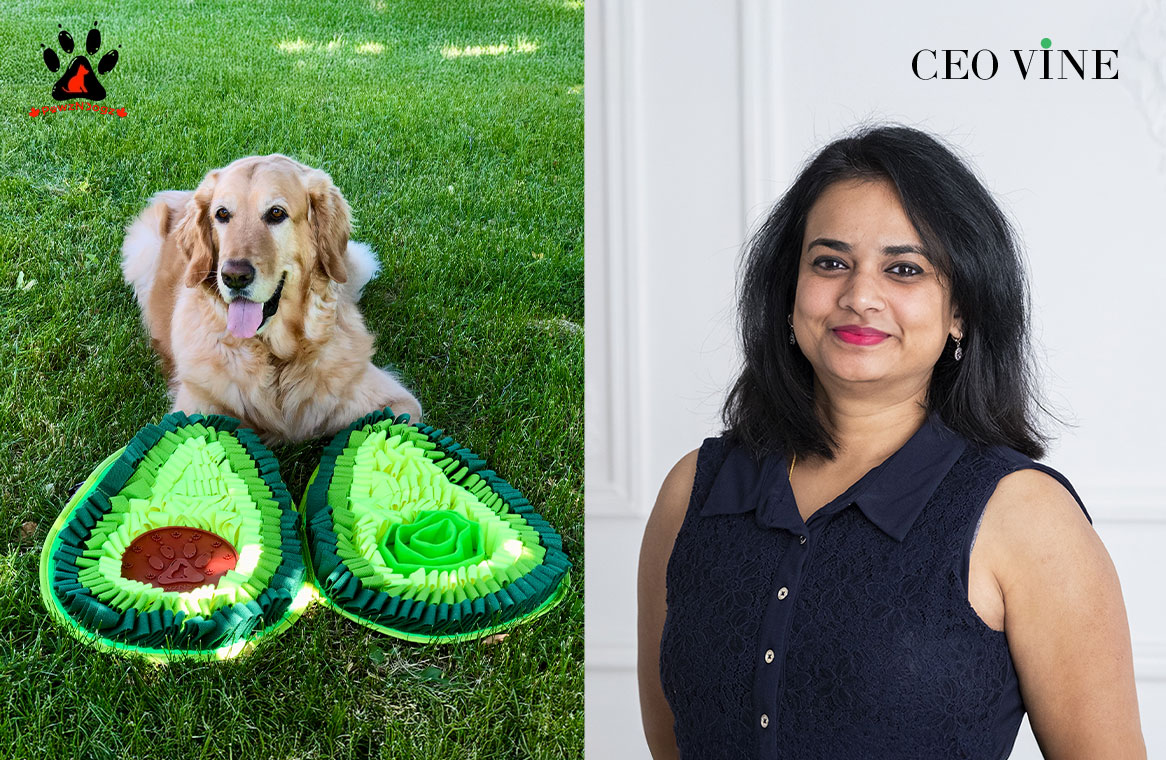
    Smriti Pratishruti (LinkedIn), the founder of PawzNDogz, didn’t start out in the pet care aisle. With a Computer Science Engineering degree and an MBA, she carved out a global HR career across IT, retail, and nonprofit sectors in India, the U.S., and Canada. When she arrived in Canada in 2018, she began working as an HR Manager for a retail furniture startup. But by early 2019, an idea was simmering—one that would grow into PawzNDogz.

    Towards the end of 2019, PawzNDogz launched as a solution-oriented dog boutique for contemporary pet parents. With no industry connections, no ready-made network, and no shortcuts, the business grew organically from scratch. Over time, it carved out a clear niche in enrichment—then still a nascent concept. The vision was simple: build products rooted in science and design to meet real canine needs.

    The Science of Sniffing: Why Enrichment Matters

    Globally, the pet care industry is projected to reach USD 500 billion by 2030, driven by a new generation of pet parents who want better nutrition, more meaningful toys, and products rooted in real research. According to multiple market studies, over 70% of dog parents actively seek enrichment tools to tackle behavioral challenges like anxiety and boredom.

    One product in particular has become a staple: the snuffle mat. Often mistaken for a simple fleece mat, a true snuffle mat is built on behavioral science. It taps into a dog’s innate foraging instinct, turning treat time into a puzzle that exercises the nose and the mind.

    PawzNDogz thoughtfully designs and professionally manufactures its snuffle mats with a focus on canine cognition and vision. Each product is carefully engineered using principles of physics, chemistry, biology, and engineering to make them functional and utilitarian—beauty is secondary to functionality here. These mats are not one-size-fits-all. They’re made for dogs of different ages, breeds, temperaments, and circumstances.

    Fast eaters learn to slow down, anxious dogs find calm, and high-energy pups get a healthy outlet for all that drive. The mats encourage problem-solving, focus, and calm, offering practical enrichment that works at home or on the go.

    And because environmental awareness is no longer optional in the pet industry, where an estimated 99% of products contain some form of plastic, the brand tries to offset its footprint through partnerships like rePurpose Global to balance plastic use. 

    Their packaging stays minimal, recyclable, and practical, because lasting enrichment shouldn’t come at the cost of the planet.

    Listening Over Loud Marketing

    Many pet brands lean on big ads and influencer buzz. PawzNDogz has taken a quieter path. From the beginning, Smriti has kept customer feedback at the center, responding personally, refining designs, and building a global base of repeat customers—many of whom became informal brand ambassadors.

    The “PawzNDogz Champions” community, for example, includes real pet parents who test new products and share honest feedback. This grassroots model keeps the brand grounded and adaptable, without big celebrity campaigns or splashy launches.

    The products aren’t just online novelties. Trainers, behaviorists, and veterinarians increasingly use snuffle mats to manage stress behaviors, slow down eating, and redirect destructive habits.

    Demand for practical enrichment tools is climbing as more owners understand that behavioral health is as vital as physical health. A 2024 report by Grand View Research shows that the global pet enrichment product segment is expanding at over 7% CAGR, driven by urban pet parents looking for home-friendly solutions to tackle issues like separation anxiety and boredom.

    The brand manufactures in bulk, but quality and durability are always at the forefront. Each product is crafted with an emphasis on longevity. For first-time dog parents, multi-pet households, busy families, or pet-friendly offices, these mats serve a clear purpose: to help dogs stay occupied, content, and engaged—safely and naturally. Loading the snuffle mat can also be a fun activity for kids, encouraging responsible pet ownership from a young age and helping strengthen the bond between children and their family pets.

    Next Read | 20 Pet Care Startups Making Life Easier for Pet Parents in India

    Industry Recognition : PawzNDogz

    Despite being bootstrapped, the brand’s efforts have earned it industry nods. PawzNDogz was named Training Aid Product of the Year by the Pet Innovation Awards in 2023, recognized as Pet Stress Relief Product of the Year in 2024, and more recently won the Corporate Vision Canadian Business Award in 2025. These wins point to a small company making a measurable impact—without viral stunts or paid fame.

    At its core, PawzNDogz is built on three words: Quality, Care, Empathy. The team listens, learns, and adapts. And as Smriti often says, “Our goal isn’t to sell the most, it’s to sell what matters most to your dog. Nothing But The Best Matters.

    The broader pet care industry may be booming with trends that fade fast. But some brands quietly stand apart by putting science, sustainability, and sincerity first.

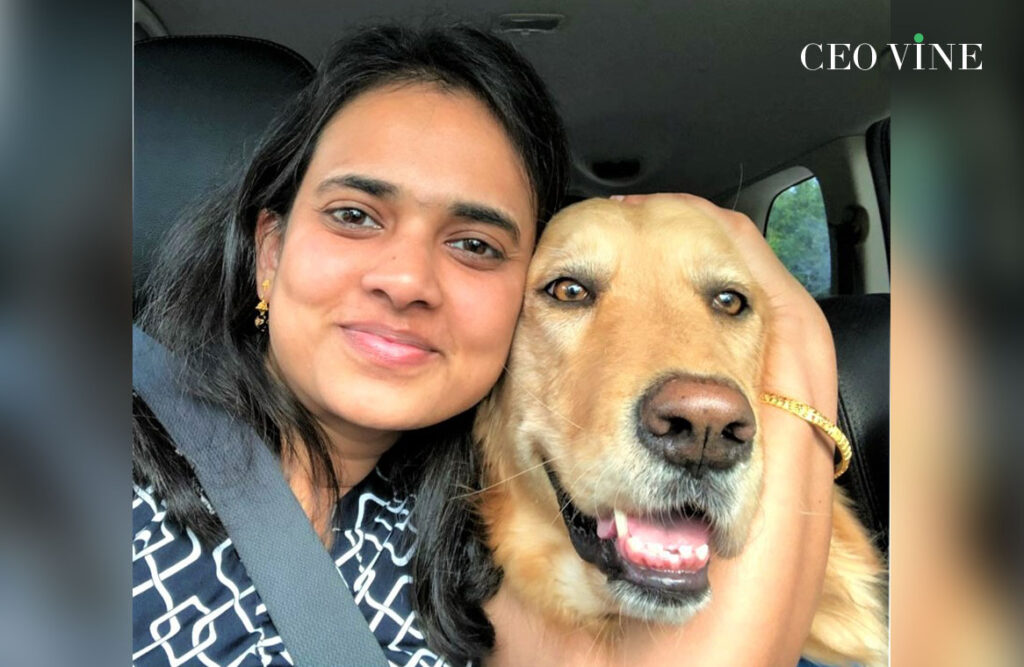
    For PawzNDogz, it all comes back to one curious dog named Princess and the belief that behind every wagging tail is a mind that deserves to be challenged, understood, and loved.