Category: Startups

  • How Greenway Mobility Plans to Redefine India’s 3-Wheeler EV Market

    How Greenway Mobility Plans to Redefine India’s 3-Wheeler EV Market

    India’s electric vehicle (EV) market is evolving at a remarkable pace. According to Fortune Business Insights, the market is projected to grow from USD 23.38 billion in 2024 to USD 117.78 billion by 2032, with a CAGR of 22.4% during the forecast period.

    India is already the fifth-largest automobile market globally and is expected to rank third by 2030. A mix of government subsidies, rising fuel prices, and a broader shift toward cleaner mobility is accelerating this transition.

    According to JMK Research & Analysis, electric three-wheelers—the second-largest EV segment by volume are expanding rapidly. In 2024 alone, 6,94,466 electric three-wheelers were sold, marking an ~18% year-over-year growth. The cargo segment saw nearly 45% YoY growth, driven by booming logistics and favorable cost dynamics.

    But much of this EV wave is urban-centric and consumer-focused. Rural India, the real Bharat is still left behind. For many small-town and semi-urban users, mobility isn’t a lifestyle upgrade. It’s a necessity.

    This is the space Greenway Mobility is stepping into: durable, purpose-built EVs engineered for real-world India.

    The Beginning of Greenway Mobility: Engineering EVs for Bharat
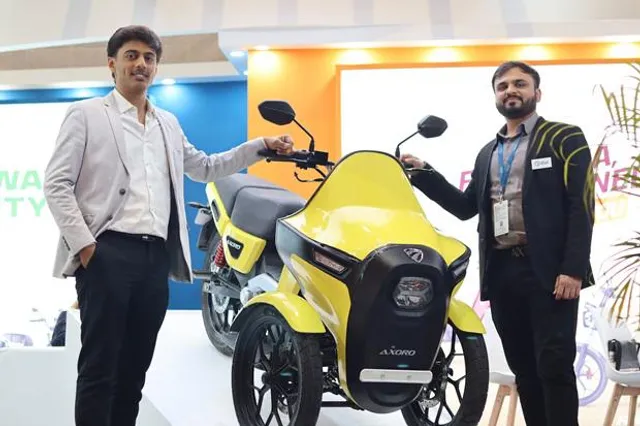
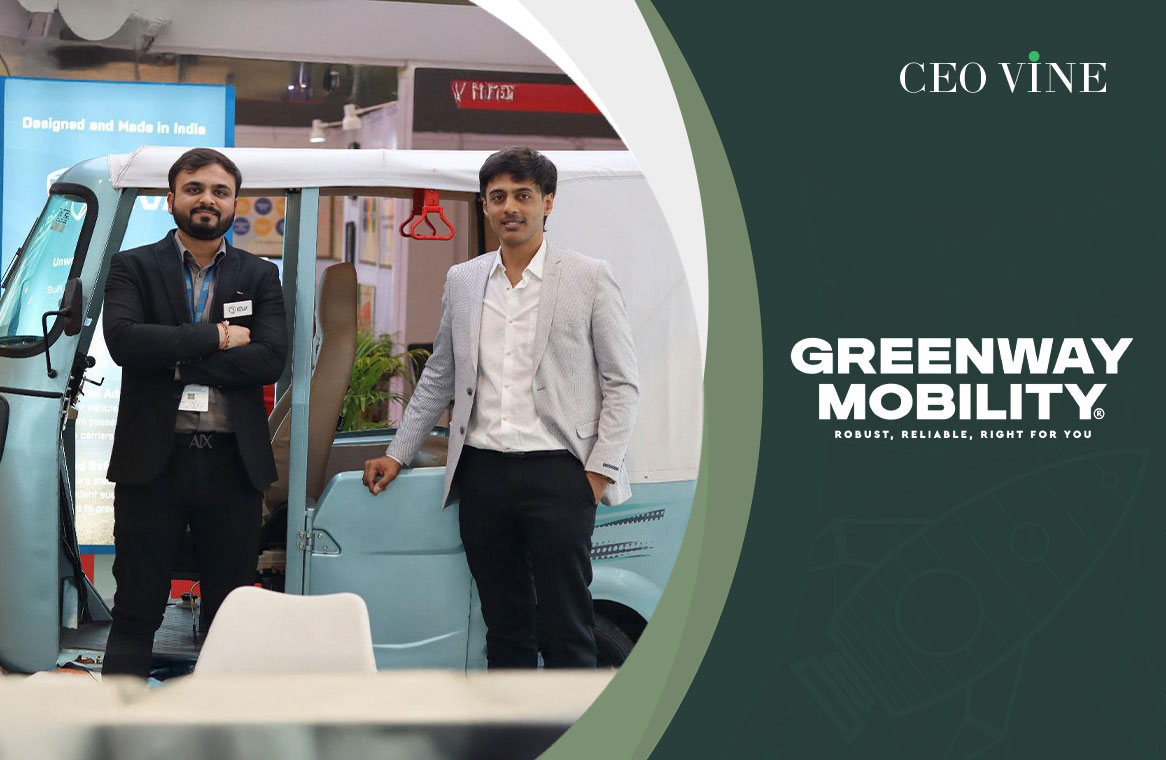
    Greenway Mobility Founders - Siddharth Patel and Harsh Raval
    Greenway Mobility Founders – Siddharth Patel and Harsh Raval

    Founded in 2023 by Siddharth Patel (LinkedIn) and Harsh Raval (LinkedIn), Greenway Mobility emerged from a grounded, on-the-road vision.

    Siddharth, an IIT Bombay and Cornell graduate, brought experience in finance and analytics across manufacturing and financial services. Harsh, with a civil engineering background and roots in infrastructure, understood India’s mobility challenges from the ground up.

    Together, they realized that the opportunity wasn’t in premium scooters or urban showrooms but in creating workhorse EVs for the people who drive India’s real economy.

    Joining them was Nilabh Jha (LinkedIn), Chief Technology Officer. An industry veteran who has developed over 20 vehicle products during his tenure at companies like Ampere Greaves, Alti-Green, and SEG Motors, Nilabh brought a practical, consumer-centric engineering lens to product development.

    “We dreamt of building a world-renowned Indian brand that creates electric vehicles for the global mass market,” says Siddharth. “The three-wheeler EV space was growing, but there was a clear lack of innovation. Most models were retrofitted or unreliable—and that’s what we wanted to change.”

    This vision led to the creation of two brands: E-Vi Mobility and Auron.

    E-Vi Mobility

    Greenway’s commercial EV brand, E-Vi Mobility, focuses on electric three-wheelers designed for cargo and passenger transport. These are built from scratch—not retrofitted—with a focus on durability, reliability, and cost-effectiveness.

    In the passenger segment, models like Chhota OTTO and Rydan come equipped with exclusive anti-topple architecture, and options for fixed or swappable batteries (5.04 kW and 8.8 kW), delivering a city range of 100–150 km.

    In the cargo segment, Chhota Bull is purpose-built for heavy-load deliveries in tight urban spaces. Its robust engineering ensures it can withstand daily wear and tear, while navigating narrow streets and bustling markets.

    Greenway claims its in-house chassis and component design double the vehicle lifespan compared to competitors, and reduce maintenance costs significantly. A five-year vehicle warranty reinforces their commitment to product longevity—an industry outlier in this segment.

    Auron

    Recognizing that not all mobility needs are commercial, Greenway launched Auron, a brand catering to personal, utility-first electric transport.

    Auron’s offerings—Rigoro, Axoro, and Axoro+—are modular electric bikes and trikes tailored for rural and semi-urban geographies. They’re designed to be low-frill but high-function, reliable in regions with poor roads and limited charging infrastructure.

    “We saw a huge opportunity to serve geographies where poor road infrastructure makes mainstream bikes and scooters impractical,” says Harsh. “For these users, reliability isn’t a feature—it’s a necessity.”

    Greenway MobilityInfrastructure, Strategy, and Scale

    Greenway operates from a 6.5-acre solar-powered manufacturing facility in Dholka, Ahmedabad, landscaped with over 15,000 trees, an environmental commitment that reflects its larger sustainability goals.

    Notably, the company is entirely bootstrapped, a rarity in the capital-heavy EV market. Siddharth and Harsh have committed up to ₹100 crore (approximately $12 million) of internal and promoter-led funding by 2026.

    Within its first year, the company has developed a portfolio of nine EVs across both personal and commercial categories. Rather than investing in celebrity endorsements or flashy marketing, Greenway is investing in engineering, service networks, and long-term customer value.

    The company’s current expansion plans prioritize high-mobility states such as Uttar Pradesh, Bihar, Punjab, Maharashtra, Gujarat, Rajasthan, J&K, Assam, Orissa, Jharkhand and Madhya Pradesh—regions often underserved by EV companies despite high usage in last-mile delivery and passenger transport.

    The company is also building a robust after-sales ecosystem, with local service teams, spare parts distribution, and battery lifecycle management. A battery recycling initiative is in the pipeline, further strengthening their sustainability roadmap.

    The company  also plans to expand  into emerging international markets such as Africa, Latin America, South Asia, and Southeast Asia, where affordability and durability are key priorities.

    https://app.ceotrail.com/how-serviceplug-puts-nearby-local-mechanics-at-your-fingertips/

    Building the Future for Everyone – E-Vi Mobility & Auron

    Greenway’s roadmap includes expanding its product range, enhancing modularity, and developing EVs tailored for off-grid, remote, and tribal regions. These areas often lack basic mobility infrastructure, making transport a critical barrier to healthcare, education, and livelihood.

    In a space where much of the noise comes from luxury concepts and futuristic prototypes, this startup is choosing focus over flash.

    “We’re not chasing headlines or valuations,” Siddharth says. “We’re focused on building a company that lasts.”

    While many startups aim for rapid scale or unicorn status, Greenway Mobility is taking a different path—building vehicles that don’t just move people, but move markets.
  • How PawzNDogz Quietly Built A Brand Where Science Meets Pet Play

    How PawzNDogz Quietly Built A Brand Where Science Meets Pet Play

    What if the future of pet care had nothing to do with toys, treats, or leashes? What if it was rooted in neuroscience, empathy, and the quiet language of joy?

    In recent years, something remarkable has begun unfolding in the world of pet parenting—a movement that’s less about flashy accessories and more about understanding the mind of a dog. Pet care is no longer confined to the basics; it’s evolving into something far more intelligent and intimate. Today’s pet parents aren’t satisfied with what simply looks good. They want what feels right, what enriches, and what connects.

    But how did we get here? And who’s helping lead this shift?

    Not a billion-dollar conglomerate or a celebrity label, but a modest, research-led brand born in Acton, Ontario, Canada – built around the real, everyday needs of dogs and the people who love them.

    PawzNDogz – From Corporate Grit to Canine Care

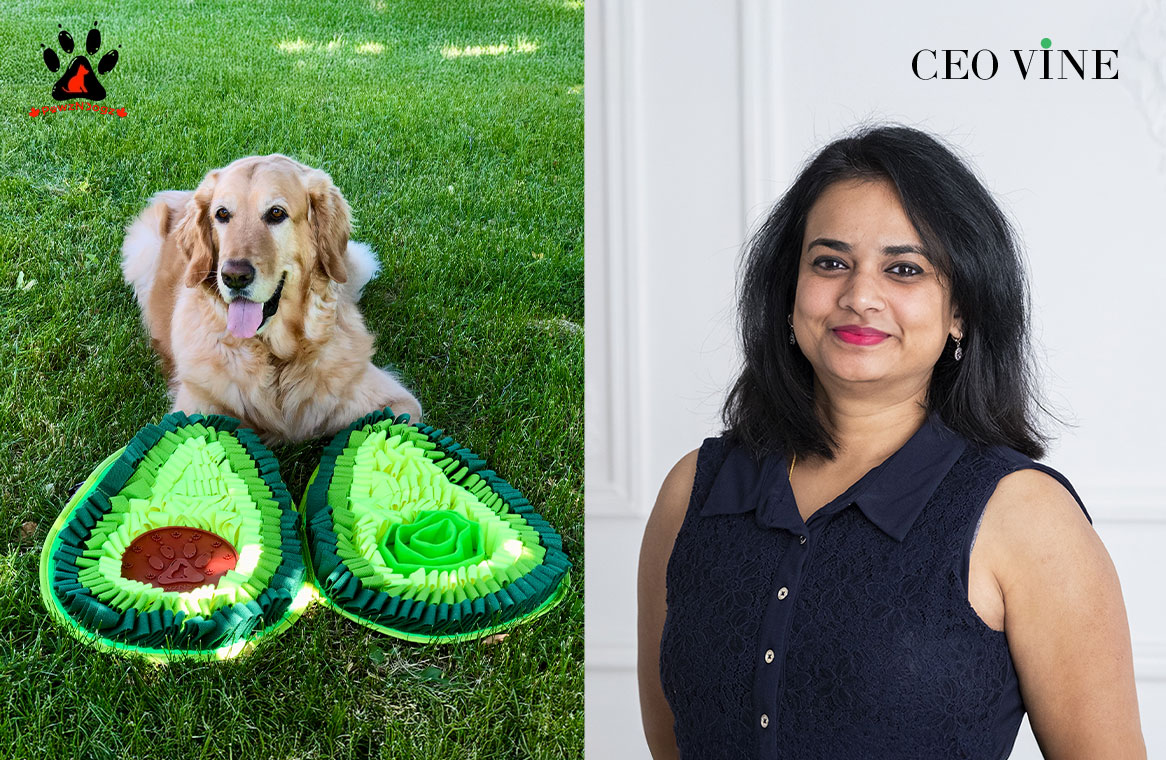
    Smriti Pratishruti (LinkedIn), the founder of PawzNDogz, didn’t start out in the pet care aisle. With a Computer Science Engineering degree and an MBA, she carved out a global HR career across IT, retail, and nonprofit sectors in India, the U.S., and Canada. When she arrived in Canada in 2018, she began working as an HR Manager for a retail furniture startup. But by early 2019, an idea was simmering—one that would grow into PawzNDogz.

    Towards the end of 2019, PawzNDogz launched as a solution-oriented dog boutique for contemporary pet parents. With no industry connections, no ready-made network, and no shortcuts, the business grew organically from scratch. Over time, it carved out a clear niche in enrichment—then still a nascent concept. The vision was simple: build products rooted in science and design to meet real canine needs.

    The Science of Sniffing: Why Enrichment Matters

    Globally, the pet care industry is projected to reach USD 500 billion by 2030, driven by a new generation of pet parents who want better nutrition, more meaningful toys, and products rooted in real research. According to multiple market studies, over 70% of dog parents actively seek enrichment tools to tackle behavioral challenges like anxiety and boredom.

    One product in particular has become a staple: the snuffle mat. Often mistaken for a simple fleece mat, a true snuffle mat is built on behavioral science. It taps into a dog’s innate foraging instinct, turning treat time into a puzzle that exercises the nose and the mind.

    PawzNDogz thoughtfully designs and professionally manufactures its snuffle mats with a focus on canine cognition and vision. Each product is carefully engineered using principles of physics, chemistry, biology, and engineering to make them functional and utilitarian—beauty is secondary to functionality here. These mats are not one-size-fits-all. They’re made for dogs of different ages, breeds, temperaments, and circumstances.

    Fast eaters learn to slow down, anxious dogs find calm, and high-energy pups get a healthy outlet for all that drive. The mats encourage problem-solving, focus, and calm, offering practical enrichment that works at home or on the go.

    And because environmental awareness is no longer optional in the pet industry, where an estimated 99% of products contain some form of plastic, the brand tries to offset its footprint through partnerships like rePurpose Global to balance plastic use. 

    Their packaging stays minimal, recyclable, and practical, because lasting enrichment shouldn’t come at the cost of the planet.

    Listening Over Loud Marketing

    Many pet brands lean on big ads and influencer buzz. PawzNDogz has taken a quieter path. From the beginning, Smriti has kept customer feedback at the center, responding personally, refining designs, and building a global base of repeat customers—many of whom became informal brand ambassadors.

    The “PawzNDogz Champions” community, for example, includes real pet parents who test new products and share honest feedback. This grassroots model keeps the brand grounded and adaptable, without big celebrity campaigns or splashy launches.

    The products aren’t just online novelties. Trainers, behaviorists, and veterinarians increasingly use snuffle mats to manage stress behaviors, slow down eating, and redirect destructive habits.

    Demand for practical enrichment tools is climbing as more owners understand that behavioral health is as vital as physical health. A 2024 report by Grand View Research shows that the global pet enrichment product segment is expanding at over 7% CAGR, driven by urban pet parents looking for home-friendly solutions to tackle issues like separation anxiety and boredom.

    The brand manufactures in bulk, but quality and durability are always at the forefront. Each product is crafted with an emphasis on longevity. For first-time dog parents, multi-pet households, busy families, or pet-friendly offices, these mats serve a clear purpose: to help dogs stay occupied, content, and engaged—safely and naturally. Loading the snuffle mat can also be a fun activity for kids, encouraging responsible pet ownership from a young age and helping strengthen the bond between children and their family pets.

    Next Read | 20 Pet Care Startups Making Life Easier for Pet Parents in India

    Industry Recognition : PawzNDogz

    Despite being bootstrapped, the brand’s efforts have earned it industry nods. PawzNDogz was named Training Aid Product of the Year by the Pet Innovation Awards in 2023, recognized as Pet Stress Relief Product of the Year in 2024, and more recently won the Corporate Vision Canadian Business Award in 2025. These wins point to a small company making a measurable impact—without viral stunts or paid fame.

    At its core, PawzNDogz is built on three words: Quality, Care, Empathy. The team listens, learns, and adapts. And as Smriti often says, “Our goal isn’t to sell the most, it’s to sell what matters most to your dog. Nothing But The Best Matters.

    The broader pet care industry may be booming with trends that fade fast. But some brands quietly stand apart by putting science, sustainability, and sincerity first.

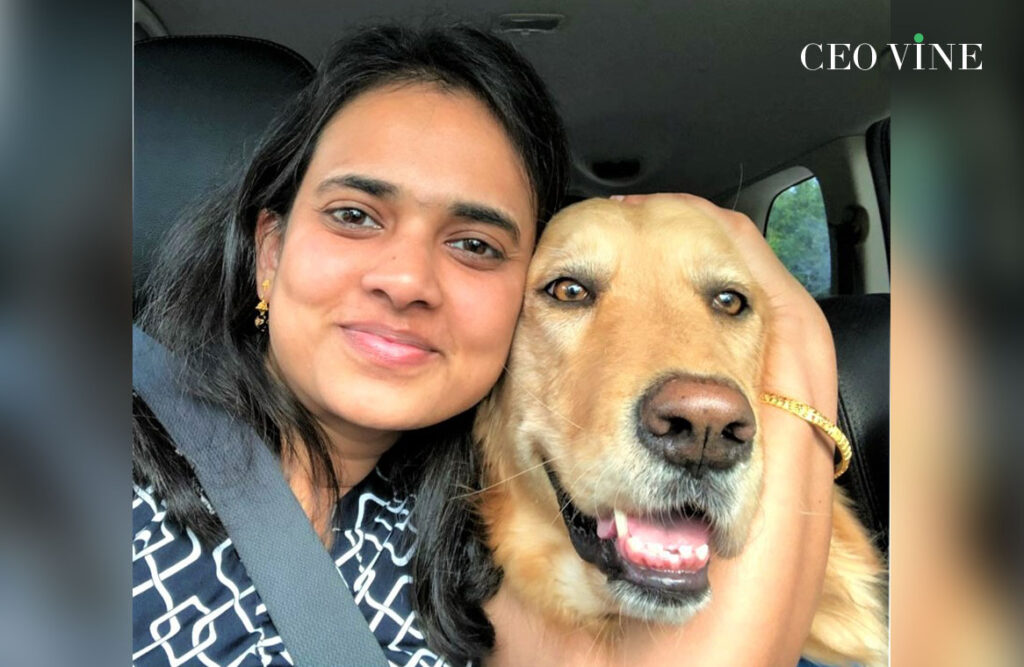
    For PawzNDogz, it all comes back to one curious dog named Princess and the belief that behind every wagging tail is a mind that deserves to be challenged, understood, and loved.

  • Bridging the Gap in Hospitality: How THE BOH LABS Is Reimagining India’s Mid-Market Hotels

    Bridging the Gap in Hospitality: How THE BOH LABS Is Reimagining India’s Mid-Market Hotels

    India’s hospitality industry has entered a critical inflection point. While the premium and budget segments have both seen accelerated growth over the past decade, the mid-market especially in urban business and transit corridors remains largely underserved.

    According to IBEF, the Indian travel and tourism industry is expected to grow with a Compound Annual Growth Rate (CAGR) of 20% in the next couple of decades, driven by the rise in India’s middle-income group and disposable income. Yet, the demand for thoughtfully designed, tech-enabled hotels that cater to millennial and Gen Z travelers is still far from met.

    This evolving traveler profile—seeking experiences over excess, and function over formality has prompted a fresh approach to mid-scale hospitality. Among the newer players attempting to redefine this space is THE BOH LABS, a firm bringing a blend of design intelligence, operational strategy, and localized storytelling to hotel development and repositioning.

    The Vision Behind THE BOH LABS

    Founded by Siddharth Kochhar (LinkedIn), who previously worked with FabHotels, Bloomrooms, OYO, and Wyndham Hotels & Resorts, the brand was born out of a realization: many mid-market hotels were missing soul. They felt tired, disconnected from their surroundings, and lacking in brand identity.

    “I kept seeing the same problem—properties that had potential but weren’t living up to it,” Siddharth recalls. “They needed better design, smarter systems, and a reason for guests to choose them over the next place down the road.”

    This observation led to the founding principle of THE BOH LABS to reinvent hotels from the inside out, combining intuitive design with efficient technology and authentic local character.

    Design Meets Logic: A Holistic Approach to Hospitality Transformation

    Rather than offering surface-level changes, the firm takes a holistic route of reworking back-end operations as meticulously as front-facing aesthetics.

    The brand’s design-first methodology, supported by operational insights and local cultural nuances, ensures that each space is tailored to its market. Public areas become multifunctional—lobbies double as co-working lounges, cafés act as meeting hubs—and staff areas are restructured for smoother workflows.

    Guest-facing upgrades are anchored in what the space wants to be, not just what’s trending.

    A recent example from the Delhi-NCR region highlights this approach. Tasked with advising on a greenfield hotel development of around 70 rooms, THE BOH LABS began with market analysis—tracking tourism data, airport access, medical hubs, and corporate clusters. They built feasibility models, advised on optimal brand positioning, and coordinated consultants across architecture, interiors, MEPF, and F&B. The project, now under construction, is expected to break even in under five years, striking a balance between guest appeal and financial viability.

    Consulting for the Entire Lifecycle

    THE BOH LABS functions as more than just a design agency. Their services are structured to support hospitality assets through every phase of the lifecycle – from site selection and feasibility studies to brand negotiations, legal structuring, and pre-opening strategy.

    This is particularly relevant as more institutional and first-time developers enter the space, often without the in-house expertise to navigate brand affiliations, contract complexities, or technical services.

    THE BOH LABS’s consulting layer uses data analytics, AI-backed tools, and competitive benchmarking to craft tailored playbooks. These insights support not only private owners but also financial institutions, tourism bodies, and legal teams involved in valuation, litigation, or public infrastructure-led hospitality projects.

    “The industry is moving too fast for generic solutions,” says Siddharth. “Whether we’re advising a single asset or supporting a portfolio, the focus is always on creating long-term alignment between design, operations, and return on investment.”

    Brand Strategy, Technology & Future-Proofing

    One of the most nuanced services THE BOH LABS offers is brand and contract negotiation. In an increasingly saturated hospitality landscape, choosing the right operator, franchise or management is as much a strategic decision as a financial one.

    The team brings its deep network and operational understanding to match hotel owners with the most suitable brand partner, while negotiating terms that reduce owner obligations and boost revenue potential. For instance, the Delhi case involved evaluating both international and domestic brands, eventually shortlisting one with strong regional traction and leaner capex requirements.

    Beyond brand selection, technology forms a core part of the firm’s toolkit. From PMS and CRM systems to in-room entertainment and IoT integrations, they help future-proof hotels with scalable, guest-centric digital infrastructure.

    This includes implementing mobile concierge apps, self-check-in kiosks, channel managers, and smart locks – all designed to streamline operations and enhance guest satisfaction.

    Also Read:
    House of Biryan founders How House of Biryan Is Crafting Its Legacy in India’s $4 Billion Biryani Market

    Interior Design That Tells a Story

    Design, for THE BOH LABS, is a narrative medium. Every hotel space is seen as an opportunity to tell a story, be it through material selection, lighting, or spatial layout.

    With LEED-accredited consultants on board, the firm integrates sustainability from the outset, minimizing waste, optimizing resource use, and promoting energy efficiency. Yet, the spaces remain emotionally resonant, culturally grounded, and operationally sound.

    The team offers full FF&E specifications, vendor coordination, and execution support, ensuring that what’s envisioned during design doesn’t get diluted during delivery.

    The Market Ahead: Shifting Preferences, New Models

    With India’s hotel industry projected to add over 40,000 rooms by 2027 (HVS Anarock), especially in Tier 2 and Tier 3 cities, the need for differentiated, mid-market hotels is expected to grow. At the same time, guests are demanding more thoughtful, tech-enabled experiences at lower price points.

    In this context, players like THE BOH LABS offer a compelling value proposition not just as a service provider but as a strategic partner for developers and owners navigating a rapidly evolving market.

    By blending storytelling with spatial design, data with intuition, and long-term thinking with hands-on execution, they are helping build what could soon become a dominant category in Indian hospitality: the mid-scale lifestyle hotel.

    “We don’t just ask what the guest wants today,” Siddharth adds. “We ask what they’ll expect tomorrow—and then we design for that.”

  • How House of Biryan Is Crafting Its Legacy in India’s $4 Billion Biryani Market

    How House of Biryan Is Crafting Its Legacy in India’s $4 Billion Biryani Market

    In India, biryani is more than just food; it is a dish that unites diverse flavors, cultures, and traditions. From the fiery Hyderabadi biryani to the aromatic Kolkata style, it stands as a symbol of the country’s rich culinary heritage.

    The popularity of this dish is evident from Swiggy’s 2024 data, which recorded an impressive 83 million biryani orders—equivalent to 158 orders per minute.

    This overwhelming demand highlights biryani’s transformation from an occasional delicacy into an everyday comfort food.

    The biryani market in India, valued at $4 billion, is expanding rapidly, driven by changing consumer preferences and the rise of food delivery platforms. Meanwhile, the cloud kitchen segment—valued at $969.5 million in 2023—is projected to grow to $2.9 billion by 2032, signalling significant opportunities for brands entering the space.

    Recognizing this growing demand, many startups are entering the market to offer their unique take on biryani. Among them, House of Biryan (HOB) stands out, founded by Mohammed Bhol (CEO & Co-founder) and Chef Mikhail Shahani.

    A Shared Vision: House of Biryan

    The foundation of HOB was laid during a casual dinner where the two co-founders first met.

    Mohammed, deeply rooted in biryani traditions through his family’s Bohri Biryani business since the 1950s, brought a strong understanding of authentic flavors. In contrast, Mikhail, a chef aspiring for global culinary recognition, introduced an experimental, modern approach.

    “We realized we could transform biryani from an occasional treat to something people could enjoy daily,” recalls Mohammed.

    This shared passion marked the beginning of House of Biryan, blending traditional authenticity with contemporary innovation.

    For Mohammed, biryani was an inherited passion. Growing up in a family devoted to preserving Bohri biryani traditions, he developed a deep understanding of this iconic dish’s art and nuances.

    Chef Mikhail’s journey, however, revolved around pushing culinary boundaries. With a background as a professional chef, his goal was to reinvent recipes while maintaining their core essence, making them appealing to evolving customer preferences.

    Their partnership bridged two worlds, bringing together traditional expertise and modern creativity under one brand—House of Biryan.

    Challenges and Early Growth – HOB

    Like any new business, the brand faced initial challenges. Maintaining consistency in flavor across outlets while operating within a crowded market demanded precision and effort.

    “We focused on consistency and customer experience, and that’s what brought us success,” says Chef Mikhail.

    Social media and collaborations with food influencers played a key role in enhancing the brand’s visibility. Delivery platforms like Swiggy and Zomato contributed to 85% of their orders, while efforts to promote direct orders through their app and website have steadily gained traction.

    They operate as a cloud kitchen, prioritizing efficiency without compromising on quality. Using pre-portioned ingredients, advanced packaging, and tech-driven processes, the founders ensures fresh, flavorful meals.

    With over 20 outlets across Mumbai and Delhi NCR, the brand fulfills thousands of daily orders, promising a swift 30-minute delivery.

    “Our strength lies in blending traditional flavors with the convenience of modern dining,” says Mohammed.

    Their menu features signature dishes like Kepsa Biryani and Afghani Chicken Biryani for traditionalists. For vegetarians, options like Paneer Kepsa Biryani and Jackfruit Biryani offer exciting alternatives.

    Their standout offering, “Meri Wali Biryani,” allows customers to personalize their meals, tailoring spice levels, proteins, and toppings for a unique experience. Beyond biryani, they also have Mughlai dishes, kebabs, and curries, ensuring a wider appeal.

    In just 2 years, House of Biryan has made a mark in the biryani market, becoming a go-to choice for enthusiasts. However, the founders are clear that this is only the beginning.

    Also Read | How Greensole Is Fixing the Footwear Waste Problem for India and Beyond

    The brand has ambitious plans to expand to 40 outlets within the next 18 months and aims to enter international markets like the Middle East.

    They are also exploring offline expansion with dine-in restaurants, aiming to establish a multi-channel presence while staying true to their core identity.

    “The aim is to create a multi-channel presence while staying true to our roots,” says Mohammed.

    Across India, biryani is more than food—it’s a cultural phenomenon. As tastes evolve and food delivery platforms transform habits, the cloud kitchen market continues to expand. Brands like House of Biryan, with their mix of tradition, innovation, and convenience, are perfectly positioned to thrive.

  • Meet Nikhil Agrawal – Shaping the Future of Global Trade with Pazago

    Meet Nikhil Agrawal – Shaping the Future of Global Trade with Pazago

    In recent years, India’s presence in global trade has grown stronger than ever. According to the Ministry of Commerce & Industry, India’s exports soared to a record-breaking USD 778.21 billion in 2023-24—a staggering 67% jump from USD 466.22 billion in 2013-14.

    This surge reflects the country’s increasing influence in international markets, with both merchandise and services exports driving the momentum.

    Yet, behind these impressive numbers lies a different reality. Exporting remains a tough game—filled with unpredictable delays, unexpected costs, and endless compliance hurdles. 

    Many exporters struggle with slow payments, lack of visibility, and outdated processes that make global trade feel more like an uphill battle than an opportunity for growth.

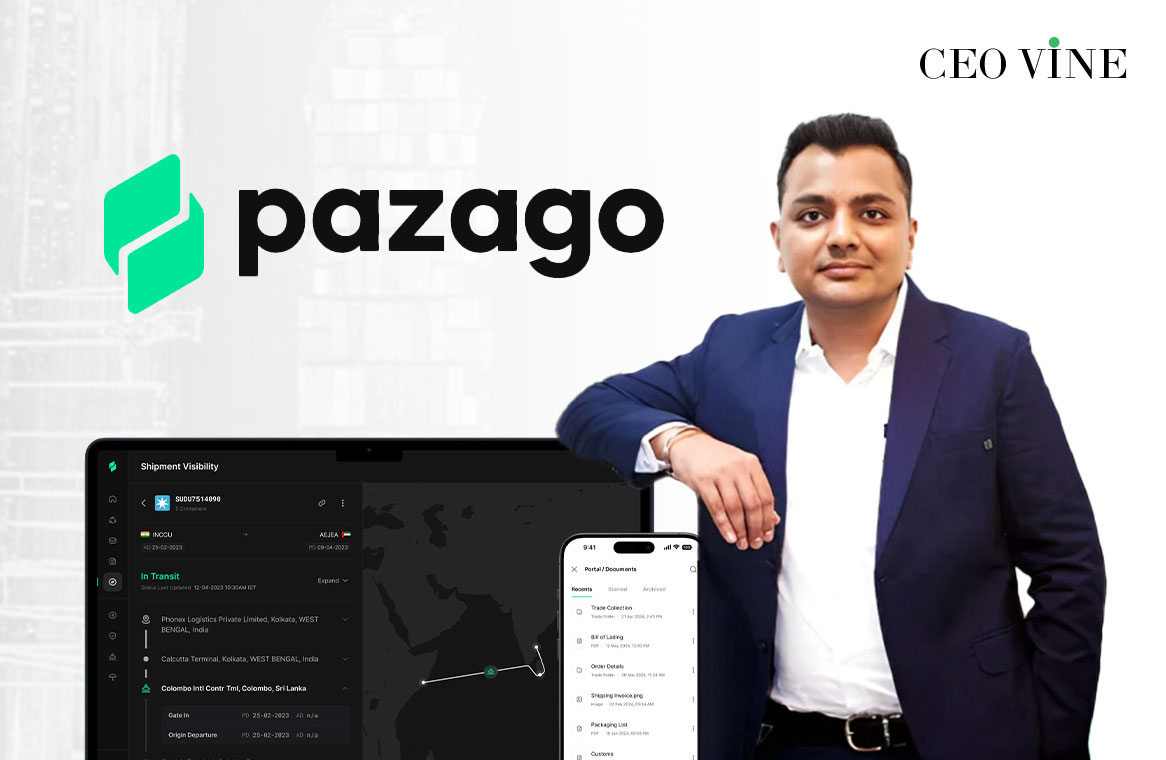
    Seeing these challenges firsthand, Nikhil Agrawal founded Pazago—a platform designed to make exports faster, smoother, and more reliable, helping businesses trade with confidence and scale without the usual roadblocks.

    Nikhil Agrawal – Shaped by Early Experiences

    Born into a business-driven family, where conversations over dinner often revolved around navigating market fluctuations and managing risks, Nikhil grew up with an entrepreneurial mindset. 

    His father, an entrepreneur himself, didn’t just teach him about numbers and profits but instilled in him the importance of resilience, execution, and trust in business.

    “I saw firsthand how relationships and execution matter more than just ideas,” Nikhil recalls. 

    My father always emphasized that trust is the foundation of business, and that clarity, consistency, and accountability drive long-term success.

    He pursued a Bachelor’s in Business Administration to build a strong foundation in strategy and finance.

    But it was his Master’s in Computer Science that truly helped him bridge the gap between business challenges and technology-driven solutions.

    Mastering Startups 

    Before founding Pazago, Nikhil’s journey took him to Silicon Valley, where he witnessed firsthand how technology could revolutionize industries.

    He began his career as a software engineer at Credit Karma, where he experienced the power of data-driven decision-making. This exposure reinforced his belief that technology, when leveraged effectively, could drive efficiency and innovation at scale.

    Eager to push boundaries, Nikhil then co-founded Alinea, an investing app designed for Gen Z. But he wasn’t just building an app—he was racing against time.

    In just 31 days, he led product development, creating a platform that quickly gained traction, achieving an impressive 30% month-over-month growth.

    Securing a Y Combinator spot on the first attempt was a milestone, but the real lesson came from the journey itself.

    Learning from his mentors, he realized that success isn’t just about having a great idea—it’s about execution, moving fast, and solving real problems better than anyone else.

    Also Read | Meet Radhika Rajpal, Founder of India’s First Vitamin Patches Brand Patch Up Health

    The Birth of Pazago

    The idea for Pazago took shape through Nikhil’s conversations with exporters, where he repeatedly heard the same frustrations—lack of real-time shipment visibility, quality issues without structured resolution processes, and a trade environment full of inefficiencies and intermediaries. 

    These recurring challenges made it clear that the industry needed a smarter, more transparent solution—one that Pazago was built to provide.

    “Global trade was unnecessarily complex, unpredictable, and filled with friction. Exporters were constantly playing defense,” he says. “That’s when I realized the industry needed a fundamental shift—from reliance on relationships and manual processes to operating with data, automation, and process discipline.”

    Building Pazago wasn’t easy. The fragmented export-import industry had varied workflows, so Nikhil and his team spent months studying exporters’ processes to ensure the platform was flexible. 

    They developed API integrations to automate data flows, enabling seamless, real-time supply chain visibility.

    “Adapting to industry nuances while maintaining a scalable tech framework was key to overcoming our early hurdles,” he shares.

    Traveling across the world gave him a unique lens on business. In Silicon Valley, he saw how technology could drive efficiency at scale.

    London’s structured financial systems highlighted the power of process-driven economies.

    Back in India, he witnessed the unmatched resilience and adaptability of businesses navigating complex trade environments. 

    These experiences shaped Pazago’s core vision—bringing structure to exports without compromising the agility that businesses need to thrive.

    Today, Pazago integrates real-time updates, AI-driven alerts, and seamless API connections, ensuring a smarter, more efficient global trade ecosystem.

    “We’re turning exports from a reactive process into a proactive, data-driven operation,” he says.

    Looking ahead, he sees AI and blockchain transforming global trade. “AI will predict disruptions, optimize supply chains, and automate decisions. Blockchain will enhance trust with secure, immutable transactions. 

    Together, they’ll make trade faster, more efficient, and reliable.”

    His leadership philosophy revolves around ownership, speed, and bold thinking. “Every team member should feel like a stakeholder. We move fast, iterate, and take calculated risks. True innovation comes from challenging the status quo.”

    Changing the Playbook

    Under his leadership, Pazago has grown rapidly, with a strong revenue model and increasing transactions.

    While financials remain undisclosed, Nikhil is clear: “We are on track to scale Pazago into a billion-dollar trade infrastructure within five years, supporting thousands of exporters.”

    But for him, success isn’t just about money. “True success is when Pazago helps exporters operate with certainty, scale efficiently, and unlock growth. Wealth is a byproduct of creating something meaningful.”

    In the next decade, he envisions Pazago as the go-to operating system for global trade.

    “Our mission is to eliminate friction in exports, making global trade as seamless as e-commerce.”

    Harmony Between Work, Life, and Growth

    Despite his intense focus on work, Nikhil values balance. “I prioritize what truly matters, delegate effectively, and create mental space for clear thinking.” He enjoys deep conversations with founders and exploring new business models.

    Books have shaped his mindset—The Hard Thing About Hard Things for startup leadership, Zero to One for innovation, and The Almanack of Naval Ravikant for leverage and long-term thinking.

    For aspiring entrepreneurs, his advice is clear: “Execution beats ideas. You win by moving fast, staying adaptable, and solving real problems better than anyone else.”

    As he builds Pazago into a global leader, he remains driven by purpose. “Problems will always exist, but they should be different ones, and we should be solving them differently. That’s what keeps me going.”