Category: Startups

  • How High Time Foods Is Building a Two-Year Shelf-Life Plant Protein for the World

    How High Time Foods Is Building a Two-Year Shelf-Life Plant Protein for the World

    In most parts of the world, protein is not just a nutritional conversation, it is a logistics problem.

    While plant-based innovation has surged across the US and Europe, much of it has been built for refrigerated supermarket shelves and premium urban consumers. But what about kitchens without reliable cold storage? What about institutions, caterers, and restaurants that operate in high-temperature, infrastructure-constrained environments?

    That question led to the birth of High Time Foods in 2022.

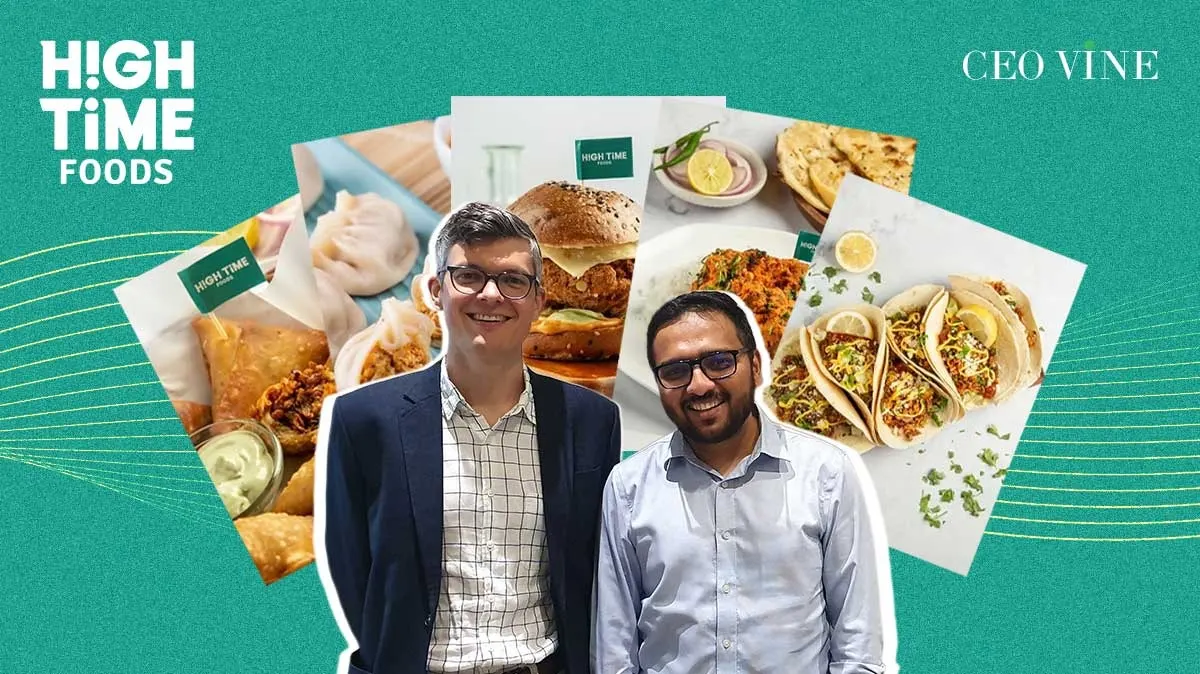
    Founded by Aakash Shah (Co-Founder & CEO) and Damian Felchlin (Co-Founder & COO), both graduates of Babson College, the startup is building a shelf-stable, plant-based protein platform designed not for novelty, but for practicality.

    “We realised that protein access is impossible without exceptional taste. Sustainability and logistics matter, but if it doesn’t taste good, nothing else matters,” says Aakash.

    From MBA Classrooms To Commercial Kitchens

    The idea took shape during their MBA at Babson, where both founders were immersed in entrepreneurship and food systems innovation. Aakash had prior experience in food technology sales and had launched and exited a cloud kitchen venture. Damian brought global trade expertise, having worked with major food importers in the US and served as a trade commissioner for the Swiss government, helping food brands enter North America.

    What united them was a shared frustration: most alternative proteins depended heavily on cold-chain logistics and had limited applications, like burgers or nuggets, but food is so much more.
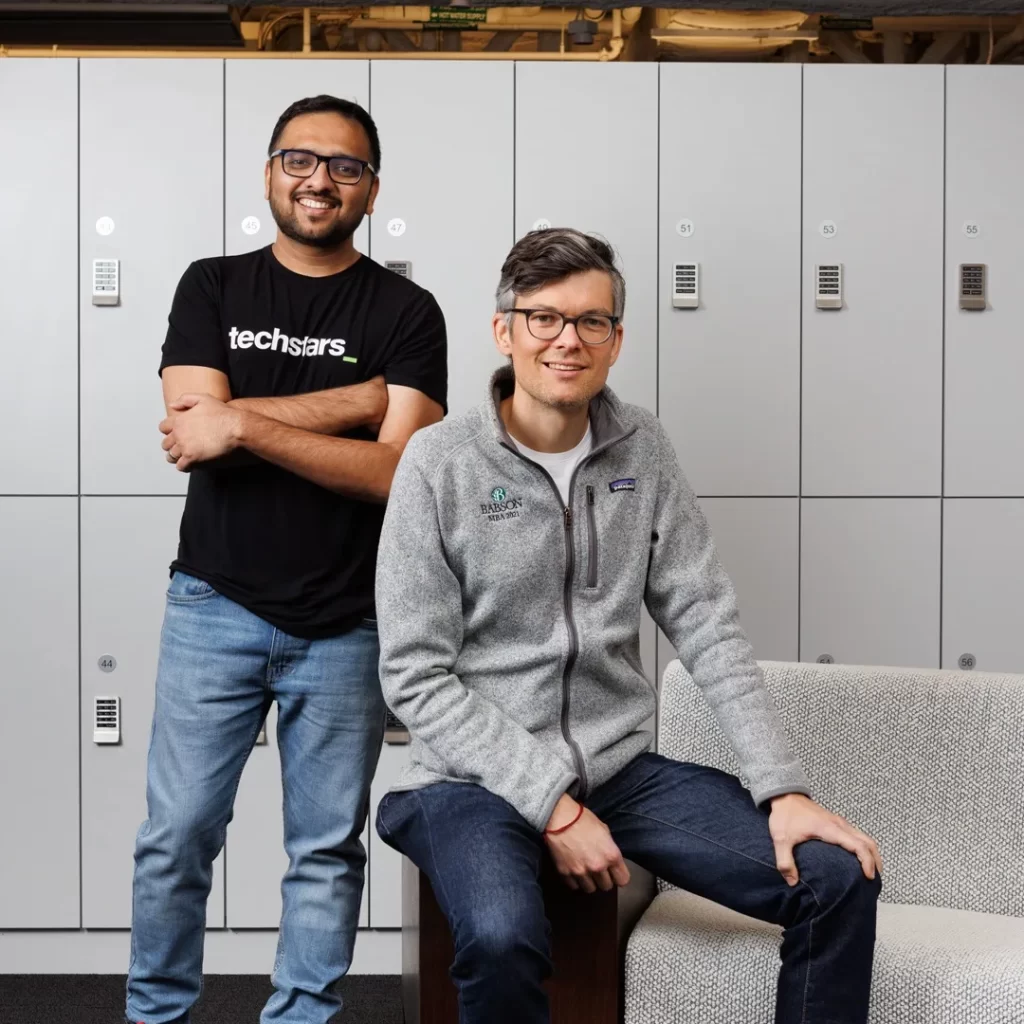
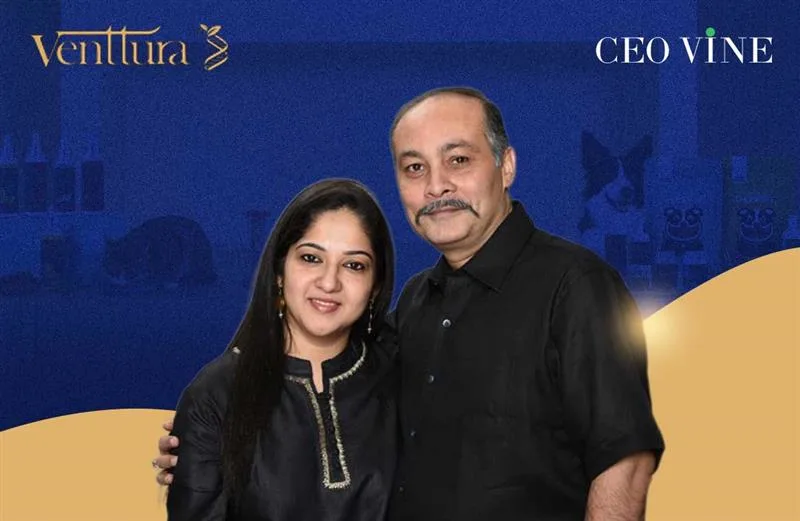
    Aakash Shah (Co-Founder & CEO) and Damian Felchlin (Co-Founder & COO)

    During his MBA, Aakash worked with the Good Food Institute and interviewed over 50 chefs and kitchen operators across India. The feedback was consistent, taste, affordability, versatility, and shelf life were non-negotiable.

    Winning Babson’s annual startup pitch competition along with a $20,000 prize, allowed him to invest in early R&D. The breakthrough? A dehydrated, plant-based minced protein that requires no refrigeration and rehydrates in just two minutes.

    “When our first commercial production run was completed, we literally jumped in the air,” Damian recalls.

    Building A Protein That Travels Like Rice, Cooks Like Meat

    The brand’s flagship product is a dry, plant-based minced protein blend made from pea, wheat, and mung bean proteins.

    Because the product contains no water, it offers a shelf life of up to 2 years and requires zero refrigeration, significantly reducing storage and transportation costs while minimising food waste. This shelf-stable format also enables seamless global distribution without dependence on cold-chain infrastructure, making it particularly viable for emerging and high-temperature markets.

    Once rehydrated with water and oil, it functions like a versatile protein base that can be shaped and cooked into dishes ranging from samosas and kebabs to tacos, momos, patties, curries, and pasta fillings. Each serving delivers approximately 19 grams of protein, comparable to chicken.

    Unlike many plant-based startups focused on mimicking meat, High Time Foods positions itself differently.

    “We are not a meat alternative brand. We are building a foundational protein ingredient — something chefs can adapt to any cuisine for both veg and non-veg consumers/eaters,” says Aakash.

    This B2B-first model allows them to serve restaurants, institutional kitchens, food manufacturers, and HoReCa operators at scale.

    Early Traction Across The US And India

    Since launching commercially in 2022, the company has supplied its products to foodservice operators and manufacturers across the United States, including partnerships with the largest US food distributor, Sysco.

    In 2025, the brand expanded aggressively into India, relocating its headquarters to Bengaluru after closing a $1.2 million seed round led by Avaana Capital. Earlier, it had raised $0.55 million through the Techstars accelerator program.

    Today, the company serves over 30 B2B clients across India and the US.

    Among its notable collaborations:

    • Vasantha Bhavan, a 65-year-old vegetarian restaurant chain
    • Birdy’s, which recently launched four high-protein dishes using High Time’s minced protein

    Before India expansion, the company had already validated demand in US college dining halls, national burrito and dosa chains, and a leading momo manufacturer.

    The startup is also exploring expansion into West Africa — markets where shelf stability is not just convenient but essential.

    Engineering For Infrastructure Gaps

    The plant-based protein market globally is expanding rapidly, driven by sustainability awareness and shifting consumer preferences. However, most products still rely on frozen or refrigerated formats, limiting accessibility in emerging economies.

    High Time Foods is solving this structural bottleneck.

    By eliminating cold-chain dependence, the company reduces emissions, cuts logistics costs, and improves affordability. Its low-moisture extrusion-based processing ensures texture and functionality even in spice-heavy, high-moisture cuisines.

    “Shelf stability isn’t a feature for us, it’s the foundation. It opens markets that conventional alt-protein products simply can’t reach,” Damian explains.

    The startup also offers an allergen-free variant (no wheat, soy, or nuts), expanding usability across institutional settings.

    Scaling With Discipline

    With a lean 10-member team, the brand is pursuing a phased expansion strategy focused on deepening its HoReCa penetration across India, expanding into institutional kitchens and food manufacturing partnerships, and exploring quick-commerce channels.

    The company is also introducing new formats such as protein chunks and finished products, including high-protein Manchurian balls and momos.

    Pricing remains a core differentiator. The brand aims to compete directly with conventional proteins like chicken or paneer by leveraging shelf stability and logistics savings.

    “In markets like India, affordability is as important as innovation,” says Aakash.

    A Human Moment Behind The Mission

    Beyond numbers and funding rounds, some milestones remain deeply personal.

    One Middle Eastern restaurant owner adapted her grandmother’s seekh kebab recipe using High Time’s protein base. When she tasted the final dish, she was moved to tears.

    “That moment reminded us why we’re building this. Food is emotional. If we can preserve taste and tradition while making protein more accessible, that’s real impact,” Damian shares.

    The Road Ahead

    In the next 2–3 years, the brand aims to become a go-to plant protein platform across India and key global markets. Expansion into emerging economies, deeper B2B partnerships, and continued product innovation remain central to its roadmap.

    But the long-term ambition goes further.

    “We are building products for a future in which nutritious plant-based protein is affordable and accessible to everyone in the world,” says Aakash.

    In a category crowded with retail-focused meat alternatives, High Time Foods is betting on something less glamorous but far more scalable for both veg and non-veg eaters.

    If protein is one of the defining food challenges of this decade, the brand  is positioning itself not as a trend-driven brand, but as a foundational solution.

    And perhaps, as the founders believe, it really is high time.
  • Inside iGowise Mobility’s Mission To Rebuild Urban Mobility For India’s Most Underserved Riders

    Inside iGowise Mobility’s Mission To Rebuild Urban Mobility For India’s Most Underserved Riders

    India’s electric vehicle (EV) story is often told through speed, range, and charging infrastructure. But beneath the headline numbers lies a quieter truth: for millions of Indians, everyday mobility remains intimidating rather than empowering. Two-wheelers dominate urban transport, yet large sections of the population like women riders, senior citizens, first-time users and those uncomfortable with balance-heavy scooters continue to opt out of independent mobility altogether.

    It was this gap that Bengaluru-based iGowise Mobility (iGo) set out to address.

    Founded in 2020, iGo is not trying to build just another electric scooter. Instead, it is creating an entirely new category of vehicles, self-balancing, leaning electric trikes designed to make daily commuting safer, more stable and significantly more accessible, without losing the agility of a two-wheeler.

    “Urban mobility in India has been exclusionary for far too long,” said Sravan Kumar Appana, cofounder and CEO of iGo Mobility. “We saw people treating daily travel as a source of stress rather than freedom. That’s where the idea of iGo truly began.”

    Rethinking Two-Wheelers From The Ground Up

    India’s light EV market is among the fastest growing globally, driven by rising fuel costs, policy incentives and increasing environmental awareness. But most electric two-wheelers today are built as engine-to-battery replacements, carrying over the same balance challenges, riding risks and learning curves.

    For iGo, that approach felt insufficient.

    The founding team Suresh Babu Salla and Sravan Kumar Appana came together with backgrounds spanning hardcore engineering, customer-centric product design and high-technology-driven startups. What united them was a shared conviction that EVs should not merely electrify existing designs, but fundamentally rethink vehicle architecture for Indian roads and riders.

    The idea initially began as an exploration into stability-enhanced scooters. But as early prototypes evolved, it became clear that this was not an incremental upgrade, it was a new mobility platform altogether.

    “There were no reference designs, no suppliers, and no rulebooks for what we were building in the domestic market,”Sravan said. “We weren’t improving a category — we were creating one.”

    Engineering Stability Into Everyday Riding

    At the heart of iGo’s innovation lies its proprietary self-balancing and anti-topple technology. Unlike conventional scooters that rely entirely on rider balance, iGo vehicles can actively stabilise themselves at low speeds and standstill at the click of a button, while allowing natural leaning during turns at higher speeds.

    In simple terms, the vehicle balances itself when the rider needs it most — at traffic signals, while manoeuvring tight turns, or on uneven roads without the fear of rolling over.

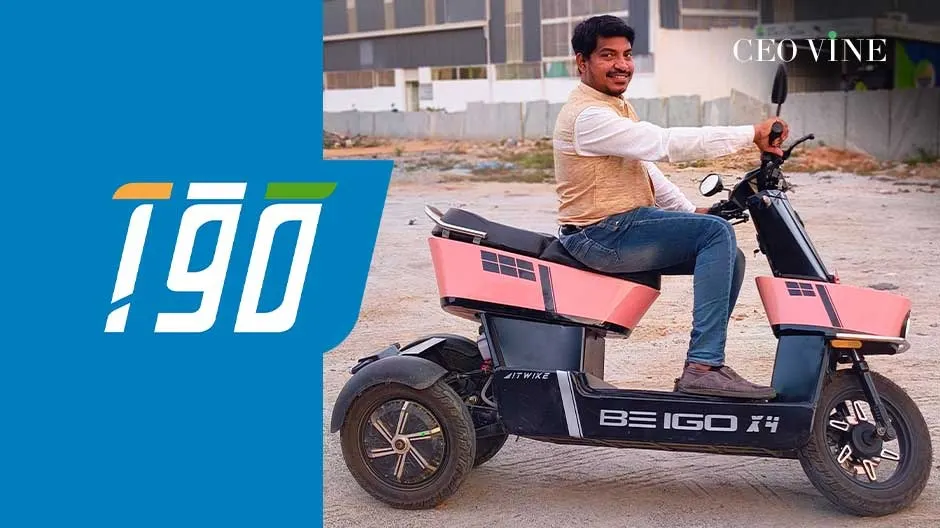
    Its flagship product, the BeiGo X4, is India’s first practical self-balancing leaning electric trike built specifically for real-world Indian conditions. The front wheels tilt like a scooter during turns, while the rear wheel architecture provides added stability and unparalleled road-grip— placing it squarely between a two-wheeler and a three-wheeler.

    “Even novice riders tell us it feels as easy as riding a bicycle, but as reassuring as sitting in a small car,” Sravan said.

    The R&D journey behind the BeiGo X4 spanned over five years, involving physics modelling, mechanical design, control algorithms and extensive road testing. Early prototypes focused on proving the physics of tilting and balance before progressing into manufacturable vehicle architecture, safety systems and long-term durability.

    Building Intelligence Into Mobility

    Beyond mechanical innovation, iGo vehicles are designed as connected, intelligent platforms. Features such as IoT-enabled diagnostics, GPS tracking, theft alerts, ride analytics and OTA updates allow the company to continuously improve performance even after delivery.

    These smart systems also play a role in safety and maintenance, enabling predictive servicing and reducing downtime — a critical factor for daily commuters and commercial riders alike.

    Looking ahead, iGo is also working on auto-summoning light vehicle technology, aimed at assisted repositioning, fleet operations and future shared mobility use cases. While still a long-term initiative, it reflects the company’s ambition to move beyond vehicles and build intelligent mobility ecosystems.

    Who iGo Is Built For

    While urban commuters form a core audience, iGo’s early traction has come from a diverse set of users — women riders, senior citizens, first-time two-wheeler users, and increasingly, rural utility riders & micro-entreprenuers.

    The On-demand self-balancing system removes the immense fatigue of balancing the entire vehicle at low speeds, while ergonomic seating, a low step-through design and predictable handling provide the level of comfort and confidence for the rider unimaginable in the scooter space.

    “For many riders, confidence to conquer the potholes matters more than top speed,”  said. “Once that fear disappears, mobility becomes liberating.”

    From Pilots To Pre-Seed Funding

    Currently in early commercialisation, iGo has focused on controlled deployments, pilot programs and pre-orders, rather than aggressive volume ramp-ups. Initial adoption has been strongest in South and West India, regions with high two-wheeler dependence.

    As of September 2025, the startup raised INR 92 million (₹9.2 crore) so far in angel and  pre-seed funding, led by ISB Angels, 888VC and Guptaji VC. The capital has been deployed towards advanced R&D, regulatory certifications, proto tooling, supplier development, customer support infrastructure for initial scale.

    The company plans to raise a larger seed round in 2026 to support mass production tooling, service & dealer network expansion, and next-generation products.

    Manufacturing currently follows a lean, semi-in-house model, supported by a fully indigineous scalable vendor partnerships allowing modular growth aligned with demand.

    Positioning In A Crowded EV Landscape

    Rather than competing head-on with conventional two-wheeler OEMs, iGo operates in a new category between two-wheelers and three-wheelers. Its differentiation lies not in speed or styling, but in stability, safety and accessibility.

    The company also actively engages with B2B partners, particularly in last-mile delivery and utility operations where rider fatigue, uptime and safety directly impact productivity. While demand from big eCommerce players like  Tata BigBasket, Porter, Hala Mobility and Elektric Express signal growing interest from commercial ecosystems, iGo is focusing on specific niche logistics such as Neera sip, health drink supplier, laundry service, toys delivery, pharma delivery and courier service.

    “Our competition isn’t another scooter brand,” Sravan noted. “It’s the idea that personal mobility has to be difficult or intimidating.”

    The Road Ahead

    India’s EV market is gradually shifting from subsidy-driven adoption to value-led purchasing, with increasing emphasis on safety, durability and total cost of ownership. In that transition, stability-enhanced vehicles could become a natural evolution rather than a niche.

    Over the next 1–2 years, iGo plans to scale BeiGo X4 deployments, strengthen dealership and service networks, and launch additional variants for family, shared and light commercial mobility.

    Longer term, the company aims to establish itself as a global reference for safe personal mobility platforms, expanding into multiple intelligent mobility categories and international markets.

    “By 2030, our goal is to move millions every day,” Sravan  said. “Not just by building more vehicles, but by building platforms that make confident mobility accessible to everyone.”

    As urban density rises and rider demographics diversify, iGo’s bet on safety-first engineering may well redefine how India thinks about everyday movement — not as a test of balance, but as a basic right.

  • How Venttura Bioceuticals Is Strengthening India’s Growing Pet Healthcare Market

    How Venttura Bioceuticals Is Strengthening India’s Growing Pet Healthcare Market

    India’s pet care industry has crossed an estimated $3.6 billion in 2024 and projected to hit $10 – $24 billion by 2032 due to rising pet ownership, greater focus on preventive healthcare and the increasing adoption of long-term nutrition. While food, grooming and accessories account for a major share of the sector, the fastest expansion is happening in pet health supplements, a category where structured, species-specific formulations remain limited.

    Startups like Supertails, Wiggles, Heads Up For Tails, Drools and newer startups have helped build awareness, but most offerings still rely on generic blends rather than scientifically designed solutions tailored individually for dogs, cats and horses.

    This is the gap where Venttura Bioceuticals has positioned itself as a health-focused brand building condition-specific, premium quality,  pharma-standard supplements designed for the biological needs of each species.

    The Founding Journey: From Observations to a Focused Brand

    Many chronic pet health issues continued to persist despite improved veterinary care, primarily because both pet parents and vets lacked reliable, species-specific nutritional solutions. Amid these gaps, founders Rajas Kulkarni and Uday Kulkarni felt there was room for a more structured, research-informed supplement ecosystem.

    Founded in 2013, Venttura Bioceuticals began with extensive discussions with vets, breeders and pet parents across metro and semi-urban markets. The founders’ early objective was to build a company centered on preventive and supportive nutrition, supported by regulated manufacturing, controlled ingredient sourcing and thorough documentation, areas that were inconsistent across the pet wellness segment.

    “We understood early that supplements cannot be treated like treats nor should they be considered medicines,” the founders shared during their internal discussions. “They need the same discipline and testing standards expected in human nutrition.”

    A Clearly Defined Product Philosophy

    Venttura operates through a manufacturing and quality framework rooted in pharma standards. All its products are made in GMP and ISO-certified plants, using pharma and human-grade ingredients backed with COAs from reputed vendors.

    According to the company, every batch is recorded, and control samples are retained for quality verification. Each formula undergoes third-party lab testing for contaminants, microbial load and ingredient accuracy.

    As the founders explain, their products do not fall under the purview of FSSAI because the compositions are designed as specialised supportive veterinary formulations rather than food-based products.

    The company’s offerings span three distinct species-specific ranges, each designed around biological and metabolic needs.

    Petraceuticals for Dogs

    This is Venttura’s largest and most comprehensive range, covering areas such as skin and coat health, joint and mobility support, detoxification, anaemia management, general wellness, immunity and multi-nutrient blends. The company states that this remains its core revenue driver, having grown 6x in recent years.

    Cat-Specific Range

    Venttura Bioceuticals is among the first Indian brands to build an entirely cat-focused supplement line. This includes products for liver and bladder health, skin and coat improvement, immune support and overall wellness, formulations crafted specifically for feline metabolism.

    Equiceuticals for Horses

    This range includes all-in-one growth and performance formulations, stamina and recovery blends, hoof and joint support, liver and digestive aid, lactation support for mares and omega-rich products. The segment targets performance-led and long-term equine wellness needs.

    Across all categories, Venttura Bioceuticals maintains a focus on condition-led, species-specific nutrition rather than broad-spectrum blends.

    Where Venttura Stands Today: Numbers & Growth

    The company reports that it has served over 1 million pet parents so far, with an internal target of reaching 5 million in the coming years. Over the last two years, Venttura states that it has seen an overall sales growth of 6–7x across channels.

    Online Business

    Venttura sells through its own website and marketplaces including Amazon, Flipkart, Snapdeal and Supertails. As per the company’s internal data, online sales have been growing at nearly 30% month-on-month. The brand also notes a 4x jump in volumes for its best-performing SKUs and a steady rise in repeat purchases across platforms.

    Offline Business

    Historically, Venttura operated primarily as a B2B brand and continues to expand across veterinary clinics, pet stores, chemists and breeders. The company avoids supermarket and grocery retail to maintain product category discipline.

    The startup claims their offline sales have grown by 102%, largely driven by veterinary recommendations and stronger distributor networks.

    This year, Venttura prioritised deeper penetration in existing regions instead of geographic expansion. The focus remained on strengthening veterinary relationships and expanding digital presence for direct consumer engagement.

    The company shares that it has raised funding exclusively through private equity and is now looking to secure additional capital in the near future to scale its operations, broaden its product categories and expand into global markets across Asia, Europe and the US.

    https://app.ceotrail.com/how-pawzndogz-quietly-built-a-brand-for-pet-play/

    Venttura’s Position in a Competitive Market

    As larger players increase their presence in supplements, Venttura differentiates itself through its species-specific approach, its holistic formulations using novel ingredients, pharma-style manufacturing discipline, long-term condition-based solutions and a hybrid B2B + D2C model. According to the founders they don’t compete on just having products; they compete on science, quality and getting visible results with their supplements.

    The founders note that preventive nutrition is steadily gaining acceptance, with more pet parents shifting from reactive, emergency-based purchasing to long-term supplementation guided by vets.

    The Road Ahead

    India’s pet population is projected to cross 31 million by 2025, with supplements expected to form one of the fastest-growing segments. As awareness around condition-based, long-term nutrition increases, structured and science-backed brands are likely to shape market evolution.

    Venttura’s roadmap includes expanded digital D2C channels, expanding their product portfolios and driving deeper community interaction. Venttura Bioceuticals will soon be launching a first of its kind dog food in the market after having completed a series of market trials.

    The founders, Rajas and Uday believe that long-term impact will depend on educating pet parents, building responsible supplementation habits and maintaining strong collaboration with veterinary professionals and all stakeholders in the pet care industry.

  • SkyySkill Academy: A Homegrown Skilling Startup Preparing India’s Future Workforce

    SkyySkill Academy: A Homegrown Skilling Startup Preparing India’s Future Workforce

    As industries shift toward electric mobility, renewable energy, automation, and connected technologies, the gap between classroom learning and industry expectations continues to grow. Companies want talent that can work on real systems. Colleges want partners who can bring practical learning into their curriculum. Students want skills that convert into jobs.

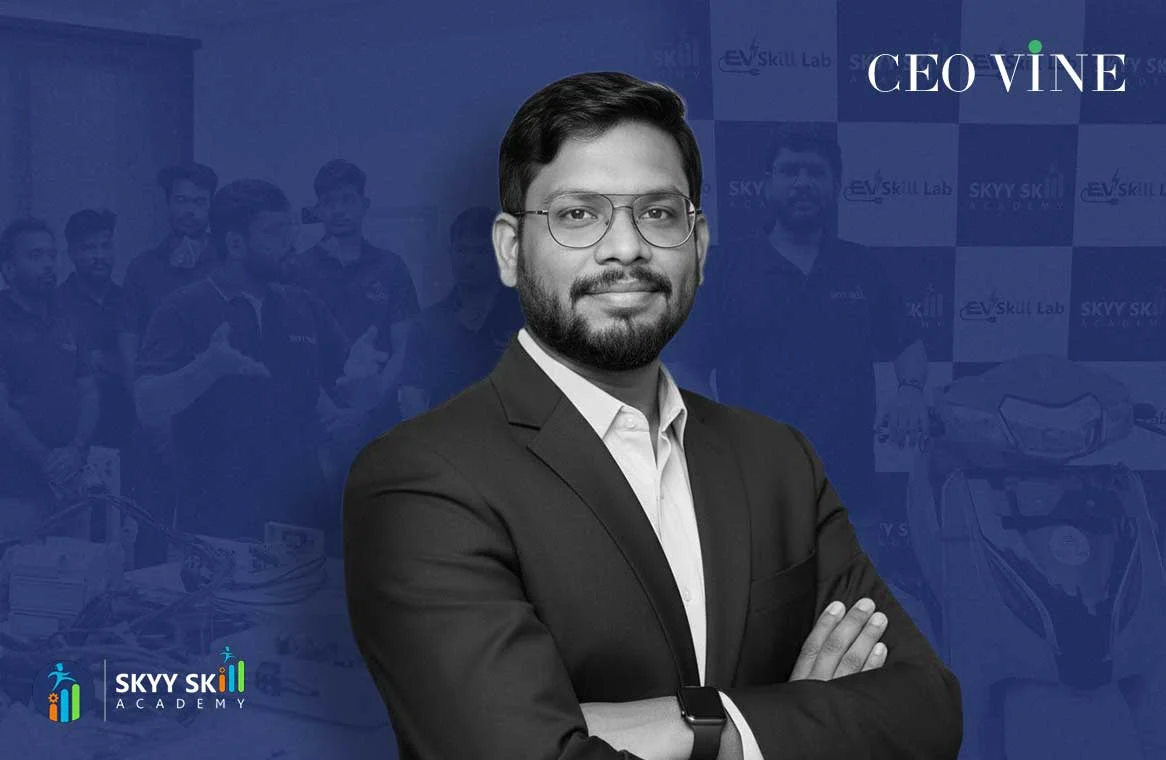
    SkyySkill Academy, founded by Himansu Sekhar Panda, is building its place in this landscape. Headquartered in Hyderabad, the company focuses on training that happens through real labs, equipment, and hands-on engineering work rather than theory-heavy online modules.

    Where the Journey Began

    Himansu grew up in a small town in Odisha. He often saw students complete engineering without getting real exposure to equipment, tools, or industry systems. The disconnect stayed with him through his own education and early career.

    “The problem was never talent,” he says. “It was access. Students needed systems to work on, not just lectures to listen to.”

    His early years working with colleges, companies, and students made the issue more visible. The idea was not to launch a training company, but to create an environment where learners could assemble, test, build, and understand real systems.

    What started in 2018 as Skyy Rider Institutions set up in a small rented room eventually shaped itself into SkyySkill Academy. The company was formally incorporated under Telangana ROC in 2023.

    A Model Built Around Real Systems

    The company’s core belief is that engineering must be experienced, not just studied. Learners work on EV powertrains, battery modules, solar setups, embedded controllers, CAD/CAE tools, and IoT applications.

    The Academy runs alongside SkyySkill Lab, its engineering and infrastructure arm that designs and manufactures labs and Centres of Excellence for institutions. This combined structure allows the team to introduce the Learn–Earn Program, where students take part in assembling and testing systems that later get deployed in colleges across India.

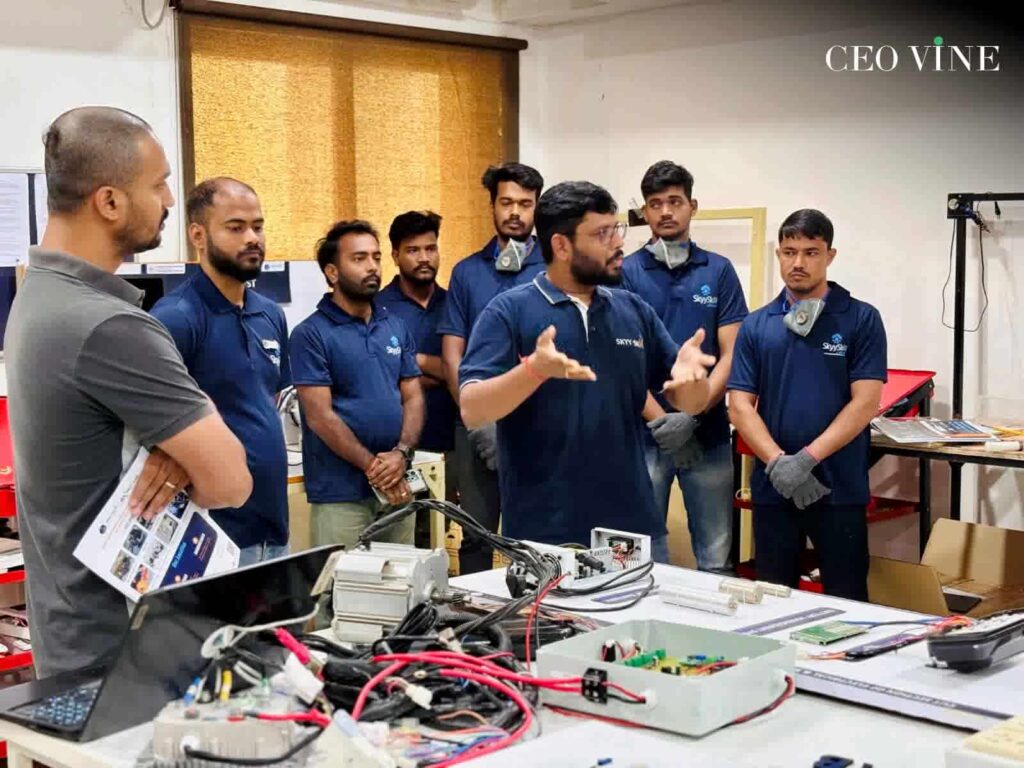
    Himanshu at his manufacturing unit explaining the technology to a client from Bosch
    Himanshu at his manufacturing unit explaining the technology to a client from Bosch

    “Our goal was not to replace colleges,” Himansu says. “It was to strengthen them. Students should not have to wait for a job to get industry exposure.”

    Building Credibility Through Demonstration

    In the early years, gaining trust was a major challenge. Institutions were hesitant to partner with a young company building advanced labs without a long track record.

    The turning point came when colleges began visiting the facilities. They watched students working on real EV drivetrains, digital-twin dashboards, battery management systems, robotics rigs, and embedded labs. Seeing the setup in action made the model easier to understand and helped SkyySkill secure its first large collaborations.

    From there, word of mouth and demonstrations drove growth. Today, the company has set up more than 60 Centres of Excellence, trained over one lakh learners, and worked with 200+ institutions across India. Its team has grown to more than 80 members.

    Institution Partnerships and Expanding Infrastructure

    SkyySkill Academy collaborates with IIT Guwahati, IIT Kanpur, MG Motor India, ASDC, ESSCI, and other industry bodies to keep its curriculum aligned with changing technologies. Inputs from EV manufacturers, renewable energy companies, embedded engineers, and academic partners are added into the training content every few months.

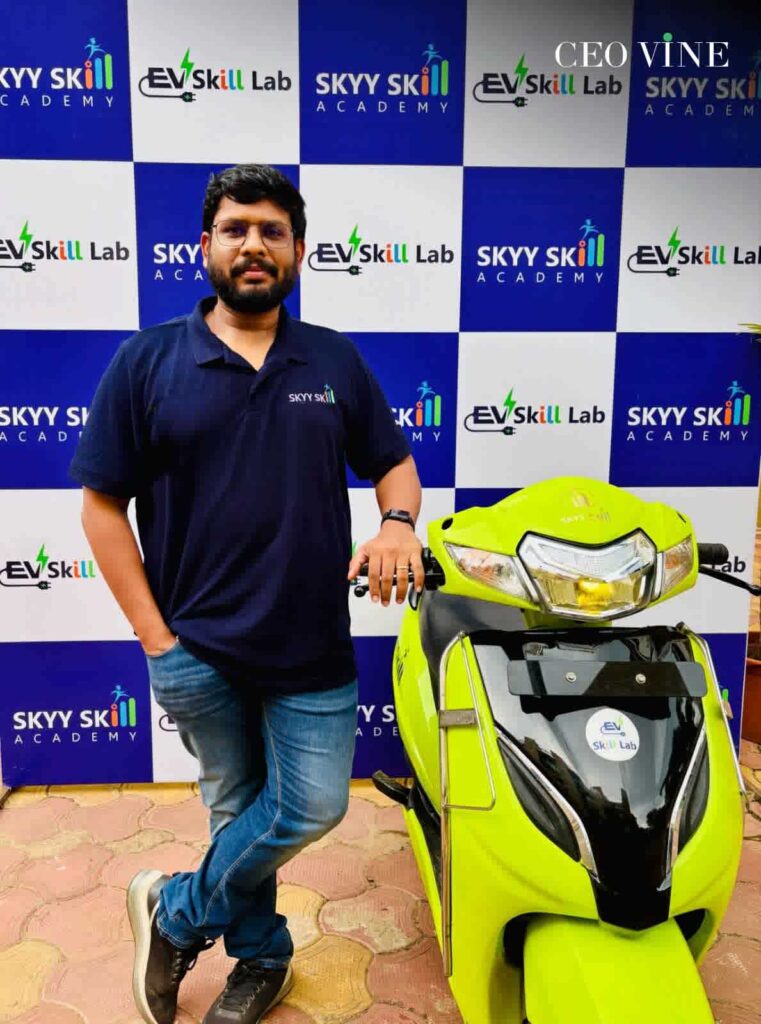
    Himanshu presenting a retrofitted EV 2-wheeler manufactured by Skyy Skill.
    Himanshu presenting a retrofitted EV 2-wheeler manufactured by Skyy Skill

    To support scale, the company introduced digital twins, AI-driven learning tools, and adaptive assessments within its LMS. These tools run parallel to hands-on sessions, allowing students to learn theory and practice together.

    A Structure With Two Divisions

    SkyySkill functions through its two verticals: SkyySkill Lab, which builds technology, labs, and CoEs, and SkyySkill Academy, which delivers training in EVs, Solar, IoT, Embedded Systems, Robotics, and other technologies.

    Revenue comes from lab deployments, institutional engagements, training programs, CSR projects, hiring partnerships, and consulting.

    A Founder Guided by Purpose

    Himansu often refers to the philosophy he shared in one of his talks, Passion, Perception, Persistence, Patience, Pursuit, and Purpose. These principles shape how the company operates and how the team approaches skilling.

    “The future workforce needs theoretical clarity and practical confidence,” he says. “Our job is to build the bridge that connects the two.”

    What Comes Next

    SkyySkill Academy is now working on advanced labs for hydrogen mobility, robotics, drones, smart grids, and AI-driven manufacturing. The team is also building hybrid learning systems that combine physical labs with AI tools and simulations.

    As India moves toward greener mobility and more technology-driven industries, SkyySkill aims to contribute to the talent pipeline by giving students access to real systems and real engineering, not just content on screens.

    SkyySkill’s story is not about competing with conventional education; it is about complementing it and giving students the confidence to handle emerging technologies. The company’s growth reflects a broader shift in Indian skilling toward practical, industry-connected training that prepares learners for what the market actually needs.

  • ABCD by Ritz7: How a No-Code Community Is Making Tech Skills Accessible for All

    ABCD by Ritz7: How a No-Code Community Is Making Tech Skills Accessible for All

    India’s technology landscape is shifting toward accessibility. No-code and AI automation tools are lowering entry barriers and enabling students, freelancers, founders and professionals to build digital solutions without traditional programming. Demand for practical, outcome-led learning continues to grow, yet structured pathways remain limited.

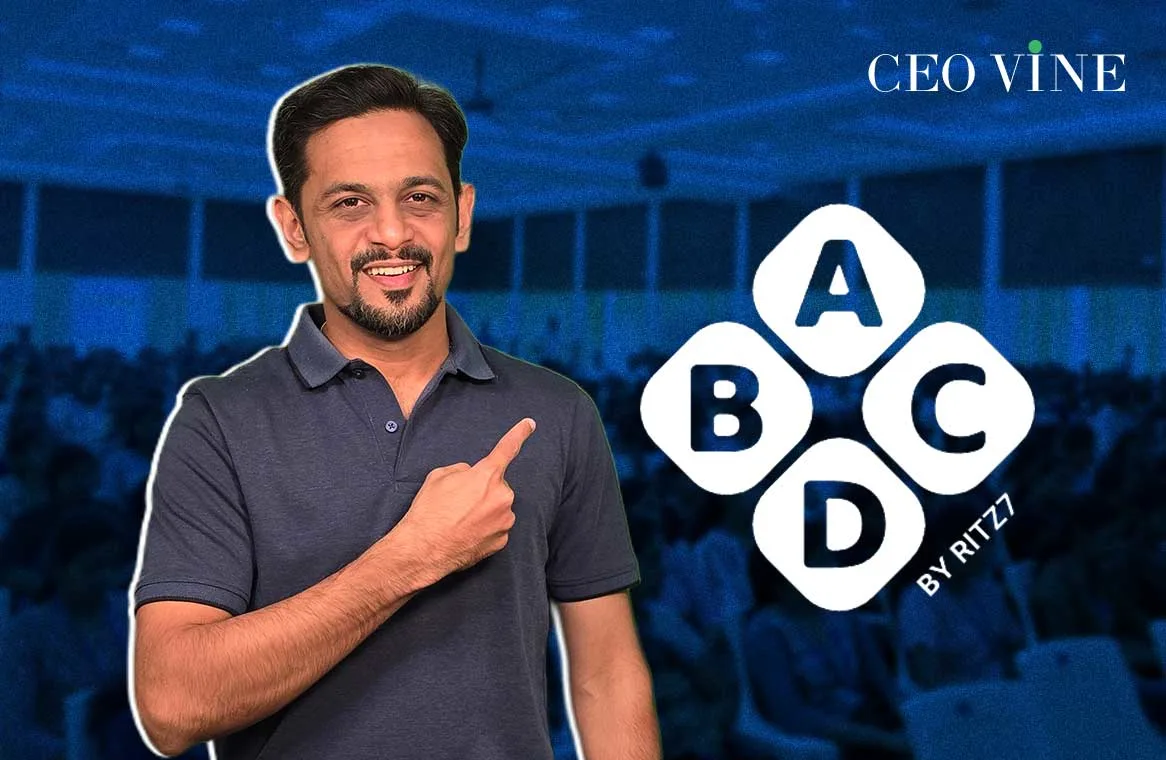
    This is the space in which ABCD by Ritz7, founded by Ritesh Hegde under Ritz7 Automations, found its purpose as a community-led learning ecosystem where people learn to design, develop and deploy real solutions using no-code and AI tools. ABCD, short for Anybody Can Design, Develop and Deploy has grown into a learning and community ecosystem focused on building real-world skills through no-code and automation.

    Ritesh understands this space closely. Before ABCD, he had already delivered more than 450 automation and no-code projects across 30 countries and trained upwards of 15,000 learners through platforms such as GrowthSchool, Buildschool and 100x. For him, the rise of no-code signaled something larger, a shift in who gets access to technology.

    “There are people with ideas, ambition and clarity, but they don’t have coding skills. No-code removes that barrier. ABCD became our way of making tech possible for anyone willing to learn,” he says.

    How ABCD Took Shape Inside Ritz7

    In early 2024, Ritesh created a small knowledge-sharing group under Ritz7 Automations where he discussed tools like Bubble, n8n and early AI agents. The sessions were informal, often built around real client problems or simple workflows. But the response made it clear there was a larger need.

    Participants wanted more guidance, more practice, more community. The group grew steadily as students, professionals, freelancers and early-stage founders began showing up to understand how they could build or automate without coding. Within months, the informal initiative developed into a structured program. Cohort-based learning tracks, weekly challenges, college workshops and community activities followed.

    This growth was also shaped by Ritesh’s belief that learning has to be hands-on to create impact. 

    “People don’t want theory. They want to build something that works,” he says.

    A Community That Learns by Building

    Today, ABCD by Ritz7 functions less like a traditional edtech platform and more like a community-led learning movement. The platform attracts a diverse group of students preparing for tech-driven careers, freelancers building automation services, founders working on MVPs and professionals trying to streamline their workflows with AI and no-code tools.

    The community has crossed 1,000 members since launch, growing through WhatsApp groups, workshops, structured learning paths and word-of-mouth referrals. What keeps the community active is the culture of continuous building. There are weekly office hours, challenge-based assignments, live sessions and public showcases where members demonstrate what they have built.

    One of the standout initiatives is the 1000-Day AI Challenge, which has already crossed 350 days. Members participate daily, share learnings, experiment with new tools and gradually build confidence in AI automation. The challenge has turned consistency into a habit and helped learners ship their first functional systems without waiting for formal certifications.

    ABCD’s reach expanded further through its partnerships with educational institutions. In one of its largest engagements, the team trained more than 1,600 students in a single college, introducing them to no-code tools and showing how these skills open up freelance and career opportunities.

    What ABCD by Ritz7 Offers

    ABCD’s programs revolve around helping people build apps, automate workflows and use AI tools with guided practice. The sessions are simple, structured and solution-oriented. Instead of teaching abstract concepts, the team walks learners through real business problems, breaking them down into buildable modules.

    The brand’s consulting arm strengthens the model. Ritz7 Automations works with businesses across the globe to build automation systems, internal tools and operational workflows. The experience gained through 450+ projects has allowed the ABCD learning framework to stay aligned with actual industry demand.

    A Bootstrapped Company With Steady Growth

    ABCD by Ritz7 is fully bootstrapped and no external funding has been raised. Founder Ritesh confirms the team does not plan to seek investment.

    The business operates on a hybrid model involving workshops, structured training programs, consulting services, institutional partnerships and upcoming membership layers. Its sustainability is built on lean operations, high-quality delivery and a clear focus on practical outcomes.

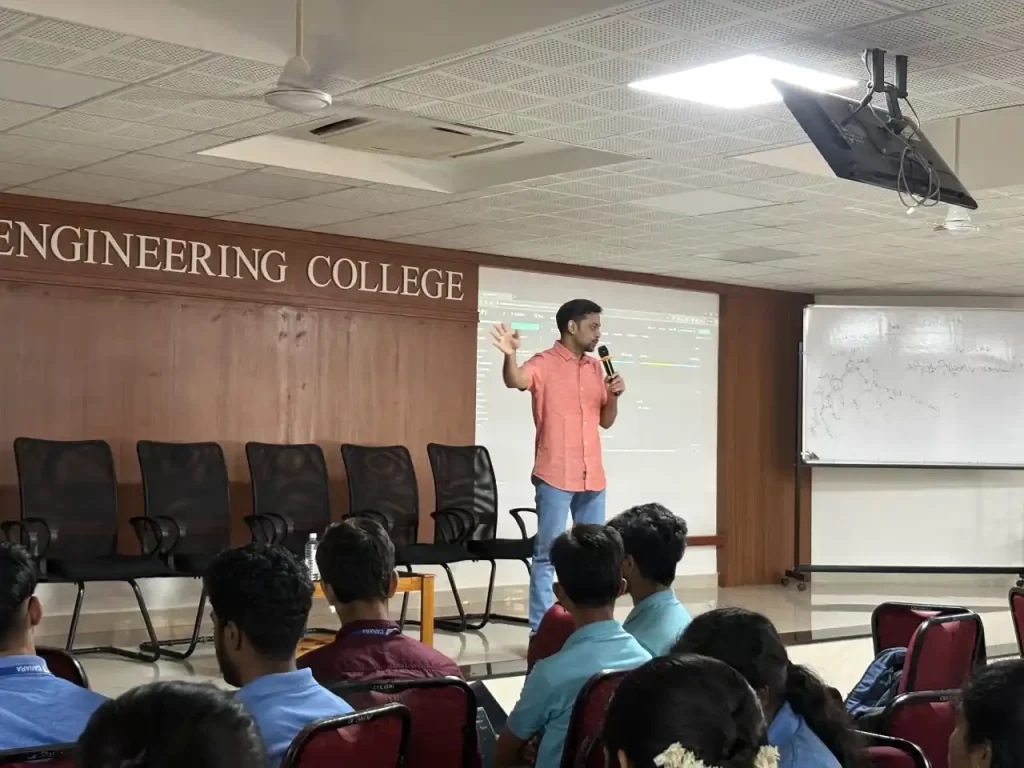
    Ritesh Hegde -  conducting workshop at Canara Engineering College
    Ritesh Hegde – conducting workshop at Canara Engineering College

    ABCD by Ritz7 has trained more than 15,000 learners through external collaborations, completed automation projects for clients in more than 30 countries, supported over 500 individuals and businesses through no-code solutions and expanded its community to 1,000 active members. Retention remains strong, with 85–90% of participants returning for more sessions, challenges or advanced tracks.

    Overcoming Challenges in the Early Phase

    Despite its momentum, building awareness for no-code wasn’t easy. Many traditional businesses initially believed automation required full-scale coding. Convincing them otherwise required a different approach.

    The team relied on demonstrations and case studies, showing real systems built on no-code platforms. Once clients saw functional internal tools or automated workflows running smoothly, perception shifted.

    Building credibility in the education segment came with its own learning curve, but strong collaborations with major platforms like GrowthSchool and Buildschool helped cement ABCD’s identity as a practical, industry-focused learning ecosystem.

    The Larger Market Context

    India is at the beginning of what many believe will be a significant no-code shift. Automation is becoming essential for companies trying to reduce operational friction. Early-stage founders now prefer rapid MVP development rather than investing heavily in engineering in the initial months. Students are increasingly drawn toward job-ready tools that allow them to build portfolios early.

    No-code and AI-led automation sit at the center of this shift. The demand for talent that understands these tools is rising, yet the supply of structured learning ecosystems remains small. ABCD’s emergence coincides with this demand wave and is aligned with a larger transition in how technology is being built, learned and deployed.

    https://app.ceotrail.com/luzo-app-indias-1-beauty-tech-platform/

    The Road Ahead for ABCD by Ritz7

    In the next 1–2 years, ABCD plans to deepen its community programs, expand its presence across colleges and launch more structured learning paths focused on AI agents, automation workflows and beginner-friendly no-code tracks.

    The long-term vision includes international expansion, proprietary tools and enabling one million automations for businesses and individuals.

    The company’s goal is to make no-code and automation skills practical, accessible and outcome-driven, and to empower people to build without traditional barriers.Ritesh sums up the vision simply:

    “We want to build an ecosystem where anyone, whether a student, founder or professional can build, automate and innovate without code. The future of work is going to be shaped by people who can do more with less complexity.”

    FAQs

    In ABCD by Ritz7, what does ABCD stand for?

    ABCD stands for Anybody Can Design, Develop and Deploy.

    Who can join ABCD by Ritz7?

    Students, freelancers, founders or working professionals, who wants to learn how to automate workflows, build apps or create AI-driven solutions can join the community.

    Is ABCD a free or paid platform?

    ABCD follows a hybrid model. It offers free community access, challenges and events, while workshops, structured programs and institutional training are paid offerings.

    Who is the founder of ABCD by Ritz7?

    ABCD is founded by Ritesh Hegde, a no-code automation expert.

    Is ABCD funded by investors?

    No, ABCD is entirely bootstrapped. The company has not raised external funding and is currently focused on sustainable, community-led growth.

  • Can Restaverse Become the All-in-One Digital Assistant for India’s Restaurants?

    Can Restaverse Become the All-in-One Digital Assistant for India’s Restaurants?

    In India’s buzzing food industry, restaurants are juggling more than just flavours. Between managing online orders, social media presence, customer reviews, and day-to-day operations, running a restaurant has turned into a full-time tech challenge.

    For many owners, multiple dashboards and apps mean more confusion than convenience. Mumbai-based Restaverse wants to change that, by becoming the single, unified assistant every restaurant owner has been looking for.

    The Genesis of Restaverse

    The idea of Restaverse took shape from inside the food tech ecosystem itself. Its founder, Siddharth Jogani, spent years at Zomato, observing how restaurant owners were overwhelmed with tools that hadn’t evolved with the times.

    “It was my time at Zomato that led me to this,” recalls Siddharth. “Over the past decade, restaurant tech has evolved a fair bit, but the tools restaurants rely on have largely stayed dated.”

    Founded in 2023, Restaverse, short for “the universe of all things a restaurant owner or operator requires under one roof” was built to simplify life for restaurant operators.

    The goal was clear: build a platform that not only helps restaurants stay visible online but also makes their day-to-day operations smarter and more accountable.

    From Marketing Suite to Operational Powerhouse

    The startup’s journey began with an ambitious goal, to become the go-to marketing solution for restaurants.

    “Our early product could make a consolidated advertising and discounting strategy in minutes, using historic data,” Siddharth explains. “But we realised it was ahead of its time. Restaurant owners needed something they’d use daily — not just occasionally for campaigns.”

    That insight led to a major pivot. Restaverse shifted its focus from just marketing to solving daily operational gaps, areas often ignored by traditional POS or billing tools.

    “Without solving their daily challenges, there would be no longevity,” says Siddharth. “Now, we’ve evolved into a go-to platform for brands for their digital share of voice, operations checklists, customer lifecycle management, and much more.”

    The Product: Your Restaurant’s Digital Assistant

    For someone unfamiliar with the platform, Siddharth explains it simply:

    “Imagine all the things you did manually or over WhatsApp — Restaverse is the assistant for that. It’s like the executive assistant you’ve been trying to hire.”

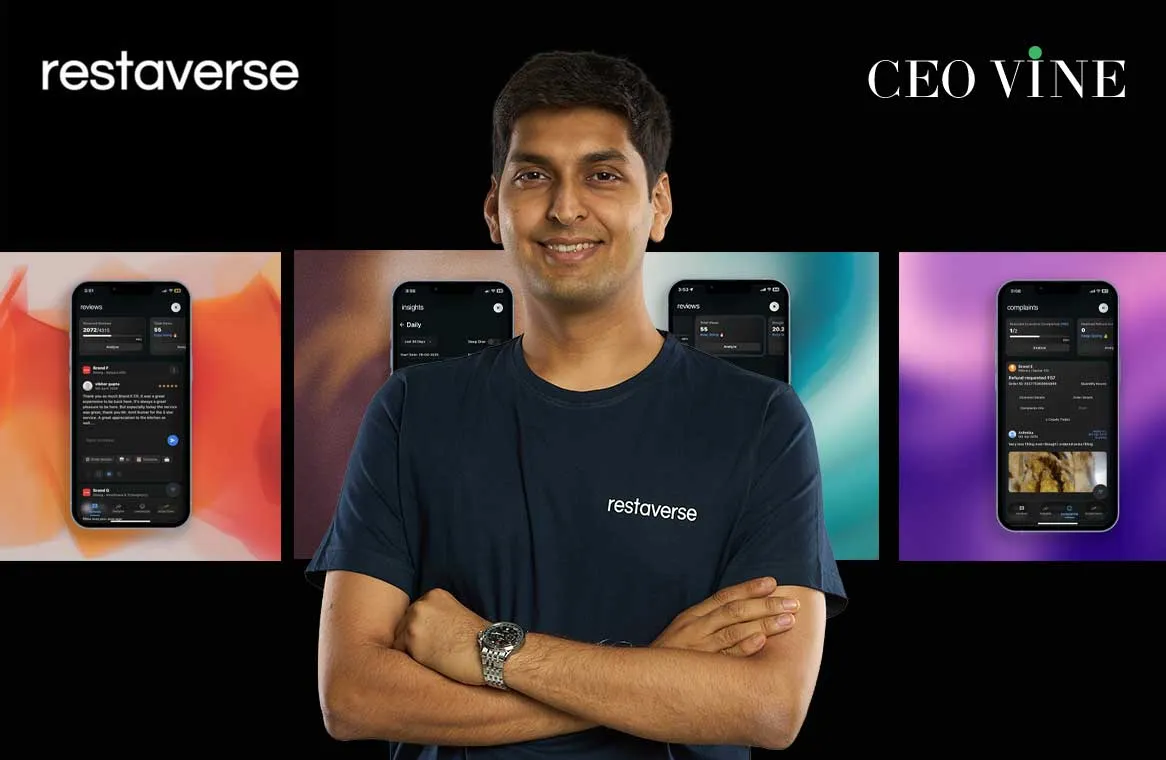
    The platform aggregates data from multiple sources — delivery aggregators, POS systems, social media, and search engines — and brings everything under one roof. It helps restaurant owners:

    • Track operational metrics and staff accountability
    • Monitor customer experience in real-time
    • Identify why conversions are dropping
    • Understand customer preferences and retarget better

    The product’s strength lies in speed and depth, says Siddharth. “The sheer time in which we’ve been able to build the ecosystem — no one else has been able to drive that kind of depth and width simultaneously.”

    Data, Insights, and Decisions

    In an industry where every order and review counts, data-driven decision-making is key. Restaverse gives restaurants visibility into metrics that often go unnoticed — from what dishes customers love or dislike, to what type of audience they attract, their visit frequency, and how they respond to offers.

    These insights help renowned brands like Mag St, The Table, Bombay Sweet Shop, Veronica’s, Social, Mainland China, The Belgian Waffle, 99 Pancakes, Pizza Express, Chillis, Radisson Hotels, Cream Centre,Copper Chimney, Salad Days, Foo, Burma Burma and many others run their businesses with more predictability and precision.

    Two new products, Siddharth hints, are currently under wraps as pilot with a few brands — “You’ll hear about them soon. They’ll enable  the ecosystem for restaurants even further.”

    Business Model & Growth

    Restaverse operates on a pure SaaS model. Restaurants pay for access to its platform, while those that need additional help can opt for managed services. 

    In terms of numbers, the startup’s growth has been steady and strong:

    • Year 1 restaurants : 300+ restaurants
    • Year 2 restaurants : 2500+ restaurants
    • Year 3 restaurants ongoing: 8000+ restaurants

    From around 200 restaurants in its first year to 2,000 a year later, Restaverse now serves 8,000+ restaurants across formats from fine-dining to cloud kitchens.

    Restaverse’s momentum is also validated by its partners. In a recent LinkedIn post, Gauri Devidayal, Co-Founder and CEO of Food Matters Group, highlighted how the team consistently acts as an extension of their partners’ businesses, a mindset she says turns service providers into long-term allies.

    The startup hasn’t raised external funding yet.

    “We often get inbound interest,” Siddharth says, “but we haven’t explored it actively. Our focus has been on growing the business right now and setting the right partners to scale in the coming decades. We aren’t ruling this out, but in no rush either.”

    https://app.ceotrail.com/greenway-mobility/

    Challenges and Learnings

    Building a tech platform for the restaurant industry comes with its own set of challenges. Adoption, training, and consistency are often the biggest hurdles.

    “Innovative features require a lot of reasoning and constant reiteration,” Siddharth admits. “Restaurant operations are intense — what a CXO needs and what on-ground staff deliver are often very different. Our job is to bridge that gap and make technology easy for both.”

    Over time, the perception has shifted. “Earlier, people thought of us as a ‘good-to-have.’ Now the same clients are asking us to build more for them,” he says. “We even have brands that started with a quarterly pilot and are now signing five-year contracts. That kind of trust shows how much value we’ve been able to create.”

    The Future of Restaurant Tech

    The restaurant industry in India is fast digitising, with efficiency, accountability, and customer retention becoming the new battlegrounds. Restaverse aims to be at the center of this transformation — an intelligent layer connecting every part of a restaurant’s digital journey.

    As Siddharth puts it, “We want to help more restaurants and, in the process, build a better ecosystem.”

    The idea is simple yet powerful — one assistant, one ecosystem, one universe of restaurant technology.

  • How Mulyo Kids is Creating a Conscious Brand in Children’s Fashion

    How Mulyo Kids is Creating a Conscious Brand in Children’s Fashion

    When we think of kidswear, most of us imagine playful prints, bright colors, and tiny outfits that children quickly outgrow. What we don’t usually picture is the mountain of waste this creates. In India alone, the children’s apparel market is valued at more than ₹1.6 trillion and continues to grow but with growth comes responsibility. Every discarded garment adds to a fashion industry already under scrutiny for its waste-heavy practices.

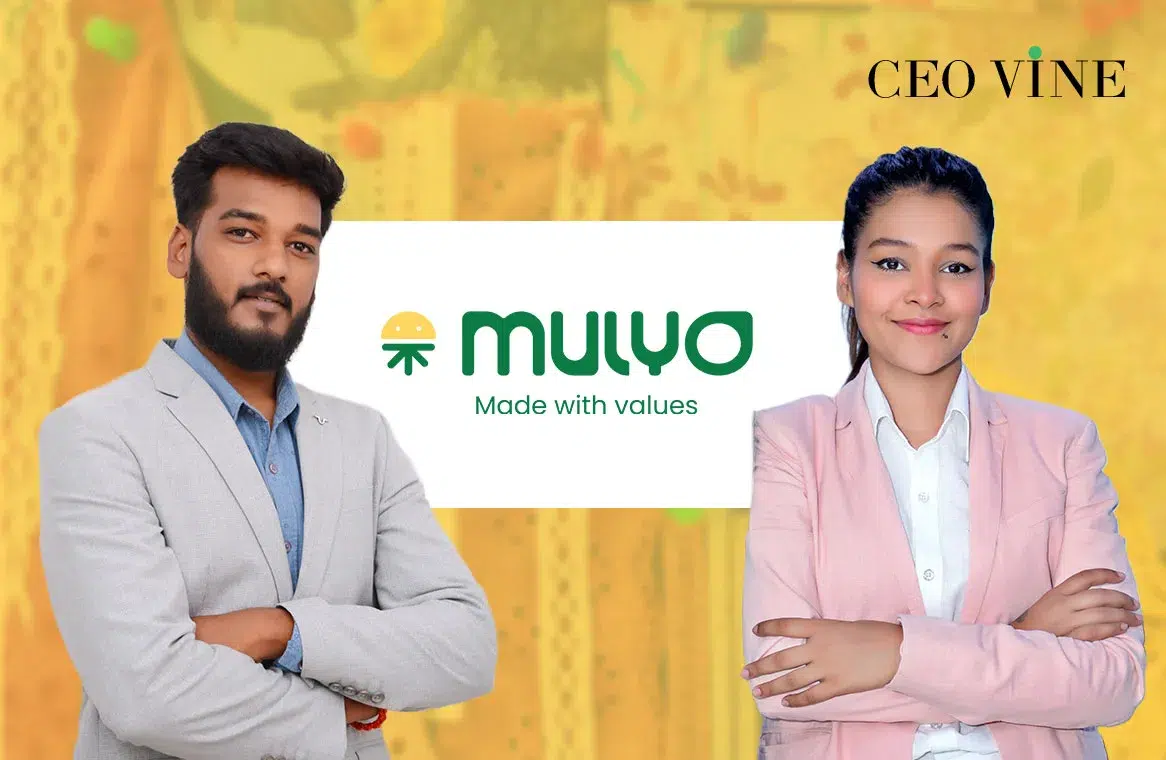
    This is where Mulyo Kids, founded in 2023 by siblings Shambhavi Jaiswal and Shivay Jaiswal, steps in with a mission: to make kidswear that is stylish, functional, and deeply sustainable. Their brand blends India’s artisanal traditions with Japanese-inspired comfort, proving that children’s fashion can be aspirational and eco-conscious at the same time.

    The Founders Behind the Brand

    Shambhavi Jaiswal, a fashion industry professional, saw firsthand the inefficiencies of fast fashion. A period of post-COVID recovery gave her time to reflect on her values, drawing inspiration from her grandparents’ simple, waste-free lifestyle. But her real turning point came after a long recovery from illness. With time to pause and reflect, she found herself asking deeper questions: “What do I really want to build? What kind of impact do I want to leave?”

    Her mind wandered back to childhood memories at her grandparents’ home, where sustainability wasn’t a buzzword,  it was simply a way of life. Old bottles became lamps, clothes were repurposed, and nothing ever went to waste. Those values, deeply ingrained, shaped the foundation of Mulyo Kids.

    Originally set on launching a women’s wear label, Shambhavi’s research revealed a surprising blind spot on kidswear that contributes disproportionately to textile waste because children outgrow clothes so quickly. That insight changed everything.

    Her sibling and co-founder, Shivay Jaiswal, brought a complementary skill set in finance and business management. While Shambhavi dreamed in fabrics, embroidery, and silhouettes, Shivay mapped out cost structures, systems, and scalability. Their synergy became clear: one would lead the creative vision, while the other built the backbone to make it sustainable as a business.

    “We don’t just want to exist because we’re ‘sustainable.’ We want Mulyo to compete with mainstream brands in quality and efficiency while staying true to our values,” says Shivay.

    Names carry stories, and for Mulyo, the name itself reflects its philosophy. Rooted in the Indian word Mulya (value) and inspired by the Japanese word Muryō (free of cost), it symbolizes values that are priceless yet universal. For the founders, it also carries a personal memory of their father’s lesson:

    “True value can never be bought…it is free of cost, yet priceless to those who recognize it.”

    What Makes Mulyo Kids Different?

    Mulyo Kids sets itself apart by addressing two problems at once, the waste-heavy cycles of kidswear and the lack of aspirational yet responsible clothing options for children in India.

    Here’s what makes them stand out:

    • Sustainable Materials – experimenting with innovative fabrics like coconut husk-based textiles and textile waste blends.
    • Safe & Eco-Friendly Processes – using vegetable dyes and AZO-free coloring, safe for children’s skin and better for the planet.
    • Child-Friendly Designs – silhouettes inspired by Japanese minimalism: easy to wear, comfortable, and durable.
    • Diverse Range – from affordable everyday wear to premium ethnic collections that highlight artisanal embroidery.
    • Tech Innovation – AI-powered tools (coming soon) will allow parents to virtually try outfits on their children before purchasing.

    This balance of sustainability, functionality, and innovation ensures that Mulyo Kids doesn’t just rely on the “eco-friendly” tag  but competes on quality, comfort, and storytelling.

    Beyond clothes, the startup is deeply invested in social impact. Mulyo Kids collaborates with Sewa Bharti, Noida, to train women from economically weaker backgrounds in specialized embroidery. These women are not only trained but also fairly compensated for their contributions. For them, it means financial independence and dignity. For Mulyo, it means every garment carries the story of empowerment, culture, and care.

    This approach strengthens artisanal traditions, preserves heritage, and embeds ethical production into the brand’s DNA.

    Despite being new, Mulyo Kids was recognized among India’s top 8 women-led startups under the Make in India initiative, a distinction that placed it alongside well-known names like Vineeta Singh and Ghazal Alagh. Industry media and sustainability-focused platforms have also highlighted its commitment to rethinking fashion for the better.

    Looking ahead, the brand is working on scaling innovative biomaterials like coconut husk textiles, while also integrating AI-powered shopping tools to make sustainable fashion more accessible and interactive for parents. Alongside this, it aims to strengthen its presence in India and expand into global markets, starting with the UAE.

    https://app.ceotrail.com/how-pawzndogz-quietly-built-a-brand-for-pet-play/

    The Bigger Picture: Shifting Industry Trends

    Globally, kidswear is becoming one of the fastest-growing apparel segments. Parents are increasingly conscious of what their children wear, not only in terms of safety and comfort but also values. Sustainable, toxin-free, and heritage-driven fashion is no longer niche; it’s becoming mainstream.

    In India, this shift is even more pronounced as millennial parents drive the demand for mindful consumption. Mulyo Kids ethos — sustainability, minimalism, and craftsmanship aligns perfectly with these evolving consumer values.

    Over the next five years, as technology integrates more deeply into retail, brands like Mulyo Kids that combine eco-consciousness with innovation are well positioned to lead the way.

    In a world where fast fashion often drowns out lasting value, Mulyo Kids is proving that conscious choices can be aspirational, scalable, and deeply impactful.

    For parents considering sustainable fashion, Shambhavi offers a simple but powerful reminder:

    “You’re already doing something amazing by caring about your child’s choices. Sustainable fashion doesn’t have to be complicated, it can be playful, stylish, and full of stories. Every small step matters.”

  • Taxi Sanchalak: Driving Trust and Transparency in India’s Intercity Taxi Industry

    Taxi Sanchalak: Driving Trust and Transparency in India’s Intercity Taxi Industry

    In India, intercity travel has long been a paradox. On one hand, demand is massive—millions of travelers rely on taxis for business trips, holidays, and family journeys. On the other, the industry remains deeply fragmented, largely offline, and often plagued by fraud, safety concerns, and lack of transparency.

    For years, travel agents and operators relied on WhatsApp groups to arrange taxis. Bookings happened informally, payments were unverified, and disputes were frequent. For drivers and operators, delayed payouts and lack of accountability created constant uncertainty. For passengers, unregulated systems meant safety was never guaranteed.

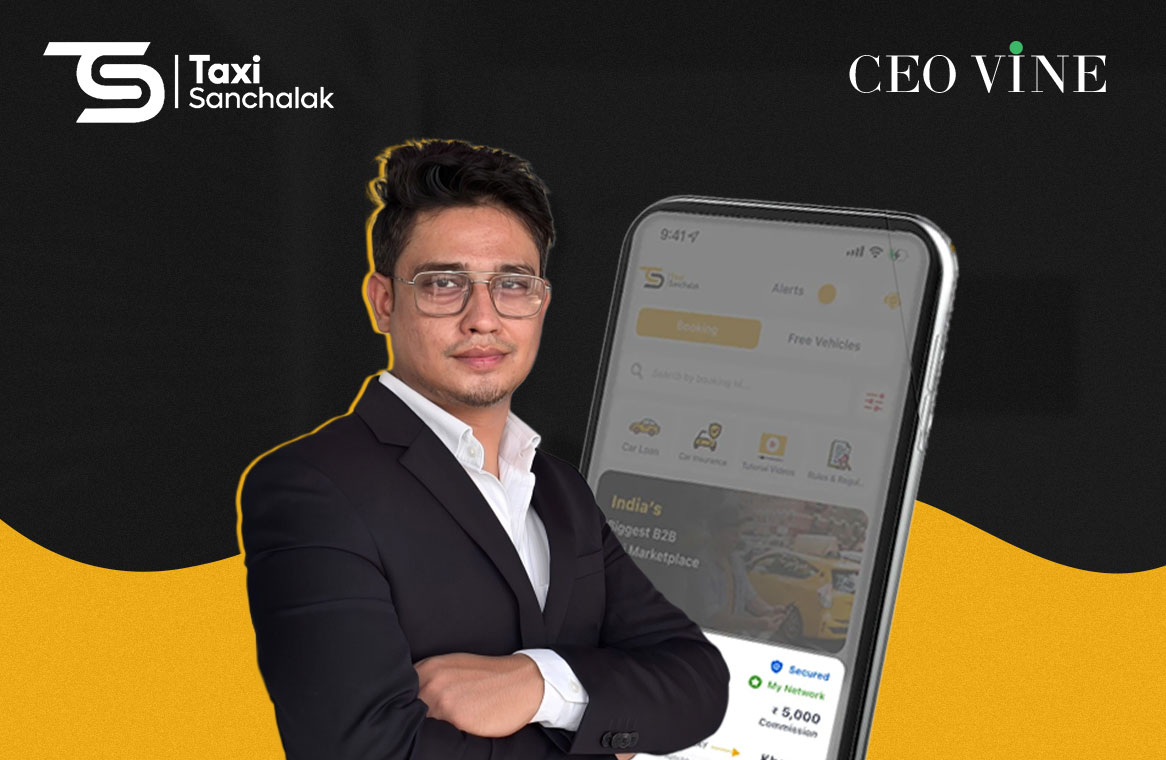
    It was against this backdrop that Taxi Sanchalak, a Uttarakhand-based startup, was born in February 2022. A digital-first platform designed to regulate, unify, and empower the intercity taxi ecosystem.

    Founding Spark: From Personal Experience to Platform Vision

    The idea for Taxi Sanchalak traces back to founder Namit Gusain’s years in the travel business. Working closely with operators and drivers, he witnessed firsthand how unorganized the intercity taxi sector was. Payment fraud, lack of verification, and unsafe systems had become the norm.

    “Everything was running on trust within WhatsApp groups, but there was no accountability,” recalls Namit. “We wanted to build a platform that brought fairness, safety, and structure for everyone involved.”

    The name itself reflects this mission. “Sanchalak” means regulator, symbolizing the company’s role in organizing a sector long left unregulated.

    What Taxi Sanchalak Does?

    Unlike consumer-focused ride-hailing apps like Ola and Uber, Taxi Sanchalak is built for the B2B intercity taxi market. It connects drivers, fleet operators, and travel agents on a single digital platform.

    • Drivers gain access to verified bookings, ensuring steady income without relying on local contacts.
    • Travel agents arranging packages can post requirements and instantly connect with reliable operators.
    • Fleet owners managing large contracts can fulfill demand by sourcing vehicles at scale through the platform.

    With features such as automated payments, verified user onboarding, and AI-driven scalability, Taxi Sanchalak ensures secure, fast, and transparent transactions.

    Early Challenges: Building Trust in a Fragmented Market

    Adoption wasn’t easy. Convincing drivers and operators to move away from WhatsApp groups required persistence. Resistance eventually faded once the platform demonstrated the value of verified connections and secure payments.

    The team prioritized education and support. From automated onboarding calls to daily personal guidance, even non-tech-savvy drivers were able to adopt the platform with confidence.

    Regulatory hurdles, such as RBI-related payment gateway approvals, and the slow pace of digital adoption added to the challenge. But the startup learned an important lesson: intercity mobility cannot be disrupted overnight—it requires gradual, trust-led adoption.

    “Our biggest learning has been that execution matters more than ideas. This industry needs persistence, not shortcuts,” says Namit.

    Scaling an Industry That Resisted Change

    While Ola and Uber drove digital adoption in intracity travel, the intercity market—covering sedans, tempo travellers, and buses—remains largely unorganized.

    Taxi Sanchalak stepped into this gap and, in under three years, has achieved remarkable traction:

    • 14 lakh+ lifetime bookings
    • 2 lakh+ vehicles connected across multiple states
    • 18,000+ daily active users
    • ₹3 crore+ in monthly commission payments processed

    Much of this growth has been organic, driven by word of mouth—proof of the trust built within the driver and operator community.

    The company operates differently from commission-heavy models. It follows a driver subscription model, providing affordable access while ensuring higher earnings for operators. Additional revenue streams include insurance marketing and payment security fees, creating a sustainable and diversified structure.

    Importantly, the startup is bootstrapped and already profitable, a rarity in India’s transport-tech ecosystem.

    “We’re profitable because we focused on solving real pain points rather than chasing vanity metrics,” Namit emphasizes.

    The Industry Lens

    India’s intercity taxi market is projected to grow rapidly as mobility expands beyond metro cities. Post-pandemic demand has surged, with estimates suggesting the market could cross $30 billion by 2030. Yet, most of this remains offline, offering technology-first players like Taxi Sanchalak a clear opportunity.

    To capture this growth, the company is preparing to launch Taxi Sanchalak Hub, an extension focused on round-trip, holiday, and package-based travel. The goal is to further professionalize the industry and create a holistic ecosystem.

    In the short term, Taxi Sanchalak is focused on strengthening its tech, expanding geographically, and rolling out the Hub. Over the next 3–5 years, the ambition is clear: become India’s leading taxi-tech marketplace and eventually expand into other developing countries facing similar fragmentation.

    The motto, “Drive. Connect. Grow.”, captures this vision—empowering drivers, unifying operators, and organizing the sector for sustainable growth.

    A Platform That Moves People and Lives

    Taxi Sanchalak is not just about bookings, it’s about transforming livelihoods. Take the story of a regional operator who started with just three vehicles. Over time, he scaled to over 25, thanks to reliable demand and secure payments via the platform.

    Stories like these highlight the startup’s real impact.

    Namit concludes: “For decades, intercity taxis have run on informal systems. We are here to change that—step by step, with fairness and trust at the center.”

    With over 14 lakh bookings already completed, Taxi Sanchalak is proving that India’s intercity taxi industry can indeed move beyond chaos into a future built on transparency, safety, and opportunity.

  • Can LUZO Become India’s #1 Beauty-Tech Platform?

    Can LUZO Become India’s #1 Beauty-Tech Platform?

    In India, beauty and wellness are becoming part of everyday life. Yet the industry has long remained fragmented, opaque, and under-digitized. Despite thousands of salons, spas and aesthetic dermatology clinics in every city, customers struggle with discovery, unclear pricing, and outdated booking systems. On the other side, salon owners face underutilized chairs, high fixed costs, and no way to optimize revenue.

    That’s the gap LUZO set out to bridge in 2021.

    Founding Spark: A Personal Story Meets Market Reality

    The idea for LUZO was born during the pandemic. Co-founder Maan’s mother, who ran a salon, was forced to shut down operations during COVID-19. Conversations at home highlighted the deeper issues in the industry—idle capacity, lack of digital tools, and no transparency for customers.

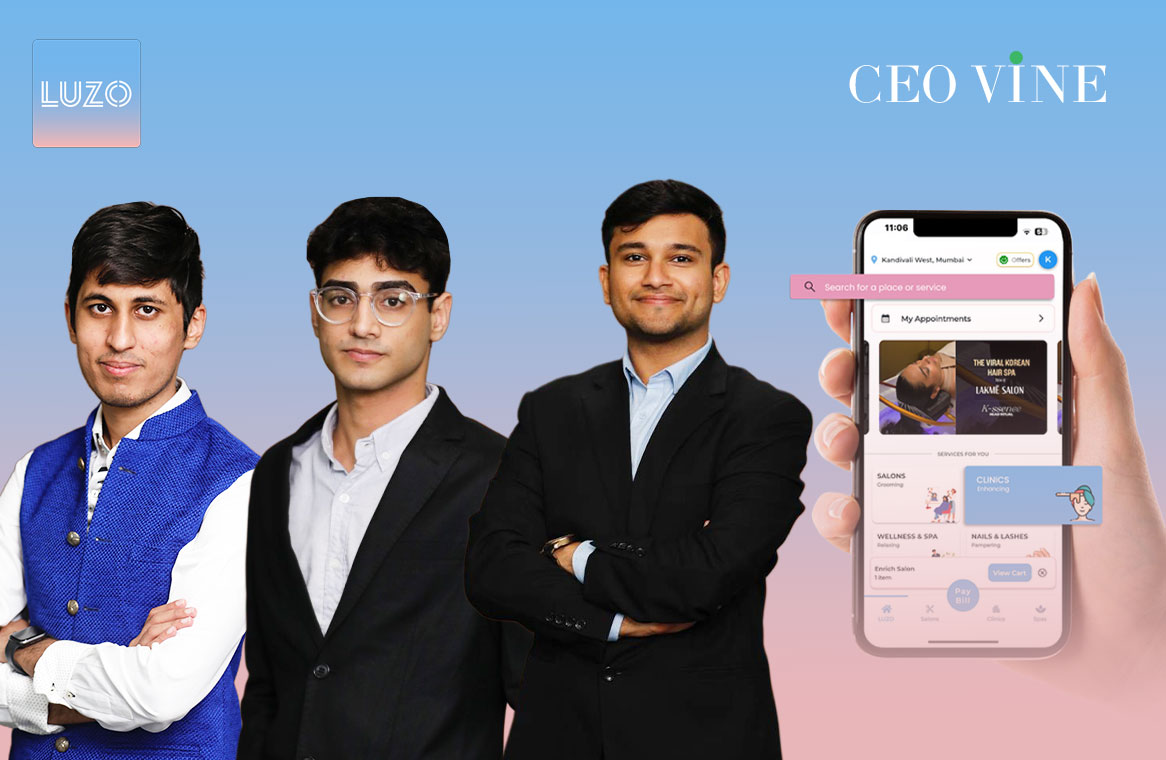
    Maan joined hands with Nikhil, a finance professional with experience at Edelweiss and Deloitte, and Anurav Dave, who brought product, operations, and scaling expertise from digital-first businesses. Together, the trio combined industry knowledge, business strategy, and product execution.

    Even the name carries meaning. LUZO comes from “luz”, the Portuguese word for light—a symbol of clarity, accessibility, and a fresh way to experience beauty.

    “We wanted to make beauty and wellness simple, transparent, and accessible. That’s the mission that guides us every day,” says the LUZO team.

    The LUZO App: How It Works

    For customers, LUZO offers a curated list of premium salons, spas and aesthetic dermatology clinics, visible prices, exclusive offers, and seamless bookings. For partners, it provides a simple dashboard to list services, track performance, and fill idle slots.

    The early version of the app was a basic booking tool, but traction grew when transparent pricing, curated partners, and utilization-based offers were introduced. Unlike mass-market aggregators, LUZO’s focus is premium—partnering only with trusted, high-quality salons and wellness brands.

    Anurav explains, “We built LUZO to remove friction for salon teams. The dashboard and onboarding are deliberately simple so owners who aren’t tech-savvy can still benefit. Our goal is to convert idle capacity into reliable revenue without adding operational burden.”

    The brand is currently live in Delhi NCR, Mumbai, Bengaluru, Pune, Chennai and Hyderabad.

    Building the Business: From Zero to Traction

    Since its launch, the startup has crossed over 500,000 downloads and partnered with more than 1,500 premium salons, spas, and dermatology clinics. Partner brands include BBLUNT, Enrich, Lakme, Toni&Guy, Kaya, Naturals, Truefitt&Hill, Looks, and Bodycraft. Customer adoption is strong, with repeat usage rates touching 67% among high-value clients.

    The business model is a mix of revenue-sharing on bookings, subscription-based partnerships, and brand promotions. Customers benefit from loyalty programs and referral rewards, while salons see measurable growth in visibility and revenue.

    Funding and Growth Path

    The startup has raised two funding rounds so far: a $250,000 round led by 100X.VC in 2023, followed by $550,000 in 2025 from Enrission India Capital along with investors associated with Swiggy Dineout and Orra.

    The funds are being directed towards expanding into more Tier-1 cities, strengthening product features, and building partnerships with premium brands. The team is also focused on ensuring strong unit economics before exploring Tier-2 markets.

    LUZO’s Edge in a Crowded Industry

    The Indian beauty and wellness market is projected to touch $30 billion by 2030. Yet challenges remain—salon owners are hesitant to digitize, and customers are only beginning to trust online booking for beauty services.

    LUZO is solving these with proof points. Top-tier brands on the app have reported 15%+ revenue growth, inspiring more partners to join. On the consumer side, introductory offers, loyalty benefits, and consistent engagement are gradually changing booking habits.

    Differentiation is clear: the brand prioritizes premium salons, spas and aesthetic dermatology clinics, offers transparent pricing, and is working on AI-driven recommendations and milestone-based loyalty programs. Plans also include expanding into corporate wellness partnerships and beauty product discovery.

    As co-founder Anurav notes,

    “Every feature we’ve built came directly from salon conversations or customer feedback. That keeps the product practical and trust high.”

    Looking Ahead: Beyond a Booking App

    LUZO’s ambition goes beyond being just a booking platform. The vision is to create a complete beauty-tech ecosystem covering services, products, and brand engagement.

    In the near term, the brand is focused on expanding to more Tier-1 cities and launching its loyalty program. Long-term, it aims to become India’s #1 beauty-tech platform, with plans to reach Tier-2 cities and even international markets.

    The bigger bet is simple: beauty and wellness are no longer occasional luxuries—they’re everyday choices. And LUZO wants to make those choices transparent, accessible, and empowering.

    The Bigger Picture

    The India beauty salon market was valued at $11.65 billion in 2024 and is expected to reach nearly $23 billion by 2033, growing at a CAGR of 7.85%.

    The startup is not just filling salon chairs—it’s bringing an entire industry online, supporting small business owners, and transforming the way beauty is experienced.

    From an idea sparked by a salon shutdown in 2020 to a fast-growing app with lakhs of users in 2025, LUZO is proving how clarity, technology, and empathy can modernize one of India’s most traditional industries.

    For customers, the message is simple: booking your next salon, spa, or dermatologist appointment is now just a tap away.

    Next Read | How Greenway Mobility Plans to Redefine India’s 3-Wheeler EV Market

    FAQs

    What is LUZO?

    LUZO is a beauty-tech platform that connects customers with premium salons, spas, and aesthetic dermatology clinics. Through its app, users can discover services, view transparent pricing, access exclusive offers, and make seamless bookings.

    Who are the founders of LUZO?

    LUZO was founded in 2021 by Anurav Dave, Maan Jetly and Nikhil Kalwani. Together, they bring industry knowledge, finance expertise, and product operations experience.

    What cities is LUZO currently available in?

    As of 2025, LUZO is live in Delhi NCR, Mumbai, Bengaluru, Pune, Chennai, and Hyderabad.

    How many downloads does LUZO have?

    LUZO has crossed over 500,000 app downloads with a repeat usage rate of 67% among high-value clients.

    How much funding has LUZO raised so far?

    LUZO has raised $250,000 in 2023 from 100X.VC and $550,000 in 2025 from Enrission India Capital along with investors associated with Swiggy Dineout and Orra.

    How can customers download and use LUZO?

    The LUZO app is available for download on both Android and iOS platforms. After installing, users can browse premium salons, check pricing, and book services instantly.

  • How Growdea Technologies Is Using AI to Cut Drug Discovery Timelines by Years

    How Growdea Technologies Is Using AI to Cut Drug Discovery Timelines by Years

    The pharmaceutical industry is one of the most innovation-driven yet slow-moving sectors in the world. Developing a new drug can take over fifteen years, cost up to three billion dollars, and still face a failure rate approaching ninety percent. The early discovery stage alone can stretch to five years, consuming millions before a single clinical trial begins.

    For small biotech companies, academic research labs, and even mid-sized pharmaceutical firms, these timelines and costs can be prohibitive. This is where Growdea Technologies steps in — an Indian-origin company reimagining drug discovery through a powerful blend of artificial intelligence, machine learning, and physics-based simulations.

    The mission is clear: make advanced computational drug discovery faster, more accurate, and accessible to researchers everywhere.

    The name “Growdea” is a fusion of growth and idea that reflects the founders’ belief that innovation should lead directly to measurable progress.

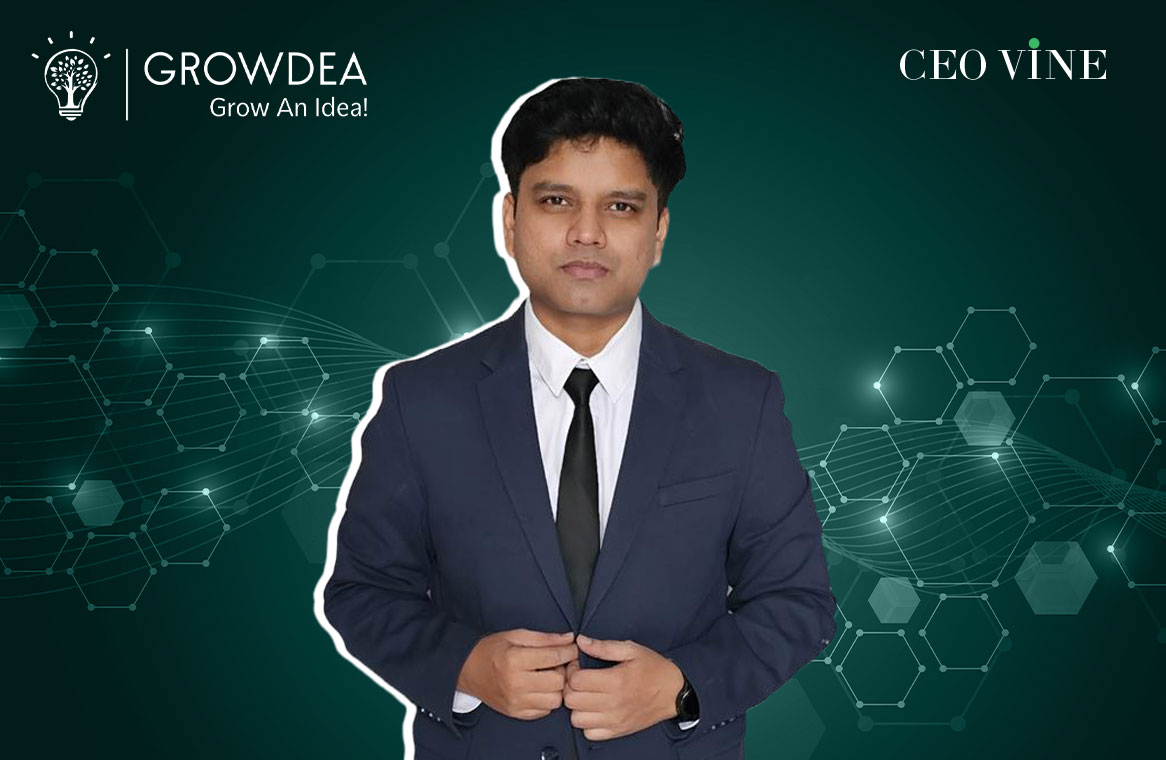
    “For big pharma, these delays are frustrating but manageable. For smaller biotech firms and academic labs, they can be fatal to a project,” recalls Dr. Avinash Mishra, Co-founder and CEO.

    An Idea Rooted in Global Research Experience – Growdea Technologies

    Founded in November 2018, Growdea Technologies is the brainchild of Dr. Avinash Mishra (LinkedIn), a computational biologist with deep expertise in structural biology, protein aggregation, and AI-driven drug design. After earning his Ph.D. at the Indian Institute of Technology Delhi, he was awarded the Indo-Australian Gold Fellowship by the Department of Biotechnology, taking him to Griffith University, Australia, for postdoctoral research. There, he worked at the intersection of protein structure analysis, machine learningand computational drug discovery, publishing high-impact research.

    His return to IIT Delhi’s Department of Chemical Engineering saw him focus on improving drug stability through peptide inhibitors — an experience that, along with consulting work for AstraZeneca, gave him a close-up view of the inefficiencies in early-stage drug discovery. He saw the gap clearly: powerful computational tools existed, but smaller organizations couldn’t afford the infrastructure, software, or expertise to use them.

    To bring the vision to life, Dr. Mishra partnered with Professor Anurag S. Rathore (LinkedIn), Institute Chair Professor at IIT Delhi and a globally recognized expert in bioprocess engineering. With decades of experience spanning academia and industry, including senior roles at Amgen Inc. in California, Prof. Rathore brought the strategic and industrial insight needed to bridge research innovation with practical application. Together, they set out to create tools that would democratize access to advanced drug discovery.

    From Concept to Analogue

    Growdea’s flagship product, Analogue, is a platform that combines AI and machine learning algorithms with physics-based computational methods to predict drug–target interactions entirely in silico.

    Analogue allows researchers to screen millions of molecules digitally, narrowing down to the most promising candidates before costly and time-consuming lab work begins. The results are transformative: early discovery timelines can shrink from five years to roughly one, and costs can drop by 40–50%, translating to $2–3 million saved per candidate selection.

    Unlike many competing platforms requiring coding skills or dedicated hardware, Analogue offers a no-code, intuitive interface. Researchers can upload molecular data, run predictive simulations, and receive validated insights without specialized training. Its versatility spans oncology, inflammation, rare diseases, vaccines, and antivirals.

    From inception, Growdea chose to bootstrap rather than seek early venture capital, operating on a dual-revenue model:

    • Project-based services, where the team works directly with clients to design, simulate, and validate new therapeutic candidates.
    • SaaS licensing, giving organizations independent access to Analogue through subscriptions or enterprise agreements.

    Financially, the startup generated close to ₹1 crore  in revenue between 2023–2025, with projections of ₹1.55 crore next year and steady YOY growth of 15–20%. Its burn rate of ₹5,00,000 per month gives it a runway of nearly 10 months, with an anticipated ₹1.44 crore surplus after 12 months.

    “Our focus has always been on making the country selfdependent in the area of in-silico drug discovery by competing with market leaders in this field on the ground of scientific accuracy, user convenience and affordability ” says Dr. Avinash.

    Initially, convincing the cautious pharmaceutical industry to trust computational predictions was an uphill task for the startup. The breakthrough came when early client projects validated Analogue’s predictions in the lab, turning trial users into long-term partners.

    Growdea has since worked for cancer therapeutic designs for a biotech company, also collaborated with Australian research institutions and private companies. Additionally, Growdea secured government grants with generous collaboration with IIT-D, Ashoka University, and Translational Health Science and Technology Institute for advanced vaccine  design.

    Scaling Beyond Borders

    The startup’s next phase is international expansion. With a growing presence in India and Australia, the company is now targeting the UK, US and Europe,.

    The UK expansion will be supported through a strategic partnership with Biollegence, a London based company.

    Growdea also plans to develop its own therapeutic pipeline, moving toward a full-stack drug discovery model. Moreover, over the next 12–18 months, it will launch a cloud-based version of Analogue, eliminating hardware barriers and expanding global accessibility. 

    Their future iterations will integrate de novo drug design capabilities, enabling the creation of entirely new molecules from scratch, the company told CEO VINE.

    Conclusion

    Inside Growdea, the culture is collaborative and mission-driven. Biologists, AI engineers, and chemists work side by side, united by the belief that faster discovery can save lives.

    “Everyone in the team knows they’re working on something that could speed up life-saving treatments. That sense of purpose is what keeps us moving forward.” says Dr. Avinash

    In a crowded AI drug discovery market, this company stands out for its integration of advanced computational methods into a simple, cost-effective platform backed by real-world validation.

    Dr. Avinash puts it, “We’re not just building for the top five pharma companies in the world. We’re building for the thousands of researchers who have the ideas and looking for scientifically relaiable and affordable tools.”By making world-class computational tools affordable and accessible, Growdea Technologies is not just accelerating drug discovery, it’s changing who gets to be part of the process.

    Also Read | How Greenway Mobility Plans to Redefine India’s 3-Wheeler EV Market >>

    FAQs

    What is Growdea Technologies?

    Growdea Technologies is an Indian-origin startup that uses artificial intelligence, machine learning, and physics-based simulations to speed up and lower the cost of drug discovery.

    Who is the founder of Growdea Technologies?

    The company was founded by Dr. Avinash Mishra, a computational biologist, along with Professor Anurag S. Rathore from IIT Delhi.

    When was Growdea Technologies founded?

    Growdea Technologies was founded in November 2018.

    What is Growdea’s flagship product?

    Growdea’s flagship product is Analogue, a platform that predicts drug–target interactions entirely in silico, reducing discovery timelines from years to months.

    What is Growdea Technologies’ current revenue?

    Between 2023–2025, Growdea generated close to ₹1 crore in revenue, with projections of ₹1.55 crore for the coming year.

    Is Growdea Technologies funded or bootstrapped?

    Growdea is a bootstrapped company that runs on a dual revenue model — project-based services and SaaS licensing for its platform Analogue.

    What is Growdea Technologies’ growth rate?

    The company has a steady year-on-year growth rate of around 15–20%.

    Where is Growdea Technologies based?

    Growdea Technologies is based in India, with a growing presence in Australia and plans for global expansion.

    What is Growdea Technologies’ business model?

    Growdea follows a dual model: offering drug discovery services through collaborations and licensing its Analogue platform to organizations on a subscription or enterprise basis.

    Does Growdea Technologies work with international clients?

    Yes, Growdea has collaborated with research institutions and companies in Australia and is expanding into the UK, US, and Europe.

    What are Growdea Technologies’ future plans?

    Future plans include launching a cloud-based version of Analogue, entering new global markets, and eventually building its own therapeutic pipeline.