Category: Insights

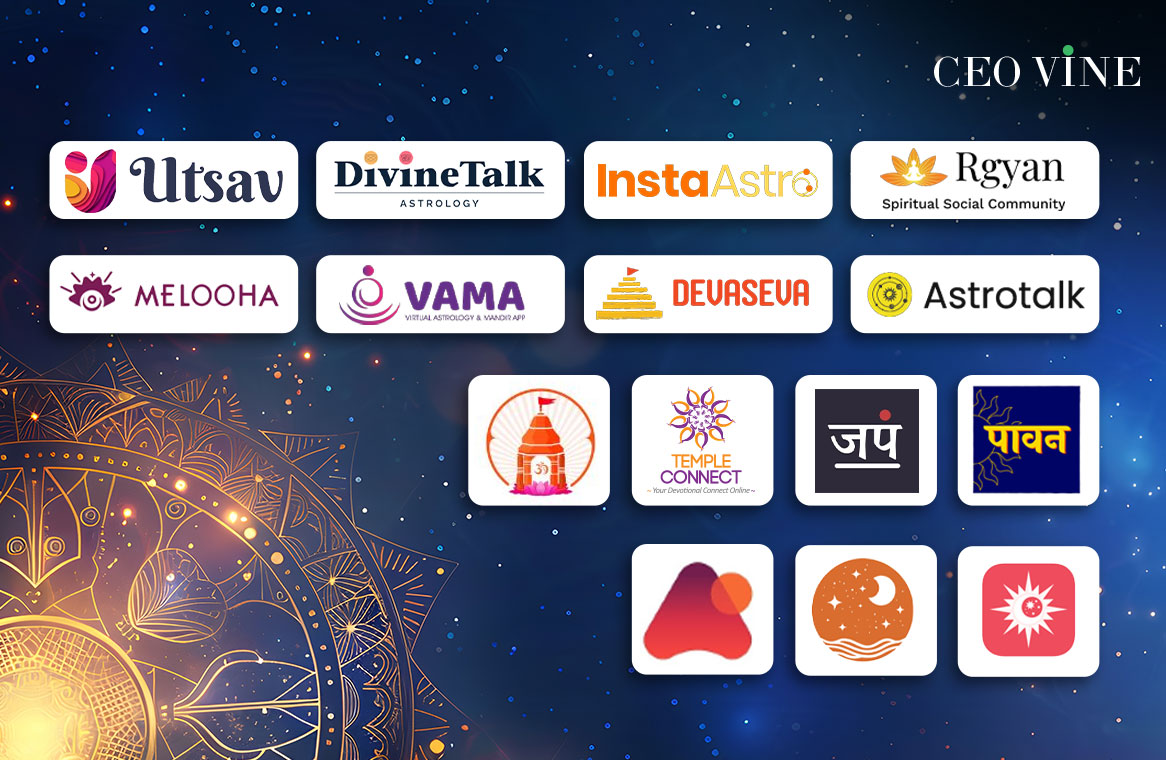
  • When Tech Meets Faith: 15 Spiritual Tech Startups Changing How India Prays

    When Tech Meets Faith: 15 Spiritual Tech Startups Changing How India Prays

    In today’s digital-first world, few would expect spirituality—so deeply rooted in personal belief and tradition—to find its place alongside technology. Yet in India, spiritual tech is not only thriving, it’s transforming how people connect with faith.

    The Indian religious and spiritual market stood at a massive $58.56 billion in 2023, with expectations to grow at a 10% CAGR until 2032. As younger audiences, particularly those between 25-35 years, drift away from traditional visits to temples or astrologers, they’re turning to their phones instead—seeking spiritual services online.

    What’s Driving This Shift?

    • Convenience and Accessibility: Book a puja, consult an astrologer, or view a darshan—all in a few taps.
    • NRI Demand: Millions abroad want to stay connected to Indian rituals.
    • Influencer Power: Celebrities promoting astrology and puja apps have brought spirituality into digital mainstream.
    • Funding Momentum: Investors are backing spiritual tech with serious capital.

    Let’s look at 15 spiritual tech startups in India that are bringing age-old traditions into the digital age—seamlessly blending faith and innovation.

    AstroTalk
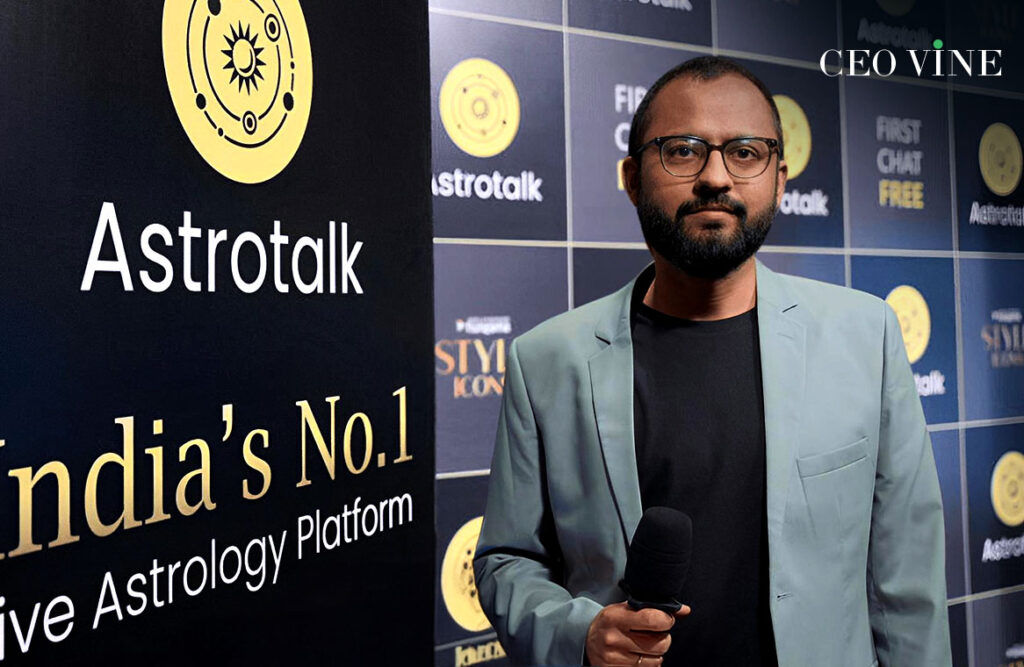
    AstroTalk founder

    Founded in 2017 by Puneet Gupta and Anmol Jain, AstroTalk has rapidly become India’s largest and most trusted astrology platform. Offering real-time consultations with over 41,000 astrologers, it delivers personalized insights through calls, chats, horoscopes, Kundli readings, numerology, tarot, and matchmaking services.

    The Noida based spiritual tech startup has raised a total of $30.3 million across three funding rounds. In its most recent Series A round in April 2024, it secured $9.5 million, led by Elev8 Venture Partners and Left Lane Capital, boosting its post-money valuation to $300 million.

    According to filings with the Registrar of Companies (RoC), the startup saw its profit surge by an astonishing 1,080%, reaching ₹99.99 crore in FY24. This exponential growth was powered by a more than 100% jump in revenue, which climbed from ₹283.32 crore in FY23 to ₹651.12 crore in FY24.

    With 4.5 lakh daily users and a strong digital ecosystem, the Noida-based company is targeting ₹1,250 crore in revenue and an operating profit of ₹230–250 crore in FY25.

    Recently, AstroTalk appointed Daman Soni, former President and Chief Business Officer at GlobalBees, as its Chief Business Officer (e-commerce) to lead its strategic growth.

    DivineTalk Astrology

    DivineTalk Founder

    DivineTalk Astrology, launched in 2022 by Paras Shah, is a spiritual tech startup offering live, personalized astrology readings and consultations on-demand. Designed as an intuitive app-based platform, Divine allows users to engage with astrologers, healers, ayurvedic experts, and more.

    Beyond astrology, the platform provides a holistic suite of spiritual services including psychic readings, Kundli matching, guided meditation sessions, and daily horoscopes. Its modern design and user-first approach have attracted a younger audience seeking spiritual insights without the traditional barriers.

    The startup raised $2 million in seed funding on November 3, 2022,

    Melooha
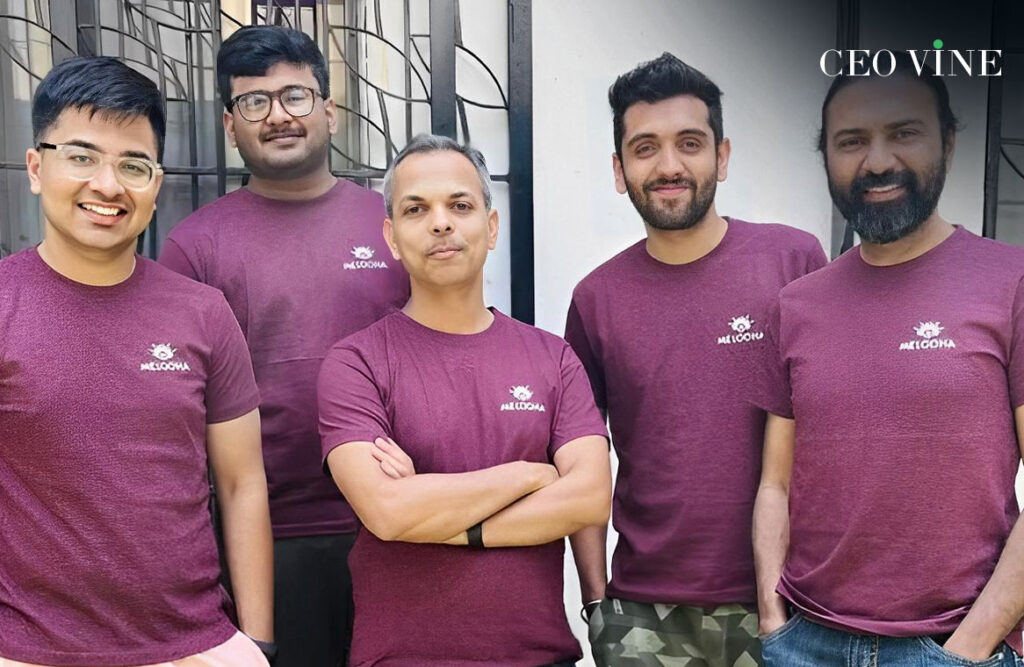
    Melooha founders

    Founded in 2022 by Vikram Labhe and Bhalchandra Patil, Melooha is revolutionizing astrology through artificial intelligence. Its AI-based algorithms provide highly customized predictions and guidance on love, health, and career.

    The platform allows users to experience astrology that’s data-backed, deeply personal, and relevant to daily life.

    This Nagpur based startup has raised $635K in funding from proSoC and Streak Ventures, with a current valuation of ₹28.6 crore.

    Paavan
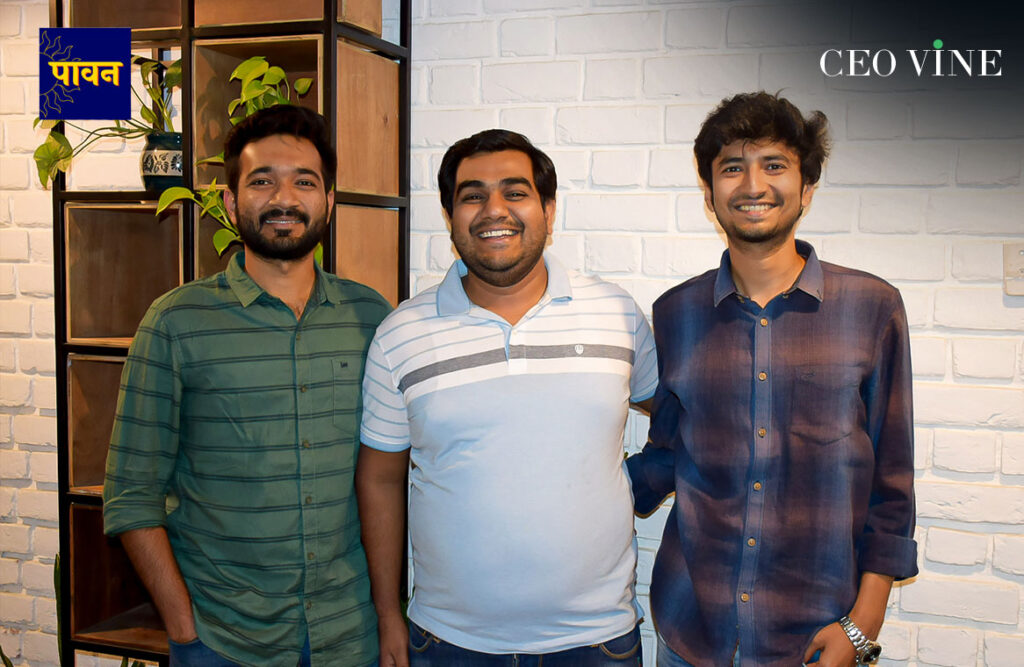
    Paavan founders

    Founded in 2021 by Nitin Agrawal, Sankalp Jain, and Mohit Mittal, Paavan is a Delhi-based spiritual wellness platform on a mission to democratize access to India’s ancient wisdom.

    The app features a rich and ever-expanding library of bhajans, spiritual stories, and guided lessons rooted in Hinduism. With easy-to-navigate content and structured programs for health, relationships, success, and inner growth, Paavan helps users cultivate daily spiritual practices in a modern context.

    This spiritual tech startup has raised a total of $568K over two funding rounds. Its first round closed on September 24, 2021, followed by a $500K seed round on May 17, 2022.

    Paavan’s engaging storytelling and culturally resonant content are making it a go-to choice for Indians—both young and old—looking for deeper, more meaningful digital connections with their heritage.

    AppsForBharat
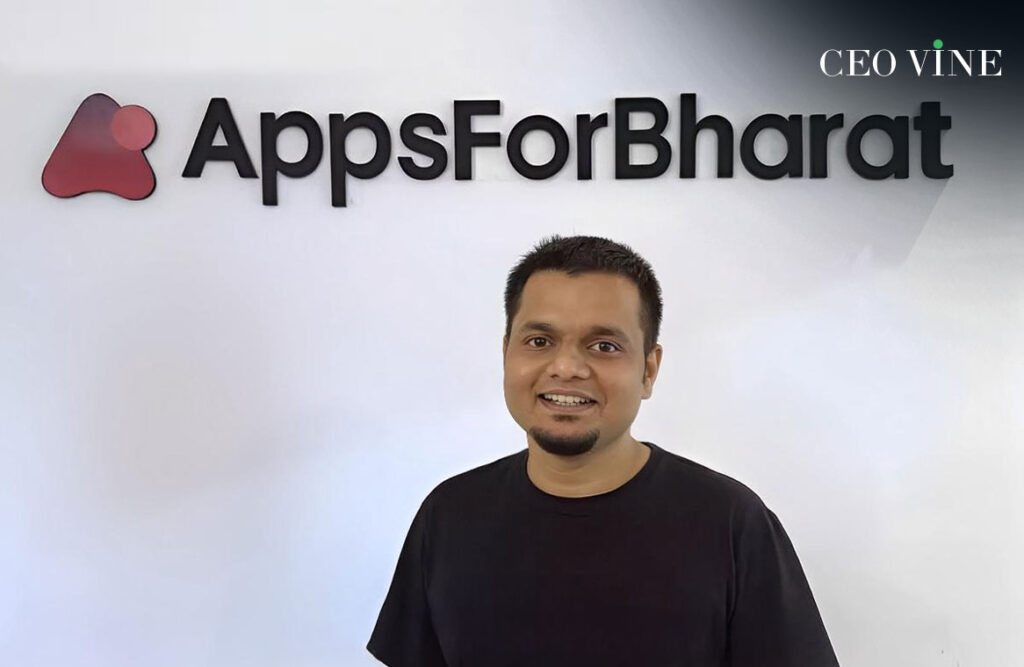
    AppsForBharat founder

    AppsForBharat, founded in 2020 by Prashant Sachan, is transforming spiritual engagement in India by blending tech, tradition, and a touch of gamification.

    The spiritual tech startup’s flagship product, the Sri Mandir app, brings age-old rituals to digital life—enabling users to create their own virtual temples, light diyas, offer flowers and shawls, and participate in live-streamed pujas from sacred shrines across India.

    Sri Mandir is more than a devotional app—it’s an immersive platform where users can spiritually engage daily without stepping outside their homes. Its success lies in making spiritual routines interactive and easily accessible to all age groups, especially younger users seeking cultural reconnection.

    AppsForBharat has raised a total of $33.4 million in funding from prominent investors including Sequoia Capital, AngelList, and Elevation Capital. Its most recent Series B round in September 2024 brought in $18 million, taking its valuation to ₹735 crore.

    With a growing user base and constant product evolution, AppsForBharat is emerging as a spiritual tech powerhouse—redefining how India connects with faith in the digital age.

    Also Read | 20 Pet Care Startups Making Life Easier for Pet Parents in India

    InstaAstro

    InstaAstro founder

    InstaAstro, founded in 2021 by serial entrepreneur Nitin Verma, is redefining how individuals access spiritual guidance in their daily lives.

    The platform connects users with experienced astrologers, Vastu experts, and spiritual guides through online consultations, allowing for a personalized experience from the comfort of one’s home.

    With a strong focus on holistic well-being, InstaAstro provides a wide array of services—from horoscope predictions, Kundli analysis, and tarot readings to numerology and Vastu consultations.

    Backed by a user-first approach and tech-driven convenience, the platform has served over 5 million users globally.

    This Noida-based startup has raised $3.23 million in seed funding, with its most recent round of $2.3 million secured on March 28, 2023, from investors including Artha Venture Fund and LogX Venture Partners. The company currently holds a valuation of ₹77.2 crore.

    With a strong network of 1,500+ vetted astrology experts and a commitment to “quality over quantity,” InstaAstro, the spiritual tech startup is steadily growing into a global destination for spiritual wellness.

    RGyan
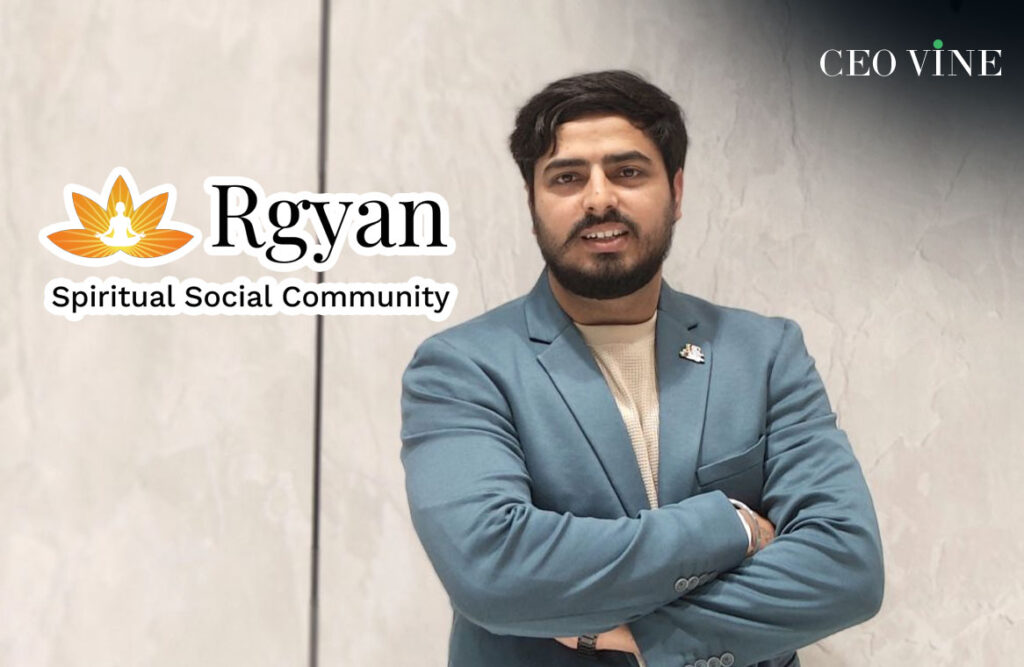
    RGyan founder

    RGyan, founded in 2021 by Devendar Agarwal and Umesh Khatri, is a unique social tech platform that blends digital content with spiritual community engagement. Unlike typical astrology or puja service apps, RGyan positions itself as a spiritual knowledge hub, offering users a space to consume, discuss, and share faith-based content in their native languages.

    Think of it as the “Quora of spirituality“—users can ask and answer questions, read devotional articles, explore rituals and religious facts, and engage in conversations on topics ranging from festivals and temples to personal spiritual growth.

    RGyan has raised a total of $362K in two seed funding rounds. The first, worth $162K, came from HNI Corporation, followed by a $200K round, helping it scale its technology and multilingual content strategy.

    With its strong emphasis on regional language accessibility and community-based knowledge exchange, this spiritual tech startup is quietly building a devout digital community of spiritual seekers, educators, and cultural enthusiasts alike.

    Utsav
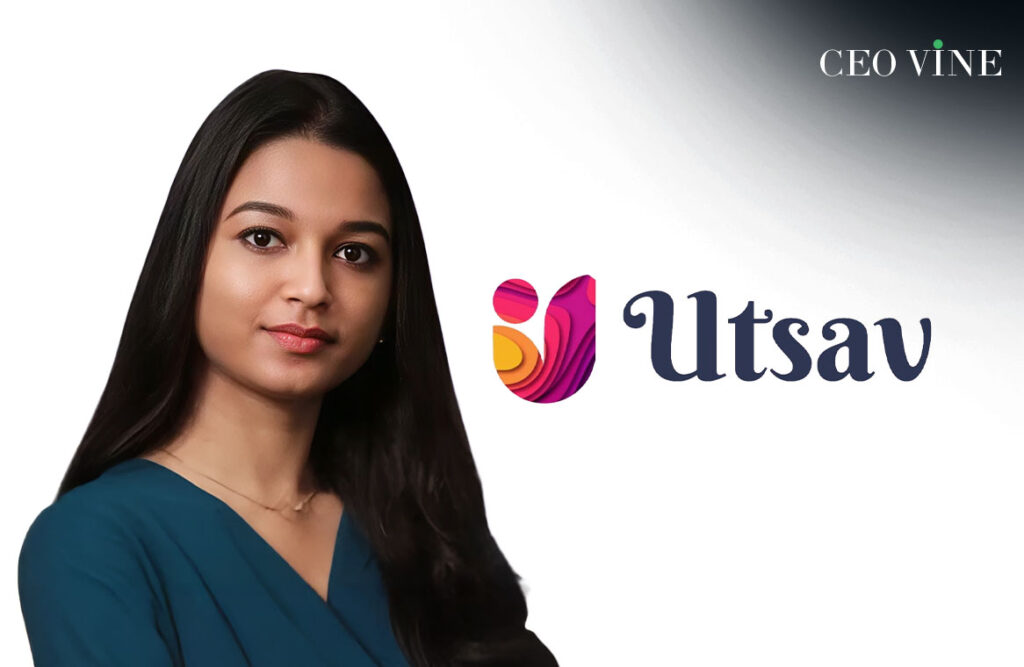
    Utsav founder

    Utsav is a Kolkata-based spiritual tech startup, founded in 2021 by Ankita De, Prajata Samanta, and Sourajit Basu, that brings temple rituals and spiritual experiences directly into users’ homes.

    Operating as a provider of online Hindu puja services and prasad delivery, Utsav allows devotees to book pujas, havans, and ceremonies remotely, receive live-streamed darshans, and get prasad delivered from temples across India—all through a seamless digital interface.

    It connects users with over 1,000 religious and spiritual communities, making it easier for people to maintain their faith practices regardless of distance or time constraints.

    The startup has raised a total of $1.02 million in seed funding, including a $733K round on September 8, 2024, from notable investors such as India Quotient, Equanimity Investments, and 100X.VC. The current valuation stands at ₹31.4 crore.

    Devaseva
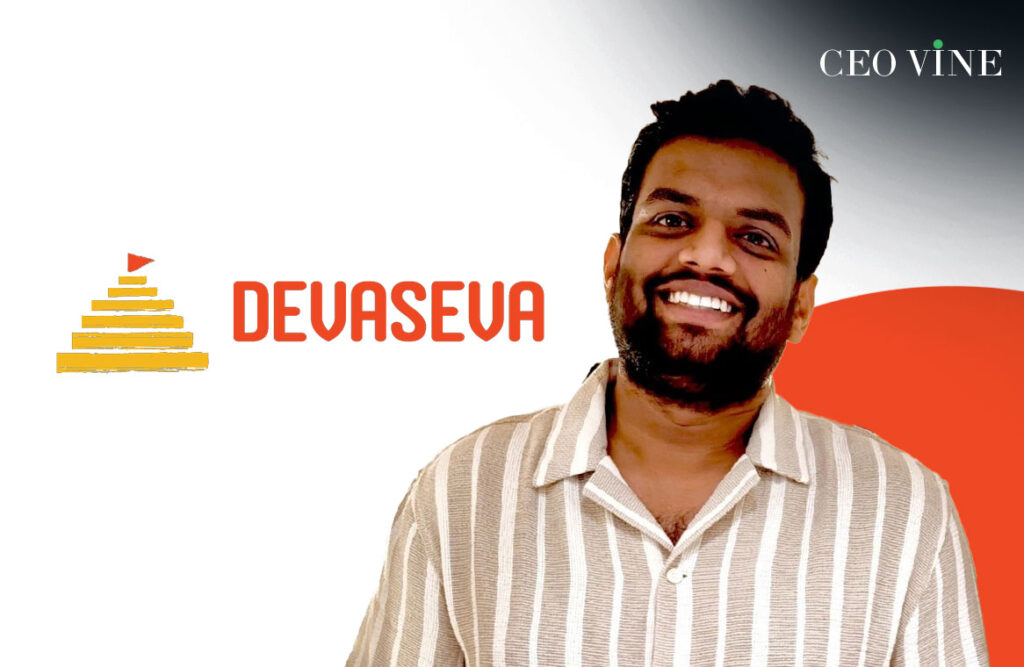
    Devaseva founder

    Devaseva is India’s first dedicated “faith-tech” platform, launched by Anil Kumar Redyy and Sandeep Sharma.

    It allows users to participate in over 200,000 Vedic rituals virtually. Ideal for NRIs and those far from home, the app bridges the gap between tradition and technology by bringing sacred experiences online.

    It’s redefining how people perform rituals—from Ganga aarti to Navagraha poojas—without needing to be physically present.

    AnytimeAstro
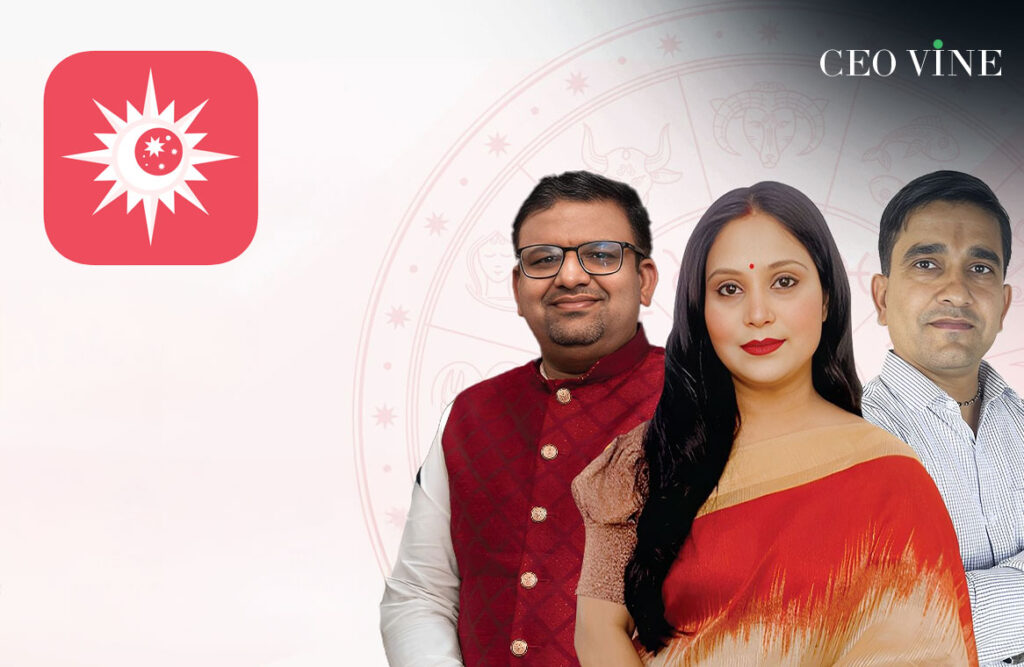
    AnytimeAstro founders

    Anytime Astro, founded in 2021 by Kapil Garg and Chandan Garg and headquartered in Jaipur, is one of India’s leading platforms for real-time astrology services.

    This spiritual tech startup was launched with a simple yet powerful mission—to make astrological guidance available 24/7, no matter where you are.

    Operating through a user-friendly mobile app, Anytime Astro connects users with professional astrologers for consultations via live chat and calls. The services range from horoscope readings, numerology, Vastu consultation, to tarot card readings.

    What sets Anytime Astro apart is its affordability and accessibility. With a commitment to offering guidance that’s both personalized and easy to understand, the platform caters to a wide audience—including first-time astrology users and spiritually inclined millennials alike.

    Despite being unfunded, the platform has grown organically and carved a niche for itself in the spiritual tech ecosystem. It won the International Business Award for Best Astrology App in India in 2024, a testament to its quality, user trust, and innovative delivery model.

    Also Read | 10 Defense Tech Startups Championing India’s Military Self-Sufficiency

    DevDham
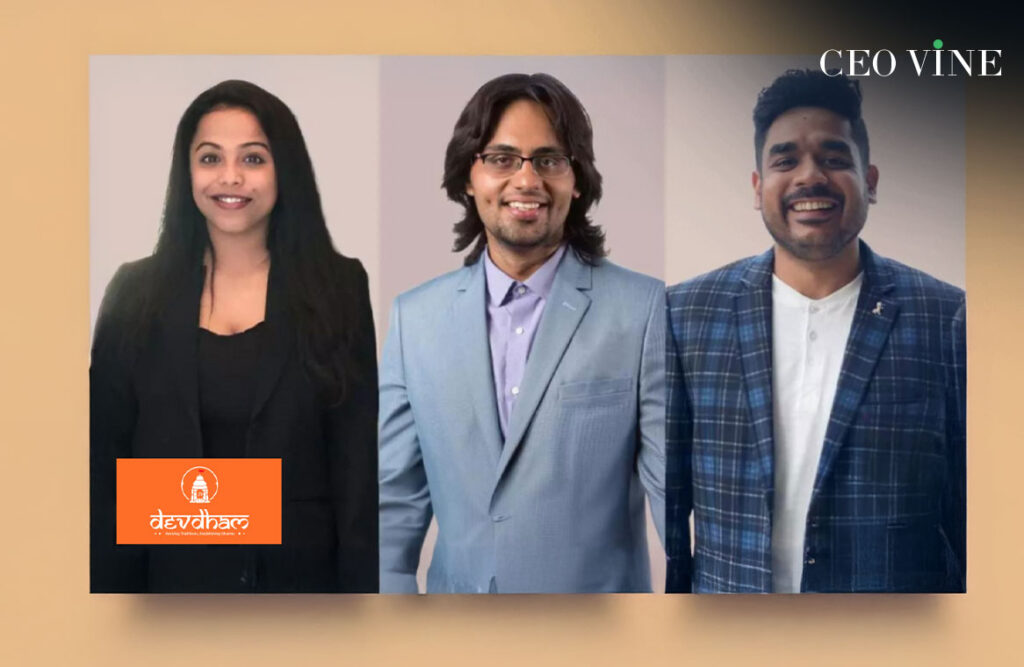
    DevDham founders

    DevDham, founded in 2020 by Pranav Kapoor, Suyash Taneja, and Sagnika Chowdhury, is a devotional digital platform that brings India’s temple experiences to your fingertips. This spiritual tech startup bridges the physical distance between devotees and places of worship by offering live darshan, at-home pooja services, and digital donations to temples and spiritual gurus across India.

    Beyond ritual facilitation, DevDham is also a rich information hub—providing detailed insights into the history, stories, rituals, and travel guidance for hundreds of temples. It empowers devotees to engage meaningfully with their faith, even when visiting a temple isn’t possible.

    So far, the startup has partnered with over 150 temples across 16 Indian states, expanding its reach and impact in both urban and rural devotional communities.

    DevDham has raised $1.59 million in seed funding, attracting prominent investors such as Titan Capital, TDV Partners, and All In Capital. Its most recent funding round was on January 3, 2024, when it secured $723K, taking its current valuation to $4.57 million.

    Japam
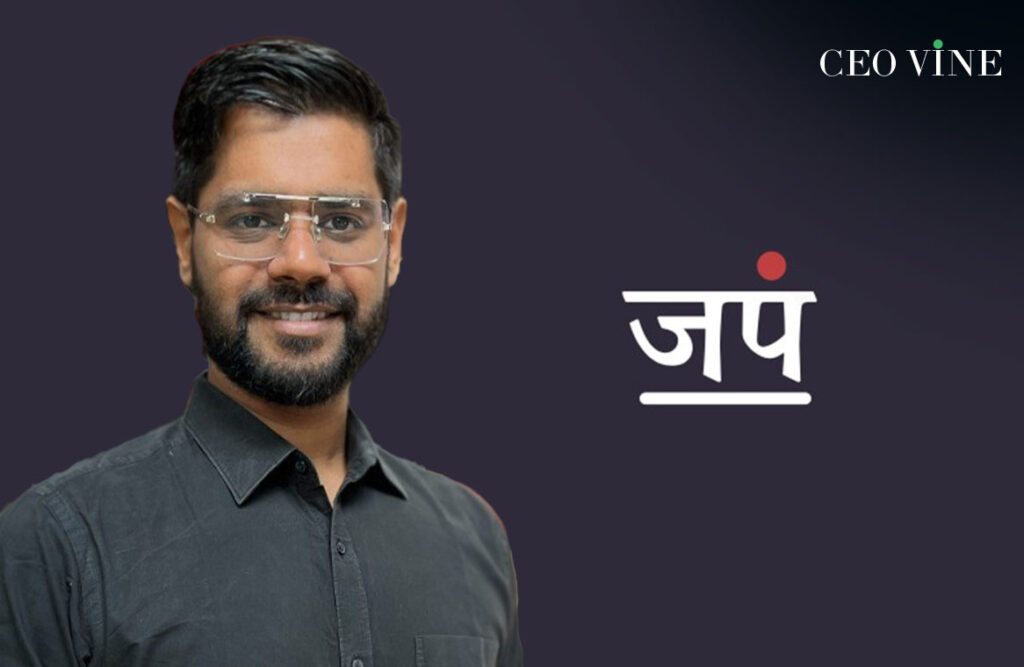
    Japam founder

    Founded in 2022 by Ritoban Chakrabarti and headquartered in Mohali, India, Japam is a fast-growing D2C spiritual ecommerce platform transforming how Indians engage with sacred traditions through curated spiritual jewelry and decor.

    What began as a small online store offering Rudraksha malas and bracelets, Japam has now expanded its offerings to include gold-plated spiritual wearables, handcrafted idols, wall hangings, and spiritually themed decor items. Each product is designed to blend traditional aesthetics with modern appeal—making spirituality both wearable and giftable.

    Japam a spiritual tech startup claims to have served over 3 lakh customers across India, becoming a preferred destination for faith-inspired lifestyle products.

    In January 2024, the startup raised $50.1K in an angel funding round, taking its valuation to ₹90.4 crore.

    VAMA
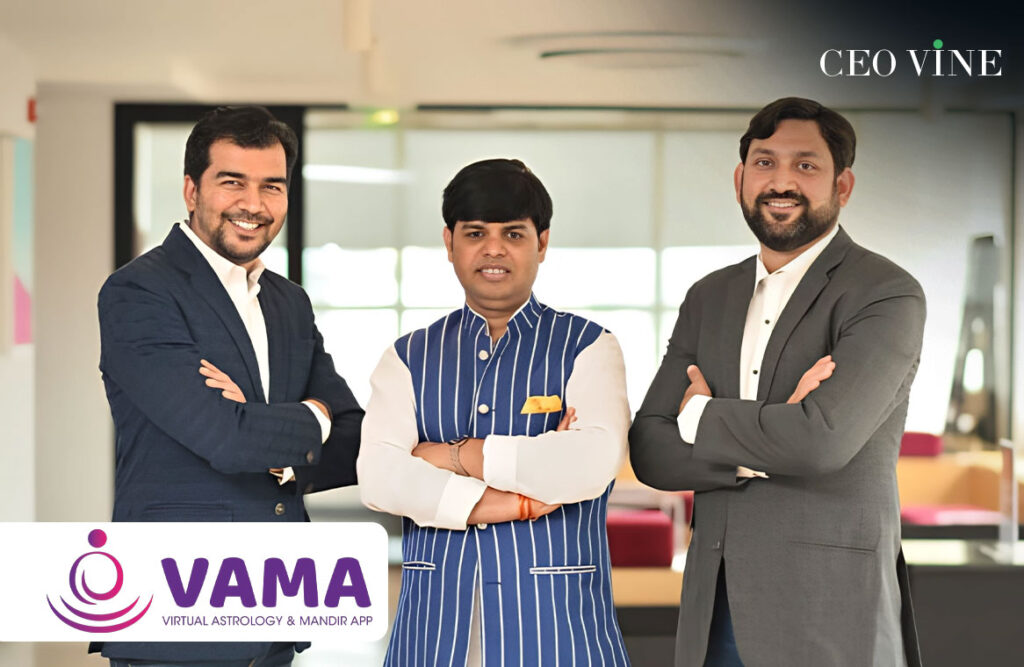
    VAMA founders

    Founded in 2020 by Manu Jain, Himanshu Semwal, and Acharya Dev, VAMA is a Delhi-based spiritual tech startup transforming how devotees engage with rituals and astrology in the digital age.

    The app offers a seamless interface for on-demand e-puja, virtual darshans, and live astrology consultations, all from the comfort of a smartphone.

    Whether you want to perform a puja at a temple across the country or consult a seasoned astrologer for life guidance, VAMA makes it possible through voice, video, and chat-enabled experiences.

    With over 250 partner temples and a network of 300+ astrologers, the platform serves as a one-stop digital destination for all things spiritual.

    VAMA has raised a total of $3.63 million in funding from marquee investors such as Wavemaker Partners, PointOne Capital, and Huddle Ventures, achieving a current valuation of ₹100 crore. Its most recent funding was a $1.5 million seed round on November 21, 2023, aimed at team expansion, product development, and scaling its tech capabilities.

    Notably, the platform also joined the government-backed Open Network for Digital Commerce (ONDC) to broaden access and bring spiritual services to more users across India.

    Temple Connect
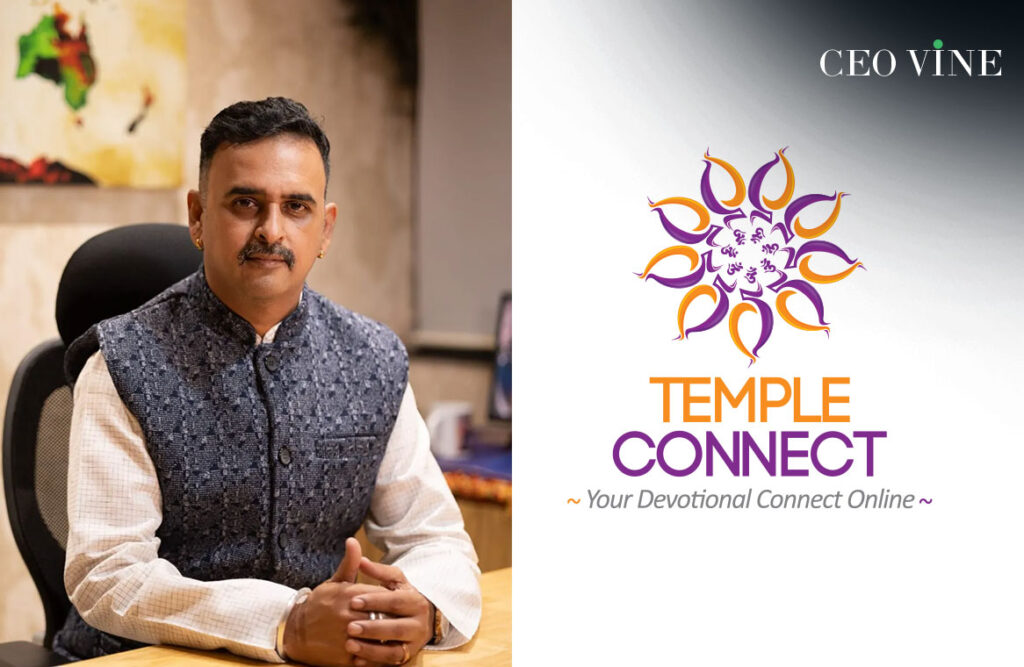
    founder

    Founded by Giresh Kulkarni in 2016, Temple Connect digitally connects users to 7000+ temples around the world.

    From providing darshan timings to e-poojan bookings, this spiritual tech startup is especially popular among NRIs.

    It played a key role during the inauguration of the Shri Ram Janmbhoomi Mandir, managing crowds and access. It’s a trusted information hub for temple-related services.

    Vaya
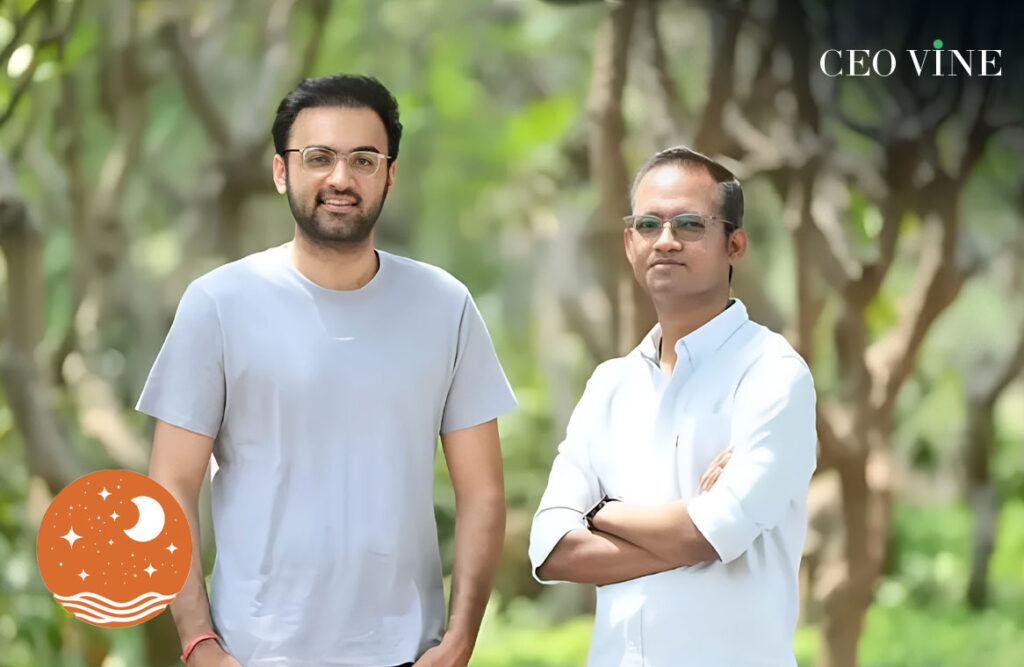
    Vaya founders

    Founded in 2025 by Maahin Puri and Nitesh Kumar Niranjan, Vaya is a Delhi-based spiritual tech startup that brings the timeless wisdom of Vedic astrology to modern users through an intuitive, on-demand platform.

    Specializing in real-time consultations with professional astrologers, Vaya allows users to book sessions instantly and receive personalized guidance on relationships, career, health, and more. The platform operates on a pay-per-minute model, offering flexible time bundles ranging from 5 to 40 minutes. This model ensures affordability while maintaining a premium experience.

    In just its first few months, this spiritual tech startup has already attracted a user base of 30,000–40,000, primarily from metro cities like Mumbai, Delhi, and Bengaluru, and is now eyeing expansion into the NRI markets in the US and Canada.

    The startup raised $1.5 million in funding from Accel on May 8, 2025, giving it a strong financial foundation to enhance its AI-powered infrastructure and scale its operations. With 11 in-house astrologers and a rapidly growing audience, Vaya is on track to become one of India’s leading platforms for accessible, authentic astrological consultation.



  • Why Brands and Manufacturers Should Avoid Fully AI-Generated Product Photography

    Why Brands and Manufacturers Should Avoid Fully AI-Generated Product Photography

    The Rise of AI in Visual Marketing Artificial Intelligence (AI) is transforming industries everywhere, including the way brands and manufacturers approach product photography.

    With AI, businesses can generate product visuals quickly, affordably, and in endless variations. While the benefits seem clear—lower costs, faster output, and creative flexibility—there’s a serious risk that often gets ignored: Trust.

    When customers can no longer trust what they see, businesses risk long-term losses that outweigh any short-term savings. Fully relying on AI-generated images can seem like a cost-saving strategy, but it could lead to high return rates, poor reviews, and damaged brand reputation.

    Why Brands Are Turning to AI for Product Photography

      Speed: AI can produce dozens of product images in minutes, eliminating the need for complex studio setups.

      Cost Efficiency: No need to hire photographers, models, or rent studio space.

      Scalability: Brands can easily adapt images for different markets, seasons, or campaigns.

      While these advantages are real, they only address the business side. What about the customer’s side?

      The Customer Sees Something Different

        Customers today are highly visual. They buy with their eyes before their wallets. If an image oversells a product, the customer’s expectations are instantly set high. When the delivered product falls short of the AI-enhanced promise, disappointment kicks in.

        Reality vs. Rendered: AI can enhance a product’s texture, color, and lighting in ways that are impossible to replicate in real life.

        The “What I Ordered vs. What I Got” Problem: These moments can go viral and damage your brand reputation beyond repair.

        Short-Term Gains, Long-Term Losses

          It’s true: you might see improved ad click-through rates or more impressions using hyper-polished AI visuals. But what happens after the sale?

          Higher Return Rates: If the product doesn’t match the image, customers return it. Returns are expensive.

          Loss of Repeat Customers: Once trust is broken, customers rarely come back.

          Bad Reviews and Social Proof: Online reviews are public. One dissatisfied customer can influence hundreds.

          The Hidden Costs of Free AI

            AI might save on upfront photo production, but the hidden costs are massive:

            Loss of Customer Trust: Trust is built slowly and lost instantly.

            Reputation Damage: A single misleading image can lead to backlash on social media.

            Retail Pushback: Distributors and marketplaces may require realistic, unedited images.

            Why Authenticity Wins

              Today’s consumers crave authenticity. They’re tired of being sold a dream. They want to feel like they’re making an informed, honest decision.

              User-Generated Content (UGC): Real photos from customers build trust faster than polished marketing images.

              Behind-the-Scenes Visuals: Showing your process, your factory, or your team adds credibility.

              Mixed Content Strategy: Combine AI for backgrounds or layouts, but always keep real images front and center.

              Best Practices for Using AI in Product Photography

                AI doesn’t have to be the enemy. It’s about how you use it:

                Use AI for basic editing, lighting correction, and background removal.

                Avoid using AI to completely generate products or scenes.

                Always keep at least one real, high-quality photo of the product on every listing.

                Be transparent about AI usage when necessary (especially for fashion, food, or beauty products).

                Even Big Brands Won’t Go All-AI

                  AI can generate entire scenes, characters, and even full-length movies today. But despite that, Hollywood still casts real actors like Tom Cruise, Angelina Jolie, Jason Momoa, Shah Rukh Khan, and Amitabh Bachchan. Why? Because people connect with real humans, not perfect digital replicas.

                  The same goes for music. AI can now generate incredible vocals and compositions, but it still can’t replace the emotional depth of a real singer or a live performance. Connection matters more than perfection.

                  Big brands understand that it’s not just about how a product looks, but how it feels to the customer. That’s why they continue to invest in real photography, real models, and real experiences.

                  Hence don’t sacrifice trust for convenience.

                  AI can be a fantastic tool, but it should support your brand’s authenticity—not replace it. In the rush to save a few bucks, don’t lose sight of the bigger picture: customer trust, long-term loyalty, and brand credibility.

                  If you’re in this for the next quarter, AI-only visuals might work. But if you’re building a brand for the next decade, authenticity wins every time.

                1. IPO 2025: The Startups List Going Public in India This Year

                  IPO 2025: The Startups List Going Public in India This Year

                  India’s stock market is witnessing an exciting shift, one that’s putting the country on the global IPO map. After a phenomenal 2024 that broke records in terms of capital raised and startup listings, 2025 is already buzzing with anticipation. The country is not just home to tech innovation anymore; it’s where bold ventures are going public, rewriting the rules of business scalability.
                  In 2024, India saw 13 new-age tech startups going public more than double the number from 2023. These companies raised INR 29,070 Cr in total, split between fresh issues worth INR 10,300 Cr and OFS (Offer for Sale) worth INR 18,770 Cr. This surge is part of a larger trend.

                  Over the past five years, 851 IPOs have launched in India. Now, experts believe we could cross the 1,000-IPO mark within just two years.

                  Startups That Filed DRHP in 2024

                  1. Ecom Express – Logistics Enabler for E-commerce

                  With clients like Amazon and Flipkart, Ecom Express is key to India’s ecom backbone. Filed for a ₹2,600 Cr IPO, reducing its FY24 losses by 67%.

                  2. Aye Finance – AI-Driven MSME Lending

                  NBFC using AI for credit decisions, backed by Google. Revenue surged in FY25 H1, though profits dipped slightly.

                  3. DevX – Coworking Space Provider

                  Operating in 10+ cities, DevX flipped into profitability with a lean team and robust real estate strategy.

                  4. IndiQube – Flexible Office Space Solutions

                  Despite rising losses, it saw a 44% jump in revenue due to demand for hybrid workspaces.

                  5. BlueStone – D2C Jewellery Brand

                  Omnichannel player known for elegant jewellery. Clocked INR 348 Cr in Q1 FY25 revenue despite net loss.

                  6. ArisInfra – AI-Based Construction Procurement

                  Streamlining material sourcing for real estate developers with AI. Posted minor losses amid high revenue.

                  7. Smartworks – Enterprise Coworking Spaces

                  Focused on large-scale managed offices; its revenue crossed INR 1,000 Cr, signaling strong enterprise demand.

                  8. Ather Energy – EV Scooter Pioneer

                  One of India’s top EV startups, with Hero MotoCorp among backers. Revenue growth slowed, but losses rose due to expansion costs.

                  9. Avanse Financial Services – Education Financing

                  Offers student and institutional loans. FY24 profit more than doubled, signaling strong market demand.

                  10. Ullu – OTT Platform

                  Focuses on regional and niche content. Maintains profitability with INR 99.6 Cr revenue in FY24.

                  11. Zappfresh – D2C Meat Startup

                  Farm-to-fork delivery model, ensures 90-minute meat delivery. Revenue and profit both surged in FY24.

                  Also Read | Unicorn Startups in India 2025: Who Made It to the Billion-Dollar Club So Far?

                  Upcoming IPO 2025

                  Here are the startups lined up to go public in 2025, covering sectors from fintech and EV to SaaS and e-commerce:

                  • Bira 91 – India’s craft beer brand, backed by Peak XV and Sofina, eyeing broader market reach.
                  • boAt – Wearables brand facing revenue dip but with solid brand equity among youth.
                  • Capillary Technologies – SaaS CRM & loyalty solutions provider with a global footprint.
                  • Captain Fresh – Seafood exporter using AI to optimize B2B seafood sourcing.
                  • CarDekho – Auto marketplace also running insurance and lending arms.
                  • Cult.fit – Fitness-tech platform with gyms, food, and mental health verticals.
                  • Curefoods – Cloud kitchen giant with diverse brands like CakeZone and EatFit.
                  • Droom – Used car platform with value-added services like financing and SaaS.
                  • Flipkart – The ecom behemoth, ready for its second act post-Walmart acquisition.

                  • Fractal – AI & analytics firm serving Fortune 500 clients.
                  • Groww – Online investment platform with growing profits and retail investor love.
                  • InCred – Diversified financial services player; profits surged 162% YoY.
                  • Imarticus Learning – Upskilling platform for finance, data science & AI skills.
                  • Infra.Market – B2B marketplace for construction supplies with INR 11K Cr+ revenue.
                  • InMobi – One of India’s first unicorns; a global adtech force.
                  • Innoviti – Smart payment infrastructure for offline businesses.
                  • Kissht – Digital loans platform for personal and small biz lending.
                  • Lenskart – Eyewear D2C unicorn, now operating in UAE, Singapore & Japan.
                  • Licious – Farm-to-fork meat delivery startup cutting losses sharply.
                  • Meesho – Social commerce to mainstream marketplace transition; strong revenue growth.
                  • Navi – Fintech by Flipkart’s co-founder; offers loans, insurance, mutual funds.
                  • NoPaperForms – CRM & automation for educational institutions.
                  • OfBusiness – Lending meets B2B material commerce with 25%+ revenue growth.
                  • Ola Consumer – Ride-hailing, fintech, and food—under one mobility ecosystem.
                  • OYO – Hospitality and travel tech brand, now profitable after major revamp.
                  • PayU India – Payment gateway major, with diverse payment suite.
                  • PhonePe – UPI powerhouse, processing nearly half of India’s digital payments.
                  • Physics Wallah – Edtech unicorn, expanding into skilling & study-abroad.
                  • Pine Labs – POS and merchant payments company eyeing omnichannel expansion.

                  • Pure EV – Electric bike manufacturer offering budget-friendly models.
                  • Razorpay – Fintech super app for payments, payroll, and banking.
                  • Rebel Foods – Multi-brand cloud kitchen with presence across QSR segments.
                  • Servify – Device protection & exchange platform for top OEMs.
                  • Shadowfax – Logistics startup with strong FY24 turnaround and revenue rise.
                  • Shiprocket – Logistics aggregator helping SMBs ship across India.
                  • Turtlemint – Insurance distribution startup serving 3L+ financial advisors.
                  • Urban Company – Service marketplace with salons, cleaning, and repairs.
                  • Wakefit – D2C furniture & sleep brand scaling fast with reduced losses.
                  • WonderChef – Kitchenware & home appliances startup co-founded by Sanjeev Kapoor.
                  • Zepto – Quick commerce rocketship doing 10-min deliveries; revenue doubled.
                  • Zetwerk – B2B contract manufacturing unicorn serving large industrial clients.

                  India’s IPO momentum is not a flash in the pan, it’s a reflection of deepening capital markets, maturing startups, and growing investor trust. As new sectors like EV, AI, and quick commerce join the IPO fray, 2025 could become the country’s most IPO-active year yet.

                  For founders, investors, and market watchers—this is a moment worth tracking. The next wave of India’s public companies is more diverse, more tech-driven, and more ambitious than ever.

                2. 20 Pet Care Startups in India – Brands Transforming Life for Pet Parents

                  20 Pet Care Startups in India – Brands Transforming Life for Pet Parents

                  Imagine coming home after a long day, and there’s your furry friend waiting by the door, wagging its tail or purring with joy. That simple moment of unconditional love is a reminder of the unique companionship pets bring into our lives. From offering emotional support to reducing stress, pets have become more than just companions—they are integral to our well-being.

                  As pet ownership continues to rise, especially among Millennials and Gen Z embracing the ‘pet parent’ culture, the demand for quality pet care solutions is booming. In India, the pet care industry is growing rapidly, with projections to exceed ₹10,000 crore by 2028

                  Currently, India has over 31 million pet dogs and 2.44 million pet cats, with pet parents spending more than ₹3,000 per month on their pets’ needs in cities like Bengaluru. 

                  This surge in pet care spending is driving a wave of innovative pet care startups offering everything from nutritious food to specialized grooming services.

                  List of pet care startups in India

                  Here are 20 pet care startups leading the charge and making life better for both pets and their parents.

                  Heads Up for Tails

                    Heads Up for Tails

                    In 2008, Rashi Narang struggled to find good-quality pet accessories for her dog. Frustrated by the lack of options, she decided to create her own brand. What started as a passion project in her home has now become Heads Up For Tails (HUFT)—India’s largest luxury pet care startups.

                    HUFT offers everything from premium pet food and grooming essentials to personalized accessories and stylish pet beds. With 90+ retail stores across India and an ever-growing online presence, HUFT has become a one-stop destination for pet parents looking for quality and style.

                    Drools 

                      Drools

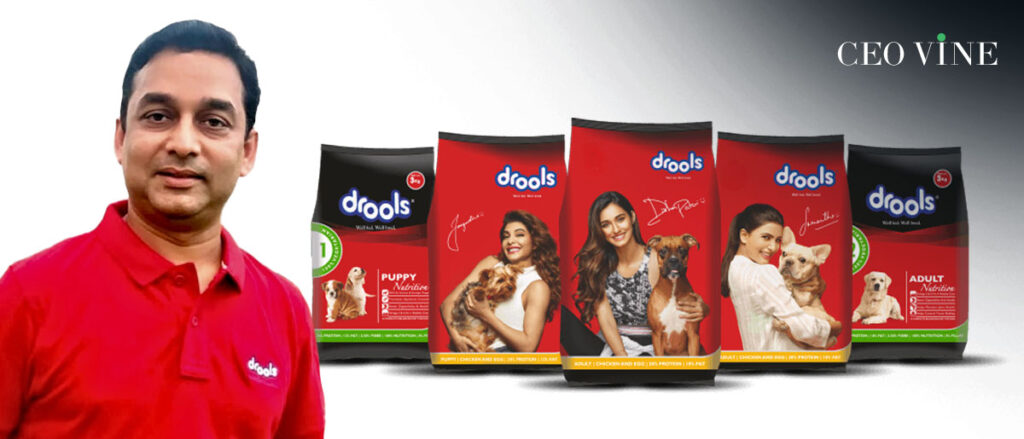
                      In 2010, Fahim Sultan set out to create India’s first scientifically formulated pet food brand Drools, offering high-protein, vet-approved nutrition designed specifically for Indian pets. His goal was to provide a high-quality alternative to international brands like Pedigree and Royal Canin.

                      Even as the pet food industry grew, many pet parents continued to prefer homemade meals, often due to concerns about packaged food containing by-products and leftovers. Drools aimed to change this perception by focusing on real, wholesome ingredients. Rather than just making dog food, the brand committed to making food for dogs, with real chicken as the primary ingredient.

                      Led by Shashank Sinha (CEO at Drools), who brings over a decade of leadership experience, Drools has become one of India’s leading pet food brands.

                      Today, its products are available in over 34,000+ retail outlets and exported to more than 20 countries.

                      Supertails

                        Supertails

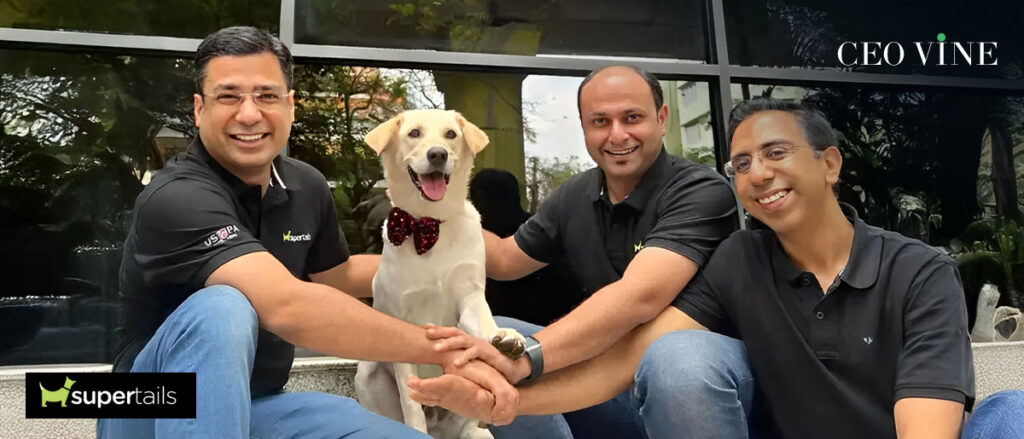
                        Supertails was founded in 2021 by Varun Sadana, Vineet Khanna, and Aman Tekriwal with a mission to transform pet parenting in India. Recognizing the challenges pet parents face in finding reliable products and veterinary services, the Bengaluru-based startup created a comprehensive digital platform to meet these needs.

                        Offering everything from high-quality pet food and accessories to grooming essentials and toys, Supertails ensures convenience at every step.

                        What sets the platform apart is its expert-led online veterinary consultations, making professional pet care easily accessible.

                        With strong investor backing, Supertails has raised $31.4 million to date, including a $15.2 million Series B round in February 2024. The company reported an annual revenue of ₹67.3 crore ($8.13 million) as of March 31, 2024.

                        Zigly

                          Zigly

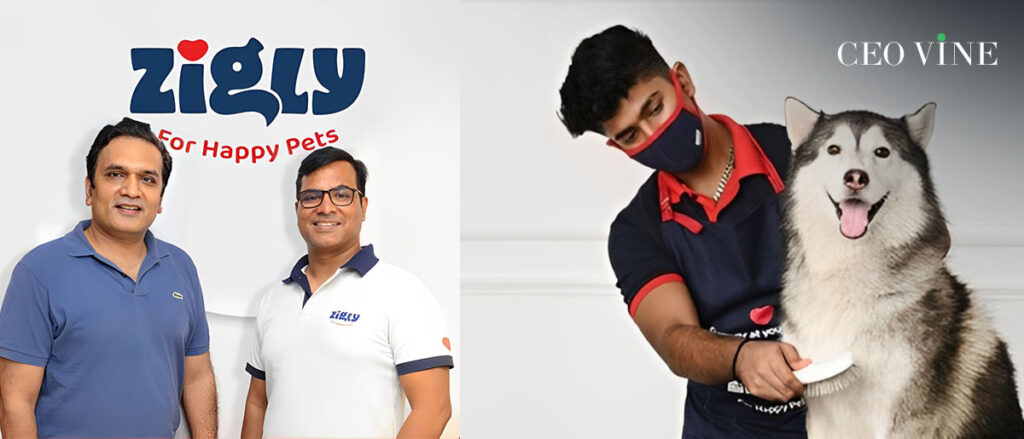
                          Ashok Jaipuria saw a gap in India’s pet care market—pet parents were struggling to find reliable services like grooming, training, and vet consultations. That’s when Zigly was born in 2021.

                          Unlike a traditional pet store, Zigly offers a complete ecosystem of pet care—from food and accessories to professional grooming and healthcare services. With a flagship care center in Delhi and a growing online platform, Zigly is making pet care more convenient and accessible.

                          With an annual revenue of $388 million as of 2023, Zigly is on track to become India’s leading pet service brand.

                          Wiggles

                            Wiggles

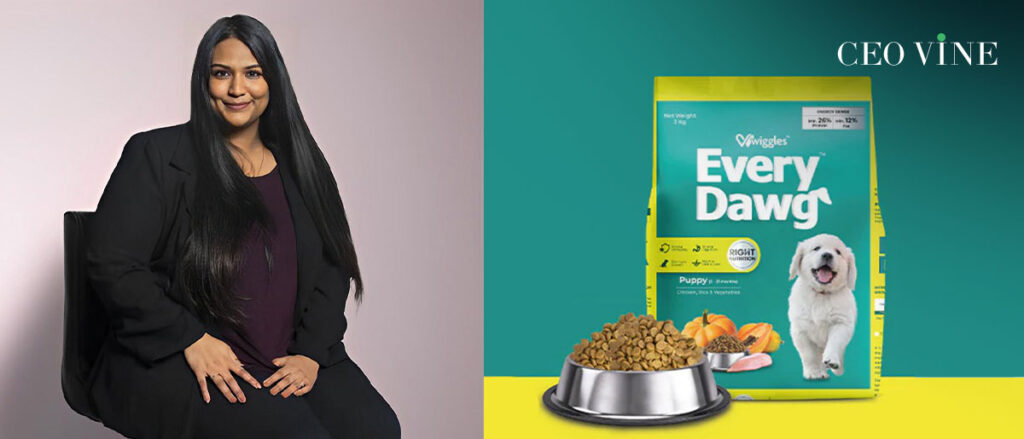
                            To bridge the gap in pet care knowledge for new and experienced pet parents, Anushka Iyer founded Wiggles in December 2018 alongside her father, Rajh Iyer, and co-founder, Venky Mahadevan.

                            Wiggles is known for its Wiggle Box, a subscription service delivering monthly anti-parasitic meds and pet supplements. It also provides grooming, daycare, and on-call vet services. In 2019, Wiggles raised $1 million in angel funding from investors, including Dell EMC’s Aparna Badkundri and LTI’s Nachiket Deshpande.

                            In 2023, Wiggles acquired Capt Zack, strengthening its grooming and skincare range. With $6.5 million in funding, the brand continues to set new standards in pet healthcare.

                            Dogsee Chew

                              Dogsee Chew

                              Dogsee Chew was born out of the love founders Bhupendra Khanal and Sneh Sharma had for their Golden Retriever, Mowgli. Struggling to find healthy treats, they launched the brand in 2015 in Bengaluru to provide 100% natural, gluten-free, and grain-free options for dogs. Their mission is to replace chemically processed treats with wholesome, organic alternatives. 

                              Made with Himalayan ingredients, Dogsee Chew offers high-protein, low-carb, vegetarian treats that serve as a natural alternative to bones and rawhide, ensuring both nutrition and taste for furry friends.

                              With $14 million in funding, including $6.7 million from Mankind Pharma, the brand has expanded to global markets, making it one of India’s top pet treat exports.

                              Benny’s Bowl

                                Benny’s Bowl

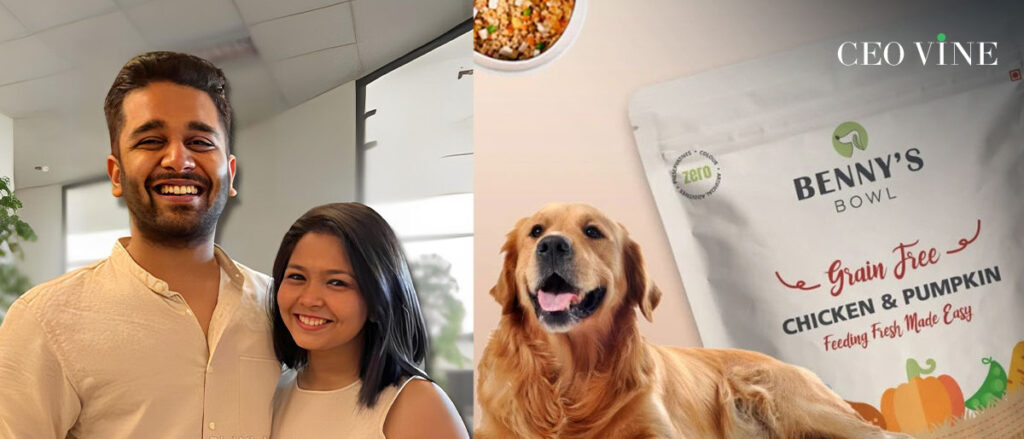
                                Tired of seeing pet parents struggle with preservative-laden kibble, Aashna Jain and Akshay Gupta launched Benny’s Bowl in 2021. The brand offers fresh, preservative-free dog food made with real meat, rice, and vegetables.

                                With a subscription-based model, pet parents can customize meal plans to suit their dog’s dietary needs. $300K in funding has helped Benny’s Bowl expand, offering a healthier alternative to traditional dog food.

                                PetChef

                                  PetChef

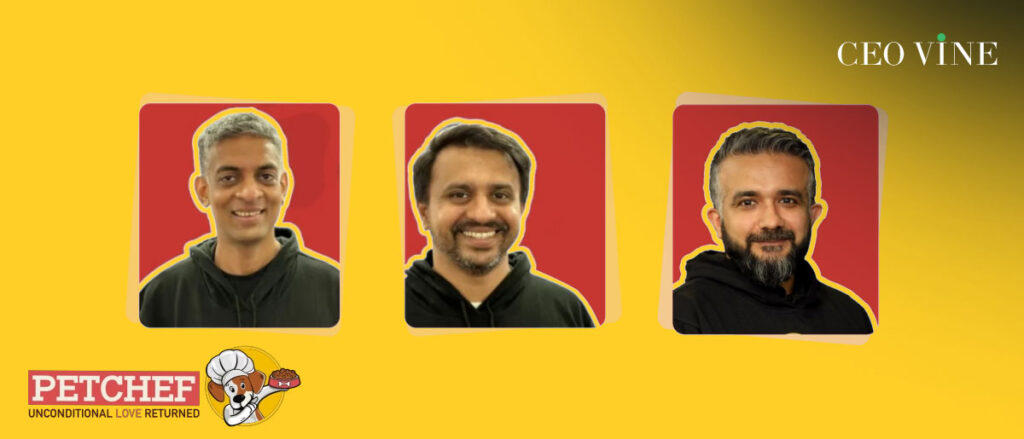
                                  Founded in 2024 by Nayan Shah, Akshay Patel, and Nakul Ruparel, PetChef focuses on human-grade, preservative-free pet meals.

                                  Their product line includes gravy meals, bone broth, and high-protein treats, ensuring that pets get balanced, natural nutrition. 

                                  Recently backed by 100X.VC, PetChef is quickly gaining popularity among health-conscious pet parents.

                                  MyPetz

                                    MyPetz

                                    Founded in 2021 by Dr. Anjan Goswami and Ankita Parihar, MyPetz is a Bengaluru-based digital platform simplifying pet care. 

                                    It offers e-consultations, grooming, and a curated selection of pet food, toys, bedding, hygiene essentials, and medicines.

                                    With a tech-driven approach and a focus on affordability and quality, MyPetz bridges the gap in standardized pet services. 

                                    Operating in the B2C retail space, the platform has surpassed 10,000 downloads, connecting pet parents with trusted brands and expert care.

                                    Doggie Dabbas

                                      Doggie Dabbas

                                      Founded in 2011 by Rashee Shah Kuchroo, Doggie Dabbas began as a solution to her pet Sloppy’s health issues caused by poor nutrition. Seeing the benefits of fresh, balanced meals, she started offering vet-approved meal plans, leading to the launch of Doggie Dabbas.
                                      Now delivering meals monthly across Delhi and Mumbai, the brand provides fresh, tailored nutrition, helping pets lead healthier lives while supporting busy pet parents.

                                      Initially focused on frozen meals, the brand expanded in 2014 to include treats and snacks, catering to a growing demand for fresh, vet-approved pet nutrition.

                                      Over the years, Doggie Dabbas has helped numerous pets, including those struggling with obesity and health issues, achieve better well-being through tailored diets. 

                                      Just Dogs

                                        Just Dogs

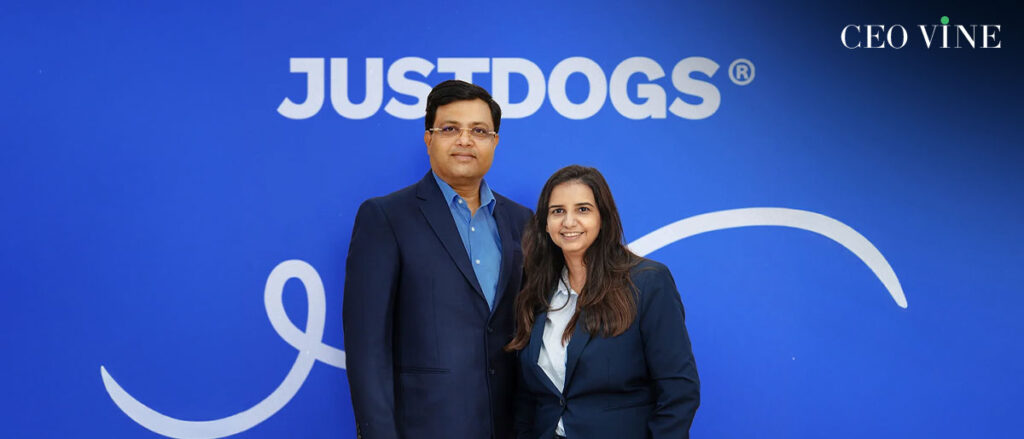
                                        Started in 2011 by Poorvi and Ashish Anthony, Just Dogs has grown into India’s largest pet retail chain, offering a wide selection of pet food, treats, accessories, and grooming products.

                                        With a strong online presence and physical stores across the country, Just Dogs provides expert-recommended pet care solutions.

                                        In 2022, the company secured $7 million in Series A funding, allowing it to expand its services further.

                                        Canine India

                                          Canine India

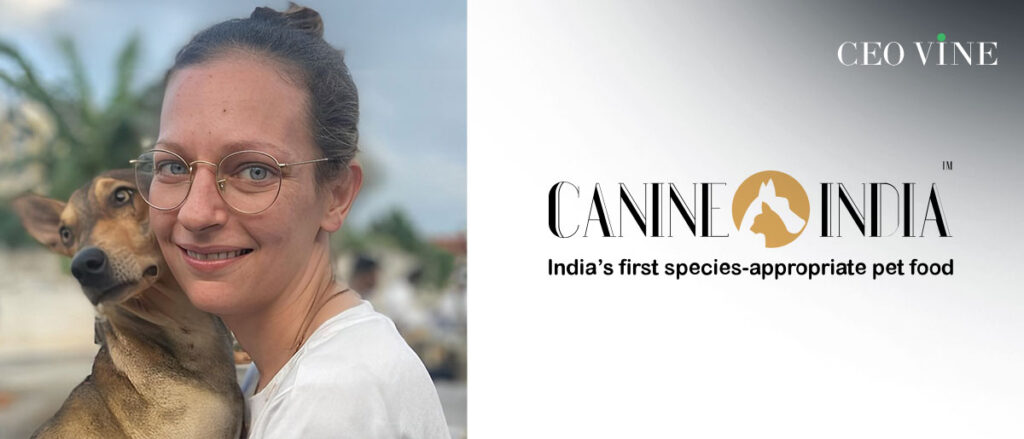
                                          Founded in 2018 by Certified Pet Food Nutritionist Julia Pape, Canine India was born from the need for high-quality, ethically sourced pet food. Struggling to find nutritious options for her Indie dog, Coco, Julia began sourcing fresh, farm-raised meat, leading to the brand’s creation.

                                          Based in Thiruvallur, Canine India offers minimally processed, species-appropriate pet food, including air-dried treats, raw fish, chews, and supplements—free from fillers and preservatives. Committed to transparency and animal welfare, the brand also supports Indie dog feeding programs. Julia believes, “Making food is a huge responsibility, not a cash grab.”

                                          Wagr

                                            Wagr

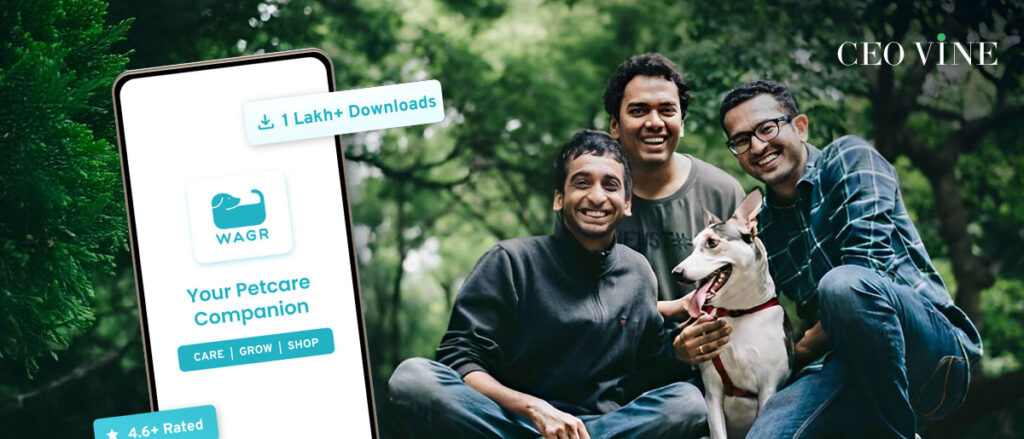
                                            Wagr is India’s pioneering AI-driven pet care platform, transforming how pet parents access expert guidance. Founded in 2016 by Siddharth Darbha, Advaith Mohan, and Ajith Kochery, Wagr introduced Toto, the world’s first AI-powered pet care chatbot. 

                                            Toto provides 24/7 personalized advice on nutrition, behavior, training, and health, assisting thousands of pet owners with data-backed insights.

                                            Beyond AI-driven support, the Wagr app offers seamless access to veterinary consultations, pet supplies, and India’s first GPS and fitness tracker for dogs. Backed by IvyCap Ventures and Inflection Point Ventures, the company raised $699K in a seed funding round in November 2021.

                                            ThePetNest

                                              ThePetNest

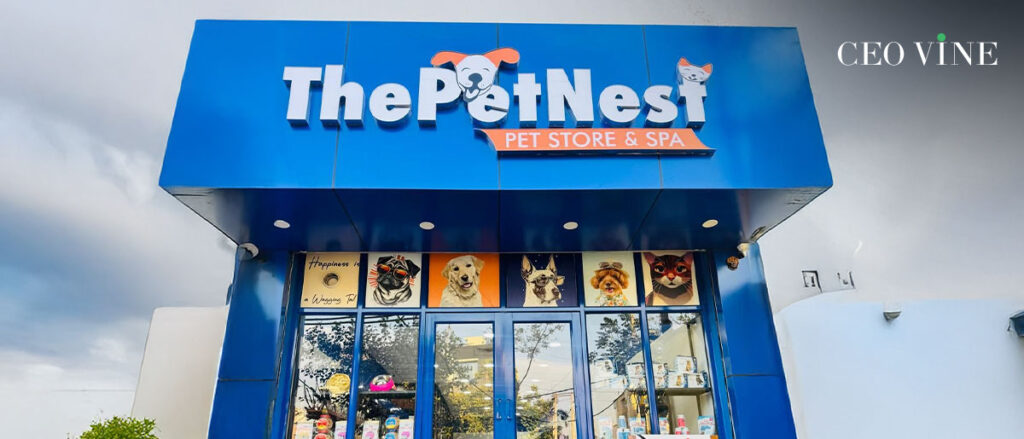
                                              ThePetNest is a leading pet care platform in India, offering a tech-enabled, one-stop solution for all pet-related needs. Founded in 2019 by Vivek Kumar, Chandrakant Yadav, and Shivam Gupta, the company provides a range of services, including grooming, veterinary consultations, pet insurance, relocation, adoption, dog walking, and boarding across 35+ cities.

                                              ThePetNest ensures quality pet care through a network of 4,000+ trained professionals. With services accessible via its website, mobile app, and retail franchises, it offers convenience and reliability. 

                                              As a bootstrapped, profitable company, ThePetNest prioritizes innovation, customer satisfaction, and trusted service, making pet parenting easier.

                                              FreshWoof

                                                FreshWoof

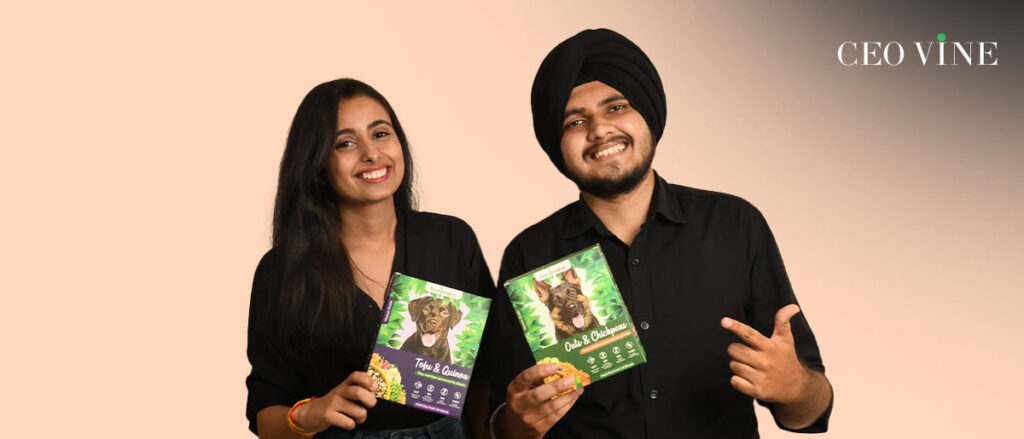
                                                FreshWoof offers 100% plant-based, vet-approved dog food that exceeds AAFCO guidelines, ensuring a nutritious and sustainable diet for pets. Founded in 2019 by Saakshi Sharma and Tejwinder Singh, the brand is committed to providing preservative-free, hypoallergenic, and easily digestible meals crafted with over 25 superfoods.

                                                Its signature formula, Plant Power, is packed with essential nutrients like B12, D3, and taurine, supporting overall health, digestion, and skin and coat wellness. Research suggests that plant-based diets can contribute to longer, healthier lives for dogs

                                                Luvin

                                                  Luvin

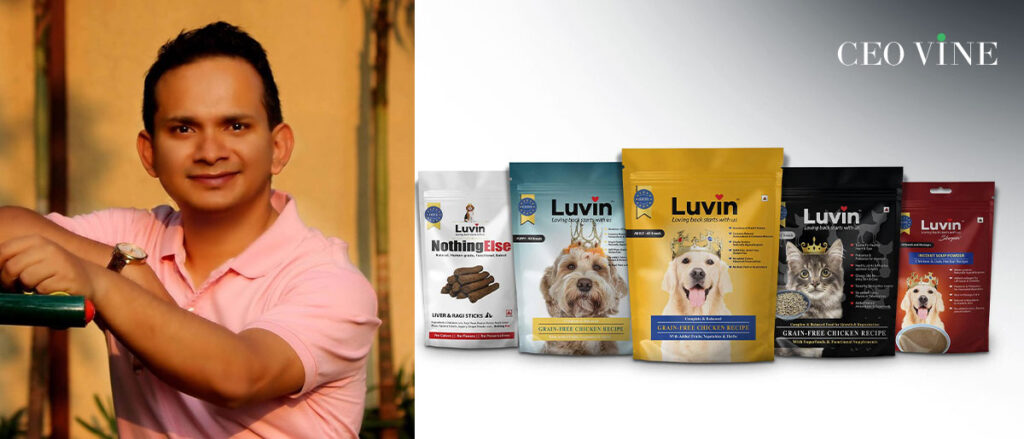
                                                  Founded in 2021 by Ipshit Bhattacharya, Luvin focuses on premium, all-natural pet food and accessories.

                                                  From organic treats to eco-friendly pet products, Luvin is helping pet parents make healthier, more sustainable choices.

                                                  With $300K in funding, Luvin is rapidly becoming a trusted brand for natural pet care.

                                                  Papa Pawsome

                                                    Papa Pawsome

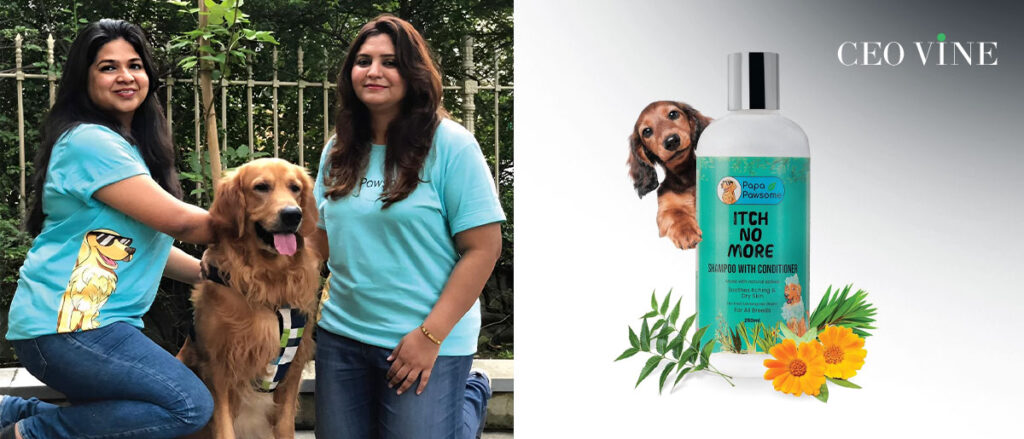
                                                    Founded in 2019 by Nikita Tarun Agarwal, Nishita Agarwal, and Pratik Kanath, Papa Pawsome offers a range of natural, holistic wellness products for pets.

                                                     Its lineup includes wet and dry shampoos, detanglers, itch creams, medicinal ointments for ticks and infections, paw and skin creams, spa kits, and more—crafted from natural ingredients.

                                                    Currently, Papa Pawsome offers breed-specific and concern-specific kits available through its website and e-commerce platforms like Amazon, Flipkart, and Nykaa. To enhance customer convenience, the brand has introduced subscription-based services. 

                                                    As part of 100X.VC’s 7th cohort, the startup secured $400K in a seed funding round in February 2024.

                                                    TailZ

                                                      TailZ

                                                      Founded in 2021 by Mansi Kohli, TailZ is a one-stop app designed to meet every dog’s care needs. Built on the vision of creating a seamless and trusted pet care experience, the brand connects pet parents with verified hosts and expert services, ensuring personalized care for their furry companions.

                                                      With offerings that include boarding, daycare, dog walking, nutrition advice, vet consultations, and pet training, TailZ has quickly built a community of satisfied pet parents. Operating on a B2C model in the retail and health tech space, the app has already surpassed 5,000 downloads.

                                                      FiloMilo

                                                        FiloMilo

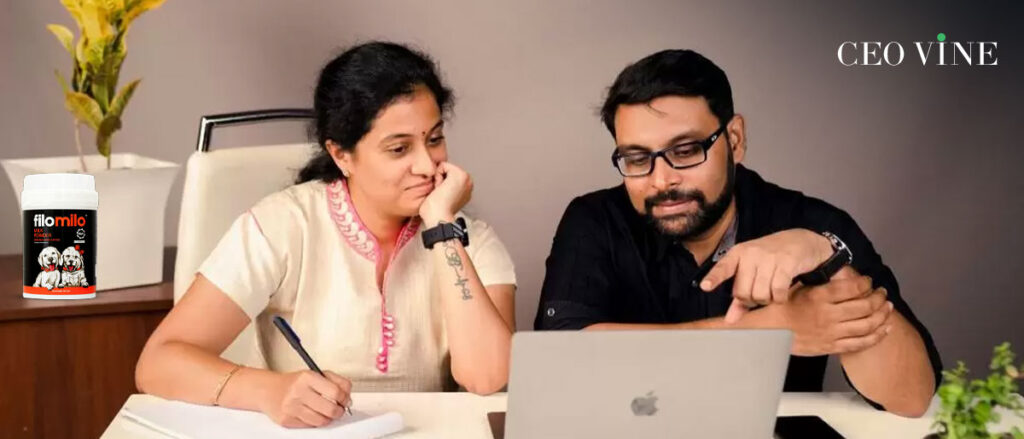
                                                        Founded in 2021 by Brinda Prabhu and Prabhu Gandhikumar, FiloMilo is dedicated to providing high-quality, Ayurvedic-inspired pet nutrition. 

                                                        With a range of meals, snacks, and super-premium dog biscuits made from real chicken, calcium, and Brahmi powder, the brand ensures pets get optimal health benefits with every bite.

                                                        Backed by European veterinarians and nutritionists, FiloMilo’s recipes meet the highest quality standards. Operating in the B2C retail, food, and agriculture space, the brand secured $782K in seed funding in January 2024 and continues to redefine pet nutrition with natural, science-backed products.

                                                        PetSutra

                                                          PetSutra

                                                          Founded in 2016 by Amol Sharma and Tabrez Alam, PetSutra (PetBuddy Products Private Limited) is dedicated to supporting pet parents across India with expert guidance and personalized pet care solutions. 

                                                          By blending technology with pet nutrition and behavioral science, PetSutra ensures pets receive the best possible care tailored to their unique needs.

                                                          The platform offers India’s first dog food diet calculator, personalized pet products, expert consultations, and pet adoption services, creating a seamless pet parenting experience.

                                                          Backed by $1.29M in funding, the company remains committed to empowering pet parents with reliable solutions for a healthier and happier life for their pets.

                                                          Also Read | 10 Defense Tech Startups Championing India’s Military Self-Sufficiency

                                                          Conclusion:

                                                          A decade ago, pet care in India was simple—feeding pets leftovers, giving them a backyard spot, and visiting the vet only when necessary.

                                                          Today, this has changed dramatically. Pets are no longer just animals in the house; they are cherished family members, with their well-being as important as any loved one.

                                                          This shift in perspective has fueled a new wave of pet care, where quality nutrition, expert healthcare, and specialized services have become the norm. Leading this transformation are 20 pet care startups, redefining the industry with better nutrition, advanced healthcare, and high-quality pet products. 

                                                          From fresh food and grooming solutions to AI-driven recommendations, these pet care startups are making pet care more accessible and effective.

                                                          With pet ownership in India on the rise, these startups are at the forefront of the industry, ensuring pets receive the love, care, and attention they truly deserve.

                                                        1. 20 Must-Know Terms for Modern Entrepreneurs to Crack the Business Code

                                                          20 Must-Know Terms for Modern Entrepreneurs to Crack the Business Code

                                                          The business world is changing faster than ever. New technologies, shifting consumer behaviors, and innovative strategies are reshaping how companies operate. As an entrepreneur, staying ahead means understanding not just what’s happening, but also the language driving these changes.

                                                          Ever heard someone mention “Phygital experiences” or the rise of “Q-Commerce” and felt a step behind? You’re not alone. These buzzwords aren’t just trends—they’re shaping the future of industries worldwide. This guide is your shortcut to understanding the most important business terms today.

                                                          Whether you’re launching a startup, scaling a company, or simply staying informed, mastering these concepts will help you navigate the evolving business landscape with confidence.

                                                          • Phygital:

                                                          A business strategy that seamlessly integrates physical and digital experiences, combining the best of both worlds to enhance customer engagement. It often uses technologies like augmented reality (AR), virtual reality (VR), and interactive kiosks to blur the lines between online and offline experiences.

                                                          Example: Tata Cliq is a perfect example of a Phygital experience. The platform allows luxury shoppers to browse products online and experience them physically in stores before making a purchase, providing both convenience and an immersive shopping experience.

                                                          • Dark Stores:

                                                          Physical retail spaces that operate as fulfillment centers rather than customer-facing outlets. They are strategically located in urban areas to expedite order processing and delivery, primarily serving the needs of online shoppers.

                                                          Example: Swiggy Instamart and Blinkit leverage dark stores to ensure deliveries within minutes, streamlining the entire supply chain.

                                                          • Neobanks:

                                                          Digital-only banks that operate without traditional physical branches. They offer a range of financial services, including checking accounts, loans, and investments, through user-friendly mobile apps.

                                                          Example: Jupiter and Fi Money are Indian neobanks offering seamless digital banking experiences with personalized financial insights.

                                                          • Omnichannel:

                                                          A unified approach to commerce that provides customers with a seamless and integrated shopping experience across multiple channels, including online stores, mobile apps, social media platforms, and physical stores.

                                                          Example: Reliance Trends and Croma have adopted an omnichannel model, allowing customers to order products online, try them in-store, and choose between delivery or pickup.

                                                          • Click-and-Mortar:

                                                          A hybrid business model where companies operate both physical retail locations and an e-commerce presence. It combines the convenience of online shopping with the personalized service and instant gratification of in-store purchases.

                                                          Example: Nykaa uses the click-and-mortar model to offer beauty products online while also running physical stores across India for customers who prefer in-person shopping.

                                                          • Gig Economy:

                                                          A labor market characterized by short-term, flexible, and freelance jobs rather than permanent employment. It offers individuals the flexibility to work on-demand while businesses benefit from a scalable workforce.

                                                          Example: Freelancer and Upwork connect professionals with remote freelance opportunities, while gig platforms offer flexible jobs to thousands of delivery partners.

                                                          • BNPL (Buy Now, Pay Later):

                                                          A consumer financing option that allows customers to make purchases immediately and pay for them in installments over time, often without interest if paid within a specified period. It is a popular alternative to credit cards.

                                                          Example: Simpl and LazyPay offer BNPL services to customers, making purchases more affordable by splitting payments into manageable installments.

                                                          • Super Apps:

                                                          All-in-one mobile applications that offer a variety of services such as payments, shopping, ride-hailing, food delivery, and financial management. They create a comprehensive ecosystem that caters to multiple consumer needs within a single platform.

                                                          Example: Tata Neu integrates services like e-commerce, payments, and travel bookings within a single app, streamlining the user experience.

                                                          Also Read: Top 50 Corporate Jargons with Examples to Master Business Lingo

                                                          • Hyperlocal:

                                                          A business model that delivers goods and services within a limited geographical area, focusing on meeting the immediate needs of consumers in a specific neighborhood or city block.

                                                          Example: BigBasket and Swiggy Genie provide hyperlocal delivery of groceries, essentials, and other items within hours, using warehouses and local partners for fulfillment.

                                                          • Voice Commerce:

                                                          A form of e-commerce that enables customers to search for products, place orders, and interact with brands using voice commands through smart devices like Amazon Alexa, Google Home, or Siri.

                                                          Example: Jio Platforms is exploring voice commerce using AI-powered voice assistants to enhance customer experience.

                                                          • Embedded Finance:

                                                          The integration of financial services such as payments, lending, insurance, or investment management directly within non-financial platforms, enabling users to access financial products within their everyday apps without needing to visit a bank or financial institution.

                                                          Example: Ola offers embedded finance by providing insurance options directly within its app, making the process quick and accessible for riders.

                                                          • D2C (Direct-to-Consumer):

                                                          A business model where companies manufacture, market, and sell their products directly to consumers, eliminating intermediaries such as wholesalers, distributors, or retailers. This allows companies to build stronger customer relationships and have greater control over brand perception and pricing.

                                                          Example: Boat and BlissClub use the D2C model to sell their products through their websites and marketplaces, allowing them to gather valuable consumer data and build a loyal customer base.

                                                          • Q-Commerce (Quick Commerce):

                                                          An advanced form of e-commerce that focuses on delivering products to customers within a short time, usually 10 to 30 minutes. It caters to the increasing demand for convenience and instant gratification, especially in urban areas.

                                                          • Fintech:

                                                          Financial technology companies that leverage software and digital platforms to provide innovative financial services, streamlining processes like payments, lending, investing, and insurance.

                                                          Example: Paytm offers financial services including digital payments, insurance, and wealth management through its platform, making it a comprehensive fintech ecosystem.

                                                          • Proptech:

                                                          The application of technology in the real estate sector to streamline processes related to property buying, selling, renting, and management, often using data analytics and AI-powered tools.

                                                          Example: NoBroker enables people to buy, sell, and rent properties without brokers, using AI and data analytics to recommend suitable options and provide seamless transactions.

                                                          • Edtech:

                                                          Technology-driven platforms that provide educational content, virtual learning environments, and online tutoring services, making learning accessible and personalized.

                                                          Example: Byju’s has revolutionized learning in India by offering interactive lessons and adaptive learning modules through its app, catering to students from primary to competitive exam levels.

                                                          • Healthtech:

                                                          The use of digital technology, including telemedicine, wearable health devices, and AI-powered diagnostics, to provide healthcare solutions and improve patient outcomes.

                                                          Example: Practo and Teladoc.

                                                          • Martech:

                                                          Marketing technology that helps companies automate, optimize, and measure their marketing campaigns. Martech tools leverage data analytics to deliver personalized customer experiences.

                                                          Example: HubSpot offers CRM, marketing automation, and customer engagement tools to help businesses streamline their marketing and sales efforts.

                                                          • Insurtech:

                                                          Companies that apply technology to simplify and enhance the insurance process, providing consumers with personalized policies, streamlined claims management, and greater transparency.

                                                          Example: Acko provides digital-first insurance solutions, simplifying claims and policy management through a user-friendly app.

                                                          • Green Tech (Greentech):

                                                          Environmentally-friendly technology that aims to mitigate climate change and reduce environmental impact through innovations in clean energy, electric vehicles, sustainable agriculture, and waste management.

                                                          Example: Ola Electric manufactures electric scooters, contributing to the transition to sustainable mobility in India.

                                                          In the dynamic world of business, understanding these emerging terms can give you a competitive edge. Whether you’re an entrepreneur, investor, or curious learner, staying informed about the latest trends is key to navigating the evolving marketplace.

                                                          So, next time you hear someone mention a “Neobank” or “Super App,” you’ll be ready to jump into the conversation with confidence. After all, the future of business is already here—and now you know the language of tomorrow.

                                                        2. Sacred No More: How Irresponsible Corporate Tourism Is Ruining Rishikesh

                                                          Sacred No More: How Irresponsible Corporate Tourism Is Ruining Rishikesh

                                                          Rishikesh, a city once revered as a sanctuary for saints, yogis, and spiritual seekers, is now facing an alarming environmental crisis. Nestled along the pristine waters of the Ganga, the sacred town is under threat from irresponsible corporate tourism.

                                                          While companies often send employees on retreats for team-building and relaxation, many fail to respect the city’s cultural and environmental significance.

                                                          Corporate Tourism: A Growing Threat to Rishikesh

                                                          What was once a tranquil spiritual retreat has become a bustling party destination. Corporate offsites bring large groups for adventure activities like rafting and riverside camping. However, the absence of sustainable practices has turned these gatherings into a burden on Rishikesh’s fragile ecosystem.

                                                          1. Liquor Bottles in the Sacred Ganga

                                                          Despite Rishikesh being a dry city, alcohol consumption during corporate trips is rampant. Late-night parties at riverside camps often result in empty liquor bottles being carelessly discarded into the Ganga. This sacred river, which provides drinking water to over 400 million Indians, is being polluted by those who should act responsibly.

                                                          1. Sanitary Pads and Plastic Waste Everywhere

                                                          Improper waste disposal has become a major issue. Used sanitary pads, plastic bottles, chips packets, and disposable cutlery are frequently found littering riverbanks and public spaces. Such waste not only pollutes the environment but also disrespects the sanctity of Rishikesh.

                                                          1. Surge in Vehicle Traffic and Air Pollution

                                                          With corporate tourists flocking to the city, the increase in vehicles has led to severe air pollution. SUVs, buses, and cars jam the narrow streets, diminishing the pristine air quality once synonymous with Rishikesh. The noise and emissions disrupt the peaceful ambiance that spiritual seekers once cherished.

                                                          1. Harm to the Natural Ecosystem

                                                          Loud music, bonfires, and reckless partying along the Ganga’s banks are detrimental to the local ecosystem. Wildlife and aquatic life suffer due to noise pollution and waste accumulation. The city’s delicate balance between nature and spirituality is deteriorating as irresponsible tourism continues unchecked.

                                                          1. Disrespect for Local Culture and Traditions

                                                          Rishikesh is a place of prayer, meditation, and spiritual reflection. However, corporate tourists often display disregard for local customs, with incidents of drinking near temples and littering the ghats. This blatant disrespect undermines the cultural and spiritual essence of the town.

                                                          Who Cleans Up the Mess?

                                                          Local organizations and volunteers bear the brunt of cleaning up after careless visitors. Foundations like The Himadri Foundation tirelessly work to remove waste from the Ganga and spread awareness about responsible tourism. But their efforts alone cannot reverse the damage caused by unchecked corporate negligence.

                                                          The Need for Stricter Regulations

                                                          To preserve Rishikesh’s sanctity, the government and local authorities must implement and enforce stricter regulations:

                                                          • Fines and Penalties: Heavy fines for littering, improper waste disposal, and alcohol consumption in prohibited areas.
                                                          • Corporate Accountability: Mandate cleanup drives for corporate groups before their departure.
                                                          • Eco-friendly Practices: Ensure adventure tourism operators follow sustainable guidelines.
                                                          • Traffic Management: Regulate vehicle entry to reduce congestion and pollution.

                                                          Responsible Tourism is the Only Way Forward

                                                          Rishikesh’s beauty and spiritual significance deserve protection. Tourists, especially corporate groups, must commit to respecting the environment, local culture, and the sacred Ganga.

                                                          Practicing responsible tourism can ensure that Rishikesh remains a place of peace and rejuvenation for generations to come.

                                                          If companies cannot pledge to uphold these values, perhaps it’s time they reconsider their travel plans.

                                                          Rishikesh is not a party destination; it is a sanctuary that demands respect. Let’s ensure the Ganga flows pure, and the spirit of Rishikesh endures.

                                                        3. 11 Top Jewelry Brands Redefining Elegance and Ruling the Market

                                                          11 Top Jewelry Brands Redefining Elegance and Ruling the Market

                                                          We Indians have a deep love for jewelry, seeing it as a symbol of wealth, tradition, and personal expression.

                                                          In the past, jewelry was kept safely in lockers, and only brought out for special occasions. But today, young, urban consumers are embracing jewelry as part of their everyday look.

                                                          For those who’ve spent their youth scrubbing away green stains from cheap jewelry, the frustration is all too familiar. Flimsy chains and earrings that tarnish within days often lead to more frequent replacements, ultimately adding to the waste. 

                                                          In the past decade, the mid-range jewelry market has flourished, bridging the gap between fine and affordable pieces.

                                                          Designers are now creating luxurious, high-quality jewellery that offers both style and durability, providing customers with a refined alternative without the high price tag or disposable quality. 

                                                          With an increasing preference for versatile and fashionable pieces, demi-fine collections are becoming the go-to choice for those seeking both elegance and practicality in their jewelry.

                                                          Here are some top jewelry brands that are blending new styles with old traditions.

                                                          Zariin Jewelry

                                                            Zariin

                                                            Founded in 2010 by sisters Mamta and Vidhi Gupta, Zariin is a prominent jewelry brand known for its wide range of designs, including necklaces, rings, earrings, and bracelets. 

                                                            From the beginning, they aimed to break industry norms by incorporating uncut gemstones and offering handcrafted gold-dipped pieces, blending luxury with affordability.

                                                            The brand stands out with a lifetime warranty on its gold plating, ensuring free re-plating for customers.

                                                            Zariin now operates in over 21 countries and has a flagship store in India.

                                                            It has garnered attention from celebrities like Sonam Kapoor, Priyanka Chopra, and Deepika Padukone.

                                                            GIVA Jewelry

                                                              GIVA

                                                              GIVA, founded in 2019 by Ishendra Agarwal, Nikita Prasad, and Sachin Shetty, has gained prominence as a fine jewelry brand

                                                              Based in Bengaluru, the brand became known for its elegant 925 silver pieces, offering minimalistic designs with a contemporary touch.

                                                              As GIVA grew, it expanded into gold-plated,14K, 18K gold, and lab-grown diamond jewelry.

                                                              The brand’s pieces are crafted with cubic zirconia and other precious stones, adding a luxurious feel to every design. It simply focuses on quality, ensuring each item is made to last. 

                                                              Recently, the brand raised INR 525 Cr in Series B funding, and it continues to grow, with a strong revenue increase of 97%.

                                                              Starting at INR 1,599, GIVA’s designs are perfect for both daily wear and special occasions.

                                                              Palmonas

                                                                Palmonas

                                                                Founded in 2021 by Pallavi Mohadikar and Amol Patwari, Palmonas is a demi-fine jewellery brand offering contemporary pieces for both daily and special occasions.

                                                                It is known for using high-quality materials such as sterling silver and surgical steel, coated with 2.5-micron gold plating.

                                                                The brand provides a range of affordable yet premium quality jewellery, including necklaces, rings, earrings, bracelets, and mangalsutras, priced between INR 800 to INR 5,500. 

                                                                All products come with a one-year warranty.

                                                                In 2023, Bollywood actress Shraddha Kapoor joined the brand as a co-founder, helping to strengthen its presence and appeal in the market.

                                                                According to Tracxn, Palmonas reported an annual revenue of $479K as of March 31, 2023.

                                                                Amama

                                                                  Amama

                                                                  Founded in 2017 by Nikita, AMAMA is a New Delhi-based jewellery brand inspired by a personal tribute to her grandmother, whose love for timeless ornaments sparked this journey. 

                                                                  ‘Amama,’ meaning grandmother in Telugu, reflects the brand’s ethos—celebrating tradition while embracing modern design. 

                                                                  Known for its intricately handcrafted, lightweight statement pieces, the brand has adorned celebrities like Karan Johar, Jacqueline Fernandez, and Sonakshi Sinha. 

                                                                  With the motto “never limiting, always creating,” AMAMA aims to be a one-stop destination for jewellery lovers, offering diverse styles for every occasion with a seamless shopping experience.

                                                                  Silver line 

                                                                    Silver line

                                                                    For those who appreciate jewellery with a legacy, Silver Line stands tall, combining decades of craftsmanship with a modern twist.

                                                                    Founded in 1978 by Mukesh Jain, the brand is a well-established brand in the fine jewellery market. 

                                                                    Inspired by his travels, Mukesh created pieces that blend culture with emotion through expert craftsmanship.

                                                                    The brand is known for its minimalistic designs, including layered necklaces, cosmic-inspired collections, and everyday jewelry like bangles and anklets. The product range starts from INR 1000, as minimal.

                                                                    Today, Mukesh’s sons, Anubhav, Sidharthe, and Nirvane Jain, continue the family legacy, making Silver Line’s alluring 925 silver jewelry accessible to a wider audience.

                                                                    Also Read:

                                                                    10 Defense Tech Startups

                                                                    10 Defense Tech Startups Championing India’s Military Self-Sufficiency

                                                                    Dhora

                                                                      Dhora

                                                                      Dhora, founded by Aavriti Jain, is a unique jewelry brand that merges bold, contemporary styles with traditional Indian craftsmanship. 

                                                                      Inspired by Rajasthan’s rich heritage and Aavriti’s education in Italy, the brand offers a diverse range of minimal yet edgy designs.

                                                                      Each piece blends Indian artistry with modern aesthetics, creating an exquisite fusion of old-world traditions and fresh, wearable looks. 

                                                                      From polkis and gold pieces to dainty pearl ornaments, Dhora’s minimalistic design ethos blends effortlessly with the Indian audience’s penchant for statement pieces.

                                                                      Dhora’s jewelry, from necklaces to rings, captures the essence of Rajasthan while resonating with the modern, free-spirited individual.

                                                                      With prices starting at INR 1,200, Dhora offers accessible luxury that stands out for its fresh, wearable aesthetic.

                                                                      Sukkhi

                                                                        Sukkhi

                                                                        Affordable yet dazzling, Sukkhi caters to the masses, proving that great design doesn’t always come with a hefty price tag.

                                                                        Founded in 2012 by Bhavesh Navlakha and Prashant Gupta, the brand is known for offering a wide variety of jewelry for both men and women.

                                                                        It sells through e-commerce platforms, its website, and physical outlets across cities like Mumbai, Bengaluru, Kolkata, and Indore. 

                                                                        With over 10,000 designs featuring necklaces, bangles, earrings, and rings, Sukkhi claims to serve 15 lakh customers.

                                                                        In 2018, it secured $7 million in funding from Carpediem Capital and Duane Park. 

                                                                        The brand aims to expand to 300 stores across India.

                                                                        Kiri Kiri

                                                                          Kiri Kiri

                                                                          Born in Jaipur, a city known for its rich tradition of gemstones, Kiri Kiri is a jewellery brand that blends heritage with modern style.

                                                                          The name means “stones on the river bed” in an ancient Polynesian language, symbolizing timeless beauty and nature. 

                                                                          The brand specializes in delicate, handcrafted pieces made from semi-precious stones like Blue Topaz, Amethyst, and Aquamarine.

                                                                          Kiri Kiri believes that gemstones hold healing powers, and they guide customers in choosing the right stone, ensuring each piece is both meaningful and stylish for everyday wear. 

                                                                          Olio Stories

                                                                            Olio Stories

                                                                            Jewellery can also be storytelling, and Olio Stories captures this beautifully with whimsical, handcrafted pieces inspired by culture and memories

                                                                            The brand was born out of friendship, Aashna Singh and Sneha Saksena launched OLIO in 2015, originally a womenswear brand.

                                                                            However, three years later, the duo shifted focus, introducing OLIO Jewels. 

                                                                            The brand blends the ancient with the modern, offering beautifully crafted pieces that tell unique stories. Featuring brass and 18k gold-plated designs, 

                                                                            The Olio Stories emphasizes artisanal craftsmanship and intricate detailing. Their jewellery celebrates both casual and formal moments, designed for everyday wear with a touch of whimsy and cultural narrative.

                                                                            TOUCH925 Jewelry

                                                                              Touch925

                                                                              Touch925, a Gujarat-based brand founded in 2023 by Nishit Begwani, brings a fresh perspective to silver jewellery with its tagline, “Silver Jewellery that Speaks!”

                                                                              Emphasizing unique, expressive designs, the brand crafts pieces that resonate with personal stories while maintaining elegance. 

                                                                              Catering to young professionals and fashion lovers, their collection offers everything from office-friendly pieces to eye-catching party accessories. 

                                                                              With a strong focus on quality and individuality, Touch925 is steadily growing, carving a niche for itself in India’s silver jewellery market while prioritizing customer satisfaction.

                                                                              VOYLLA

                                                                              Voylla

                                                                              Finally, Voylla bridges the gap between tradition and modernity, growing from a local venture into a household name across India.

                                                                              Founded in 2011 by Vishwas and Jagrati Shringi, Voylla began as a small jewellery venture in Jaipur.

                                                                              What started with a focus on women’s fashion jewellery soon expanded into the men’s segment in 2015, marking a new chapter for the brand. 

                                                                              Voylla now operates through 250 stores across India and an omnichannel online presence, making stylish jewellery accessible to all. 

                                                                              In 2015, the company also secured $15 million in funding from Peepul Capital, paving the way for future growth.

                                                                              Conclusion:

                                                                              Jewelry in India has undergone a significant transformation, becoming an essential part of daily life and celebrations. The right pair of earrings or a statement necklace can effortlessly elevate any look. 

                                                                              Today, consumers are leaning toward designs that blend tradition with modernity, seeking pieces that tell a personal story or reflect their values. 

                                                                              From minimalist styles to custom-made designs, the demand for high-quality, skin-friendly, and affordable jewelry is on the rise. The digital revolution has also made online shopping the preferred choice, making it easier than ever to find unique and classy pieces at these top jewelry brands in India.

                                                                            1. Top 50 Corporate Jargons with Examples to Master Your Business Lingo

                                                                              Top 50 Corporate Jargons with Examples to Master Your Business Lingo

                                                                              It’s your first day at a new job, and you’re eager to impress. You walk into a meeting, prepared to contribute, but suddenly, your manager says,

                                                                              “Let’s do a brain dump, whiteboard our go-to-market strategy, and touch base on those low-hanging fruits. We’ll take a deep dive into the details later, but for now, let’s not boil the ocean.”

                                                                              You nod along, but inside, you’re completely lost. Welcome to the world of corporate jargons—a language of buzzwords and phrases that’s become an integral part of business culture.

                                                                              Corporate Jargons may seem confusing at first, but understanding them is key to succeeding in any professional environment.

                                                                              Corporate jargons are everywhere—whether you’re in a meeting, sending emails, or having a casual chat with your team. And while some terms can be useful, others may leave you wondering what on earth is being said.

                                                                              Here are 50 essential corporate jargons, along with their meanings and examples.

                                                                              General Business & Strategy

                                                                              1. Synergy: Synergy occurs when two or more elements work together to create a result greater than the sum of their individual contributions.
                                                                                • Example: “The synergy between our marketing and sales teams has boosted revenue significantly.”
                                                                              2. Core Competency: A company’s key strength or area of expertise that differentiates it from competitors.
                                                                                • Example: “Our core competency lies in providing AI-driven cybersecurity solutions.”
                                                                              3. Paradigm Shift: A fundamental change in thinking or approach within an industry or market.
                                                                                • Example: “The rise of e-commerce caused a paradigm shift in the retail industry.”
                                                                              4. Scalability: The ability of a business or system to grow and handle an increasing amount of work without incurring disproportionate increases in costs.
                                                                                • Example: “Our cloud-based software is highly scalable and can support thousands of users.”
                                                                              5. Disruptive Innovation: A new approach or product that significantly alters or revolutionizes an industry.
                                                                                • Example: “Uber’s ride-sharing model was a disruptive innovation in the taxi industry.”
                                                                              6. Low-Hanging Fruit: Opportunities that are easy to achieve with minimal effort.
                                                                                • Example: “Focusing on existing customers for upselling is low-hanging fruit for quick revenue gains.”
                                                                              7. Best Practices: The most effective methods or techniques that are considered the best in a specific area or industry.
                                                                                • Example: “The team follows best practices in agile development, ensuring we deliver projects on time and within budget.”
                                                                              8. Mission-Critical: A task or system that is essential to the success or operation of an organization.
                                                                                • Example: “Ensuring cybersecurity for financial transactions is mission-critical for our company.”
                                                                              9. Move the Needle: To make a noticeable or significant impact.
                                                                                • Example: “This new advertising campaign is expected to move the needle on brand awareness.”
                                                                              10. Future-Proof: Designing a business or system to remain relevant and effective over time, despite changes in market conditions or technology.
                                                                                • Example: “We need to future-proof our IT infrastructure to adapt to new cybersecurity threats.”

                                                                              Also Read | 20 Must-Know Terms for Modern Entrepreneurs to Crack the Business Code

                                                                              Workplace & Team Dynamics

                                                                              1. Leverage: To use resources, skills, or connections to achieve better outcomes.
                                                                                • Example: “Let’s leverage our industry connections to gain new clients.”
                                                                              2. Bandwidth: The capacity of an individual or team to handle tasks, workload, or additional responsibilities.
                                                                                • Example: “I don’t have the bandwidth to take on another project this week, I’m already working on two major tasks.”
                                                                              3. Deep Dive: A thorough examination or analysis of a subject or issue.
                                                                                • Example: “Let’s do a deep dive into last quarter’s sales data.”
                                                                              4. Touch Base: To briefly check in or follow up on something.
                                                                                • Example: “I’ll touch base with the marketing team to finalize the campaign strategy.”
                                                                              5. Circle Back: To revisit a topic or discussion at a later time.
                                                                                • Example: “We’ll circle back on this after gathering more data.”
                                                                              6. Quick Win: A small, easy success that provides immediate results.
                                                                                • Example: “Optimizing the website’s speed is a quick win for user experience.”
                                                                              7. Take It Offline: To discuss something privately or at a later time, outside of a group meeting.
                                                                                • Example: “Let’s take this offline and discuss it after the meeting.”
                                                                              8. Empower: To give employees the authority or confidence to take action or make decisions.
                                                                                • Example: “We empower our employees to lead their own projects.”
                                                                              9. Thought Leader: An industry expert whose ideas and insights are widely respected and influential.
                                                                                • Example: “She’s a thought leader in digital marketing, frequently speaking at conferences.”
                                                                              10. Open the Kimono: To reveal confidential or detailed information (though it can be a controversial term).
                                                                                • Example: “Before investing, we need the company to open the kimono and share financial reports.”

                                                                              Meetings & Communication

                                                                              1. Actionable Insights: Information that can be directly used to make informed decisions or take action.
                                                                                • Example: “These survey results provided actionable insights for improving customer service.”
                                                                              2. Ping: To send a quick message or reminder, typically through email or chat.
                                                                                • Example: “Ping me when the report is ready.”
                                                                              3. On the Same Page: Ensuring that everyone involved has the same understanding or alignment on a topic.
                                                                                • Example: “Let’s make sure we’re all on the same page regarding the project timeline before the meeting.”
                                                                              4. Drill Down: To examine something in greater detail.
                                                                                • Example: “We need to drill down into the customer feedback to understand the reasons behind the complaints.”
                                                                              5. Boil the Ocean: To make a simple task unnecessarily complicated or overwhelming.
                                                                                • Example: “Let’s not boil the ocean by trying to tackle everything at once—let’s focus on what’s important.”
                                                                              6. Synergize: To work together effectively for mutual benefit.
                                                                                • Example: “Let’s synergize our marketing and product teams to ensure the upcoming product launch gets maximum exposure.”
                                                                              7. Holistic Approach: A complete view that considers all aspects of a situation or problem.
                                                                                • Example: “We need to take a holistic approach to improving customer satisfaction, including both the product and service.”
                                                                              8. Game Plan: A strategic plan for achieving a particular goal or objective.
                                                                                • Example: “We’ve put together a game plan for the next three months to increase website traffic by 20%.”
                                                                              9. Align Stakeholders: To ensure that all key people or groups involved agree on a course of action.
                                                                                • Example: “We need to align stakeholders before presenting the new strategy to ensure everyone is on board.”
                                                                              10. Value Proposition: The unique benefit that a product or service offers to customers, which sets it apart from competitors.
                                                                                • Example: “Our value proposition is delivering high-quality software with customer service that’s available 24/7.”

                                                                              Sales & Marketing

                                                                              1. Growth Hacking: Rapid experimentation with strategies to achieve fast growth, often with limited resources.
                                                                                • Example: “By experimenting with viral marketing strategies, the company used growth hacking to increase its user base by 200% in just three months.”
                                                                              2. Customer-Centric: A business approach that prioritizes customer needs and satisfaction in every aspect.
                                                                                • Example: “A customer-centric approach has helped us improve user retention and grow our brand.”
                                                                              3. Brand Equity: The perceived value of a brand based on customer perception and loyalty.
                                                                                • Example: “Apple’s brand equity is based on its reputation for quality and innovation.”
                                                                              4. Conversion Funnel: The steps that potential customers go through from initial awareness to making a purchase.
                                                                                • Example: “We’ve optimized our conversion funnel to improve the customer journey from lead to sale.”
                                                                              5. Engagement Metrics: Data that measures customer interaction and involvement with a product, service, or brand.
                                                                                • Example: “Our social media campaign’s engagement metrics show that our audience is highly active, with a 40% increase in likes and comments.”
                                                                              6. Go-To-Market Strategy (GTM): A plan for how a company will introduce and sell its products to customers.
                                                                                • Example: “Our go-to-market strategy includes influencer partnerships, targeted ads, and email marketing.”
                                                                              7. KPI (Key Performance Indicator): A measurable value that indicates the success of a business or its components in achieving goals.
                                                                                • Example: “Customer acquisition cost is one of the key KPIs for our marketing team this quarter.”
                                                                              8. ROI (Return on Investment): A metric used to evaluate the profitability of an investment.
                                                                                • Example: “The ROI on our latest digital ad campaign was 400%, exceeding our expectations and justifying the increased spend.”
                                                                              9. Pain Point: A specific problem or challenge faced by customers that needs solving.
                                                                                • Example: “Our app addresses the pain point of long wait times by offering real-time delivery tracking.”
                                                                              10. Call to Action (CTA): A prompt or instruction encouraging the customer to take a specific action, such as making a purchase.
                                                                                • Example: “The landing page includes a strong CTA prompting visitors to sign up for a free trial.”

                                                                              Finance & Operations

                                                                              1. Burn Rate: The rate at which a company spends its available funds, typically used to assess the sustainability of its operations.
                                                                                • Example: “The startup’s burn rate is high, and they’ll need additional funding soon to stay operational.”
                                                                              2. Runway: The amount of time a company can operate before it runs out of capital or needs more funding.
                                                                                • Example: “The company has a six-month runway before they’ll need to secure additional funding.”
                                                                              3. Ecosystem: A network of interconnected businesses, suppliers, and partners that collaborate to provide a comprehensive solution.
                                                                                • Example: “Our app integrates with the fintech ecosystem, offering users seamless payment solutions.”
                                                                              4. Upsell/Cross-Sell: The strategy of selling a more expensive product (upsell) or selling additional related products (cross-sell) to existing customers.
                                                                                • Example: “We were able to upsell premium plans to several existing clients and cross-sell our other services.”
                                                                              5. Big Picture: A broad perspective on business strategy, focusing on long-term goals rather than individual details.
                                                                                • Example: “Before we focus on the details, let’s step back and look at the big picture to align our goals.”
                                                                              6. Deep Pockets: Refers to having significant financial resources, often implying the ability to make large investments.
                                                                                • Example: “The company has deep pockets, allowing them to invest in new technology and scale quickly.”
                                                                              7. Data-Driven: Making decisions based on data analysis rather than intuition or assumptions.
                                                                                • Example: “We’ve adopted a data-driven approach to our marketing campaigns, ensuring we target the right audience.”
                                                                              8. Sustainable Growth: Growth that is maintained over the long term without depleting resources or compromising future stability.
                                                                                • Example: “Our company focuses on sustainable growth by expanding into new markets while maintaining cost-efficiency.”
                                                                              9. Painkiller vs. Vitamin: Differentiating between a product that solves an urgent problem (painkiller) versus one that is more of a nice-to-have (vitamin).
                                                                                • Example: “Our software is a painkiller, solving a major issue for our customers, while the mobile app feature is more of a vitamin, adding value but not essential.”
                                                                              10. Elephant in the Room: An obvious issue or problem that everyone is aware of but no one wants to discuss.
                                                                                • Example: “Let’s address the elephant in the room—the fact that the project deadline is fast approaching and we’re behind schedule.”

                                                                              These 50 corporate jargons, combined with explanations and examples, should help you navigate conversations in the business world with greater ease and confidence.

                                                                               Mastering corporate jargons doesn’t just help you understand what’s going on—it also boosts your confidence and makes you sound like a pro. Whether you’re trying to “move the needle” or “drill down” on a project, knowing the right terms can help you communicate your ideas effectively and get things done faster.

                                                                              By understanding these common business terms or corporate jargons, you’ll navigate the corporate world with ease and make a strong impression on your colleagues and managers.

                                                                              So, next time someone asks you to “circle back” or “leverage your bandwidth,” you’ll be ready to jump right in.

                                                                            2. 10 Defence Tech Startups Championing India’s Military Self-Sufficiency

                                                                              10 Defence Tech Startups Championing India’s Military Self-Sufficiency

                                                                              India has the third-largest startup ecosystem in the world, and in recent years, it has also emerged as a key player in defence innovation.

                                                                              Over the past 5 – 6 years, the country has witnessed a rapid rise in defence tech startups, fostering a growing ecosystem dedicated to advanced military solutions.

                                                                              A significant shift occurred in February 2018 when the Ministry of Defence introduced the draft Defence Production Policy.

                                                                              This policy set ambitious targets—tripling the defence sector’s turnover to ₹1.75 lakh crore and increasing defence exports nearly 15 times to ₹25,000 crore by 2025.

                                                                              A crucial aspect of this initiative was encouraging innovation through startups, a move that many initially viewed with skepticism.

                                                                              Today, as evolving geopolitical challenges demand stronger security solutions, homegrown defence tech startups are stepping up with groundbreaking advancements.

                                                                              From AI-powered drones and marine robotics to advanced electro-optics and swarm warfare solutions, these companies are redefining India’s defence capabilities and positioning the country as a key player in global defence technology.

                                                                              List of Top Defence Tech Startups in India

                                                                              Here are 10 defence tech startups making a significant impact in this space.

                                                                              Planys Technologies 

                                                                              Planys Technologies

                                                                              Founded in 2015 by IIT Madras alumni Tanuj Jhunjhunwala and Rakesh Sirikonda, Planys Technologies is a Chennai-based defence-tech startup specializing in marine robotics, non-destructive testing (NDT), and AI-driven underwater inspections.

                                                                              Its autonomous underwater vehicles (AUVs) provide real-time, high-precision data for defence, maritime security, and infrastructure monitoring.

                                                                              With a strong foundation in research and technology, Planys has developed 10 proprietary products and completed over 350 projects across five countries.

                                                                              Its autonomous underwater vehicles (AUVs) and robotics-driven solutions provide real-time, high-precision data for critical decision-making.

                                                                              Backed by over 30 patents, the startup integrates AI-powered analytics with advanced inspection systems to enhance operational efficiency in challenging and restricted environments.

                                                                              The company has raised $8 million to date, including a $4 million Series A round being the latest fund raise in 2024.

                                                                              NewSpace Research & Technologies

                                                                              NewSpace Research & Technologies

                                                                              Sameer Joshi founded NewSpace Research & Technologies (NRT) in 2018.

                                                                              Based in Bengaluru, the aerospace startup specializes in next-generation unmanned systems, developing advanced drones and aeronautical solutions for global markets.

                                                                              The company focuses on defence, telecommunications, disaster relief, and environmental monitoring.

                                                                              NRT designs and manufactures industrial UAVs, collective robotics, AI modules, and GPS-denied navigation systems.

                                                                              Its drones are capable of supporting communication and earth observation over distances of 5–20 km, with operational durations ranging from days to months.

                                                                              With dynamic payload-swapping capabilities and AR/VR integration, they can adapt to both military and civilian missions.

                                                                              To date, NRT has raised $73.2 million across 10 funding rounds, including a $430K Series B round in 2024.

                                                                              Grene Robotics

                                                                              Grene Robotics

                                                                              Grene Robotics is a multinational B2B/B2G autonomous robotics company specializing in AI-driven aerial and ground solutions for the defence sector.

                                                                              Founded in 2008 by Kiran Penumacha, the company has invested over a decade in research and development, pioneering unmanned systems that enhance operational efficiency, security, and automation.

                                                                              Out of all products in the productline Indrajaal, the world’s first autonomous wide-area Counter-Unmanned Aircraft System (C-UAS).

                                                                              Designed to neutralize aerial threats across all drone categories—micro, mini, small, large, and extra-large—Indrajaal marks a significant breakthrough in India’s defence capabilities.

                                                                              Grene Robotics has secured a total equity funding of $4.2 million across five funding rounds. The company’s latest funding round, an Angel investment of $2 million, was raised on January 1, 2022.

                                                                              Zeus Numerix

                                                                              Zeus Numerix

                                                                              Zeus Numerix is a Mumbai-based defence tech startup specializing in simulation and modeling solutions for military equipment and operations.

                                                                              Founded in 2004 by Basant Kumar Gupta, Irshad Khan, Abhishek Jain, and Prasanna Shevare, the company provides advanced design and analysis tools to enhance the performance and efficiency of defence systems.

                                                                              The company has also made significant advancements in drone warfare, designing lethal payloads and ejector rack mechanisms for swarm drones.

                                                                              These payloads, ranging from 3kg to 5kg, are adaptable across multiple drone platforms and have undergone rigorous military-standard testing.

                                                                              Additionally, Zeus Numerix is working on modular kits to improve UAV accuracy and flexibility, positioning itself as a crucial player in modernizing India’s defence capabilities.

                                                                              The company has raised a total of $2.22 million in equity funding, with its largest funding round amounting to $1.78 million.

                                                                              Optimzed Electrotech

                                                                              Optimzed Electrotech

                                                                              Optimized Electrotech is a deep-tech defence company specializing in electro-optics-based video surveillance systems.

                                                                              Founded in 2017 by Sandeep Shah, Anil Yekkala, Dharin Shah, Kuldeep Saxena, and Purvi Shah, the company develops high-end surveillance solutions for defence, aerospace, paramilitary forces, and civilian applications.

                                                                              Its advanced systems utilize multiple imaging spectrums, including Visible Spectrum (VIS), Near Infra-Red (NIR), Short Wave Infra-Red (SWIR), Medium Wave Infra-Red (MWIR), and Thermal Infra-Red (TIR).

                                                                              These technologies enable long-range surveillance, zero-light image capturing, and resistance to environmental conditions, ensuring optimal security operations in all scenarios.

                                                                              By integrating AI-driven analytics, Optimized Electrotech enhances border surveillance, aircraft tracking, and counter-drone measures.

                                                                              Recently, the company won the ADITI 1.0 iDEX-DIO Challenge by the Defence Space Administration and was recognized at DefConnect 4.0.

                                                                              It received a record INR 25 crore grant from the Government of India for its space situational awareness technology, further advancing India’s defence capabilities.

                                                                              Tonbo Imaging 

                                                                              Tonbo Imaging

                                                                              Tonbo Imaging is a Bengaluru-based defence technology startup specializing in advanced imaging and sensor systems for military reconnaissance, infrastructure security, and transportation safety.

                                                                              Founded by Arvind Lakshmikumar, the company designs and deploys electro-optics solutions, leveraging micro-optics, low-power electronics, and real-time vision processing.

                                                                              The company’s technology enhances situational awareness for soldiers, unmanned drones, security personnel, and automotive applications, enabling superior visibility in challenging conditions such as darkness, fog, and bad weather. 

                                                                              By balancing front-end analog processing with sophisticated digital image processing, Tonbo delivers lightweight, low-power imaging platforms across visible, mid-wave infrared (MWIR), and long-wave infrared (LWIR) spectrums.

                                                                              With a vertically integrated design approach and a strong intellectual property portfolio, Tonbo offers cutting-edge electro-optics technology without ITAR/government restrictions, making it a preferred partner in emerging markets.

                                                                              The company has raised a total of $23.9 million over four funding rounds. In its Series B round, Tonbo secured $17 million.

                                                                              lvlAlpha

                                                                              lvlAlpha

                                                                              In 2019, Aditya Mishra and Anjum Perveen founded lvlAlpha, an early-stage defence technology startup dedicated to developing wearable solutions for the Defence Tri-Forces, Industry, and Public Health. 

                                                                              With a strong focus on innovation, the Pune-based lvlAlpha quickly gained momentum, earning ISO 13485 certification and securing support from AIC Mumbai and DST TBI, India. 

                                                                              Along the way, it received key grants from MeitY, the India Entrepreneurship Grant 2020, SASACT Grant 2020, and IOCL Startup Fund Round III. 

                                                                              Now, the company is rolling out advanced solutions, including wrist-worn health trackers, trauma monitoring software, and CBRN-grade PICs for pandemic response.

                                                                              Committed to cutting-edge technology, lvlAlpha continues to enhance safety, situational awareness, and healthcare in high-risk environments.

                                                                              Big Bang Boom Solutions

                                                                              Big Bang Boom Solutions

                                                                              Founded in 2018 by Dr. Shivaraman Ramaswamy and Mr. Praveen Dwarakanath, Chennai-based Big Bang Boom Solutions (BBBS) is a fast-growing defence startup developing indigenous technology.

                                                                              Their flagship 360 Advanced Battle Interface enhances T-Series tank capabilities, alongside innovations in personal safety drones and security solutions.

                                                                              With expertise in AI, UAVs, propulsion, and data security, BBBS collaborates globally with partners from the UK, Israel, Finland, and Australia.

                                                                              The company has won five iDEX challenges, securing INR 7.5 crore in grants, a multi-crore MOQ, and an international export license.

                                                                              It also develops assistive technology for civilians, backed by BIRAC.

                                                                              Recognized with multiple innovation awards, BBBS fosters a dynamic, inclusive work culture and aims to expand its presence in India and globally.

                                                                              IdeaForge

                                                                              IdeaForge

                                                                              IdeaForge, founded in 2010 by IIT graduates Ankit Mehta, Ashish Bhat, Rahul Singh, is India’s leading drone manufacturer, specializing in advanced UAVs for defence, homeland security, and industrial applications. 

                                                                              As the first Indian company to indigenously develop and manufacture VTOL UAVs, it has deployed over 700 systems and trained more than 1,300 pilots for the Indian Army, Navy, Air Force, state police forces, and key enterprises.

                                                                              With India’s largest operational UAV fleet, an IdeaForge drone takes off every four minutes, enabling over 550,000 successful missions in surveillance, mapping, and disaster response. 

                                                                              Ranked 3rd among the world’s Top Dual-Use Drone Manufacturers, the company continues to drive innovation through advanced R&D and manufacturing hubs in Navi Mumbai, Bengaluru, Delhi, and the USA.

                                                                              Constelli

                                                                              Constelli

                                                                              Founded in 2017 by Satya Gopal Panigrahi and Avinash Chenreddy, Constelli is a Hyderabad-based technology startup specializing in advanced signal processing solutions for the defence and aerospace sectors.

                                                                              The company is dedicated to solving complex challenges through cutting-edge technologies, offering a wide range of solutions from radar systems and electronic warfare (EW) testing to mission-critical applications.

                                                                              With a vision to make lives safer and better through signal processing systems, Constelli develops innovative solutions tailored to the evolving needs of defence, aerospace, and commercial industries.

                                                                              Its expertise spans telemetry receivers, secure communication technologies, and research-driven advancements, ensuring precision and reliability in high-stakes environments.

                                                                              Constelli has established itself as a key player in the industry, leveraging technology to enhance national security and operational efficiency.

                                                                              According to Tracxn, the company reports an annual revenue of ₹32.6 crore, reflecting its growing impact and market presence.

                                                                              Also Read | 15 Spacetech Startups in India Taking Innovation to New Orbits

                                                                              Conclusion

                                                                              India’s defence tech startups are driving innovation in security, surveillance, and military technology, enhancing strategic capabilities and gaining global recognition.

                                                                              With government support through initiatives like iDEX and DISC, these firms are poised for growth, strengthening India’s defence preparedness and technological self-reliance.

                                                                              As geopolitical challenges evolve, their contributions will be key to shaping the future of military innovation and national security.

                                                                            3. 10 Indian Women Entrepreneurs Who Took the Leap and Built Success

                                                                              10 Indian Women Entrepreneurs Who Took the Leap and Built Success

                                                                              In a world where job security is often a priority, some women dared to dream beyond their high-paying careers. They walked away from corporate stability, left behind prestigious roles, and took the bold step of starting their own ventures.

                                                                              Today, their businesses have grown into multi-crore enterprises, inspiring millions across India and beyond.

                                                                              This Women’s Day, let’s celebrate ten fearless Indian women entrepreneurs who took a leap of faith and built companies that changed industries forever.

                                                                              1. Falguni Nayar

                                                                              Falguni Nayar - Nykaa

                                                                              Falguni Nayar spent nearly 20 years at Kotak Mahindra Bank, rising to the position of Managing Director at Kotak Mahindra Capital Company. Despite a successful career in investment banking, she wanted to create something of her own.

                                                                              In 2012, at the age of 50, she launched Nykaa, a beauty and lifestyle retail brand. Over the years, Nykaa has transformed the way Indians shop for beauty products, making high-end cosmetics accessible nationwide.

                                                                              By leveraging an omnichannel approach, the brand expanded both online and offline, with hundreds of physical stores across India.

                                                                              Today, Nykaa is valued at ₹97,000 crores, making Falguni one of India’s richest self-made women and an inspiration for late-stage entrepreneurs proving that it’s never too late to follow your dreams.

                                                                              2. Vineeta Singh

                                                                              Vineeta Singh - Sugar Cosmetics

                                                                              An IIM Ahmedabad graduate, Vineeta Singh was offered a ₹1 crore per year job at a global investment firm. Instead of taking the safe route, she chose to build her own brand in the beauty industry.

                                                                              In 2015, she co-founded Sugar Cosmetics, a brand that resonated with young Indian women by offering bold, high-quality, and cruelty-free makeup products.

                                                                              Competing with international giants, Sugar Cosmetics used influencer marketing and digital campaigns to gain massive popularity.

                                                                              Today, Sugar Cosmetics is valued at ₹4,000 crores, and Vineeta Singh has become a household name, especially after her appearance on Shark Tank India.

                                                                              3. Richa Kar

                                                                              Richa Kar - ZIVAME

                                                                              While working at SAP, Richa Kar studied the Indian e-commerce industry and noticed that lingerie shopping was still uncomfortable for many Indian women. She realized there was a huge opportunity in the online space.

                                                                              In 2011, she founded Zivame, India’s first major online lingerie brand, providing women a private and convenient way to shop for innerwear. By breaking taboos and normalizing conversations around lingerie, Zivame revolutionized the market.

                                                                              The company was later acquired for ₹1,200 crores, cementing its place in the Indian retail sector and making Richa Kar a pioneer in the lingerie e-commerce industry.

                                                                              4. Kiran Mazumdar-Shaw

                                                                              Kiran Mazumdar-Shaw - Biocon

                                                                              Kiran Mazumdar-Shaw trained as a brewmaster and was set to work in the beer industry. However, in the 1970s, the brewing sector was dominated by men, and she found it difficult to secure leadership roles.

                                                                              Determined to carve her own path, she started Biocon in 1978 with just ₹10,000. What began as a small enzyme-manufacturing company has now become India’s largest biotechnology firm, focusing on life-saving pharmaceuticals and cutting-edge research.

                                                                              Today, Biocon is valued at ₹29,000 crores, and Kiran Mazumdar-Shaw is recognized globally as a biotech leader and philanthropist.

                                                                              5. Malika Sadani

                                                                              Malika Sadani - The Moms Co

                                                                              Malika Sadani was a banker in London before becoming an entrepreneur. When she became a mother, she struggled to find safe, toxin-free baby products in India.

                                                                              In 2016, she founded The Moms Co., a brand that provides natural, chemical-free baby care products. The company quickly gained trust among mothers by offering dermatologically tested, Australian-certified toxin-free products.

                                                                              The Moms Co. was later acquired for ₹500 crores, making Malika Sadani one of the most successful female entrepreneurs in India.

                                                                              6. Saily Lad

                                                                              Saily Lad - Volksara

                                                                              Saily Lad was working in consulting, handling large-scale projects, but she wanted to create something impactful in the technology sector.

                                                                              She went on to establish Volksara, a company specializing in cybersecurity and smart city solutions. Volksara has played a crucial role in integrating advanced tech into city infrastructure and was responsible for deploying technology at Kumbh Mela, one of the world’s largest gatherings.

                                                                              Today, Volksara generates ₹150 crores in revenue and is expanding rapidly in the cybersecurity domain.

                                                                              7. Ghazal Alagh

                                                                              Ghazal Alagh - Mamaearth

                                                                              Ghazal Alagh was a corporate trainer before entering the entrepreneurial world. Her journey into business started when she struggled to find safe, chemical-free skincare products for her newborn.

                                                                              She co-founded Mamaearth, a toxin-free skincare brand that quickly became a household name in India. With a focus on sustainability and natural ingredients, Mamaearth became the first Indian beauty brand to be certified Made Safe.

                                                                              Today, Mamaearth is valued at ₹15,500crores, making it one of India’s most successful personal care brands.

                                                                              8. Kavitha Subramanian

                                                                              Kavitha Subramanian - Upstox

                                                                              Kavitha Subramanian had a background in investment banking, working with some of the top global financial institutions. She saw an opportunity in the rapidly growing fintech industry and decided to take the plunge.

                                                                              She co-founded Upstox, a digital stock-trading platform that makes investing easier for everyday Indians. By offering zero-commission trading and advanced analytics, Upstox quickly gained popularity among young investors.

                                                                              Today, Upstox is valued at ₹28,200 crores, making it one of the leading brokerage platforms in India.

                                                                              9. Ruchi Kalra

                                                                              Ruchi Kalra - OfBusiness and Oxyzo

                                                                              Ruchi Kalra was a partner at McKinsey & Company, where she worked with some of the biggest firms in the world. But she had a vision to build something of her own.

                                                                              She co-founded OfBusiness and Oxyzo, two financial and procurement startups focused on empowering SMEs with credit and raw material supply solutions.

                                                                              OfBusiness, in particular, became one of India’s fastest-growing unicorns.

                                                                              Today, her ventures are valued at a combined ₹52,000 crores, making her one of the most influential women in India’s startup ecosystem.

                                                                              10. Roshni Nadar Malhotra

                                                                              Roshni Nadar Malhotra -  HCL Technologies

                                                                              Roshni Nadar Malhotra began her career in media and broadcast journalism before stepping into the world of business.

                                                                              She took over as the Chairperson of HCL Technologies, a global IT services company founded by her father, Shiv Nadar. Under her leadership, HCL Technologies has expanded its global footprint, strengthened its innovation capabilities, and maintained its status as a leader in IT services.

                                                                              Today, HCL Technologies is valued at ₹2.85 lakh crores, making it one of India’s biggest IT firms.