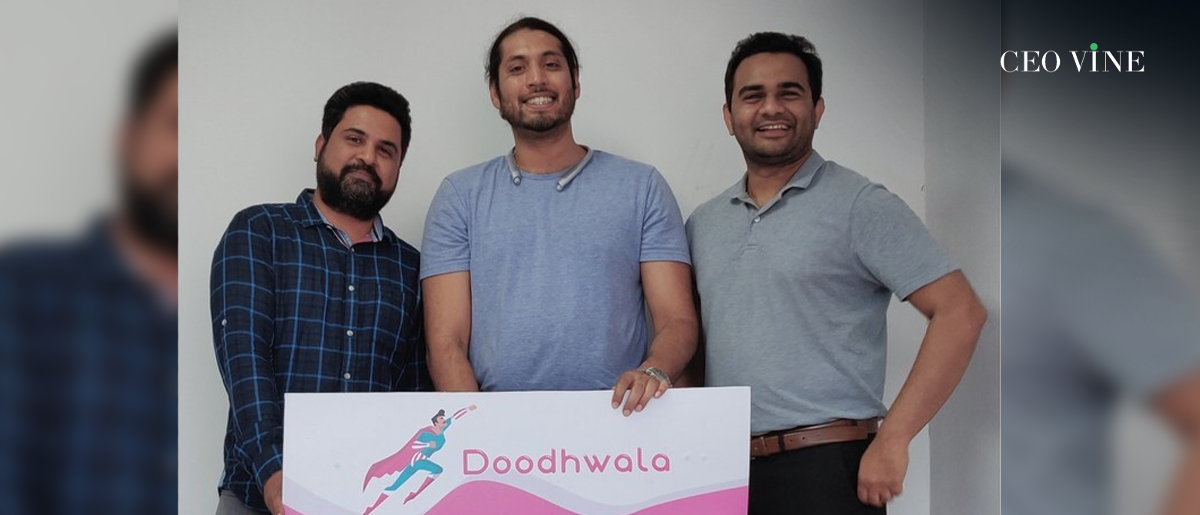
Doodhwala, a milk-tech startup, emerged in 2015 with a simple but powerful mission: to deliver fresh milk and other morning essentials to customers’ doorsteps by 7 am.
Founded by Aakash Agarwal and Ebrahim Akbari, the startup quickly became a prominent player in the hyperlocal delivery space. Focusing on subscription-based grocery delivery across Bengaluru, Hyderabad, and Pune, the brand attracted a loyal customer base looking for convenience in their daily routines.
With its commitment to freshness and a subscription model, Doodhwala initially gained significant traction. The startup raised around $200 million in funding early on, a testament to investors’ confidence in its potential for rapid growth.
As it expanded to multiple cities, Doodhwala positioned itself as a unique offering in the grocery delivery market. However, this rapid growth brought with it a host of operational and financial challenges that the company struggled to overcome.
Despite a promising start, Doodhwala faced numerous obstacles that led to its unexpected shutdown in 2019, with its customer base eventually transferring to FreshToHome.
Factors That Led to Doodhwala’s Failure
So, what caused the downfall of a startup that once captivated both consumers and investors with its fresh approach?
1. Operational Inefficiencies and Logistical Challenges:
As the startup grew, managing a seamless supply chain became a significant challenge. The startup encountered logistical issues, including delivery delays and inventory mismanagement, which led to frequent errors in orders.
This customer dissatisfaction gradually damaged Doodhwala’s reputation and slowed its growth.
Scaling up a delivery-focused business requires robust logistics, but Doodhwala’s struggles highlighted that growth without operational efficiency can be risky. In the highly competitive grocery delivery space, even minor service lapses can lead to customer loss—a reality the startup faced.
2. Intense Competition in the Grocery Delivery Market:
The grocery delivery space was becoming increasingly competitive, with companies like BigBasket, Milkbasket, and SuprDaily aggressively expanding their reach. These competitors had better funding, operational experience, and advanced technology, giving them a substantial edge.
While the startup focused on milk and essentials, its lack of differentiation in a crowded market made it vulnerable. Larger competitors offered broader product ranges, attractive deals, and superior customer engagement strategies, which left Doodhwala struggling to compete.
3. Financial Mismanagement and Cash Flow Problems:
Despite raising significant funds, the startup faced challenges in managing its finances effectively. Its high cash burn rate was unsustainable, and issues with financial record-keeping reportedly emerged.
As cash flow became critical, the startup struggled to maintain relationships with vendors and employees, with some even filing legal complaints due to unpaid dues.
Moreover, Doodhwala relied heavily on discounts and cashbacks to attract customers, which further strained its finances. These promotions helped attract new users but didn’t foster long-term loyalty, ultimately weakening the company’s financial foundation.
4. Failure to Adapt to Market Trends and Customer Expectations:
Doodhwala’s primary focus on milk faced challenges as consumer preferences shifted. Health consciousness, the rise of veganism, and environmental concerns led to declining demand for dairy. Customers became more concerned with the freshness, purity, and source of their groceries, creating pressure for Doodhwala to keep up with these evolving expectations.
India has seen an incredible surge in unicorn companies, especially in the technology sector. India is now the third-largest startup ecosystem in the world, trailing only the US and China, with over 115 unicorns as of 2023.
Additionally, as the market matured, customer expectations around technology, user experience, and service quality grew. Doodhwala’s platform reportedly faced technical issues, frustrating users and impacting customer retention. The lack of investment in enhancing the user experience was a missed opportunity in an industry where seamless technology is essential.
By 2019, the startup faced insurmountable challenges and ultimately decided to shut down, transferring its customer base to FreshToHome.
Doodhwala’s journey is a reminder that in the startup ecosystem, vision and funding alone aren’t enough. Sustainable success requires meticulous planning, sound financial management, and the ability to adapt to changing market demands.
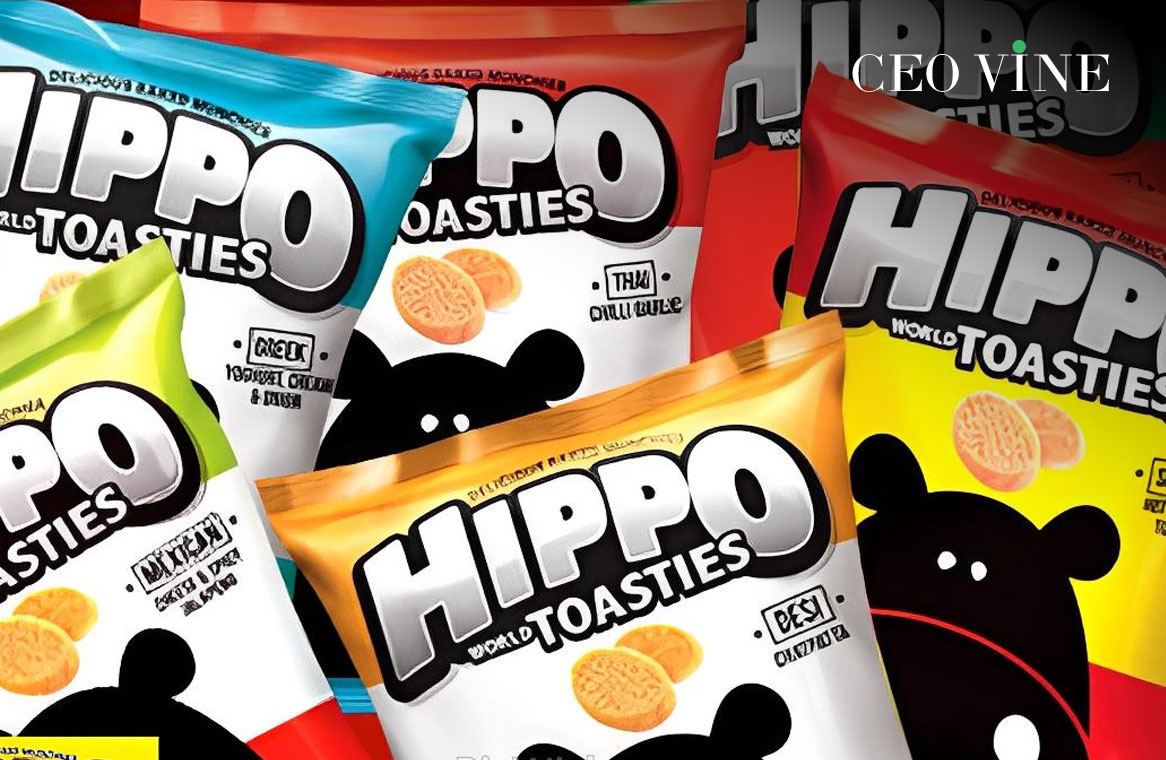
Snacking is more than just eating—it’s comfort, convenience, and nostalgia all packed into one crunchy bite. For decades, India’s snack shelves have been dominated by giants like Lays, Bingo, Balaji, and Haldiram. But in 2009, a new challenger entered the market with a bold promise and a quirky personality: Hippo Chips by Parle Agro.
Baked, not fried. Zero cholesterol. No MSG. No trans-fat. Hippo came across as a guilt-free, “better-for-you” alternative at a time when most chips were all about indulgence. Add to that oversized packs with a bright, fun-loving hippo mascot, and the product instantly stood out. Within its first year, Hippo sold over a million packets and became a household name.
But by 2014, the snack that once promised to redefine munching had quietly disappeared from the market. Fans, to this day, recall its flavors with nostalgia and even petition for its return. The story of why Hippo Chips failed is one of India’s most fascinating business case studies—an example of how even great ideas can stumble if execution falls short.
What Made Hippo Chips Unique?
Before we look at the failure, it’s important to understand what made Hippo such a hit in the first place.
Healthier Alternative: Positioned as baked and guilt-free, it offered zero cholesterol, no MSG, no GMOs, and no trans fat.
Quirky Packaging: The large, colorful packs with the bold hippo logo stood out on store shelves.
Flavor Innovation: From Afghani Tikka Masala to Greek Yogurt, Thai Chilli Cream, and Indian Chatpatta, Hippo offered flavors rarely seen in the Indian market.
Relatable Mascot: The hippo mascot was fun, goofy, and approachable, instantly connecting with younger audiences.
In short, Hippo had the product strength and the personality to become a big brand. So why did Hippo Chips fail despite such strong beginnings?
Branding Confusion: The Identity Crisis
One of the biggest reasons Hippo Chips failed was poor communication and lack of consistent branding.
Initially, Parle tried to tie Hippo with a lofty cause ending world hunger. Then it shifted to emotional advertising with the “maa ka pyaar” (mother’s love) theme, before experimenting with quirky cricket-inspired campaigns like the Indian Food League (IFL).
While each campaign was creative, the constant changes left consumers puzzled. Was Hippo a health snack? A fun indulgence? An emotional comfort food? The messaging kept shifting, and with no clear brand identity, consumers didn’t know exactly why they should choose Hippo over Lays or Bingo.
Adding to the confusion, the packaging featured a large, fat hippo while the product positioned itself as a “healthy alternative.” The visual contradicted the claim, further diluting the message.
The Supply Chain Disaster
If branding was a problem, supply chain was a crisis.
Hippo was so popular that shelves across 200,000 stores ran empty within months of launch. Consumers who couldn’t find Hippo on shelves switched to other reliable brands, and once that habit formed, it was difficult to win them back.
To address this, Parle launched the Plan-T campaign on Twitter, a pioneering crowdsourced initiative where customers reported empty shelves using hashtags. The company then relayed this data to distributors, who quickly restocked stores.
The results were impressive:
Sales rose by 76% in the short term.
Twitter followers grew from 800 to 4,000, a 300% jump.
Hippo gathered real-time market intelligence directly from customers.
This campaign is still studied as a brilliant example of social media-driven problem-solving. But it couldn’t solve the bigger issue: Parle lacked the production and distribution muscle to match demand. In FMCG, availability is everything. If shelves are empty, even the best marketing can’t save you.
Intense Competition in a Crowded Market
By the time Hippo entered, India’s snack market was already saturated. Lays controlled nearly 30% of the market, followed by Bingo, Balaji, and Haldiram with strong regional dominance. These brands had deep pockets, vast distribution networks, and consistent product availability.
Hippo’s flavors and fun persona gave it novelty value, but novelty alone couldn’t sustain long-term growth. Competing against established heavyweights required either massive scale or razor-sharp differentiation, Hippo had neither.
Timing: Too Early for “Better-for-You”
Perhaps the most ironic reason why Hippo Chips failed was timing. Today, brands like Too Yumm, Tagz, and BRB thrive by offering baked, healthier snacking options. Consumers are far more health-conscious now, making Hippo’s original promise more relevant than ever.
But back in 2009, most consumers weren’t actively seeking “better-for-you” snacks. Hippo’s health USP, therefore, didn’t get the attention it deserved. The brand was simply ahead of its time.
The Indian Food League (IFL): A Missed Opportunity
In 2012, Hippo launched another creative campaign Indian Food League (IFL) during the IPL season. It tapped into cricket frenzy by pitting regional flavors against each other (like Pav Bhaji from Mumbai vs. Idli Sambhar from Chennai) and encouraged fans to vote online.
The campaign drove engagement, boosted sales during IPL, and created buzz. But again, the effort lacked continuity. After the campaign ended, Hippo didn’t build on the momentum. Instead of reinforcing its health or fun angle consistently, the brand kept experimenting with new narratives.
Why Hippo Chips Failed: The Key Lessons
Looking back, the reasons Hippo Chips failed boil down to five interconnected issues:
Unclear Positioning – Health, emotion, fun—it tried to be everything, and ended up being nothing clear.
Mixed Branding – A fat hippo mascot contradicted the health claim, confusing consumers.
Severe Supply Issues – Empty shelves broke consumer trust, pushing people back to competitors.
Intense Competition – Lays, Bingo, and Balaji had stronger recall and wider reach.
Wrong Timing – The health-snacking trend was yet to mature in India.
Hippo Chips: A “Successful Failure”
Even though Hippo is no longer sold, its memory endures. Fans still remember its crunch, its flavors, and its quirky mascot. Online forums and social media are filled with nostalgia posts asking Parle to relaunch the brand. Some even call Hippo a “successful failure”, a product that didn’t survive commercially but carved a permanent space in consumer memory.
In many ways, Hippo paved the way for the baked-snack trend we see today. It was an experiment that proved Indian consumers were open to trying something different even if the timing, branding, and supply chain didn’t allow it to succeed.
The story of why Hippo Chips failed is more than just about a discontinued snack. It’s a reminder that in business, success isn’t only about having a great product.
Clarity matters—brands must communicate their USP without confusion.
Execution matters—great ideas die if shelves are empty.
Timing matters—being early to a trend can be just as dangerous as being late.
Hippo Chips might not have lasted long in the market, but it lives on in memory, nostalgia, and marketing case studies. And sometimes, that’s the true sign of impact a failure that refuses to be forgotten.
FAQs
Is Hippo Chips still available?
No, Hippo Chips was discontinued around 2014. It is no longer sold in India or international markets.
Why did Hippo Chips fail?
Hippo failed due to unclear branding, supply chain shortages, intense competition, and being ahead of its time in promoting “healthy snacking.”
Will Hippo Chips ever come back?
So far, Parle Agro has not announced any plans to relaunch Hippo Chips, though fans continue to demand its return online.
What made Hippo Chips different from Lays and Bingo?
Unlike fried potato chips, Hippo was baked, with zero cholesterol, no MSG, and unique flavors like Afghani Tikka and Greek Yogurt.
Why is Hippo Chips called a “Successful Failure”?
Because despite failing commercially, it built a cult following and is still fondly remembered by consumers.
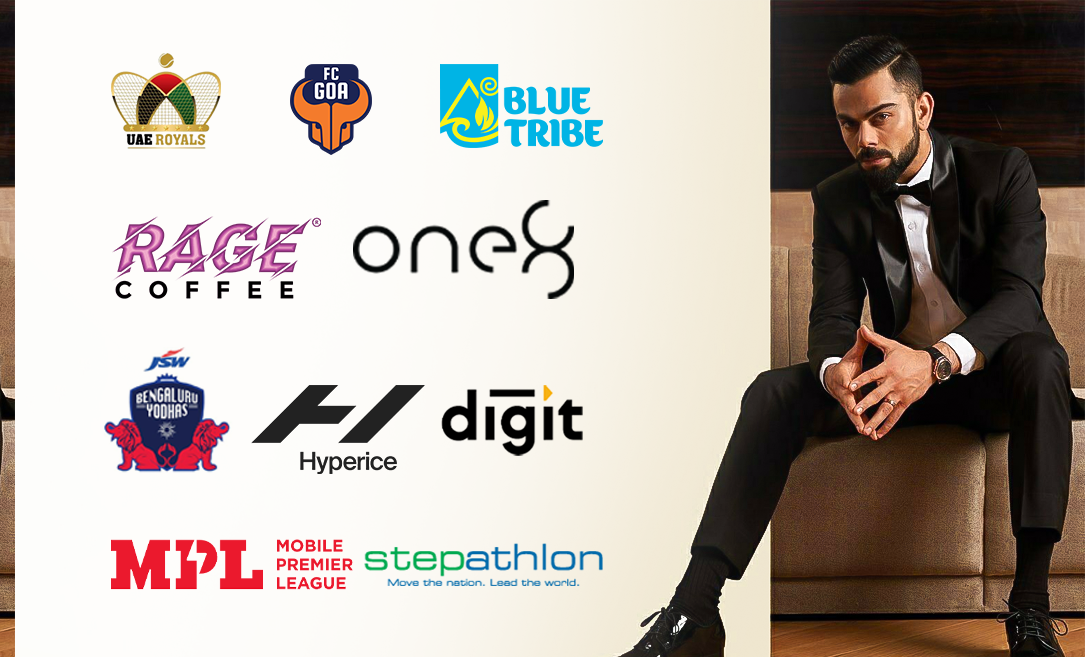
Virat Kohli’s legacy extends far beyond cricket stadiums. While the former Indian captain is celebrated for rewriting records with the bat, he’s also building a formidable innings off the pitch, as a sharp startup investor and entrepreneur.
With a net worth exceeding ₹1,050 crore and a personal brand once estimated at $184 million, Kohli is fast becoming a case study in how sports icons are shaping India’s startup economy.
In an era where cricketers are evolving from brand endorsers to active stakeholders in innovation, Kohli’s investments has curated a diverse portfolio spanning consumer tech, wellness, hospitality, and financial services.
Virat Kohli’s investment strategy is far from haphazard—it’s strategic, sector-aware, and deeply aligned with personal values like fitness, sustainability, and fan engagement.
Virat Kohli Investments in Startups
Startup Name
Year of Investment
Industry
Estimated Investment Amount
Notes
Blue Tribe
2021
Alt-Meat / Sustainability
Undisclosed
Co-invested with Anushka Sharma
Sport Convo
2014
Social Media / FanTech
Undisclosed
UK-based; fan-athlete engagement platform
Universal Sportsbiz
2015
Fashion / Apparel
₹19.3 crore
Strategic partnership with Cornerstone Sports
Digit Insurance
2020
Insurtech / Fintech
~$340,000
Now a $3.5B company backed by Prem Watsa’s Fairfax
Chisel Fitness
2016
Health / Fitness
Undisclosed
Kohli owns 30% of the chain
Hyperice
2021
Wellness / Sports Recovery
Undisclosed
US-based; Kohli facilitated its India entry
Startups Owned Virat Kohli
Kohli doesn’t just invest, he builds. His own brand ventures span hospitality, fashion, and sports, often aligning with his personal ethos of performance and premium quality.
Here’s a look at Virat Kohli investments, ventures and the evolving empire he’s creating beyond cricket.
WROGN
Launched in 2014 and backed by Virat Kohli in 2020 with an investment of ₹19.3 crore, WROGN targets youth-fashion with a streetwear edge. In 2024, Aditya Birla’s TMRW invested ₹125 crore for a 16% stake in its parent company USPL, accelerating WROGN’s omni-channel expansion.
Chisel Fitness
Kohli co-founded this premium gym chain in 2015, committing nearly ₹90 crore. Positioned as luxury fitness centers, Chisel has expanded rapidly across India and reflects his passion for disciplined living.
One8 Commune & Restauranteurs
As part of his One8 lifestyle brand (launched in 2016 with Puma), Kohli built a restaurant chain with outlets in six major Indian cities. Dining meets community in these curated spaces of food and vibe. Plans are underway to expand further.
Agilitas Sports (2025)
Kohli made headlines in June 2025with a ₹40 crore investment (~1.94% stake) in Agilitas—a sportswear and retail ecosystem founded by ex-Puma MD Abhishek Ganguly. Rather than renewing a ₹300 crore Puma deal, Kohli moved into deeper ownership and strategic involvement. The firm has raised over ₹600 crore, acquired Mochiko Shoes, and holds licensing rights for Lotto—and One8 is now part of this vertically integrated venture.
Go Digit Insurance
Together with Anushka Sharma, Kohli invested ₹2–2.5 crore in Digit Insurance in 2020. The company IPO’d in 2024 and achieved a ₹31,000 crore market cap—significantly boosting the value of their stake.
MPL
Kohli backed MPL via ₹33 lakh in convertible debentures. The platform, which now boasts over 90 million users, raised a Series D at a $945 million valuation in 2022—bringing Kohli along on what’s now a near-unicorn trajectory. He also serves as India team kit sponsor.
Rage Coffee
A D2C brand specializing in specialty coffee, Rage Coffee benefited from Kohli’s strategic investment and ambassador role. As of 2024, it has over 2,500 offline retail touchpoints and secured investments from GRM Overseas (~44% stake).
Blue Tribe Foods
Together with Anushka Sharma, Kohli backed Blue Tribe, a plant-based protein startup developing meat alternatives like patties and kebabs. This aligns with his interests in health, sustainability, and conscious consumption.
Hyperice
As global wellness tools gained traction, Kohli became an athlete-investor and ambassador to Hyperice—known for recovery products like vibrating massagers and wearable compression tech.
FC Goa
Kohli holds approximately a 12% stake in Indian Super League football club FC Goa, supporting Indian sports beyond cricket and facilitating regional sports development.
World Bowling League
In May 2025, Kohli was announced as a strategic investor in the proposed World Bowling League, aimed at popularizing bowling globally. The venture marks his entry into new sports-frontier investments.
Stepathlon & Nazara
He invested ₹10 crore in fitness tech startup Stepathlon, and holds a stake (~₹50 crore) in mobile-gaming firm Nazara Technologies—valued over ₹7,500 crore.
Virat Kohli’s investment portfolio is anything but broad—it’s strategic. Every venture ties back to his personal passions: fitness, fashion, sustainability, and Indian sports culture. He isn’t just a celebrity investor—he’s building “Kohli Inc.” with purpose, consistency, and the same hunger that defined his cricketing legacy.
FAQs
What startups has Virat Kohli invested in?
From MPL to Digit Insurance and Rage Coffee, Kohli’s portfolio spans fintech, esports, wellness, and food.
Did Kohli reject any big endorsement deals recently?
Yes—he declined a ₹300 Cr renewal offer from Puma to join Agilitas as an owner-creator.
Does Kohli co-own any sports teams?
Yes, he holds ~12% stake in ISL club FC Goa.
What was his first startup investment?
One of the earliest investments was MPL in 2019, followed closely by Go Digit in 2020.
How many startups has Virat Kohli invested in?
At least 10-12 startups across sectors like fintech, gaming, fashion, fitness, and plant-based food. As of 2025, he adds new ventures like Agilitas and the World Bowling League.
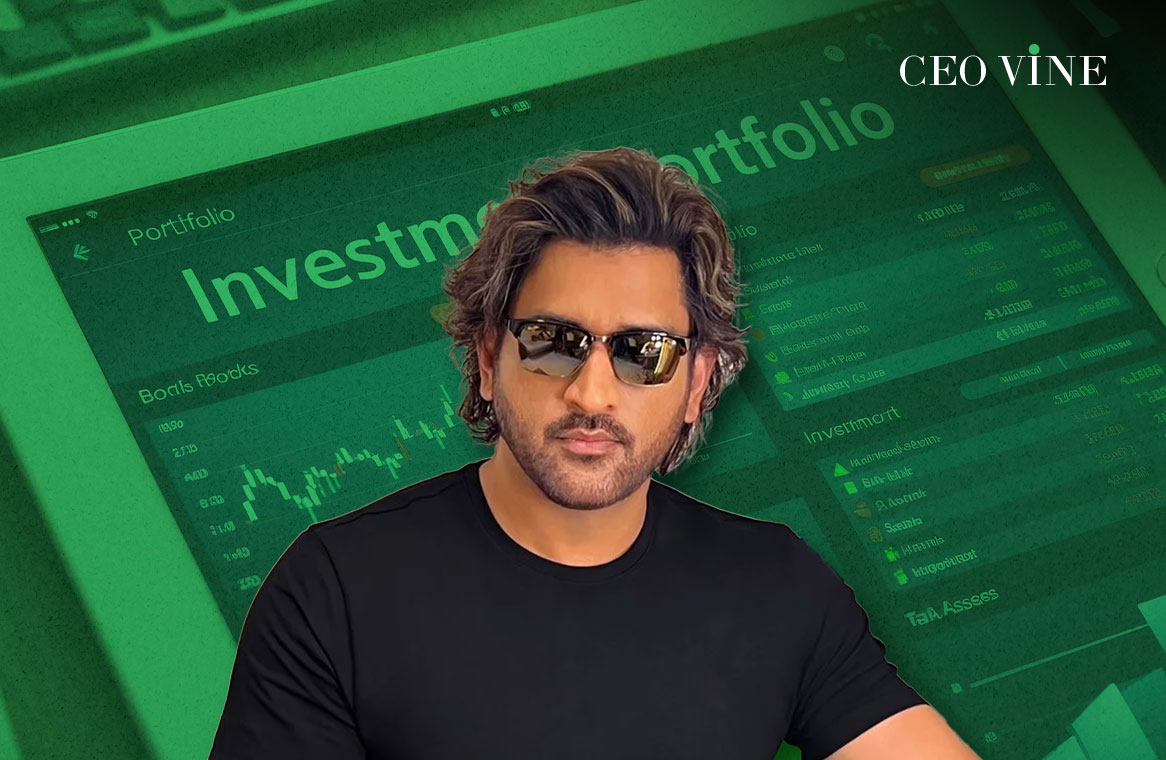
MS Dhoni isn’t just India’s most celebrated cricket captain—he’s a legend both on and off the field. From leading India to historic World Cup wins to setting the benchmark for calm and strategic leadership, his cricketing journey is the stuff of folklore. But beyond the pitch, while fans remember him for helicopter shots and lightning stumpings, Dhoni has quietly built a second inning as a savvy startup investor.
In the backdrop of India’s booming startup ecosystem spanning fintech, EVs, wellness, agritech, and creator tech—Dhoni is betting big on innovation. With his trademark focus, foresight, and discipline, he’s channeling the same game-winning instincts into building a smart, future-ready investment portfolio.
MS Dhoni Investments in Startups
Startup Name
Year of Investment
Industry
Estimated Investment Amount
Notes
Garuda Aerospace
2022
Drone Tech / Aerospace
₹4 crore for 1.1% stake
Also brand ambassador
Rigi
2023
Creator Economy / SaaS
Undisclosed
Enables monetization for creators
EMotorad
2023
Electric Mobility / E-Bikes
Undisclosed
Focus on green and smart e-bikes
Tagda Raho
2024
Fitness / Wellness
Undisclosed
Modernized desi workout equipment
Shaka Harry
2022
Plant-Based Foods
Part of $2.5M round
Backed by Dhoni & other VCs
7Ink Brews (Copter7)
2021
F&B / Lifestyle
Undisclosed
Co-founded, inspired by jersey number 7
Khatabook
2020
Fintech / MSME SaaS
Undisclosed
50M+ downloads, Dhoni as ambassador
HomeLane
2021
Home Interiors / Design
Undisclosed
Strategic investor & brand ambassador
BluSmart
2024
EV Ride-Hailing / Mobility
Undisclosed
Facing financial losses, sustainability in question
Cars24
2022
Used Car Marketplace / AutoTech
Undisclosed
Onboarded as brand ambassador, investor
Centricity
2024
WealthTech / Fintech
Part of $20M seed round
Invested via family office
SILA
2023
Real Estate / Property Services
Undisclosed
Invested via family office
List of Companies MS Dhoni Invested:
Let’s take a look at the lineup of startups where MS Dhoni has put his money.
Garuda Aerospace
MS Dhoni invested ₹4 crore in Garuda Aerospace in early 2024, acquiring a 1.1% stake and joining as the brand ambassador. In April 2025, the Chennai-based drone startup raised ₹100 crore in a Series B round led by Venture Catalysts, valuing the company at $250 million. Founded in 2015 by Agnishwar Jayaprakash, Garuda is a DGCA-approved ‘Make in India’ venture, developing drones for both civilian and defense applications.
The company holds over 20 patents and is currently building a 35,000 sq. ft. Drone Park for R&D. Garuda is projecting ₹122 crore in revenue for FY 2024–25. Its fleet operates in 84 cities, and clients include Swiggy, Flipkart, and DRDO. Most recently, in June 2025, Garuda secured an additional $1 million in funding from the Narotam Sekhsaria Family Office.
EMotorad
In April 2024, MS Dhoni invested in Pune-based EMotorad and also joined the company as its brand ambassador. Founded in 2020 by Rajib Gangopadhyay, Kunal Gupta, Aditya Oza, and Sumedh Battewar, EMotorad manufactures and sells electric bicycles across 350+ dealer outlets and operates 10 experience centers across India. The company has sold over 80,000 units, with 70% of components sourced locally. A $20 million Series B funding round in November 2023 accelerated their growth plans. EMotorad now aims to cross 100,000 units sold globally by FY 2024–25, riding the wave of sustainable urban mobility.
Rigi
In January 2023, MS Dhoni invested in Rigi, a Bengaluru-based platform operating in the creator economy space. Founded by Ananya Singhal and Swapnil Saurav, Rigi empowers educators and influencers to monetize their content through subscriptions, online courses, live workshops, and exclusive communities—primarily on platforms like WhatsApp and Telegram. The company raised ₹100 crore in a funding round led by Elevation Capital, with participation from Accel, Sequoia, and Peak XV Partners. Dhoni’s investment aligns with the growing demand for creator-led monetization tools and supports the platform’s vision of democratizing digital income opportunities for individuals across India.
Tagda Raho
Dhoni joined Bengaluru-based Tagda Raho in late 2023, backing its mission to revive traditional Indian fitness practices using tools like the gada, mudgar, and vajra. Founded by Rishabh Malhotra, the brand promotes old-school strength training with a modern twist. Its patented equipment has been adopted by professional teams including the Lucknow Super Giants and the National Cricket Academy. The startup recorded over 225% revenue growth in FY 2023–24, signaling strong market traction.
Shaka Harry
A Bengaluru-based plant-based protein brand, Shaka Harry is riding the wave of sustainable and clean eating trends in India. MS Dhoni invested in the company in October 2022, as part of a funding round where Shaka Harry raised over $2.5 million to scale its range of vegan-friendly products—including kebabs, burger patties, and more. Owned by Liberate Foods and co-founded by Anand Nagarajan and team, the brand aims to meet the rising demand for meat alternatives that are both flavorful and nutritious, offering guilt-free indulgence for the conscious Indian consumer.
7Ink Brews
Launched under the brand name Copter7, 7Ink Brews is a Mumbai-based F&B startup co-founded and backed by MS Dhoni. Inspired by his iconic jersey number 7 and personality, the brand offers a curated range of premium beverages and artisanal chocolates that fuse sports-driven branding with gourmet appeal. The startup has since raised around $7.4 million, achieving a valuation of approximately $38 million.
Khatabook
MS Dhoni became an investor and brand ambassador for Bengaluru-based Khatabook in 2020. The app helps MSMEs and kirana stores manage credit and transactions digitally and has crossed 50 million downloads. With $187 million in funding from investors like Tribe Capital and Y Combinator, Khatabook is a key player in India’s digital business ecosystem.
HomeLane
Dhoni joined HomeLane in 2021 as investor and ambassador. The interior-design tech platform founded by Srikanth Iyer and Tanuj Choudhry, has raised nearly $200 M and serves homeowners across India with end-to-end design and execution backed by tech-enabled project management.
Cars24
In August 2019, MS Dhoni invested an undisclosed amount in Cars24, a Gurugram-based online platform for buying and selling used cars. Founded in 2015 by Vikram Chopra, Mehul Agrawal, Gajendra Jangid, and Ruchit Agarwal, the company simplifies the sale of pre-owned vehicles through a tech-driven approach. Now a unicorn, Cars24 has expanded across India and internationally, backed by leading investors like Y Combinator and Sequoia Capital.
Other Notable Investments by Dhoni’s Family Office
Beyond individual startup bets, Dhoni’s family office recently backed Gurugram-based fintech platform Centricity in a $20M seed round, valuing it at $125M. The platform targets wealth‑management tools and “phygital” offerings for tier‑2 and tier‑3 markets.
In March 2025, they also invested in SILA, an integrated real estate advisory platform managing 200M sq ft across 125 cities—which is eyeing an IPO within three years.
In mid-2024, Dhoni’s family office invested in BluSmart Mobility during its $24M pre-Series B round. The Gurugram-based EV ride-hailing startup operated 8,000+ electric cars across Delhi-NCR, Bengaluru, and Mumbai, with revenues rising from ₹70 crore in FY23 to nearly ₹390 crore in FY24.
However, mounting losses (₹216 crore in FY23) and a major controversy in April 2025 changed the game. SEBI alleged that promoters siphoned ₹262 crore meant for EV purchases into personal luxury spending via related firm Gensol. This led to a regulatory crackdown, board exits, frozen accounts, and a sudden suspension of services in all cities.
In the end, Dhoni’s business moves aren’t random, they reflect his on-field persona: steady, strategic, and forward-looking. From drones and EVs to wellness, fintech, and creator platforms, his investments highlight key tech‑driven sectors of future growth. More importantly, they signal how India’s top athletes are doubling as startup champions.
MS Dhoni has invested in over 12 startups across diverse sectors such as EVs, drones, health & wellness, fintech, and creator platforms. His portfolio includes names like Garuda Aerospace, Khatabook, Rigi, EMotorad, Shaka Harry, and Tagda Raho, among others.
Has MS Dhoni invested in any EV or clean-tech companies?
Yes, Dhoni has invested in EMotorad, an electric bicycle company promoting sustainable mobility, and previously backed BluSmart, an all-electric cab service.
What is Garuda Aerospace, and why did Dhoni invest in it?
Garuda Aerospace is a Chennai-based drone tech company that builds UAVs for agriculture, disaster management, and defense. In 2022, Dhoni invested ₹4 crore and became its brand ambassador, supporting India’s growing drone economy.
Has MS Dhoni invested in any health or wellness startups?
Absolutely. Dhoni is an investor in Tagda Raho, a fitness brand reviving traditional Indian workout tools, and Shaka Harry, a plant-based meat startup that promotes healthy, sustainable eating.
Has Dhoni invested in any food or beverage startups?
Yes, he co-founded 7Ink Brews, which launched Copter7 – a premium beverage and chocolate brand inspired by his jersey number and cricket legacy.
Are all of Dhoni’s investments profitable?
Not all. For example, BluSmart, an EV ride-hailing startup Dhoni invested in, has recently faced operational challenges. However, many of his other investments, like Garuda Aerospace and Khatabook, have shown strong market performance.
India’s economy is vast, diverse, and teeming with entrepreneurial energy. But for those looking for low-risk, high-trust business opportunities, one path stands out—government franchise opportunities in India.
With India’s franchise industry valued at ₹1.2 lakh crore in 2025 and growing at a healthy CAGR of 30-35%, government-backed franchises are becoming an attractive route for small-town entrepreneurs, first-time founders, and service-oriented individuals alike. These models offer the reliability of government support, the trust of public service, and a proven business model—making them an excellent alternative to expensive private franchises.
What Exactly Is a Government Franchise?
A government franchise is a business operated by private individuals or entities under the banner of a government department or Public Sector Undertaking (PSU). These range from healthcare and citizen services to fuel retail and agriculture. Entrepreneurs get to run operations independently while following structured guidelines and benefiting from institutional backing.
The government’s push for Aatmanirbhar Bharat, combined with the Digital India initiative, is propelling this sector to new heights, especially in Tier 2 and Tier 3 cities.
Why Are Entrepreneurs Choosing Government-Approved Franchises?
Benefit
Why It Matters
Built-in Trust
Government branding adds instant credibility in the market
Affordable Entry
Many franchises start as low as ₹50,000
Assured Demand
Most offer essential services with steady customer inflow
Institutional Support
Training, operational handholding, and compliance support from the government
Subsidy Eligibility
Some schemes come with funding assistance or priority lending
Digital Access
Most have integrated digital infrastructure for operations and record-keeping
Top Government Franchise Opportunities in India (2025)
Below is a list of the most promising and widely available government franchise businesses in India, complete with investment details, potential monthly revenue, and typical profit margins.
Franchise Name
Investment
Monthly Revenue
Profit Margin
Ayushman Bharat Kendra
₹5–10 lakhs
₹1.5–2 lakhs
15–20%
PAN Services
₹50K – ₹2 lakhs
₹50K – 1.5 lakhs
30–40%
GST Suvidha Center
₹1–3 lakhs
₹70K – 2 lakhs
25–35%
Aadhaar Kendra
₹2–5 lakhs
₹80K – 2.5 lakhs
20–30%
Passport Seva Kendra
₹10–20 lakhs
₹3–5 lakhs
15–25%
Grahak Seva Kendra
₹50K – ₹2 lakhs
₹40K – 1 lakh
20–25%
Jan Aushadhi Kendra
₹2–5 lakhs
₹3–5 lakhs
15–20%
Digital Seva Centre
₹1–3 lakhs
₹80K – 2 lakhs
20–30%
LPG Distributorship
₹25–50 lakhs
₹5–10 lakhs
5–10% (fuel)
Kisan Vikas Kendra
₹5–10 lakhs
₹3–8 lakhs
15–20%
IOCL Petrol Pump
₹1–2 crores
₹1.5–5 crores
3–5% (fuel), 15–20% non-fuel
LIC Agent
₹5,000 – ₹10,000
₹30K – 5 lakhs
Commission-based
Tip: Jan Aushadhi Kendra, with low investment and high social impact, has been a top performer in rural India (Apply Online Here). Similarly, GST Suvidha Centers are gaining momentum post-GST rollout across sectors.
What to Keep in Mind Before You Apply
While the opportunity is promising, some groundwork is essential:
Comply with strict documentation, compliance, and verification processes
Pick a high-footfall location or underserved area for better profitability
Expect longer approval cycles (4–8 weeks) in some departments
Be ready for training sessions and operational audits
Tech literacy is becoming crucial—most services now run on online dashboards or apps
Applying for a government franchise typically involves choosing the right vertical, meeting eligibility criteria (age, education, financial capacity), and submitting the required documents through the official portals. Departments like the Ministry of Health, UIDAI, Bharat Petroleum, and India Post usually have franchise or partnership sections on their websites with clear application steps.
In some cases, interviews or training sessions are mandatory before approval is granted. Post-approval, you’ll be signing an agreement and setting up your center with operational guidelines from the parent department.
In conclusion, starting a government-approved franchise in India is a smart and sustainable way to build a future-ready business that combines public trust with private enterprise. With low investment, strong demand, and institutional credibility, these ventures are ideal for entrepreneurs seeking long-term value over hype.
Whether it’s serving medicines via a Jan Aushadhi Kendra, helping citizens with documents at a PAN or GST Suvidha Center, or running a high-traffic fuel station, the possibilities are wide—and impactful.
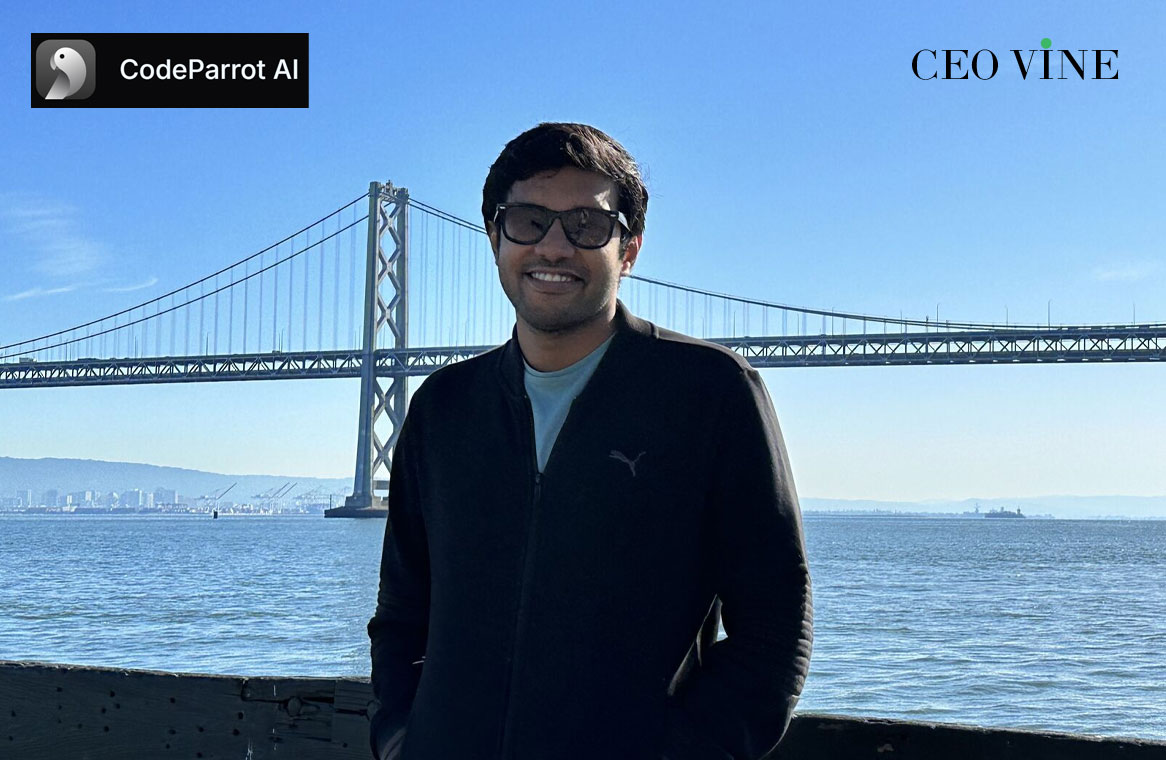
CodeParrot, an AI startup backed by Y Combinator and co-founded by Vedant Agarwala and Royal Jain in 2022, has officially shut down after operating for nearly two and a half years.
The Bengaluru- and San Francisco-based company, which was part of Y Combinator’s Winter 2023 cohort, had raised $500,000 in pre-seed funding but was unable to raise additional capital to continue operations.
The closure was announced by co-founder and CTO Vedant Agarwala in a candid LinkedIn post, where he reflected on the company’s journey, pivots, and challenges. Despite early promise and some initial traction, CodeParrot struggled to generate sufficient revenue and failed to secure investor confidence for a seed round.
CodeParrot – Journey of Pivots and Learnings
CodeParrot was originally built to automate engineering workflows, beginning with a tool that could capture API calls from production environments and integrate backend service requests, third-party APIs, and data flows. The company’s mission was to eliminate human errors and speed up the development process using AI.
As the team sought stronger product-market fit, they made several strategic pivots. Their final offering was a developer tool that could convert Figma designs and UI screenshots into production-ready code using large language models (LLMs). The product, available as a Visual Studio Code extension, supported popular frameworks such as React, Flutter, and HTML.
Despite the technological advancement, the product only managed to generate $1,500 in monthly recurring revenue—insufficient to sustain the team or attract further investment. Agarwala referred to this phase as spending over a year in “pivot hell,” as the team attempted to define the company’s core value proposition.
At its peak, CodeParrot claimed to be the only platform that could generate user interfaces by deeply analyzing a developer’s existing codebase and component libraries. The company’s website, still active at the time of writing, highlights adoption by developers from companies like Udaan, Freshworks, Capgemini, and Infosys. It also references an open-source release planned for 2024—a milestone the company was unable to achieve before shutting down.
The startup, which had only two engineers on its team at the time of closure, had to let go of its staff due to a lack of runway.
Reflecting on the experience, Agarwala mentioned that one of the most fulfilling moments was being accepted into Y Combinator and receiving their first customer payment via Stripe.
He also shared some of the lessons learned from building AI tools, particularly around the limitations of prompt engineering and the need for robust evaluation systems. “Prompting gets you 90% of the way there. Evaluation gets you to production,” he wrote, emphasizing the importance of reliability in developer-focused AI applications.
CodeParrot’s closure follows a similar announcement from Subtl.ai, another Indian AI startup that shut down due to funding constraints.
However, the broader AI investment landscape in India remains active. A recent report by Inc42 reveals that 57% of venture capital firms are currently exploring early-stage AI startups, while 22% are looking at growth-stage opportunities in the space.
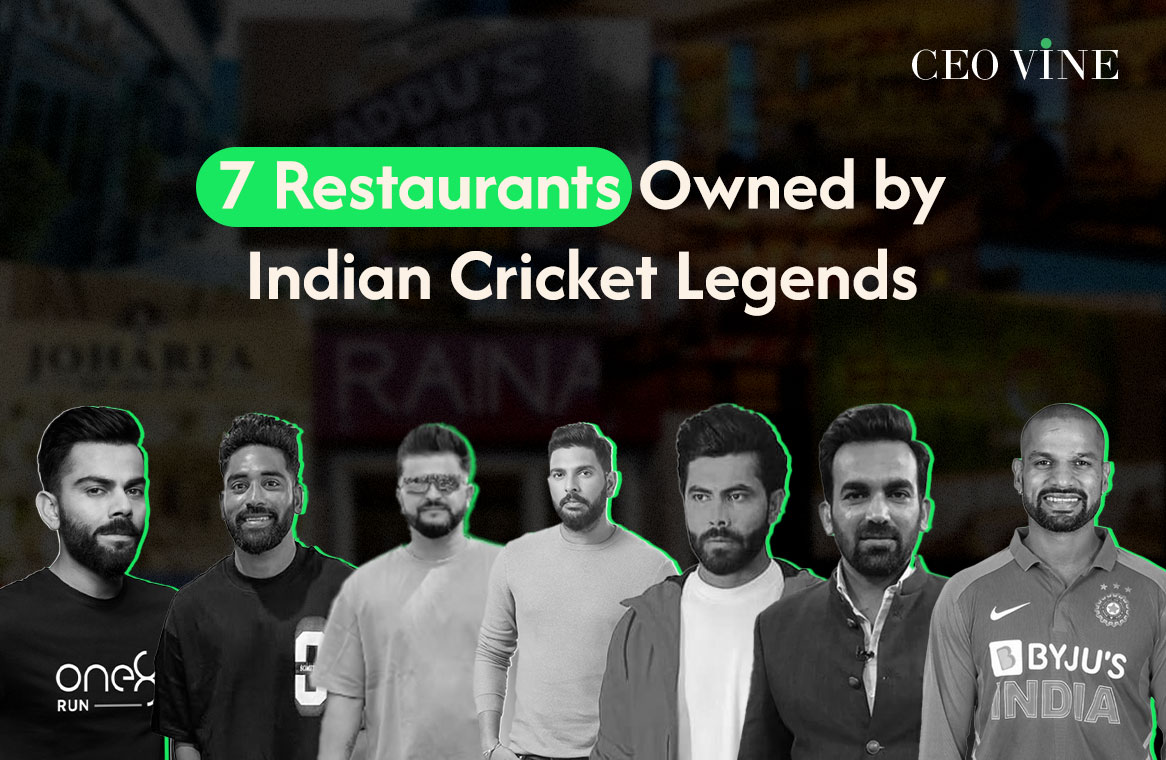
India’s passion for cricket and food needs no introduction — and today, the two worlds are blending in more delicious ways than ever. With the Indian restaurant industry valued at around $85.19 billion in 2025 and expected to cross $120 billion by 2029 at a CAGR of 10-12%, celebrities from sports and film alike are eyeing the culinary space as the next big playground.
Among these celebrity restaurateurs, India’s cricket stars are leading the charge — taking their massive fan following off the field and straight to the dining table. For them, a restaurant isn’t just about profit; it’s about brand-building, connecting with fans in a new way, and creating a lifestyle statement that outlives their cricket careers.
And the market is ripe. Urban India’s rising spending power, booming food delivery ecosystem, and growing appetite for themed dining experiences have all made F&B a smart bet for any celebrity investor.
List of restaurants owned by Indian cricketers
Virat Kohli – One8 Commune
Source: mypunepulse.com
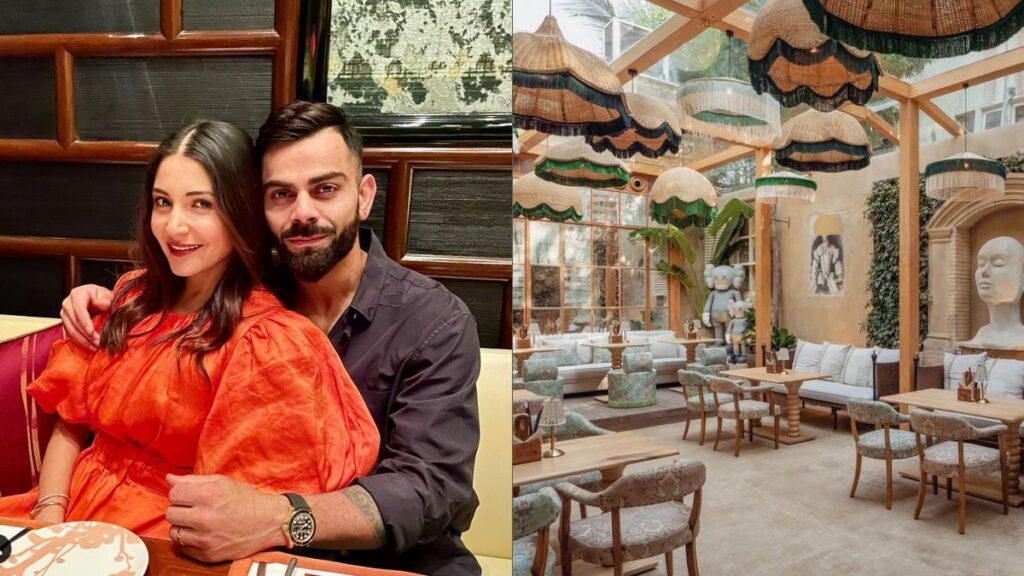
Virat Kohli, one of India’s biggest sporting icons, entered the hospitality game in 2019 with One8 Commune — named after his jersey number 18 and his lifestyle brand One8.
From its flagship in Delhi’s Aerocity, One8 Commune has expanded rapidly, with outlets in Mumbai, Jaipur, Hyderabad, Indore, Kolkata, Noida, Pune, and Bengaluru. Kohli’s concept blends global cuisine, chill community vibes, and stylish interiors, targeting India’s young urban crowd who want good food and a relaxed place to unwind.
The brand is a testament to how Kohli is extending his identity as a clean-eating, fitness-focused celebrity into an urban dining brand that feels aspirational yet approachable.
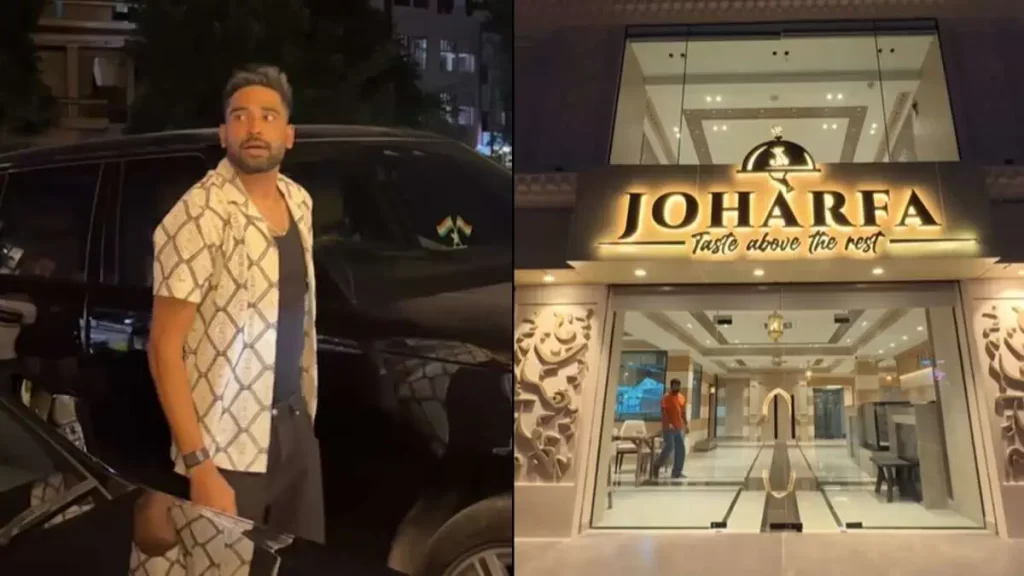
Hyderabad’s pace spearhead Mohammad Siraj joined the culinary scene in June 2025 with Joharfa, a Mughlai and Persian fine-dining venture in Hyderabad.
With the city’s dining-out market expanding at over 8% annually, Siraj’s timing couldn’t be better. Joharfa’s menu celebrates rich Mughlai spices, Persian kebabs, and Arabian platters — with interiors that reflect Hyderabad’s historic regal charm.
Siraj’s aim? To offer locals and tourists a dining experience that’s true to the city’s royal culinary roots while adding a modern touch.
Suresh Raina – Raina Indian, Amsterdam
Image: rainaamsterdam.nl
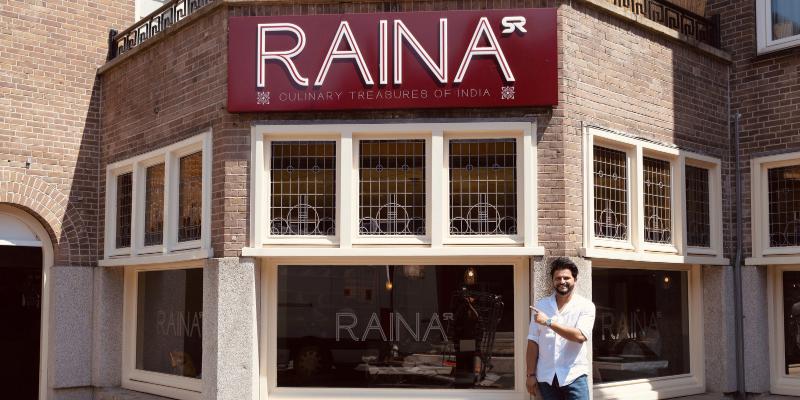
Known as Mr. IPL, Suresh Raina took his brand global with Raina Indian in Amsterdam in 2023 — giving Europe’s Indian food scene a stylish new addition.
Amsterdam is home to an active Indian expat community and attracts millions of tourists — making it a smart location for an Indian cricket star’s first international outlet.
Raina Indian focuses on pan-Indian flavours — from hearty North Indian curries to South Indian dosas — all plated with a contemporary touch. For Raina, the restaurant is as much about showcasing Indian food as it is about storytelling and nostalgia.
Yuvraj Singh – KOCA
Source: dnaindia.com
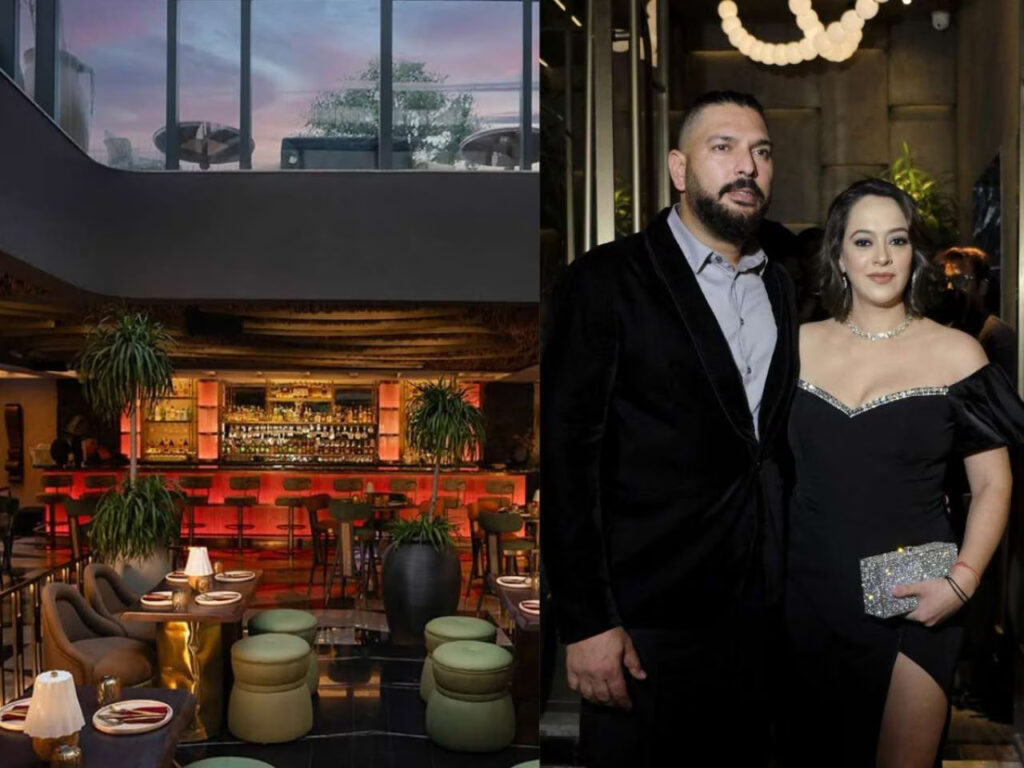
Yuvraj Singh, the man who hit six sixes in an over, entered fine dining in April 2025 with KOCA (Kitchen of Celebratory Arts) in Gurugram.
This isn’t your typical sports café — KOCA is all about global cuisines, artful plating, and an immersive vibe. Its Pan-Asian menu sits alongside “Yuvi’s Favourites,” a curated selection reflecting Yuvraj’s travels and palate.
Gurugram’s upscale dining market continues to boom, with high-income households spending more on premium dining experiences — and Yuvraj’s stylish concept fits right in.
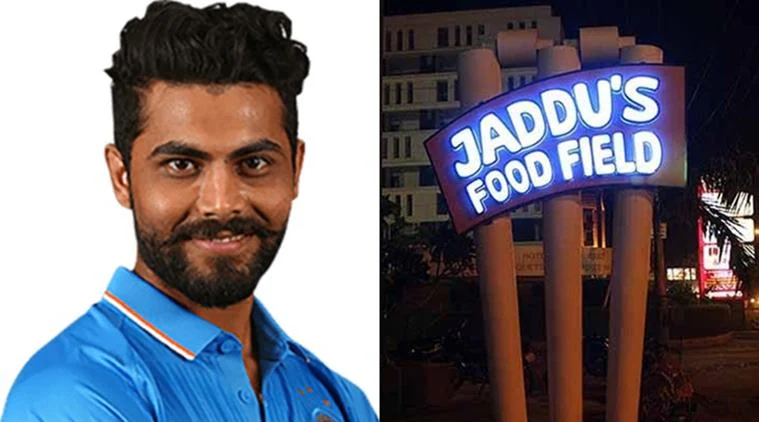
Long before celeb restaurants were trendy, Ravindra Jadeja opened Jaddu’s Food Field in Rajkot back in 2012.
Run by his sister Naina Jadeja, Jaddu’s Food Field is a family-friendly spot with multi-cuisine options — from classic Gujarati dishes to Chinese and Mexican. It’s proof that Jadeja was ahead of the curve in seeing food as more than just business — but as a community connector in his hometown.
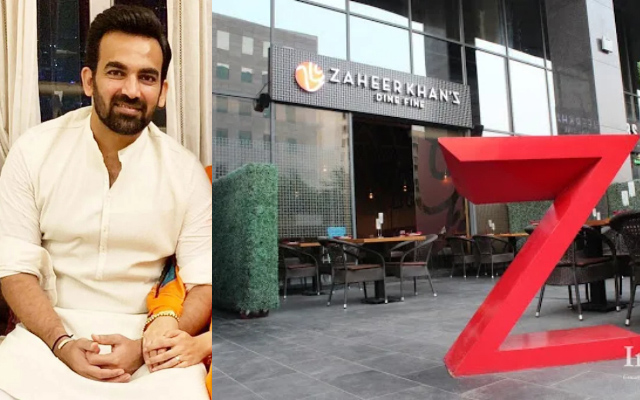
Zaheer Khan – Dine Fine
Source: crictracker.com
Ex-fast bowler Zaheer Khan was among the early sports stars to back the F&B boom. He launched Dine Fine in Pune in 2013 — combining elegant fine dining with a mellow, relaxed vibe.
With indoor-outdoor seating and a global fusion menu, Dine Fine appeals to Pune’s young professionals and families alike. It’s remained popular for over a decade — a testament to Zaheer’s focus on consistency and quality.
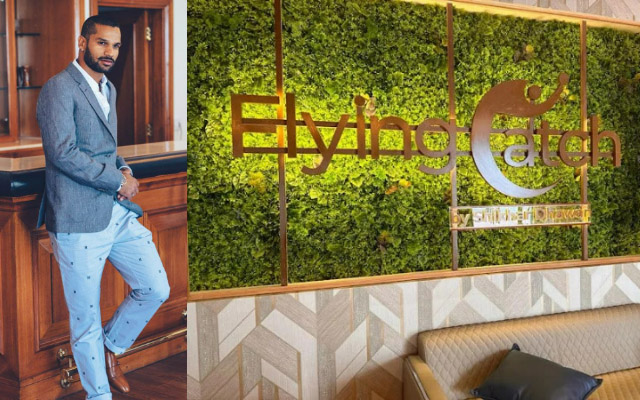
Shikhar Dhawan – Flying Catch, Dubai
Source: crictracker.com
Shikhar Dhawan, India’s flamboyant opener, took his restaurant ambitions international with Flying Catch in Dubai in 2023.
This sports-themed café brings live match screenings, cricket memorabilia, and an Indian-fusion menu to Dubai’s cricket-crazy expat crowd. Positioned in Jumeirah, the café taps into Dubai’s booming casual dining market, which is projected to grow 7-8% annually over the next five years.
Conclusion
From Dubai to Amsterdam and Rajkot to Delhi, India’s cricketers are hitting it out of the park and turning their fame into culinary ventures that go beyond food. With India’s dining-out segment projected to hit $150 billion by 2030, expect even more athletes and celebrities to step in — blending sports legacy with lifestyle brands.
For fans, these restaurants aren’t just about eating out — they’re about experiencing a piece of cricketing history, soaking in nostalgia, and seeing their heroes build businesses beyond the boundary.
So next time you crave good food and a taste of stardom — you know where to book a table.
Traveling beyond Earth was once a distant dream, limited to government scientists, massive rockets, and decades-long timelines. But the scene has changed dramatically. A new generation of spacetech startups in India is rewriting the playbook, launching rockets, building satellites, and creating technologies that make the final frontier more accessible, sustainable, and commercially viable.
A decade ago, space exploration in India was dominated by ISRO alone. Fast forward to today, India’s spacetech ecosystem is buzzing with young founders, bold investors, and record-breaking missions. The momentum is real: India’s space economy, currently valued at around $8 billion, is projected to grow fivefold to $44 billion by 2033, increasing its global market share from 2% to 8%.
Recent Indian government moves are fueling this growth. In 2024, India’s Department of Space was allocated $1.6 billion, and Finance Minister Nirmala Sitharaman announced a ₹1,000 crore (~$120 million) venture capital fund dedicated to supporting around 40 homegrown spacetech startups over the next decade.
Spacetech Startups in India to Watch in 2025
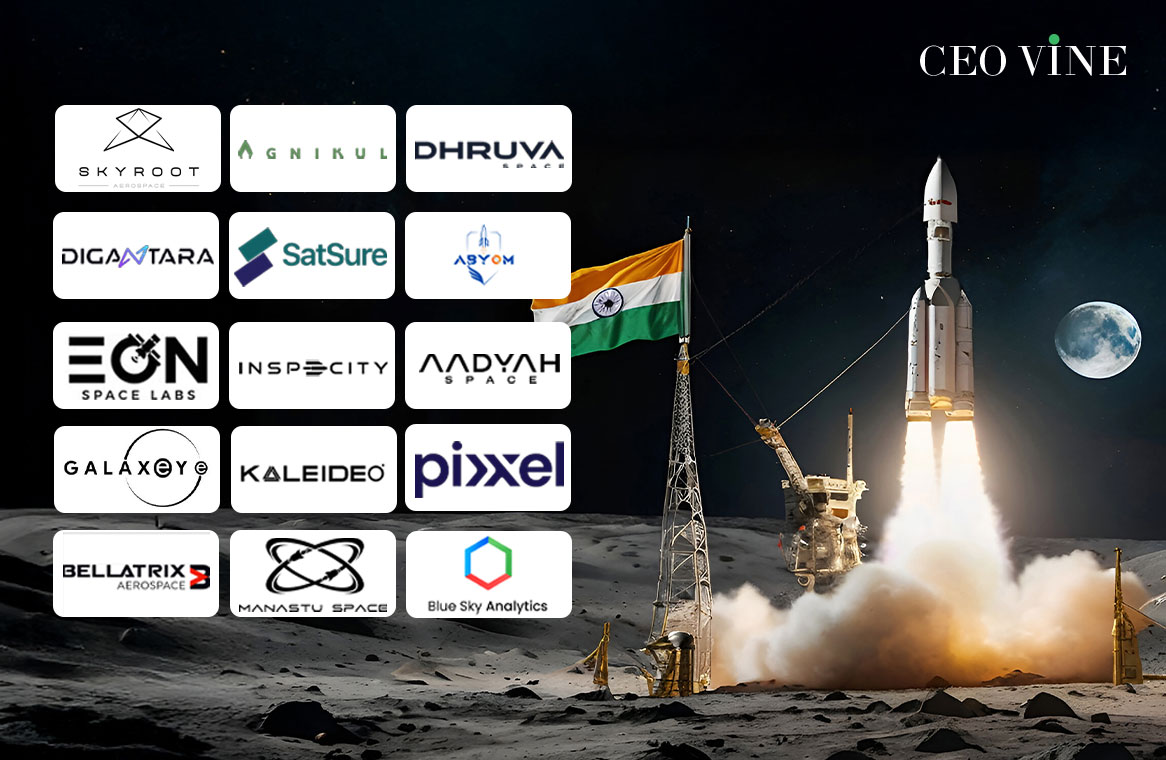
From launch vehicles to Earth observation, AI-powered satellite tracking to green propulsion, India’s spacetech startups are betting big on new-age innovation. Here are 15 promising names reshaping India’s position in the global space race.
Skyroot Aerospace is India’s most well-known private rocket startup, pioneering affordable launch vehicles for small satellites. The ex-ISRO founders imagined “Uber for space”—reliable, flexible rides to orbit for commercial payloads.
In 2022, they launched Vikram-S, India’s first privately built rocket. Their flagship Vikram-1 (due 2025) will deliver up to 500 kg to Low Earth Orbit at competitive costs.
With $95 million raised, Skyroot is expanding into reusable rocket stages, green fuels, and building Asia’s first privately owned rocket manufacturing facility. They plan to serve hundreds of global satellite makers with quick, cost-efficient launches.
AgniKul Cosmos made headlines for its fully 3D-printed rocket engines—an industry first. Incubated at IIT Madras, the startup’s modular launch vehicle AgniBaan can be customized for payloads from 30 to 300 kg. In 2024, it launched AgniBaan SOrTeD from India’s first private launchpad.
With over $40 million in funding, AgniKul is building India’s first private rocket factory. They’ve signed multiple MoUs with ISRO for testing and launch integration, signaling strong public-private synergy. AgniKul aims to make satellite launches as simple as booking a flight.
A true pioneer among spacetech startups in India, Dhruva Space delivers end-to-end satellite solutions—from design to deployment and ground operations. They’ve launched satellites for both domestic and international clients, including student payloads and defense-grade missions.
In 2022, Dhruva deployed India’s first private CubeSats on ISRO’s PSLV. By 2024, they launched ground-station-as-a-service offerings. With $19 million in funding, Dhruva’s vision is to become India’s “SpaceX for small satellites”—democratizing access for research, telecom, IoT, and climate applications.
Bellatrix specializes in electric propulsion systems that cut satellite costs and extend lifespan. From green propellants to water-based plasma thrusters, their innovations are replacing toxic fuels like hydrazine.
They’re also working on orbital transfer vehicles to reposition satellites mid-mission—key for mega-constellations.
Backed by $11 million, Bellatrix’s propulsion tech has flown on three test missions and has secured commercial contracts with global satellite operators. Their next milestone: a dedicated “space taxi” to move satellites between orbits cost-effectively.
Pixxel is building one of the world’s densest hyperspectral satellite constellations and aiming for 24 satellites capturing rich spectral data invisible to normal cameras. This can detect crop disease, pollution, oil leaks, or hidden minerals.
With $71 million raised, Pixxel’s “Aurora” analytics platform converts raw imagery into actionable insights for agriculture, mining, insurance, and climate research. The startup launched three satellites already and plans daily global coverage by 2025.
NASA has also selected Pixxel to supply hyperspectral data for its research programs—proof of India’s growing credibility in advanced Earth observation.
GalaxEye’s Drishti satellite combines Synthetic Aperture Radar (SAR) and Multispectral Imaging (MSI)—a first in India. This hybrid capability means sharper, weatherproof, day-and-night imaging—vital for defense, disaster response, and smart farming.
They recently closed a $10 million Series A, opened a state-of-the-art assembly lab, and have pilot customers lined up in Southeast Asia. By 2025, GalaxEye aims to have its full constellation in orbit, powering data-driven resilience for governments and businesses.
Digantara tackles the “junk in space” problem by mapping debris and traffic in Earth’s orbits. Their Space-MAP platform integrates multiple data streams to track and predict orbital hazards, akin to Google Maps but for satellites.
In 2023, they launched Pushan-Alpha, India’s first private debris-tracking satellite. With a partnership with SpaceX for its next launch and international clients testing the platform, Digantara is on its way to making space safer for all.
SatSure merges satellite imagery with AI and IoT data to power decision intelligence across agriculture, banking, and infrastructure. Think yield forecasts, flood monitoring, or crop insurance validated from space.
With India’s top banks as clients, SatSure is working on launching its own micro-satellite fleet to make its insights even sharper. They’re also expanding to Africa and Latin America, targeting sectors like climate adaptation and sustainable farming.
Abyom
Founded: 2020, Gorakhpur
Founder: Amit Kumar Singh
Abyom is developing reusable rocket stages and a plug-and-play engine test platform. Its goal: to bring launch costs down drastically by reusing hardware and simplifying the testing cycle for private clients.
Freshly funded with $2.5 million seed capital, Abyom’s prototype engines are undergoing hot fire tests this year. They aim to launch test missions by 2026.
Manastu is tackling the dual threat of space debris and toxic fuels. Their non-toxic green propulsion system is safer and more efficient than traditional fuels. They’re also building in-orbit refueling and debris-removal services.
With $3 million secured, Manastu is partnering with satellite manufacturers and defense agencies to expand India’s share in global satellite maintenance.
Blue Sky Analytics transforms satellite data into climate risk dashboards for insurers, investors, and policymakers. From wildfires to air quality, their API feeds help businesses comply with ESG mandates and climate disclosure frameworks like TCFD. With international partnerships brewing, they’re expanding data offerings for Southeast Asia and Africa next.
KaleidEO (SatSure Subsidiary)
Founded: 2022, Bengaluru
Parent: SatSure
KaleidEO brings real-time analytics to orbit with edge-computing satellites—processing imagery directly in space to speed up insights. It’s the first Indian firm to test edge computing in flight. Four satellites are due to launch by 2025, giving agriculture, mining, and defense players more precise, fast data.
Eon Space Labs develops compact, high-res optical payloads for satellites and drones. Their DEGA payload is designed for easy integration, giving startups and research labs advanced imaging capability at lower costs. They’re building a mini-constellation for infrastructure monitoring across India.
InspeCity is India’s answer to satellite servicing—robotic arms and autonomous drones to repair, refuel, and reposition satellites in orbit. Incubated at IIT Bombay, the startup raised $1.5 million in pre-seed funding and is working with ISRO’s POEM mission as a testbed. Their moonshot? A modular orbital habitat to house humans in space by 2030.
Aadyah Aerospace develops smart actuators, satellite deployment systems, and electro-optics for India’s growing satellite and drone market. Their cube set dispensers ensure safe deployment of mini-satellites to orbit. With early US backing, Aadyah supports defense, ISRO projects, and new private rocket ventures—making them a quiet but powerful force in India’s space supply chain.
Where India’s Space Story Is Headed
The next decade will see India’s spacetech startups push boundaries once thought impossible. Backed by supportive policies, growing private capital, and world-class talent, India’s new-age space startups are not just launching rockets—they’re unlocking billion-dollar industries in Earth observation, debris tracking, green propulsion, and in-orbit sustainability.
As we look ahead, spacetech startups in India aren’t just aiming for the stars. They’re building the ladders, engines, satellites, and systems that will define humanity’s next leap beyond Earth.
Travel is no longer just a luxury now but a lifestyle, and the luggage you carry says as much about you as your passport. Over the past few years, India has witnessed a homegrown revolution in the travel gear segment. With Millennials and Gen Z exploring the world in droves—be it for work, leisure, or digital nomadism—the demand for sleek, functional, and homegrown luggage has skyrocketed.
Gone are the days when Indian travelers relied only on international labels. Today’s market is buzzing with innovative Indian luggage brands that blend global design sensibilities with the practical needs of Indian travelers.
Market Snapshot:
The Indian luggage market stood at ₹21,000 crore (≈ $2.5 billion) in 2023.
Projected to grow at a 12% CAGR to ₹37,000 crore (~ $4.4 billion) by 2028.
Hard‑shell trolleys and cabin bags are surging, driven by younger consumers, even as soft luggage (backpacks, duffles) holds steady.
Direct‑to‑consumer (D2C) brands are winning favor for on‑demand customization, seamless e‑commerce experiences, and authentic storytelling.
From tech‑enabled suitcases and eco‑friendly materials to minimalist trolleys and vibrant design‑led collections, homegrown names are challenging legacy players.
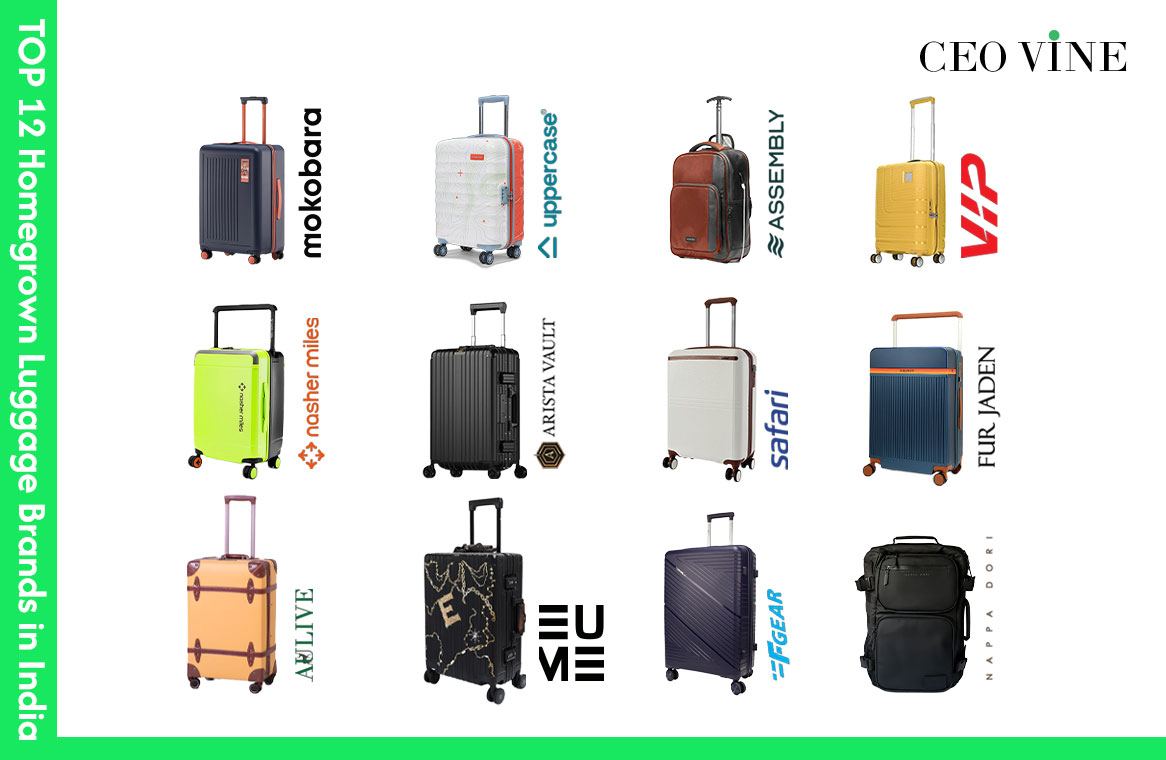
Founded in 2020 by Sangeet Agarwal and Vidit Bhargava, Bengaluru‑based Mokobara was born out of frustration with bland, low‑functionality suitcases.
The founders set out to merge utility with minimalist design for young urban travelers. Their flagship “Cabin Pro” hard‑shell trolley and “Everyday Backpack” both sport German polycarbonate shells, TSA‑approved locks, USB charging ports, and smart internal compartments—features that have made them favorites among Gen Z and Millennials.
Mokobara has raised $6.5 million in a Series A led by Sauce VC and Saama Capital and reported ₹40 crore in FY 23 revenue, with plans to double that by FY 25.
Founded in 2021, Uppercase is a Bengaluru-based luggage brand built by Sudip Ghose, Uday Sodhi, Arnob Mondal, and a team of experienced co-founders.
With a vision to blend high-performance travel gear and eco-conscious materials, uppercase creates products that meet global standards while minimizing environmental impact. Its offerings—like the Topo Trolley, Uppercase JFK, and Bullet Trolley Bag—combine aesthetic edge with thoughtful utility.
Since launch, uppercase has raised $19.6 million across 5 funding rounds, backed by institutional investors including Sixth Sense Ventures, Accel, and Enam Holdings, along with angel investors like Neeraj Agarwal.
In FY24, the brand reported a 5.8X revenue growth, rising from ₹10.7 crore in FY23 to ₹62.2 crore, while reducing losses by over 19%. At its core, uppercase challenges the idea that travel gear is purely functional. Each product is designed to be a statement—fashion that moves with you.
Launched in October 2019, Assembly is a homegrown luggage brand in India founded by Mohit Garg (CEO and Co-Founder) and Aditya Khanna (Co-Founder), offering premium luggage, trolley bags, suitcases, and backpacks that combine aesthetics with functionality.
Assembly’s lineup includes products like the Rover Trolley Backpack, Cabin Hard Luggage, and the Stark Pro bag, which features 100% polycarbonate, an aluminium trolley, wheels, and an external laptop compartment—bridging soft and hard luggage into one versatile solution.
Assembly has raised $2.48 million across three funding rounds, including a $2.1 million Series A in December 2023 led by Prath Ventures and supported by 36 investors. The brand counts 18 institutional investors—such as Blume Ventures and Angel List—and 24 angel investors among its backers.
As of March 31, 2024, Assembly has clocked ₹18.5 crore in annual revenue, reinforcing its position as a rising force in India’s premium luggage segment.
Founded in 1968 by Dilip Piramal, VIP Industries is India’s largest luggage manufacturer and a globally recognized name in travel gear. Headquartered in Mumbai, it is the world’s second-largest and Asia’s largest luggage maker, offering products built for performance, innovation, and style.
With 8,000+ retail outlets across India and a presence in 50 countries, VIP has a strong domestic and international footprint. Its youth-focused brand Skybags contributes 33% of overall revenue, while the 2004 acquisition of UK-based Carlton strengthened its premium global offerings.
The company has raised $165 million across five funding rounds, with a $150 million Series C round in November 2018 as its largest.
In 2016, siblings Shruti, Lokesh and Abhishek Daga launched Nasher Miles in Mumbai to shatter the “plain suitcase” mold.
Their vibrant collections—Silicon Valley, Istanbul, Antwerp, The Line—pair bold colors with practical features.
Backed by four funding rounds totaling $5.96 million (latest: $4 million seed led by Singularity AMC, July 2024), Nasher Miles recorded ₹168 crore revenue in FY 24.
Its USP? Covetable design at accessible price points, powered by storytelling that resonates on social media.
Founded in 2018 by Krishan Singh, Pratyush Mahendra, Purvi Roy, Sarojini Gupta and Atul Gupta in Gurugram, Arista Vault is India’s first smart‑luggage brand.
Its product line includes biometric‑lock suitcases, GPS‑enabled wallets, and anti‑theft backpacks with real‑time tracking.
The company raised an undisclosed Seed round on August 4, 2022, from Pontaq and Mainstage Hub.
The brand’s focus on embedded technology—fingerprint locks, location alerts, alarm systems—answers modern concerns about safety and convenience on the move.
Founded in 1974 as a partnership firm by Sudhir Jatia, Safari Industries is one of India’s most trusted luggage brands, offering a wide range of durable and stylish travel solutions.
Safari’s extensive product lineup includes TSA Lock Trolley Bags, Hard and Soft Trolley Bags, Anti-Theft Trolley Bags, suitcases, and backpacks—each designed to cater to diverse travel needs.
Safari Industries raised ₹229 crore (approximately $27 million) in fresh funding from Lighthouse’s fourth alternative investment fund (AIF).
What sets Safari apart is its commitment to quality and longevity. Built to last, Safari products are engineered for durability and ease of use, offering travellers a reliable companion that balances performance with affordability.
Founded in 2015 by Karishma Bansal and Sahil Rajesh Bansal, Fur Jaden is a Mumbai-based luggage brand startup that blends youthful design with timeless luxury.
Inspired by admiration for elite aesthetics and travel, the founders set out to craft signature travel pieces that are vibrant, fashion-forward, and a celebration of sophistication. The brand’s ethos is clear—premium quality or nothing.
Fur Jaden’s product portfolio features stylish travel gear such as “The Voyager,” “The Aviator,” and “The Wayfarer,” each designed for today’s aspirational and design-conscious traveler.
The brand raised a total of $1.1 million in funding in a single Seed round held on April 2, 2025. This round saw participation from two investors—Gruhas Collective Consumer Fund and Glance—with Gruhas being the lead institutional backer. Fur Jaden is also supported by six angel investors, including Dino Morea.
As of March 31, 2024, Fur Jaden reported an annual revenue of ₹33.8 crore.
Founded in 2017 by Yashraj V Rathor and Wamika Shekhawat, Aulive is a conscious lifestyle and travel gear brand that champions innovation, ethical sourcing, and cruelty-free design. With a strong belief in style without compromise, Aulive embraces plant-based leather alternatives, ensuring that each product is crafted with care for long-term use.
The brand’s offerings include unique pieces like the Vintage Spinner, reflecting both functionality and aesthetic appeal rooted in sustainable values.
Aulive has not raised any external funding rounds yet and continues to operate as a bootstrapped venture.
What sets Aulive apart is its commitment to cruelty-free, plant-based materials, offering eco-conscious consumers a genuine alternative to traditional leather, without sacrificing sophistication or durability.
EUME is founded in 2018 by Sanjay C Parekh, Naina Parekh and Pranay Parekh based in Mumbai. Built with the vision of premium build, effortless carry, and smart travel design, EUME positions itself as a customer-first brand with easy returns and exchanges.
The brand offers a variety of luggage options including Cabin, Check-in, and Trunk models—each crafted for utility, durability, and contemporary appeal.
It has raised a total funding of $5.23M over 3 rounds. The latest funding round was a Series A round on May 22, 2025 for $2.94M.
Annual revenue of EUME is ₹19.4Cr as on Mar 31, 2024.
F Gear based in Bengaluru, founded in 2008 by Anshul Jindal and Ruchi Jindal.
Established with a passion for quality craftsmanship and innovative design, F Gear has grown into a leading name in the world of backpacks and luggage. The brand’s mission is to provide reliable, fashionable, and functional travel companions that enhance every journey.
Its product lineup features popular models such as Bastion and Aegis, offering options for both urban professionals and outdoor adventurers alike.
To date, F Gear has not raised any funding rounds.
Nappa Dori, founded in 2010 by Gautam Sinha pays tribute to traditional Indian values while seamlessly integrating modern interpretations of style, material, and workmanship, making it a distinctive name in the contemporary design and fashion landscape.
Its product variety includes thoughtfully crafted models such as Rover, Steamer, and Trucker, each reflecting the brand’s refined aesthetic and dedication to quality.
The startup generated a revenue of ₹29.9 Cr for the financial year ending on Mar 31, 2024.
What sets Nappa Dori apart is its meticulous craftsmanship and a design approach deeply rooted in Indian heritage.
As India’s travel culture evolves, so do the bags we pack for our journeys. The rise of homegrown luggage brands in india is not just about offering travel gear—it’s about redefining lifestyle aspirations, design values, and cultural identity. These startups are tapping into a generation that craves personalization, innovation, and Instagram-worthy aesthetics with every product they buy.
The travel industry in India is projected to reach a market size of $125 billion by 2027, according to the Ministry of Tourism. With affordable flights, a growing middle class, and an always-on digital culture, Gen Z and Millennials are taking more trips than any previous generation, whether it’s weekend getaways, workations, or solo soul-searching adventures.
What’s fueling their choices isn’t just durability—it’s design, sustainability, and storytelling. They want luggage that sparks conversations, doubles as a fashion accessory, and mirrors their mindful lifestyle. And homegrown Indian brands are listening—and delivering.
As global supply chains get leaner and local preferences take center stage, these 12 trolley bags brands are not just catching up with international giants—they’re setting the pace for how India travels. Because in today’s world, the bag you carry isn’t just about where you’re going—it’s a reflection of where you belong.
Over the past few years, Generation Z—those born roughly between 1997 and 2012—have entered the workforce with unique expectations, skills, and behaviors. They are digital natives, social justice advocates, and more open to remote or hybrid work than any previous generation. Yet, despite these strengths, a noticeable trend is emerging: Small and Medium Enterprises (SMEs) are increasingly hesitant to hire Gen Z candidates.
Why is this happening?
Here’s a deep dive into the growing gap between Gen Z and SMEs, and what it says about the future of work.
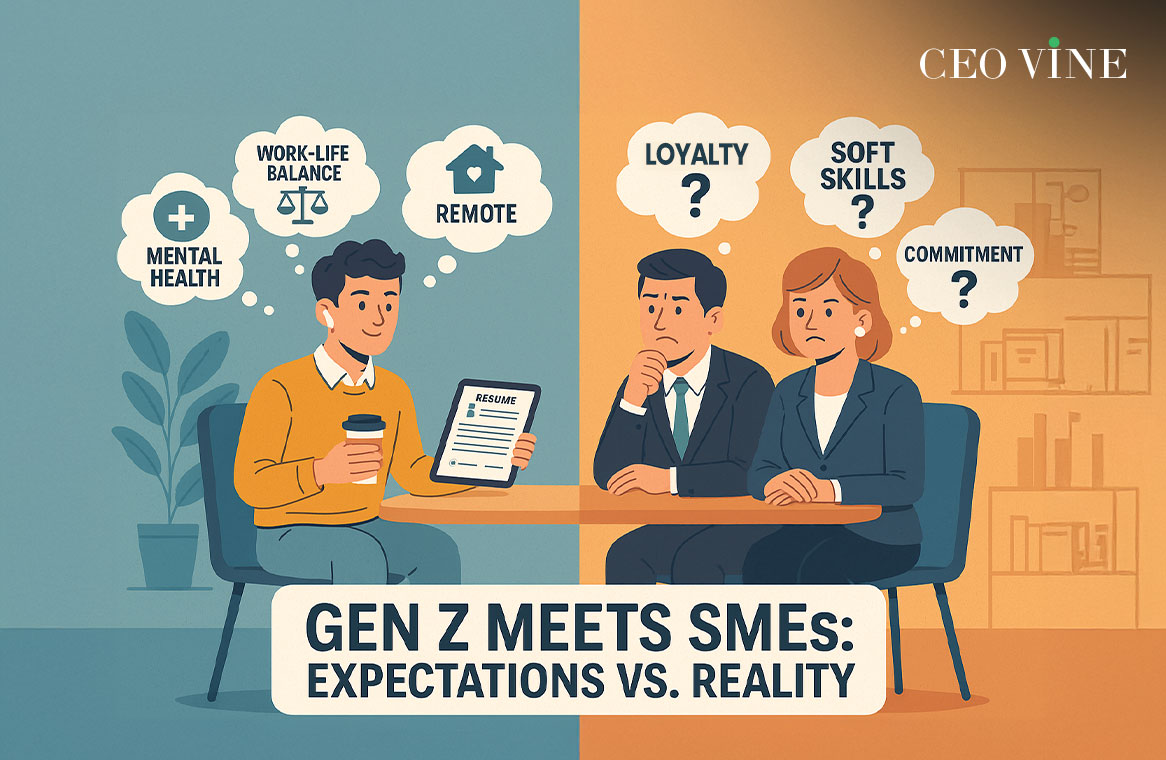
1. Expectation vs. Reality
One of the most cited reasons SMEs turn down Gen Z applicants is a mismatch between expectations and what small businesses can realistically offer.
High salary expectations: Many Gen Zers expect compensation packages that include not just a fair salary but also wellness benefits, flexible hours, mental health support, and opportunities for rapid growth. While large corporations might be able to meet those demands, SMEs with limited budgets often cannot.
Desire for quick promotions: Gen Z places a premium on career growth and personal development. SMEs, however, often lack the hierarchical structure or resources to provide frequent promotions or role changes.
2. Perceived Lack of Soft Skills
SMEs often complain about a lack of professional etiquette, communication skills, and accountability among Gen Z applicants.
Over-reliance on digital communication: Many Gen Zers are more comfortable texting or emailing than making phone calls or having face-to-face meetings—skills that are still critical in many small business environments.
Job-hopping reputation: A survey by ResumeLab found that 83% of Gen Z professionals are open to leaving their job within the first year. This tendency makes SMEs wary of investing time and money in training someone who might leave quickly.
3. Attitude and Work Ethic Misalignment
Some business owners cite a lack of commitment or “entitlement” as a reason for turning down Gen Z applicants.
Desire for flexibility vs. operational needs: SMEs often require employees who are adaptable and willing to multitask. Gen Z, however, tends to draw clearer lines between work and personal life and may resist tasks that don’t align with their job description.
Mental health prioritization: While prioritizing mental health is important, some employers misinterpret Gen Z’s boundaries and needs as a lack of resilience or a reluctance to deal with workplace stress.
Adding to this narrative, journalist Palki Sharma recently highlighted in an Instagram reel how Gen Z is often perceived as lacking the traditional work ethic valued by older generations. In her video, she critiques the mindset of younger professionals who expect rapid rewards and flexibility without showing long-term commitment or grit. This widely shared reel resonated with many employers, further fueling the debate around how Gen Z approaches work and responsibility.
SMEs often run on tightly-knit cultures that rely on informal communication, hustle, and a “wear-many-hats” mentality. This can clash with Gen Z’s more structured, values-driven approach to work.
SMEs want loyalty and initiative: They seek team members who will grow with the company and be proactive. Gen Z is often more transactional in their view of jobs, treating roles as stepping stones rather than long-term commitments.
Generational misunderstanding: Many SMEs are still led by Gen X or older millennials, who may struggle to understand or relate to Gen Z’s priorities such as climate activism, DEI (diversity, equity, and inclusion), or work-life balance.
To be fair, the friction isn’t all Gen Z’s fault. Many SMEs are still stuck in outdated hiring practices and have not adapted to the new realities of the workforce.
Lack of onboarding and mentorship: Gen Z thrives with structured onboarding and regular feedback, but many SMEs lack these formal processes.
Limited employer branding: If an SME isn’t visible on platforms like LinkedIn, Instagram, or TikTok, they may not even attract Gen Z talent in the first place.
Bridging the Gap
To move forward, both sides need to adapt:
SMEs should invest in clearer communication, mentorship, and flexible work structures that cater to Gen Z without compromising operational goals.
Gen Z needs to develop professional resilience, patience, and adaptability to meet the real-world needs of smaller businesses.
The bottom line? Gen Z isn’t unemployable—they’re just different. And SMEs aren’t resistant to change—they’re often resource-constrained. The future of work depends on bridging this gap with empathy, flexibility, and open dialogue.