Category: EV & Automobile

  • Inside iGowise Mobility’s Mission To Rebuild Urban Mobility For India’s Most Underserved Riders

    Inside iGowise Mobility’s Mission To Rebuild Urban Mobility For India’s Most Underserved Riders

    India’s electric vehicle (EV) story is often told through speed, range, and charging infrastructure. But beneath the headline numbers lies a quieter truth: for millions of Indians, everyday mobility remains intimidating rather than empowering. Two-wheelers dominate urban transport, yet large sections of the population like women riders, senior citizens, first-time users and those uncomfortable with balance-heavy scooters continue to opt out of independent mobility altogether.

    It was this gap that Bengaluru-based iGowise Mobility (iGo) set out to address.

    Founded in 2020, iGo is not trying to build just another electric scooter. Instead, it is creating an entirely new category of vehicles, self-balancing, leaning electric trikes designed to make daily commuting safer, more stable and significantly more accessible, without losing the agility of a two-wheeler.

    “Urban mobility in India has been exclusionary for far too long,” said Sravan Kumar Appana, cofounder and CEO of iGo Mobility. “We saw people treating daily travel as a source of stress rather than freedom. That’s where the idea of iGo truly began.”

    Rethinking Two-Wheelers From The Ground Up

    India’s light EV market is among the fastest growing globally, driven by rising fuel costs, policy incentives and increasing environmental awareness. But most electric two-wheelers today are built as engine-to-battery replacements, carrying over the same balance challenges, riding risks and learning curves.

    For iGo, that approach felt insufficient.

    The founding team Suresh Babu Salla and Sravan Kumar Appana came together with backgrounds spanning hardcore engineering, customer-centric product design and high-technology-driven startups. What united them was a shared conviction that EVs should not merely electrify existing designs, but fundamentally rethink vehicle architecture for Indian roads and riders.

    The idea initially began as an exploration into stability-enhanced scooters. But as early prototypes evolved, it became clear that this was not an incremental upgrade, it was a new mobility platform altogether.

    “There were no reference designs, no suppliers, and no rulebooks for what we were building in the domestic market,”Sravan said. “We weren’t improving a category — we were creating one.”

    Engineering Stability Into Everyday Riding

    At the heart of iGo’s innovation lies its proprietary self-balancing and anti-topple technology. Unlike conventional scooters that rely entirely on rider balance, iGo vehicles can actively stabilise themselves at low speeds and standstill at the click of a button, while allowing natural leaning during turns at higher speeds.

    In simple terms, the vehicle balances itself when the rider needs it most — at traffic signals, while manoeuvring tight turns, or on uneven roads without the fear of rolling over.

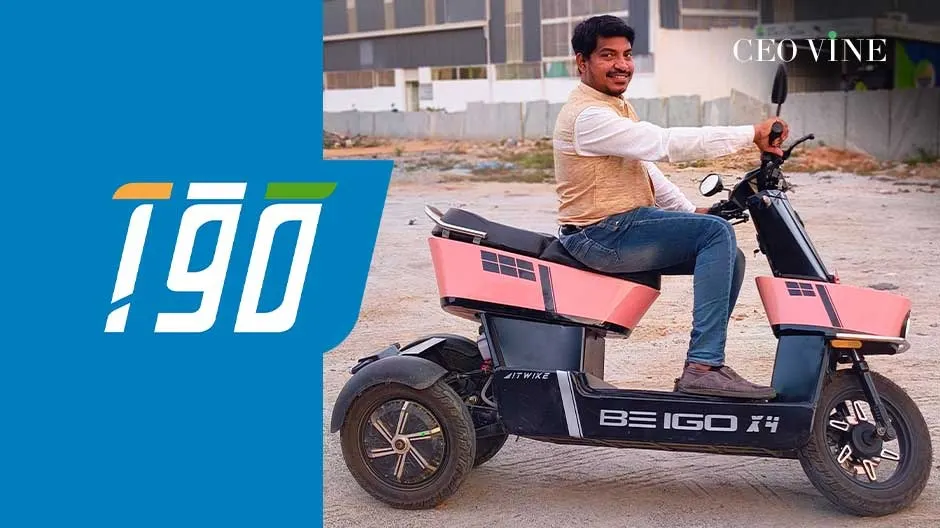
    Its flagship product, the BeiGo X4, is India’s first practical self-balancing leaning electric trike built specifically for real-world Indian conditions. The front wheels tilt like a scooter during turns, while the rear wheel architecture provides added stability and unparalleled road-grip— placing it squarely between a two-wheeler and a three-wheeler.

    “Even novice riders tell us it feels as easy as riding a bicycle, but as reassuring as sitting in a small car,” Sravan said.

    The R&D journey behind the BeiGo X4 spanned over five years, involving physics modelling, mechanical design, control algorithms and extensive road testing. Early prototypes focused on proving the physics of tilting and balance before progressing into manufacturable vehicle architecture, safety systems and long-term durability.

    Building Intelligence Into Mobility

    Beyond mechanical innovation, iGo vehicles are designed as connected, intelligent platforms. Features such as IoT-enabled diagnostics, GPS tracking, theft alerts, ride analytics and OTA updates allow the company to continuously improve performance even after delivery.

    These smart systems also play a role in safety and maintenance, enabling predictive servicing and reducing downtime — a critical factor for daily commuters and commercial riders alike.

    Looking ahead, iGo is also working on auto-summoning light vehicle technology, aimed at assisted repositioning, fleet operations and future shared mobility use cases. While still a long-term initiative, it reflects the company’s ambition to move beyond vehicles and build intelligent mobility ecosystems.

    Who iGo Is Built For

    While urban commuters form a core audience, iGo’s early traction has come from a diverse set of users — women riders, senior citizens, first-time two-wheeler users, and increasingly, rural utility riders & micro-entreprenuers.

    The On-demand self-balancing system removes the immense fatigue of balancing the entire vehicle at low speeds, while ergonomic seating, a low step-through design and predictable handling provide the level of comfort and confidence for the rider unimaginable in the scooter space.

    “For many riders, confidence to conquer the potholes matters more than top speed,”  said. “Once that fear disappears, mobility becomes liberating.”

    From Pilots To Pre-Seed Funding

    Currently in early commercialisation, iGo has focused on controlled deployments, pilot programs and pre-orders, rather than aggressive volume ramp-ups. Initial adoption has been strongest in South and West India, regions with high two-wheeler dependence.

    As of September 2025, the startup raised INR 92 million (₹9.2 crore) so far in angel and  pre-seed funding, led by ISB Angels, 888VC and Guptaji VC. The capital has been deployed towards advanced R&D, regulatory certifications, proto tooling, supplier development, customer support infrastructure for initial scale.

    The company plans to raise a larger seed round in 2026 to support mass production tooling, service & dealer network expansion, and next-generation products.

    Manufacturing currently follows a lean, semi-in-house model, supported by a fully indigineous scalable vendor partnerships allowing modular growth aligned with demand.

    Positioning In A Crowded EV Landscape

    Rather than competing head-on with conventional two-wheeler OEMs, iGo operates in a new category between two-wheelers and three-wheelers. Its differentiation lies not in speed or styling, but in stability, safety and accessibility.

    The company also actively engages with B2B partners, particularly in last-mile delivery and utility operations where rider fatigue, uptime and safety directly impact productivity. While demand from big eCommerce players like  Tata BigBasket, Porter, Hala Mobility and Elektric Express signal growing interest from commercial ecosystems, iGo is focusing on specific niche logistics such as Neera sip, health drink supplier, laundry service, toys delivery, pharma delivery and courier service.

    “Our competition isn’t another scooter brand,” Sravan noted. “It’s the idea that personal mobility has to be difficult or intimidating.”

    The Road Ahead

    India’s EV market is gradually shifting from subsidy-driven adoption to value-led purchasing, with increasing emphasis on safety, durability and total cost of ownership. In that transition, stability-enhanced vehicles could become a natural evolution rather than a niche.

    Over the next 1–2 years, iGo plans to scale BeiGo X4 deployments, strengthen dealership and service networks, and launch additional variants for family, shared and light commercial mobility.

    Longer term, the company aims to establish itself as a global reference for safe personal mobility platforms, expanding into multiple intelligent mobility categories and international markets.

    “By 2030, our goal is to move millions every day,” Sravan  said. “Not just by building more vehicles, but by building platforms that make confident mobility accessible to everyone.”

    As urban density rises and rider demographics diversify, iGo’s bet on safety-first engineering may well redefine how India thinks about everyday movement — not as a test of balance, but as a basic right.
  • SkyySkill Academy: A Homegrown Skilling Startup Preparing India’s Future Workforce

    SkyySkill Academy: A Homegrown Skilling Startup Preparing India’s Future Workforce

    As industries shift toward electric mobility, renewable energy, automation, and connected technologies, the gap between classroom learning and industry expectations continues to grow. Companies want talent that can work on real systems. Colleges want partners who can bring practical learning into their curriculum. Students want skills that convert into jobs.

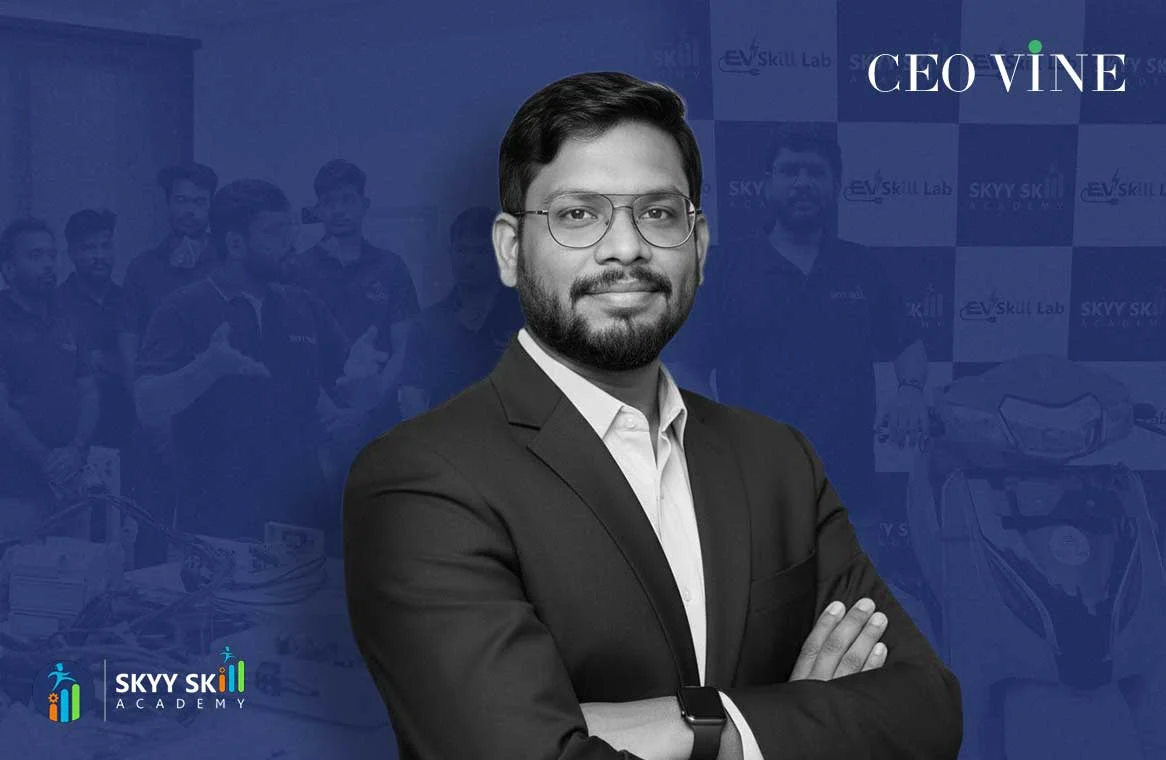
    SkyySkill Academy, founded by Himansu Sekhar Panda, is building its place in this landscape. Headquartered in Hyderabad, the company focuses on training that happens through real labs, equipment, and hands-on engineering work rather than theory-heavy online modules.

    Where the Journey Began

    Himansu grew up in a small town in Odisha. He often saw students complete engineering without getting real exposure to equipment, tools, or industry systems. The disconnect stayed with him through his own education and early career.

    “The problem was never talent,” he says. “It was access. Students needed systems to work on, not just lectures to listen to.”

    His early years working with colleges, companies, and students made the issue more visible. The idea was not to launch a training company, but to create an environment where learners could assemble, test, build, and understand real systems.

    What started in 2018 as Skyy Rider Institutions set up in a small rented room eventually shaped itself into SkyySkill Academy. The company was formally incorporated under Telangana ROC in 2023.

    A Model Built Around Real Systems

    The company’s core belief is that engineering must be experienced, not just studied. Learners work on EV powertrains, battery modules, solar setups, embedded controllers, CAD/CAE tools, and IoT applications.

    The Academy runs alongside SkyySkill Lab, its engineering and infrastructure arm that designs and manufactures labs and Centres of Excellence for institutions. This combined structure allows the team to introduce the Learn–Earn Program, where students take part in assembling and testing systems that later get deployed in colleges across India.

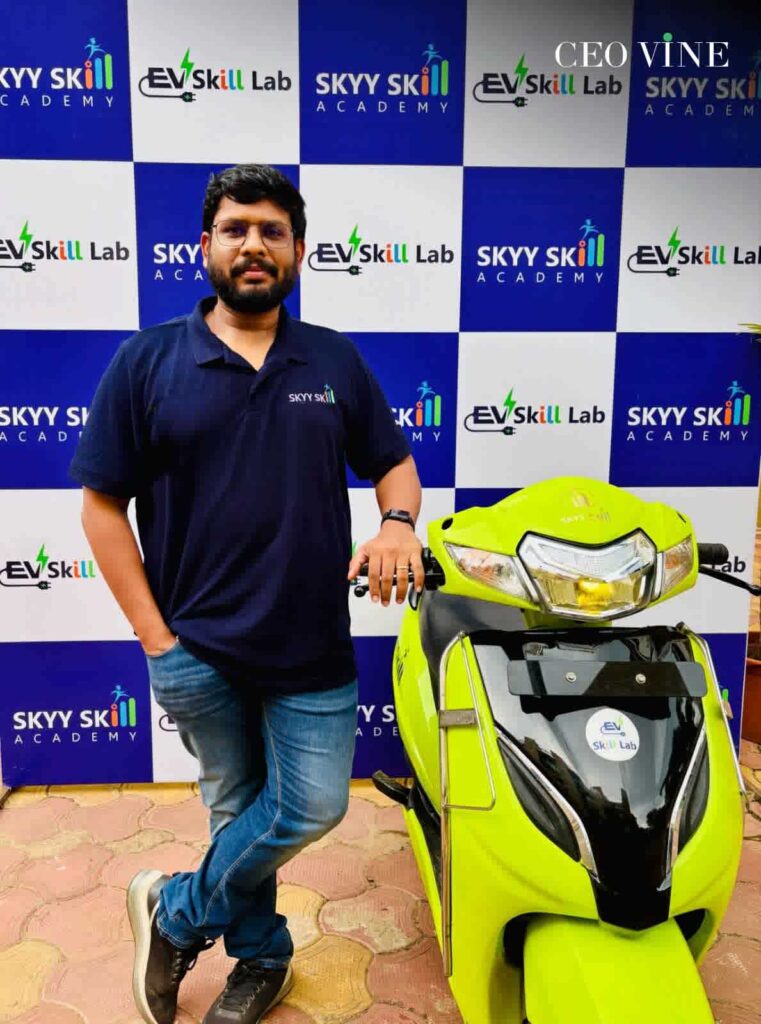
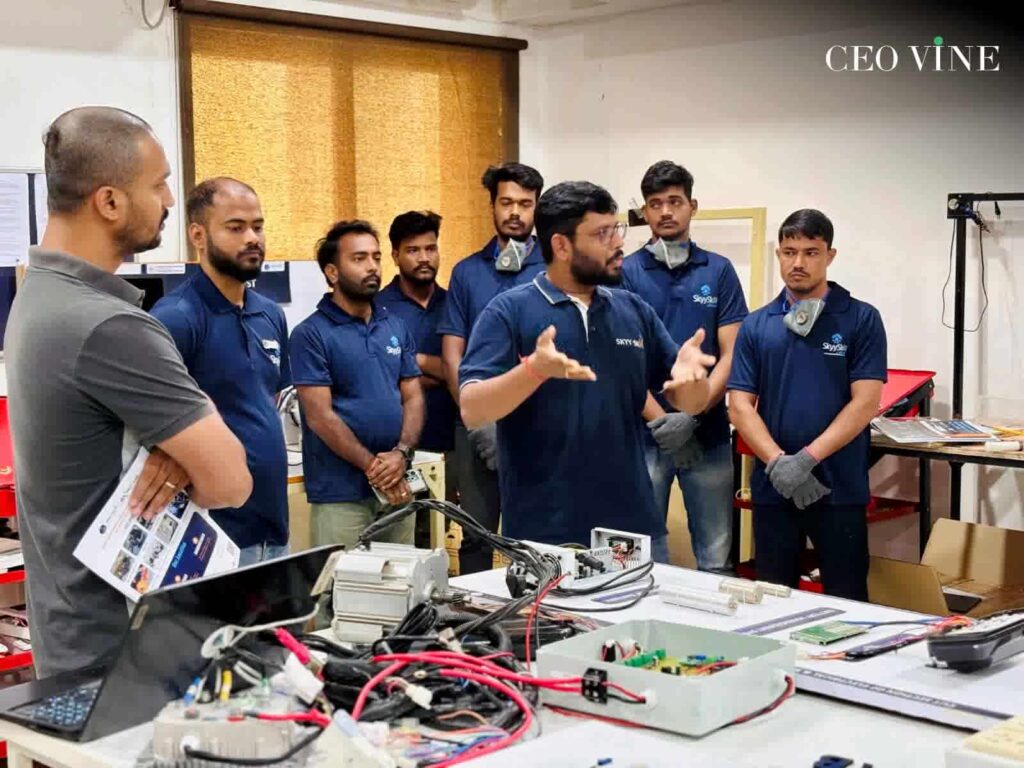
    Himanshu at his manufacturing unit explaining the technology to a client from Bosch
    Himanshu at his manufacturing unit explaining the technology to a client from Bosch

    “Our goal was not to replace colleges,” Himansu says. “It was to strengthen them. Students should not have to wait for a job to get industry exposure.”

    Building Credibility Through Demonstration

    In the early years, gaining trust was a major challenge. Institutions were hesitant to partner with a young company building advanced labs without a long track record.

    The turning point came when colleges began visiting the facilities. They watched students working on real EV drivetrains, digital-twin dashboards, battery management systems, robotics rigs, and embedded labs. Seeing the setup in action made the model easier to understand and helped SkyySkill secure its first large collaborations.

    From there, word of mouth and demonstrations drove growth. Today, the company has set up more than 60 Centres of Excellence, trained over one lakh learners, and worked with 200+ institutions across India. Its team has grown to more than 80 members.

    Institution Partnerships and Expanding Infrastructure

    SkyySkill Academy collaborates with IIT Guwahati, IIT Kanpur, MG Motor India, ASDC, ESSCI, and other industry bodies to keep its curriculum aligned with changing technologies. Inputs from EV manufacturers, renewable energy companies, embedded engineers, and academic partners are added into the training content every few months.

    Himanshu presenting a retrofitted EV 2-wheeler manufactured by Skyy Skill.
    Himanshu presenting a retrofitted EV 2-wheeler manufactured by Skyy Skill

    To support scale, the company introduced digital twins, AI-driven learning tools, and adaptive assessments within its LMS. These tools run parallel to hands-on sessions, allowing students to learn theory and practice together.

    A Structure With Two Divisions

    SkyySkill functions through its two verticals: SkyySkill Lab, which builds technology, labs, and CoEs, and SkyySkill Academy, which delivers training in EVs, Solar, IoT, Embedded Systems, Robotics, and other technologies.

    Revenue comes from lab deployments, institutional engagements, training programs, CSR projects, hiring partnerships, and consulting.

    A Founder Guided by Purpose

    Himansu often refers to the philosophy he shared in one of his talks, Passion, Perception, Persistence, Patience, Pursuit, and Purpose. These principles shape how the company operates and how the team approaches skilling.

    “The future workforce needs theoretical clarity and practical confidence,” he says. “Our job is to build the bridge that connects the two.”

    What Comes Next

    SkyySkill Academy is now working on advanced labs for hydrogen mobility, robotics, drones, smart grids, and AI-driven manufacturing. The team is also building hybrid learning systems that combine physical labs with AI tools and simulations.

    As India moves toward greener mobility and more technology-driven industries, SkyySkill aims to contribute to the talent pipeline by giving students access to real systems and real engineering, not just content on screens.

    SkyySkill’s story is not about competing with conventional education; it is about complementing it and giving students the confidence to handle emerging technologies. The company’s growth reflects a broader shift in Indian skilling toward practical, industry-connected training that prepares learners for what the market actually needs.

  • How Greenway Mobility Plans to Redefine India’s 3-Wheeler EV Market

    How Greenway Mobility Plans to Redefine India’s 3-Wheeler EV Market

    India’s electric vehicle (EV) market is evolving at a remarkable pace. According to Fortune Business Insights, the market is projected to grow from USD 23.38 billion in 2024 to USD 117.78 billion by 2032, with a CAGR of 22.4% during the forecast period.

    India is already the fifth-largest automobile market globally and is expected to rank third by 2030. A mix of government subsidies, rising fuel prices, and a broader shift toward cleaner mobility is accelerating this transition.

    According to JMK Research & Analysis, electric three-wheelers—the second-largest EV segment by volume are expanding rapidly. In 2024 alone, 6,94,466 electric three-wheelers were sold, marking an ~18% year-over-year growth. The cargo segment saw nearly 45% YoY growth, driven by booming logistics and favorable cost dynamics.

    But much of this EV wave is urban-centric and consumer-focused. Rural India, the real Bharat is still left behind. For many small-town and semi-urban users, mobility isn’t a lifestyle upgrade. It’s a necessity.

    This is the space Greenway Mobility is stepping into: durable, purpose-built EVs engineered for real-world India.

    The Beginning of Greenway Mobility: Engineering EVs for Bharat

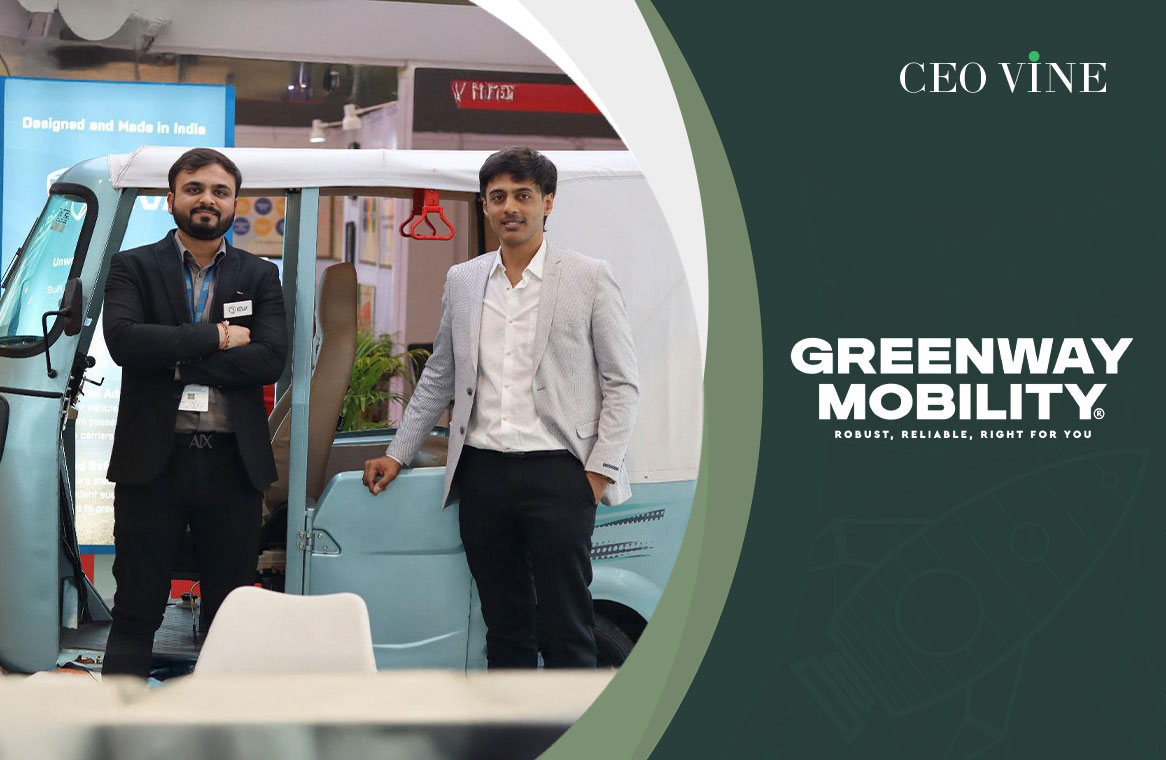
    Greenway Mobility Founders - Siddharth Patel and Harsh Raval
    Greenway Mobility Founders – Siddharth Patel and Harsh Raval

    Founded in 2023 by Siddharth Patel (LinkedIn) and Harsh Raval (LinkedIn), Greenway Mobility emerged from a grounded, on-the-road vision.

    Siddharth, an IIT Bombay and Cornell graduate, brought experience in finance and analytics across manufacturing and financial services. Harsh, with a civil engineering background and roots in infrastructure, understood India’s mobility challenges from the ground up.

    Together, they realized that the opportunity wasn’t in premium scooters or urban showrooms but in creating workhorse EVs for the people who drive India’s real economy.

    Joining them was Nilabh Jha (LinkedIn), Chief Technology Officer. An industry veteran who has developed over 20 vehicle products during his tenure at companies like Ampere Greaves, Alti-Green, and SEG Motors, Nilabh brought a practical, consumer-centric engineering lens to product development.

    “We dreamt of building a world-renowned Indian brand that creates electric vehicles for the global mass market,” says Siddharth. “The three-wheeler EV space was growing, but there was a clear lack of innovation. Most models were retrofitted or unreliable—and that’s what we wanted to change.”

    This vision led to the creation of two brands: E-Vi Mobility and Auron.

    E-Vi Mobility

    Greenway’s commercial EV brand, E-Vi Mobility, focuses on electric three-wheelers designed for cargo and passenger transport. These are built from scratch—not retrofitted—with a focus on durability, reliability, and cost-effectiveness.

    In the passenger segment, models like Chhota OTTO and Rydan come equipped with exclusive anti-topple architecture, and options for fixed or swappable batteries (5.04 kW and 8.8 kW), delivering a city range of 100–150 km.

    In the cargo segment, Chhota Bull is purpose-built for heavy-load deliveries in tight urban spaces. Its robust engineering ensures it can withstand daily wear and tear, while navigating narrow streets and bustling markets.

    Greenway claims its in-house chassis and component design double the vehicle lifespan compared to competitors, and reduce maintenance costs significantly. A five-year vehicle warranty reinforces their commitment to product longevity—an industry outlier in this segment.

    Auron

    Recognizing that not all mobility needs are commercial, Greenway launched Auron, a brand catering to personal, utility-first electric transport.

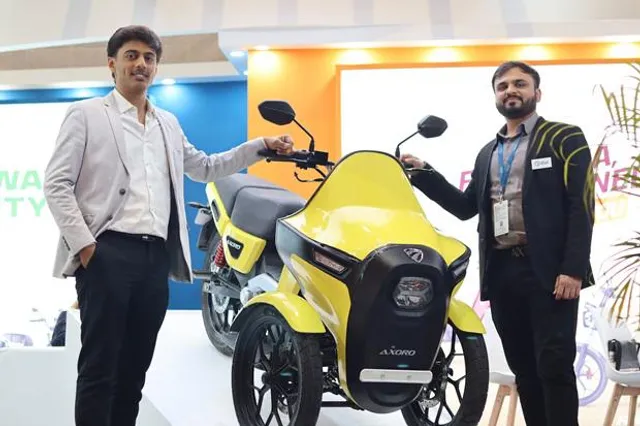
    Auron’s offerings—Rigoro, Axoro, and Axoro+—are modular electric bikes and trikes tailored for rural and semi-urban geographies. They’re designed to be low-frill but high-function, reliable in regions with poor roads and limited charging infrastructure.

    “We saw a huge opportunity to serve geographies where poor road infrastructure makes mainstream bikes and scooters impractical,” says Harsh. “For these users, reliability isn’t a feature—it’s a necessity.”

    Greenway MobilityInfrastructure, Strategy, and Scale

    Greenway operates from a 6.5-acre solar-powered manufacturing facility in Dholka, Ahmedabad, landscaped with over 15,000 trees, an environmental commitment that reflects its larger sustainability goals.

    Notably, the company is entirely bootstrapped, a rarity in the capital-heavy EV market. Siddharth and Harsh have committed up to ₹100 crore (approximately $12 million) of internal and promoter-led funding by 2026.

    Within its first year, the company has developed a portfolio of nine EVs across both personal and commercial categories. Rather than investing in celebrity endorsements or flashy marketing, Greenway is investing in engineering, service networks, and long-term customer value.

    The company’s current expansion plans prioritize high-mobility states such as Uttar Pradesh, Bihar, Punjab, Maharashtra, Gujarat, Rajasthan, J&K, Assam, Orissa, Jharkhand and Madhya Pradesh—regions often underserved by EV companies despite high usage in last-mile delivery and passenger transport.

    The company is also building a robust after-sales ecosystem, with local service teams, spare parts distribution, and battery lifecycle management. A battery recycling initiative is in the pipeline, further strengthening their sustainability roadmap.

    The company  also plans to expand  into emerging international markets such as Africa, Latin America, South Asia, and Southeast Asia, where affordability and durability are key priorities.

    https://app.ceotrail.com/how-serviceplug-puts-nearby-local-mechanics-at-your-fingertips/

    Building the Future for Everyone – E-Vi Mobility & Auron

    Greenway’s roadmap includes expanding its product range, enhancing modularity, and developing EVs tailored for off-grid, remote, and tribal regions. These areas often lack basic mobility infrastructure, making transport a critical barrier to healthcare, education, and livelihood.

    In a space where much of the noise comes from luxury concepts and futuristic prototypes, this startup is choosing focus over flash.

    “We’re not chasing headlines or valuations,” Siddharth says. “We’re focused on building a company that lasts.”

    While many startups aim for rapid scale or unicorn status, Greenway Mobility is taking a different path—building vehicles that don’t just move people, but move markets.