Gold-plated silver jewellery brand Goyaz has raised ₹130 crore ($14.6 million) in its Series A funding round led by Norwest Venture Partners, marking the Hyderabad-based company’s first institutional investment.
The funding will support Goyaz’s retail expansion across India, strengthening of design and manufacturing capabilities, and enhancement of its omnichannel customer experience. The company aims to make premium jewellery craftsmanship more accessible to a wider audience.
Founded in 2023 by Priyanka Vemuluri, Goyaz offers a curated range of gold-plated silver jewellery across bridal and contemporary collections. The brand blends traditional artistry with modern design, appealing to customers seeking occasion-ready yet wearable pieces.
In a short time, Goyaz has grown its presence to 18 retail stores across multiple states. The company provides BIS-hallmarked and certified jewellery and offers lifetime services on stones along with a 55% exchange value on purchases.
Mad Over Buildings (MOB), a fintech-driven B2B e-commerce platform for construction materials, has raised ₹6 crore in a seed funding round led by SIG Tattva, the corporate venture arm of Somany Impresa Group.
The newly raised capital will help the company strengthen its distribution network, enhance market reach, and deepen its footprint in India’s construction and interior materials ecosystem.
Founded in 2021 by Kumar Vivek, MOB aims to simplify and modernize the procurement process for architects, contractors, and developers through a Line-of-Credit model, escrow-backed payment system, and an extensive catalogue of sustainable materials.
The platform addresses liquidity challenges faced by small distributors and retailers while ensuring secure and transparent transactions. Through its fintech-powered solutions, MOB is working to bridge financial and operational gaps within the construction value chain.
SIG Tattva, which invests in early-stage ventures across deep-tech manufacturing, clean technologies, enterprise SaaS, and new-age e-commerce, will support MOB through strategic guidance and access to its industrial network.
The funding news marks a key milestone for MOB as it continues to build a tech-led supply infrastructure.
India’s fintech landscape has changed rapidly over the past decade. Online investing, once limited to a few brokers and desktop terminals, has evolved into a mobile-first experience where millions of users trade, invest, and manage portfolios daily. Platforms like Dhan, Zerodha, Groww, Upstox, and Angel One built the foundation for this boom, making stock market participation more accessible than ever.
Dhan
Founded in 2021 by Pravin Jadhav, Alok Kumar Pandey, and Jay Prakash Gupta, Dhan operates under the parent company Raise Financial Services. In just four years, it has achieved a rare milestone for an Indian fintech startup reaching unicorn status in October 2025 with a valuation of over $1.2 billion after raising $120 million in its Series B round.
The idea for Dhan came from a simple observation. After the pandemic, India witnessed a sharp rise in retail investors, but most trading apps fell into two extremes, either too basic for serious users or too complicated for new entrants. The founders saw a gap in the market for a high-performance, intuitive platform that could serve both.
Pravin Jadhav, the driving force behind Dhan, had already helped shape India’s investing landscape as the former CEO of Paytm Money, where he played a key role in building one of the country’s largest retail investment platforms. With a background in product and operations, and experience as an angel investor and entrepreneur, Jadhav brought clarity on what retail investors truly needed: simplicity, speed, and transparency.
Along with Jay Prakash Gupta and Alok Kumar Pandey, both veterans in financial services and trading infrastructure, Jadhav built Dhan with a clear mission to create a platform “for traders, by traders.”
It was designed to bridge the gap between professional-grade tools and everyday accessibility, ensuring that Indian investors could access global-quality trading infrastructure from their smartphones.
Building the Platform
Dhan started as an online trading and investing platform offering equities, F&O, ETFs, mutual funds, and IPOs. What made it different was its focus on performance, insight, and integration. The platform’s deep integration with TradingView brought institutional-level charting and analytics to retail users. Its Option Trader product catered specifically to India’s growing community of derivatives traders, while DhanHQ APIs opened up algorithmic trading to advanced users.
Over time, Dhan expanded into a broader financial ecosystem under Raise Financial Services. It launched ScanX, a market research and analytics tool; Upsurge, a financial learning platform; and Filter Coffee, a content hub focused on Gen Z and millennial investors.
In 2025, Dhan introduced Fuzz (askfuzz.ai), an AI-powered platform for investors and finance professionals that delivers contextual, data-backed insights for the Indian market.
Growth and Financial Performance
In October 2025, Raise Financial Services closed a $120 million Series B round led by Hornbill Capital and Japan’s MUFG, with participation from BEENEXT, Ramesh Damani, DSP Family Office, JM Financial Family Office, and Aashish P. Sommaiyaa of White Oak Capital. The funding marked a tenfold increase in valuation from its 2022 Series A round.
Financially, the company reported ₹900 crore in revenue in FY24, up from ₹380 crore in FY23, and turned profitable with a net profit of ₹155 crore, reversing a ₹22 crore loss the previous year. In the first half of FY25, Dhan posted ₹453 crore in revenue and a ₹214 crore profit after tax.
India’s discount broking and trading sector is one of the most competitive fintech spaces in the country. Players like Zerodha, Groww, Upstox, and Angel One dominate the market, each serving millions of users. Yet Dhan has managed to carve its own identity by focusing on technology depth and reliability rather than pricing wars or aggressive marketing.
The platform’s infrastructure emphasizes near real-time execution, seamless integrations, AI-driven insights, and advanced API capabilities. This approach appeals to both active traders and long-term investors who value control and transparency.
The Road Ahead
With unicorn status secured, Dhan is now focused on deepening its technology and expanding its reach. The company plans to strengthen its AI-driven investing tools through Fuzz.ai, enhance Upsurge to scale financial education, and continue refining its core trading infrastructure.
The broader goal is to build a full-fledged financial ecosystem that connects investing, learning, analytics, and AI under one brand. This reflects a larger trend in fintech globally — moving from single-use products to integrated platforms that guide users through their entire financial journey.
Hyderabad-based therapeutics startup Helex has raised $3.5 million in a seed round led by pi Ventures, with participation from Bluehill Capital, SOSV, and a syndicate of global investors.
The company plans to use the funds to accelerate its lead program targeting Autosomal Dominant Polycystic Kidney Disease (ADPKD) and strengthen its AI-driven platform focused on developing next-generation precision treatments for genetic kidney disorders.
Founded in 2021 by Poulami Chaudhuri, Rohini Kalvakuntla, and Anirudh Nishtala, Helex operates at the intersection of gene therapy, artificial intelligence, and precision medicine.
The company was incubated at ASPIRE-BioNEST, University of Hyderabad, and has raised more than $6 million in total funding.
Helex’s proprietary platform combines a lipid nanoparticle (LNP)-based drug delivery system with AI-powered drug design, enabling the creation of programmable, non-viral genetic therapeutics that deliver disease-specific payloads directly to kidney cells.
Powered by deep learning models and genomic data, Helex integrates bioinformatics, high-throughput sequencing, and gene-edited target cell data to design and validate precise gRNA for renal conditions.
The company’s lead candidate focuses on ADPKD, a progressive hereditary disorder that affects over 12 million individuals globally and around 5% of chronic kidney disease patients in India.
Helex aims to develop a single-dose, gene-editing-based therapy that could potentially halt or significantly slow disease progression.
Climate-tech venture Beyond Renewables & Recycling has raised ₹5 crore in a pre-seed funding round led by Momentum Capital, a US-based venture capital firm. The round also saw participation from Venture Catalysts, IIMA Ventures, Oorjan Cleantech, and Gautam Das, marking one of the earliest institutional investments in India’s solar waste management sector.
The funds will be used to develop the company’s proprietary recycling technology, strengthen its waste collection network, and expand operations to address the growing challenge of solar waste disposal. Beyond Renewables also plans to scale its recycling infrastructure and integrate advanced material recovery systems.
Founded in 2024 by Manhar Dixit and Vedant Taneja, Beyond Renewables & Recycling is building a circular ecosystem for the solar energy industry. Its technology recovers more than 95% of valuable materials — including glass, silicon, aluminum, silver, and copper — from discarded solar panels, turning solar e-waste into reusable industrial inputs.
The company uses a hybrid process combining thermal and chemical methods to extract high-purity materials efficiently. This approach supports India’s transition toward clean energy by addressing the environmental impact of end-of-life solar systems.
With India expected to generate 1.2 million tons of solar PV waste by 2040, Beyond Renewables aims to provide a scalable recycling solution. The company collaborates with asset developers, EPC players, manufacturers, and dismantlers to ensure a steady supply of recyclable modules and already has 2,000 metric tons of solar waste in its processing pipeline.
Backed by IIT Mandi Catalyst and NSRCEL, Beyond Renewables is also establishing strong sales channels and has received letters of intent (LOIs) from multiple buyers for its recycled outputs, including glass, silicon, and metal components.
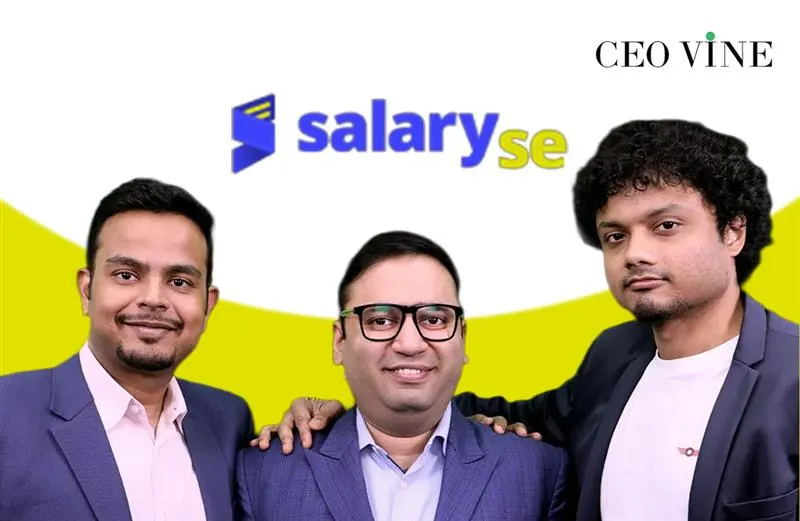
Fintech startup SalarySe has raised $11.3 million in a fresh funding round led by Flourish Ventures and SIG Venture Capital, with continued participation from Peak XV Partners and Pravega Ventures.
This comes after the company’s $5.2 million seed round in 2024, led by Surge Ventures.
The new funding will help SalarySe scale its technology infrastructure, accelerate product development, expand user acquisition, and strengthen its team.
Founded in 2023 by Saumeet Nanda, Mohit Gorisariya, and Piyush Bagaria, the Gurugram-based startup offers a digital platform that helps salaried employees manage their finances. Through payroll system integrations, the platform enables users to manage credit cards, access salary advances, track rewards, and use credit-on-UPI — all from one interface.
In under two years, the startup has achieved notable traction, reaching an annual revenue run rate (ARR) of $1.1 million as of September 2025.
The platform manages over 1 million credit cards, 400,000 loyalty program accounts, and has more than 100,000 active users paying their credit card bills via the app.
Amazon has begun its largest workforce reduction since the pandemic, cutting about 14,000 corporate roles as part of its restructuring and focus on artificial intelligence investments. The layoffs impact nearly 4% of Amazon’s 350,000 corporate employees.
The affected staff were notified through an internal email sent by Beth Galetti, Senior Vice President of People Experience & Technology. Some employees also received text messages asking them to check their email or contact HR.
In her email, Galetti wrote to employees, “I have some important, but difficult, news to share with you. After a thorough review of our organization, our priorities, and what we need to focus on going forward, we’ve made the hard business decision to eliminate some roles across Amazon. Unfortunately, your role is being eliminated and your employment will end after a non-working period.”
She added, “We didn’t make these decisions lightly, and we’re committed to supporting you throughout this transition, which will include a non-working period with full pay and benefits, an offer of a severance package, transitional benefits, and access to skills trainings and external job placement support.”
The email also informed employees that their badge access had been restricted, and those present in the office would need to be escorted out by security. During the transition, employees will retain email and internal communication access for 90 days through Amazon’s A to Z portal.
The layoffs come despite Amazon reporting $18 billion in profits last quarter and announcing plans to spend over $120 billion in capital expenditure for 2025, a 50% increase from last year.
CEO Andy Jassy had earlier indicated in a June town hall that efficiency through AI automation would reduce the need for certain corporate roles.
This is Amazon’s largest workforce reduction since the 27,000 layoffs between 2022 and 2023. Reports suggest another round may follow in early 2026, potentially bringing total job cuts to around 30,000.
Proptech startup Openhouse has raised $2 million in a seed funding round led by India Quotient Ventures.
The round also saw participation from angel investors Mohit Gupta and Gunjan Patidar (ex-Co-founders of Zomato), Gaurav Sharma (Founder, SaaS Labs), and Ramanshu Mahaur (Co-founder, Spinny).
The funds will be used to strengthen Openhouse’s technology stack, expand operations, and enhance its transaction management capabilities.
Founded in 2018 by IIT Delhi alumnus Rahool Sureka and Chartered Accountant Ankit Khemka, Openhouse operates a full-stack resale property platform focused on India’s residential secondary market.
The platform offers AI-based pricing, a 90-day sale guarantee, and end-to-end property transaction support, including buyer sourcing, home staging, documentation, and legal processes.
The startup has developed Data IQ, a pricing and market intelligence engine that evaluates more than 100,000 data points each month to estimate property values and demand trends across NCR markets. It is also building Broker AI, a matching tool that connects buyers with societies based on budget, location, and use case.
Openhouse plans to increase its monthly gross merchandise value (GMV) from Rs 10 crore to Rs 100 crore over the next four to six quarters. The company also intends to strengthen its legal and compliance functions to make transactions faster and more transparent.
E-commerce service startup Point AI (formerly Try ND Buy) has raised $5.3 million in a funding round led by Yali Capital, with participation from Lip-Bu Tan, CEO of Intel Corporation and chairman of Walden Catalyst, and Tremis Capital.
The funding will support the company’s market expansion, product refinement, R&D efforts, and new talent acquisition.
Founded by Nitin Vats, Point AI provides artificial intelligence solutions to e-commerce companies, helping them improve conversions, reduce product returns, and create more personalized shopping experiences.
The company’s platform combines commerce data, consumer behavior insights, and supply chain inputs to power its AI models.
The startup works with online retailers, marketplaces, and direct-to-consumer brands, serving clients in 12 countries, including Flipkart, Myntra, and Japan’s Rakuten. The company currently operates from offices in Bengaluru, Noida, and Shanghai.
With the fresh capital, Point AI aims to deepen its partnerships with large merchants and marketplaces that manage high-volume returns and complex product assortments.
Redacto has raised Rs 12 crore (around $1.4 million) in a seed funding round led by PeerCapital and Antler India, with participation from several angel investors.
The funds will be used to strengthen the company’s AI systems, expand its product and engineering teams, and drive enterprise adoption of its data privacy and governance platform.
Founded in 2024 by Shashank Karincheti and Amit Kumar, Redacto provides an AI-based data privacy and governance platform for enterprises. The platform helps organizations in banking, finance, and insurance manage data discovery, consent tracking, and vendor risk while complying with India’s Digital Personal Data Protection (DPDP) Act.
The startup is currently working with payment companies and NBFCs and is in discussions with banks, fintechs, and insurance firms preparing for DPDP compliance.
Its platform offers data mapping, consent management, vendor risk checks, breach workflows, and regulatory reporting through a single system.
The company’s product suite includes a Privacy Engine for automated data discovery, ConsentFlow for permission management, VendorShield for third-party risk monitoring, and TrustCentre for compliance sharing.
Redacto’s mission is to build a consumer-centric privacy platform that helps businesses comply with data protection laws while giving individuals better control over their personal data.