India’s startup count has experienced remarkable growth, with over 1,61,150 startups recognized by the Department for Promotion of Industry and Internal Trade (DPIIT) as of January 31, 2025.
This surge underscores the country’s commitment to fostering innovation and entrepreneurship.
Launched on January 16, 2016, the Startup India initiative aims to build a robust ecosystem that nurtures innovation and encourages investments.
The initiative has been instrumental in propelling India’s startup landscape, transforming it into one of the world’s largest and most dynamic ecosystems.
Maharashtra leads the states with 28,511 recognized startups, reflecting its vibrant entrepreneurial culture.
Karnataka follows with 16,954 startups, bolstered by cities like Bengaluru, renowned as India’s Silicon Valley.
The national capital, Delhi, is home to 16,356 startups, while Uttar Pradesh hosts 15,360, showcasing significant growth in these regions.
This rapid expansion is not just limited to metropolitan areas. Approximately 48% of these startups have emerged from tier-II and tier-III cities, indicating a widespread entrepreneurial spirit across the nation.
Notably, 73,151 recognized startups include at least one woman director, highlighting the increasing role of women in entrepreneurship.
The impact of this growth extends to job creation, with recognized startups generating over 17.28 lakh direct jobs as of December 31, 2024.
The IT services sector leads with 2.10 lakh jobs, followed by healthcare and lifesciences (1.51 lakh) and professional and commercial services (96,474).
The government’s vision to establish at least one startup in every district is nearing realization, with startups present in over 750 districts.
However, challenges remain in ensuring grassroots-level implementation and support. For instance, the union territory of Lakshadweep has only three recognized startups, all from a single district, indicating room for growth in certain regions.
The Startup India initiative continues to evolve, aiming to make India a global leader in innovation and entrepreneurship. With sustained support and strategic policies, the country is poised to further enhance its startup ecosystem, contributing significantly to economic growth and job creation.
Bengaluru-based edtech startup Ambitio has successfully secured $2 million in seed funding, with BLinC Invest leading the round.
The funding round also saw participation from Ritu Bapna and other investors.
Prior to this, the company had raised $187K from First Cheque and additional backers as part of the same round.
The newly acquired capital will be directed toward enhancing technological capabilities, refining the student experience, and expanding distribution channels, the company stated in a press release.
Founded in 2022 by Dirghayu Kaushik and Vikrant Shivalik, Ambitio is an AI-powered platform that simplifies the university admissions process.
By integrating insights from past applicants with expertise from alumni, the platform delivers a tailored and highly personalized experience for students.
Ambitio utilizes an extensive database of over 10 million data points to provide intelligent recommendations and connects students with admission specialists for personalized guidance.
The platform is exclusively designed to assist students in securing admissions to prestigious institutions worldwide.
Ambitio’s proprietary matching algorithm, trained on over 50,000 university programs, helps students find institutions that fit their academic and career goals.
The company claims its approach increases admission chances to top universities like Harvard, Stanford, Columbia, and Oxford by more than five times.
Mobile game publisher Felicity Games has raised $3 million (approximately Rs 25.8 crore) in a seed funding round led by 3one4 Capital, with participation from T-Accelerate Capital, MIXI Global Investments, and existing investors DeVC and Visceral Capital.
This follows a $700,000 pre-seed funding round in December 2023.
The fresh capital will be used to enhance its publishing infrastructure and strengthen partnerships with Indian game studios, the company said in a press release.
Founded in 2023 by Anurag Choudhary, Felicity Games focuses on launching and scaling global gaming successes by leveraging data-driven development and a robust publishing infrastructure.
“We are building the next generation of global gaming successes from India. By tapping into India’s studio ecosystem and top global talent in UA, Monetization, and Live Ops, we’re accelerating learning and innovation. This fundraise fuels our mission to double down on innovation, partnerships, and growth,” said Anurag Choudhary.
In 2024, the company partnered with over 10Indian studios to test and scale multiple games, strengthening its position in the competitive gaming market.
It has surpassed $1 million in annual recurring revenue (ARR) and 1 million downloads across its top titles, Seek & Find and Nova Solitaire.
In a world where job security is often a priority, some women dared to dream beyond their high-paying careers. They walked away from corporate stability, left behind prestigious roles, and took the bold step of starting their own ventures.
Today, their businesses have grown into multi-crore enterprises, inspiring millions across India and beyond.
This Women’s Day, let’s celebrate ten fearless Indian women entrepreneurs who took a leap of faith and built companies that changed industries forever.
1. Falguni Nayar
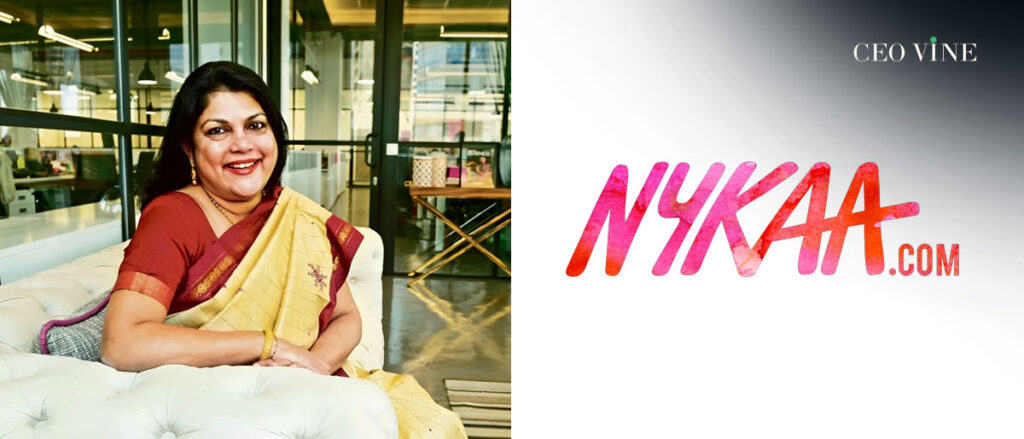
Falguni Nayar spent nearly 20 years at Kotak Mahindra Bank, rising to the position of Managing Director at Kotak Mahindra Capital Company. Despite a successful career in investment banking, she wanted to create something of her own.
In 2012, at the age of 50, she launched Nykaa, a beauty and lifestyle retail brand. Over the years, Nykaa has transformed the way Indians shop for beauty products, making high-end cosmetics accessible nationwide.
By leveraging an omnichannel approach, the brand expanded both online and offline, with hundreds of physical stores across India.
Today, Nykaa is valued at ₹97,000 crores, making Falguni one of India’s richest self-made women and an inspiration for late-stage entrepreneurs proving that it’s never too late to follow your dreams.
2. Vineeta Singh
An IIM Ahmedabad graduate, Vineeta Singh was offered a ₹1 crore per year job at a global investment firm. Instead of taking the safe route, she chose to build her own brand in the beauty industry.
In 2015, she co-founded Sugar Cosmetics, a brand that resonated with young Indian women by offering bold, high-quality, and cruelty-free makeup products.
Competing with international giants, Sugar Cosmetics used influencer marketing and digital campaigns to gain massive popularity.
Today, Sugar Cosmetics is valued at ₹4,000 crores, and Vineeta Singh has become a household name, especially after her appearance on Shark Tank India.
3. Richa Kar
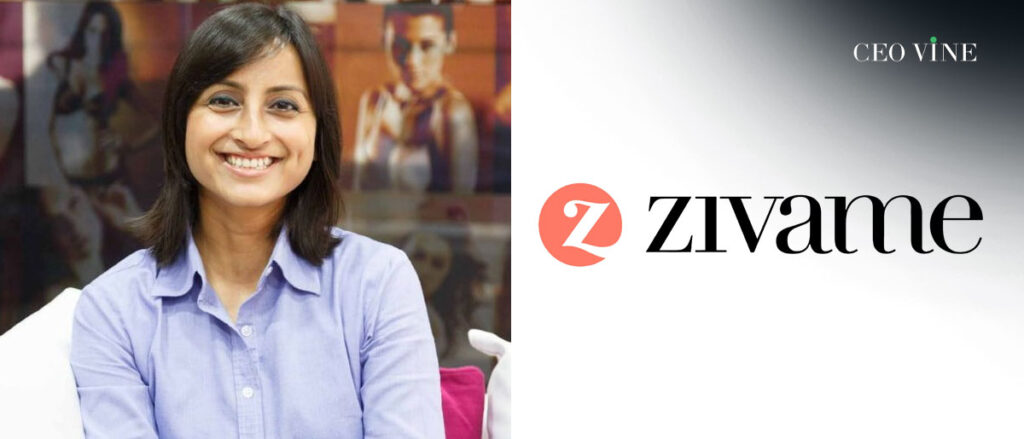
While working at SAP, Richa Kar studied the Indian e-commerce industry and noticed that lingerie shopping was still uncomfortable for many Indian women. She realized there was a huge opportunity in the online space.
In 2011, she founded Zivame, India’s first major online lingerie brand, providing women a private and convenient way to shop for innerwear. By breaking taboos and normalizing conversations around lingerie, Zivame revolutionized the market.
The company was later acquired for ₹1,200 crores, cementing its place in the Indian retail sector and making Richa Kar a pioneer in the lingerie e-commerce industry.
4. Kiran Mazumdar-Shaw
Kiran Mazumdar-Shaw trained as a brewmaster and was set to work in the beer industry. However, in the 1970s, the brewing sector was dominated by men, and she found it difficult to secure leadership roles.
Determined to carve her own path, she started Biocon in 1978 with just ₹10,000. What began as a small enzyme-manufacturing company has now become India’s largest biotechnology firm, focusing on life-saving pharmaceuticals and cutting-edge research.
Today, Biocon is valued at ₹29,000 crores, and Kiran Mazumdar-Shaw is recognized globally as a biotech leader and philanthropist.
5. Malika Sadani
Malika Sadani was a banker in London before becoming an entrepreneur. When she became a mother, she struggled to find safe, toxin-free baby products in India.
In 2016, she founded The Moms Co., a brand that provides natural, chemical-free baby care products. The company quickly gained trust among mothers by offering dermatologically tested, Australian-certified toxin-free products.
The Moms Co. was later acquired for ₹500 crores, making Malika Sadani one of the most successful female entrepreneurs in India.
6. Saily Lad
Saily Lad was working in consulting, handling large-scale projects, but she wanted to create something impactful in the technology sector.
She went on to establish Volksara, a company specializing in cybersecurity and smart city solutions. Volksara has played a crucial role in integrating advanced tech into city infrastructure and was responsible for deploying technology at Kumbh Mela, one of the world’s largest gatherings.
Today, Volksara generates ₹150 crores in revenue and is expanding rapidly in the cybersecurity domain.
7. Ghazal Alagh
Ghazal Alagh was a corporate trainer before entering the entrepreneurial world. Her journey into business started when she struggled to find safe, chemical-free skincare products for her newborn.
She co-founded Mamaearth, a toxin-free skincare brand that quickly became a household name in India. With a focus on sustainability and natural ingredients, Mamaearth became the first Indian beauty brand to be certified Made Safe.
Today, Mamaearth is valued at ₹15,500crores, making it one of India’s most successful personal care brands.
8. Kavitha Subramanian
Kavitha Subramanian had a background in investment banking, working with some of the top global financial institutions. She saw an opportunity in the rapidly growing fintech industry and decided to take the plunge.
She co-founded Upstox, a digital stock-trading platform that makes investing easier for everyday Indians. By offering zero-commission trading and advanced analytics, Upstox quickly gained popularity among young investors.
Today, Upstox is valued at ₹28,200 crores, making it one of the leading brokerage platforms in India.
9. Ruchi Kalra
Ruchi Kalra was a partner at McKinsey & Company, where she worked with some of the biggest firms in the world. But she had a vision to build something of her own.
She co-founded OfBusiness and Oxyzo, two financial and procurement startups focused on empowering SMEs with credit and raw material supply solutions.
OfBusiness, in particular, became one of India’s fastest-growing unicorns.
Today, her ventures are valued at a combined ₹52,000 crores, making her one of the most influential women in India’s startup ecosystem.
10. Roshni Nadar Malhotra
Roshni Nadar Malhotra began her career in media and broadcast journalism before stepping into the world of business.
She took over as the Chairperson of HCL Technologies, a global IT services company founded by her father, Shiv Nadar. Under her leadership, HCL Technologies has expanded its global footprint, strengthened its innovation capabilities, and maintained its status as a leader in IT services.
Today, HCL Technologies is valued at ₹2.85 lakh crores, making it one of India’s biggest IT firms.
Direct-to-consumer (D2C) men’s fashion brand Banana Club has launched its first store in Mumbai, marking a significant milestone in its retail expansion.
The new outlet, located on the first floor of R City Mall, Ghatkopar West, is the company’s 10th store nationwide.
Announcing the launch on social media, Prashant Lalwani, co-founder of Banana Club, expressed gratitude towards customers and the team.
“Super excited to announce the launch of Banana Club’s 10th store at R City Mall, Mumbai. This milestone would not be possible without the love and support of our customers who have made Banana Club what it is today – and the incredible team that brings it all to life every day,” he shared on LinkedIn.
Founded in 2012 by Nilesh Bafna and Prashant Lalwani, Banana Club started as a small offline store in Bengaluru and has since expanded across Bengaluru, Hyderabad, and Mumbai.
Alongside its retail presence, the brand maintains a strong digital footprint, selling through platforms like Myntra and Ajio.
Swiss packaged food giant Nestle is making a significant push into India’s premium coffee market with the launch of its first Nespresso boutique at Nexus Select Citywalk in Saket, Delhi.
This development follows the recent introduction of Nespresso coffee machines and capsules in the country.
Consumers will have the opportunity to explore various blends and receive personalized recommendations from trained coffee specialists.
Among the launched blends is the Master Origins India blend, which is sourced directly from the country.
Philipp Navratil, Global CEO of Nespresso, stated,
“Nespresso is positioned at the very high-end of the pyramid in terms of quality and pricing. We are really hoping to revolutionize the premium coffee experience in the country. It’s not just about coffee capsules, but we are bringing the whole Nespresso ecosystem to India, tapping into lifestyle trends. The boutiques will offer an immersive experience where consumers can explore the diverse range of blends and innovative machines.”
The company aims to expand its boutique presence in major metropolitan cities, capitalizing on the growing coffee culture among younger consumers, according to a top executive.
Nespresso has been sourcing high-quality green coffee from India since 2011 and currently includes Indian coffee in nearly one in five of its global blends.
The brand directly collaborates with around 2,000 coffee farmers in Karnataka to ensure premium-quality beans for its signature coffee capsules.
Currently, Nespresso imports its coffee capsules from Switzerland, with pricing set at Rs 950 for a pack of 10 and Rs 4,750 for a pack of 50.
The company is closely monitoring tariffs and pricing strategies following the recently signed free trade agreement between India and the European Free Trade Association (EFTA), which includes Switzerland.
Delhi-based youth travel hostel brand goSTOPS has raised Rs 35 crore ($4.2 million) in its Series A funding round.
The round was led by Blume Ventures and co-led by 1Crowd, with participation from Mumbai Angels, Chennai Angels, Indian Angel Network, Lead Angels, and Yuj Ventures.
This fresh capital infusion follows a $1 million bridge round raised in December 2021 from existing investors, including The Chennai Angels, Mumbai Angels, and Yuj Ventures.
goSTOPS plans to utilize the funds to strengthen its operations, enhance technology, and elevate the social and experiential aspects of its properties.
Additionally, the company is in the process of finalizing debt partnerships to further expand its financial resources for growth.
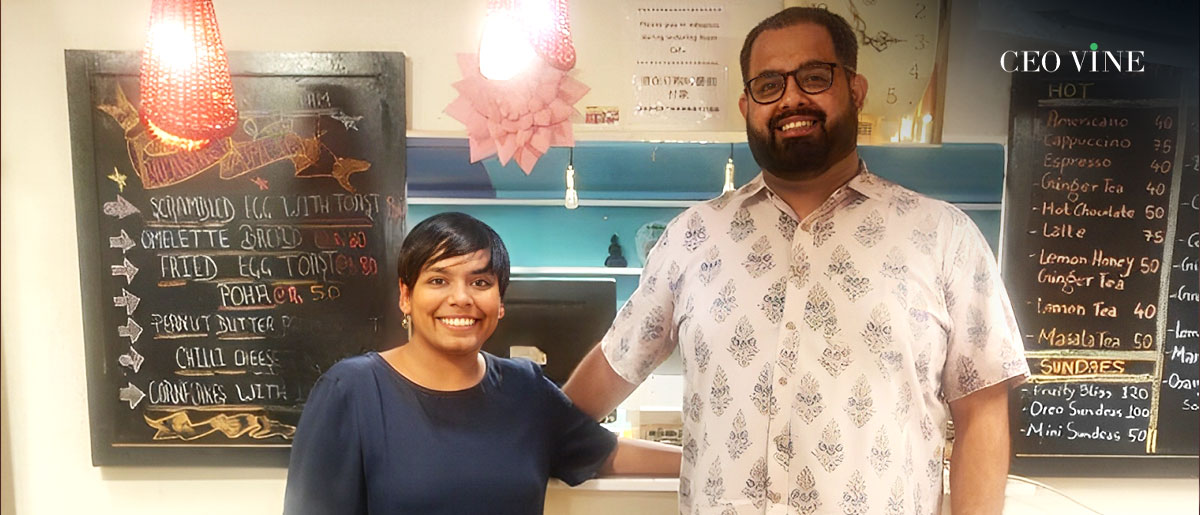
Founded in 2014 by Pallavi Agarwal and Pankaj Parwanda, goSTOPS focuses on offering vibrant, social, and design-led accommodations for young travelers.
The hostel industry is witnessing significant traction, with goSTOPS competing against brands like The Hosteller, Wudstay, and Backpackers Panda.
Reflecting the increasing investor interest in this space, The Hosteller recently raised $5.7 million in its Series A round in November 2024.
In recent years, India’s presence in global trade has grown stronger than ever. According to the Ministry of Commerce & Industry, India’s exports soared to a record-breaking USD 778.21 billion in 2023-24—a staggering 67% jump from USD 466.22 billion in 2013-14.
This surge reflects the country’s increasing influence in international markets, with both merchandise and services exports driving the momentum.
Yet, behind these impressive numbers lies a different reality. Exporting remains a tough game—filled with unpredictable delays, unexpected costs, and endless compliance hurdles.
Many exporters struggle with slow payments, lack of visibility, and outdated processes that make global trade feel more like an uphill battle than an opportunity for growth.
Seeing these challenges firsthand, Nikhil Agrawal founded Pazago—a platform designed to make exports faster, smoother, and more reliable, helping businesses trade with confidence and scale without the usual roadblocks.
Nikhil Agrawal – Shaped by Early Experiences
Born into a business-driven family, where conversations over dinner often revolved around navigating market fluctuations and managing risks, Nikhil grew up with an entrepreneurial mindset.
His father, an entrepreneur himself, didn’t just teach him about numbers and profits but instilled in him the importance of resilience, execution, and trust in business.
“I saw firsthand how relationships and execution matter more than just ideas,” Nikhil recalls.
“My father always emphasized that trust is the foundation of business, and that clarity, consistency, and accountability drive long-term success.”
He pursued a Bachelor’s in Business Administration to build a strong foundation in strategy and finance.
But it was his Master’s in Computer Science that truly helped him bridge the gap between business challenges and technology-driven solutions.
Mastering Startups
Before founding Pazago, Nikhil’s journey took him to Silicon Valley, where he witnessed firsthand how technology could revolutionize industries.
He began his career as a software engineer at Credit Karma, where he experienced the power of data-driven decision-making. This exposure reinforced his belief that technology, when leveraged effectively, could drive efficiency and innovation at scale.
Eager to push boundaries, Nikhil then co-founded Alinea, an investing app designed for Gen Z. But he wasn’t just building an app—he was racing against time.
In just 31 days, he led product development, creating a platform that quickly gained traction, achieving an impressive 30% month-over-month growth.
Securing a Y Combinator spot on the first attempt was a milestone, but the real lesson came from the journey itself.
Learning from his mentors, he realized that success isn’t just about having a great idea—it’s about execution, moving fast, and solving real problems better than anyone else.
The idea for Pazago took shape through Nikhil’s conversations with exporters, where he repeatedly heard the same frustrations—lack of real-time shipment visibility, quality issues without structured resolution processes, and a trade environment full of inefficiencies and intermediaries.
These recurring challenges made it clear that the industry needed a smarter, more transparent solution—one that Pazago was built to provide.
“Global trade was unnecessarily complex, unpredictable, and filled with friction. Exporters were constantly playing defense,” he says. “That’s when I realized the industry needed a fundamental shift—from reliance on relationships and manual processes to operating with data, automation, and process discipline.”
Building Pazago wasn’t easy. The fragmented export-import industry had varied workflows, so Nikhil and his team spent months studying exporters’ processes to ensure the platform was flexible.
They developed API integrations to automate data flows, enabling seamless, real-time supply chain visibility.
“Adapting to industry nuances while maintaining a scalable tech framework was key to overcoming our early hurdles,” he shares.
Traveling across the world gave him a unique lens on business. In Silicon Valley, he saw how technology could drive efficiency at scale.
London’s structured financial systems highlighted the power of process-driven economies.
Back in India, he witnessed the unmatched resilience and adaptability of businesses navigating complex trade environments.
These experiences shaped Pazago’s core vision—bringing structure to exports without compromising the agility that businesses need to thrive.
Today, Pazago integrates real-time updates, AI-driven alerts, and seamless API connections, ensuring a smarter, more efficient global trade ecosystem.
“We’re turning exports from a reactive process into a proactive, data-driven operation,” he says.
Looking ahead, he sees AI and blockchain transforming global trade. “AI will predict disruptions, optimize supply chains, and automate decisions. Blockchain will enhance trust with secure, immutable transactions.
Together, they’ll make trade faster, more efficient, and reliable.”
His leadership philosophy revolves around ownership, speed, and bold thinking. “Every team member should feel like a stakeholder. We move fast, iterate, and take calculated risks. True innovation comes from challenging the status quo.”
Changing the Playbook
Under his leadership, Pazago has grown rapidly, with a strong revenue model and increasing transactions.
While financials remain undisclosed, Nikhil is clear: “We are on track to scale Pazago into a billion-dollar trade infrastructure within five years, supporting thousands of exporters.”
But for him, success isn’t just about money. “True success is when Pazago helps exporters operate with certainty, scale efficiently, and unlock growth. Wealth is a byproduct of creating something meaningful.”
In the next decade, he envisions Pazago as the go-to operating system for global trade.
“Our mission is to eliminate friction in exports, making global trade as seamless as e-commerce.”
Harmony Between Work, Life, and Growth
Despite his intense focus on work, Nikhil values balance. “I prioritize what truly matters, delegate effectively, and create mental space for clear thinking.” He enjoys deep conversations with founders and exploring new business models.
Books have shaped his mindset—The Hard Thing About Hard Things for startup leadership, Zero to One for innovation, and The Almanack of Naval Ravikant for leverage and long-term thinking.
For aspiring entrepreneurs, his advice is clear: “Execution beats ideas. You win by moving fast, staying adaptable, and solving real problems better than anyone else.”
As he builds Pazago into a global leader, he remains driven by purpose. “Problems will always exist, but they should be different ones, and we should be solving them differently. That’s what keeps me going.”
D2C jewellery brand GIVA has raised INR 102 Cr (about $11.7 Mn) in equity and debt from Alteria Capital and Northern Arc.
Backed by Premji Invest, GIVA plans to use the funds for retail expansion and general corporate purposes.
This marks GIVA’s second fundraise in five months. In October 2024, it raised INR 255 Cr ($30.3 Mn) in a Series B round led by Premji Invest to boost offline expansion and lab-grown jewellery offerings.
The brand currently operates 199 stores across Tier I and II cities, including Bengaluru, Pune, Hyderabad, Mumbai, and Delhi NCR.
Founded in 2019 by Ishendra Agarwal, Nikita Prasad, and Sachin Shetty, GIVA started with 925 fine silver jewellery and later expanded into 14K and 18K gold and lab-grown diamonds.
It retails via physical stores, online platforms, and shop-in-shop partnerships with Shoppers Stop and others.
In FY24, GIVA’s operating revenue surged 66% to INR 273.6 Cr, while net loss widened by 30% to INR 58.7 Cr due to a 55% rise in metal procurement costs.
Competing with CaratLane, Kushal’s, and Palmonas in India’s $3.7 Bn online jewellery market, GIVA’s funding comes as BlueStone prepares for an IPO, having filed for an INR 1,000 Cr+ public listing in December 2024.
Bengaluru-based fintech startup Yenmo, which provides instant loans against mutual funds, has raised Rs 9.2 crore in a funding round led by Y Combinator, with participation from Pioneer Fund, Zaka VC, and other angel investors.
The fresh capital will be used to expand Yenmo’s product portfolio, enhance its technology infrastructure, strengthen its operational capabilities, and drive market expansion, the company said in a press release.
Founded in 2022 by Ashutosh Purohit and Aryan Agarwal, Yenmo aims to redefine access to credit in India by offering secured lending solutions.
Initially offering loans against mutual funds, Yenmo is expanding to include stocks, insurance, and digital assets. Its Android and iOS platform ensures quick and seamless loan access.
The startup focuses on customer-centric lending, designing solutions based on user feedback and offering real human assistance instead of automated bots.
It differentiates itself by providing loans at interest rates as low as 10.5%, significantly lower than the 30%+ charged on traditional personal loans.
“Many borrowers experience harassment and data misuse. At Yenmo, we are dedicated to ethical lending that prioritizes transparency and customer well-being,” said Ashutosh Purohit, CEO and Co-founder of Yenmo. “With this funding, we will broaden our product offerings and build an in-house lending stack that eliminates predatory practices.”
Yenmo plans to expand secured lending to stocks and other assets while offering a high-interest savings account with easy liquidity.
Its streamlined platform enables secure loan applications in just 10 minutes.