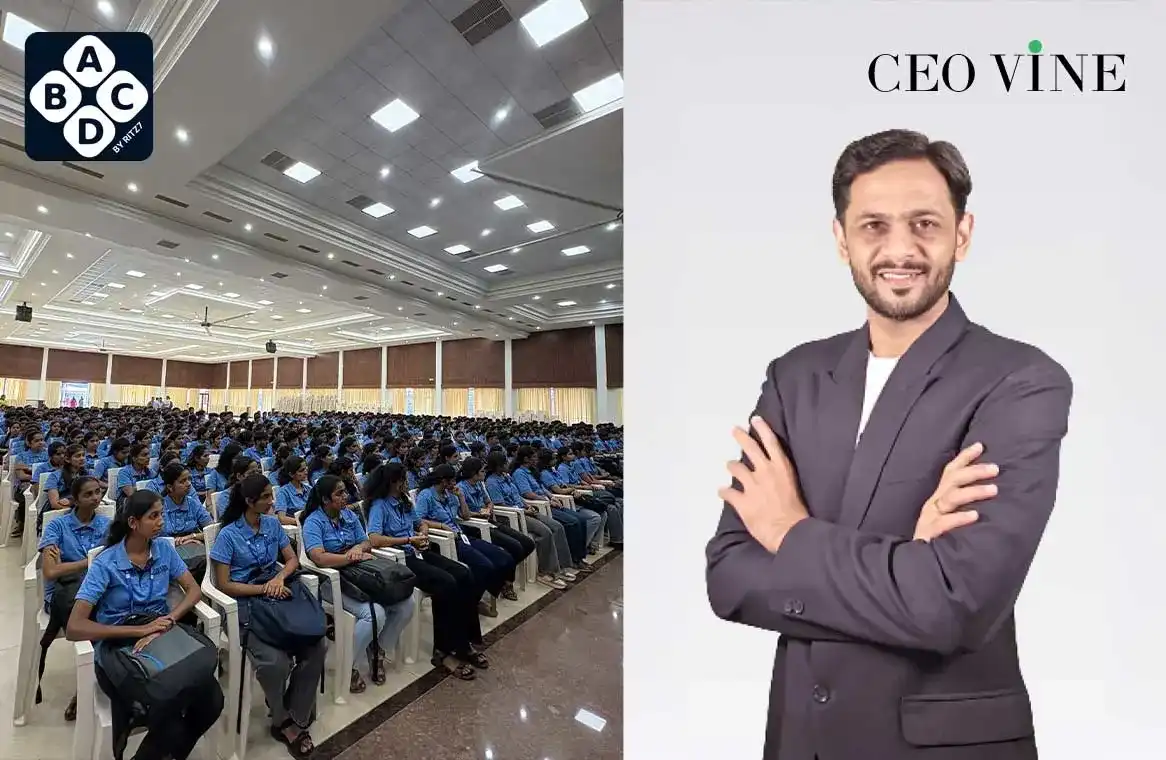
Edtech startup ABCD by Ritz7 conducted a series of workshops this week aimed at helping engineering students understand how no-code tools, AI, and freelancing are opening new career opportunities. The sessions were led by Ritesh Hegde, Founder of ABCD and CEO ofRitz7 Automations.
The workshops were held at St. Joseph Engineering College (SJEC) on November 10 and at Canara Engineering College (CEC) on November 11 and 12, 2025. Across both campuses, more than 1,700 students participated, along with faculty and placement teams from the computer science departments.
The sessions, titled “From Learners to Earners,” were designed to introduce students to modern tools used by startups and businesses. Students learned how no-code development, AI automation, and freelancing can create new pathways for earning and building practical skills.
At Canara Engineering College, students built their first AI voice agents during the live demonstration. They also took part in hands-on tasks using platforms like Bubble, n8n, and other workflow automation tools. The sessions included walkthroughs on freelancing, no-code career paths, and how early-stage startups use automation to scale.
The workshop at SJEC followed a similar structure, with strong participation during the interactive Q&A segments. Many students shared immediate feedback, stating that the session helped them gain clarity about freelancing and opportunities in the no-code space.
Canara Engineering College expressed interest in exploring extended programs with ABCD by Ritz7 focused on no-code, AI automation, and project-based learning for students. Placement teams at CEC shared positive feedback about the career-oriented approach of the workshop.
ABCD is a no-code and AI learning community founded by Ritesh Hegde under Ritz7 Automations Pvt. Ltd. The initiative is based on the idea that “Anybody Can Design, Develop, and Deploy.” It helps learners explore no-code tools, automation workflows, and AI applications through workshops, discussions, and community projects.
ABCD supports students, creators, business owners and professionals by offering resources, hands-on guidance, and opportunities in the growing no-code and automation ecosystem.
In India’s buzzing food industry, restaurants are juggling more than just flavours. Between managing online orders, social media presence, customer reviews, and day-to-day operations, running a restaurant has turned into a full-time tech challenge.
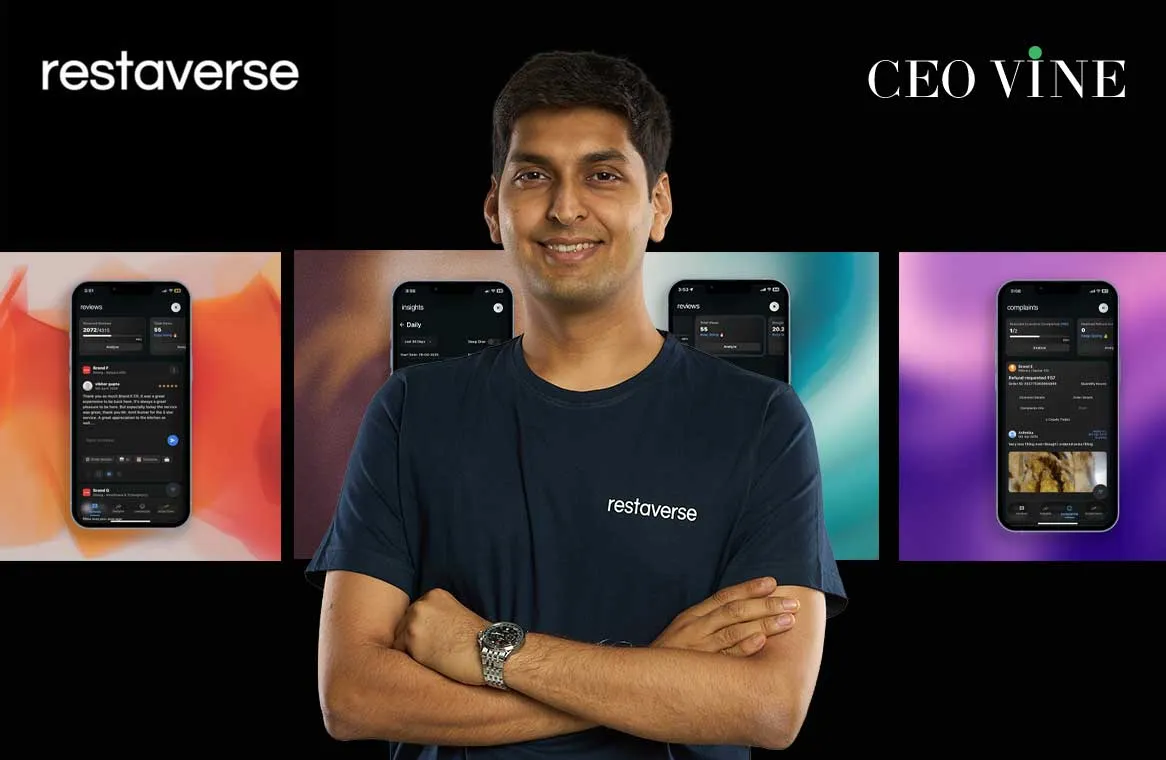
For many owners, multiple dashboards and apps mean more confusion than convenience. Mumbai-based Restaverse wants to change that, by becoming the single, unified assistant every restaurant owner has been looking for.
The Genesis of Restaverse
The idea of Restaverse took shape from inside the food tech ecosystem itself. Its founder, Siddharth Jogani, spent years at Zomato, observing how restaurant owners were overwhelmed with tools that hadn’t evolved with the times.
“It was my time at Zomato that led me to this,” recalls Siddharth. “Over the past decade, restaurant tech has evolved a fair bit, but the tools restaurants rely on have largely stayed dated.”
Founded in 2023, Restaverse, short for “the universe of all things a restaurant owner or operator requires under one roof” was built to simplify life for restaurant operators.
The goal was clear: build a platform that not only helps restaurants stay visible online but also makes their day-to-day operations smarter and more accountable.
From Marketing Suite to Operational Powerhouse
The startup’s journey began with an ambitious goal, to become the go-to marketing solution for restaurants.
“Our early product could make a consolidated advertising and discounting strategy in minutes, using historic data,” Siddharth explains. “But we realised it was ahead of its time. Restaurant owners needed something they’d use daily — not just occasionally for campaigns.”
That insight led to a major pivot. Restaverse shifted its focus from just marketing to solving daily operational gaps, areas often ignored by traditional POS or billing tools.
“Without solving their daily challenges, there would be no longevity,” says Siddharth. “Now, we’ve evolved into a go-to platform for brands for their digital share of voice, operations checklists, customer lifecycle management, and much more.”
The Product: Your Restaurant’s Digital Assistant
For someone unfamiliar with the platform, Siddharth explains it simply:
“Imagine all the things you did manually or over WhatsApp — Restaverse is the assistant for that. It’s like the executive assistant you’ve been trying to hire.”
The platform aggregates data from multiple sources — delivery aggregators, POS systems, social media, and search engines — and brings everything under one roof. It helps restaurant owners:
Track operational metrics and staff accountability
Monitor customer experience in real-time
Identify why conversions are dropping
Understand customer preferences and retarget better
The product’s strength lies in speed and depth, says Siddharth. “The sheer time in which we’ve been able to build the ecosystem — no one else has been able to drive that kind of depth and width simultaneously.”
Data, Insights, and Decisions
In an industry where every order and review counts, data-driven decision-making is key. Restaverse gives restaurants visibility into metrics that often go unnoticed — from what dishes customers love or dislike, to what type of audience they attract, their visit frequency, and how they respond to offers.
These insights help renowned brands like Mag St, The Table, Bombay Sweet Shop, Veronica’s, Social, Mainland China, The Belgian Waffle, 99 Pancakes, Pizza Express, Chillis, Radisson Hotels, Cream Centre,Copper Chimney, Salad Days, Foo, Burma Burma and many others run their businesses with more predictability and precision.
Two new products, Siddharth hints, are currently under wraps as pilot with a few brands — “You’ll hear about them soon. They’ll enable the ecosystem for restaurants even further.”
Business Model & Growth
Restaverse operates on a pure SaaS model. Restaurants pay for access to its platform, while those that need additional help can opt for managed services.
In terms of numbers, the startup’s growth has been steady and strong:
Year 1 restaurants : 300+ restaurants
Year 2 restaurants : 2500+ restaurants
Year 3 restaurants ongoing: 8000+ restaurants
From around 200 restaurants in its first year to 2,000 a year later, Restaverse now serves 8,000+ restaurants across formats from fine-dining to cloud kitchens.
Restaverse’s momentum is also validated by its partners. In a recent LinkedIn post, Gauri Devidayal, Co-Founder and CEO of Food Matters Group, highlighted how the team consistently acts as an extension of their partners’ businesses, a mindset she says turns service providers into long-term allies.
“We often get inbound interest,” Siddharth says, “but we haven’t explored it actively. Our focus has been on growing the business right now and setting the right partners to scale in the coming decades. We aren’t ruling this out, but in no rush either.”
https://app.ceotrail.com/greenway-mobility/
Challenges and Learnings
Building a tech platform for the restaurant industry comes with its own set of challenges. Adoption, training, and consistency are often the biggest hurdles.
“Innovative features require a lot of reasoning and constant reiteration,” Siddharth admits. “Restaurant operations are intense — what a CXO needs and what on-ground staff deliver are often very different. Our job is to bridge that gap and make technology easy for both.”
Over time, the perception has shifted. “Earlier, people thought of us as a ‘good-to-have.’ Now the same clients are asking us to build more for them,” he says. “We even have brands that started with a quarterly pilot and are now signing five-year contracts. That kind of trust shows how much value we’ve been able to create.”
The Future of Restaurant Tech
The restaurant industry in India is fast digitising, with efficiency, accountability, and customer retention becoming the new battlegrounds. Restaverse aims to be at the center of this transformation — an intelligent layer connecting every part of a restaurant’s digital journey.
As Siddharth puts it, “We want to help more restaurants and, in the process, build a better ecosystem.”
The idea is simple yet powerful — one assistant, one ecosystem, one universe of restaurant technology.
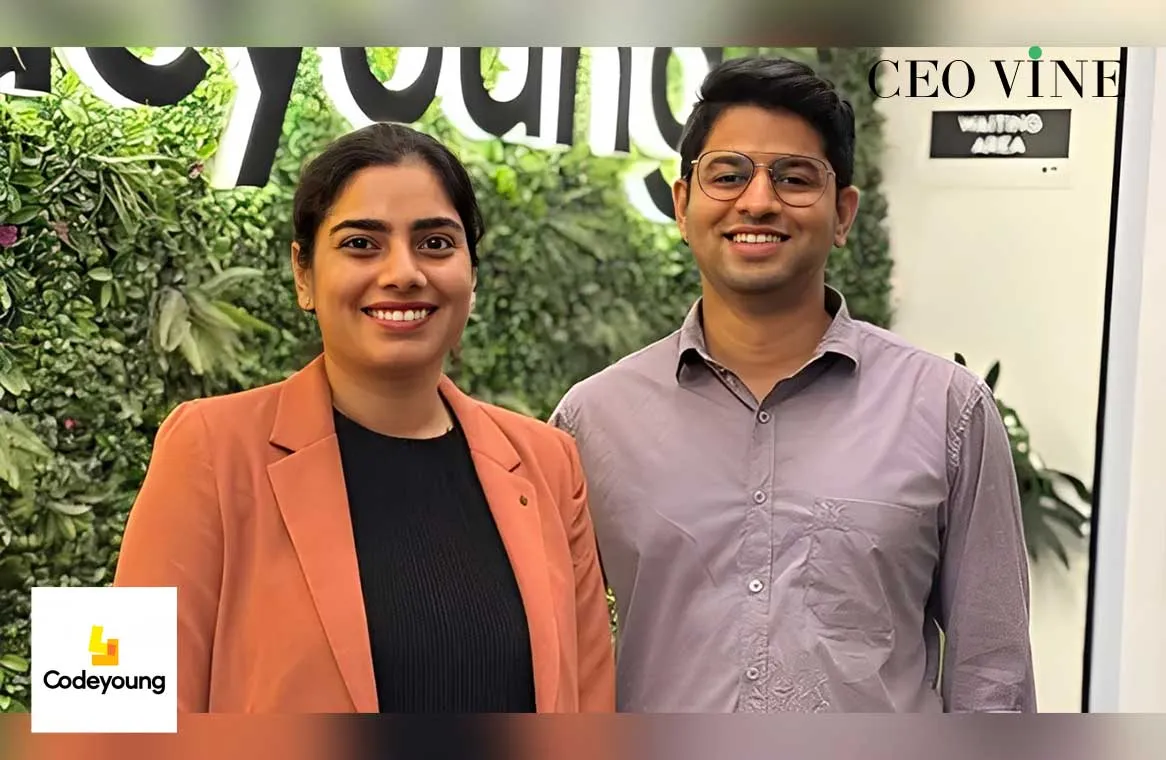
Codeyoung, a Bengaluru-based learning platform for K–12 students, has raised $5 million in a Series A funding round co-led by 12 Flags Group and Enzia Ventures. The round also enabled an exit for some early investors.
The company plans to use the fresh capital to expand in international markets, build AI-driven personalization tools, and introduce new learning categories.
Founded in 2020 by IIT Delhi alumni Shailendra Dhakad and Rupika Taneja, Codeyoung offers live, one-on-one online classes for students aged 5–17. Its curriculum covers coding, math, English, science, AP courses, and SAT preparation.
The platform is powered by its in-house learning system, Sandbox, and supports students with an AI-based learning assistant named NOAH.
The startup has reached more than 25,000 learners across 15 countries, with a strong base in the US and Canada. Its subscription-led model and global demand have helped it maintain steady unit economics.
Codeyoung was named “Edtech Startup of the Year” at the Entrepreneur Startup Awards 2025.
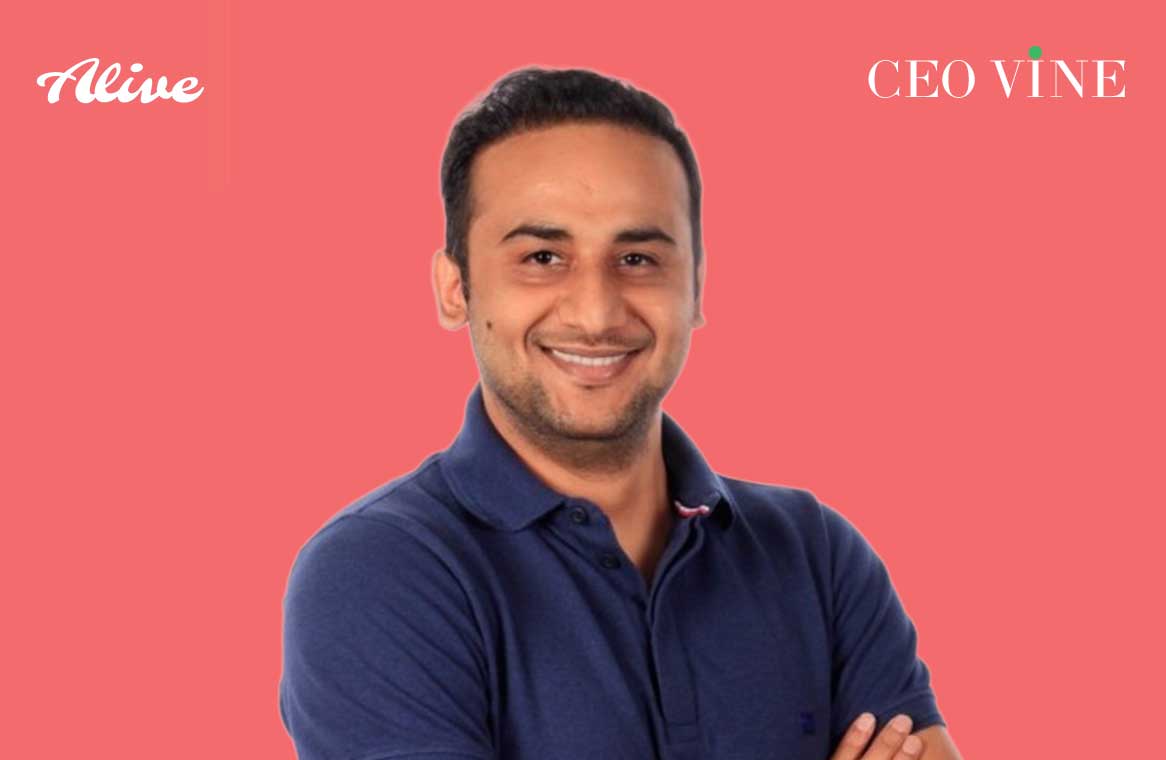
Alive, India’s first full-stack platform for curated and immersive experiences, has raised ₹6 crore in funding from Powerhouse Ventures and a group of angel investors and operators.
The Bengaluru-based startup plans to use the funds to expand into new cities, scale its proprietary tech platform, and grow its experience creator network across India. It is also investing in marketing and brand-building initiatives to deepen its presence in urban markets.
Founded by Vivek Kumar, a former investor and serial entrepreneur, Alive was created with the idea of enhancing the quality of life in Indian cities by making everyday living more engaging and meaningful. Unlike traditional travel aggregators, Alive designs, builds, and distributes its own experiences through proprietary technology.
In less than a year, Alive has recorded 90x revenue growth, scaled to over 125 original experiences, and aims to achieve ₹100 crore ARR by March 2027. The platform is currently live in Bengaluru and Hyderabad, with Goa set to launch next.
“Our mission at Alive is to massively upgrade quality of life in Indian cities,” said Vivek. “We’re doing it through thousands of new experiences produced with a tech-first, scalable approach. India’s experience economy is where e-commerce was a decade ago — full of untapped potential. We’re not just creating experiences, we’re shaping how people live, celebrate, and connect.”
The company’s user base primarily includes young professionals aged 21–38, who are seeking new ways to unwind and connect.
Kshitij Golwalkar, General Partner at Powerhouse Ventures, said, “Alive is a category-defining company blending technology, culture, and lifestyle to transform how Indians experience life. As disposable incomes rise and consumers seek meaning over materialism, Alive is well positioned to lead India’s next multibillion-dollar movement — the experience economy.”
By 2026, Alive plans to be active in 10 major Indian cities and 3–5 tourist destinations, scaling to 500+ experiences and over 100,000 paying customers.
The platform has already partnered with The Leela Palace, Prestige Golfshire, Embassy International Riding School, and the Padukone–Dravid Centre for Sports Excellence to deliver premium experiences.
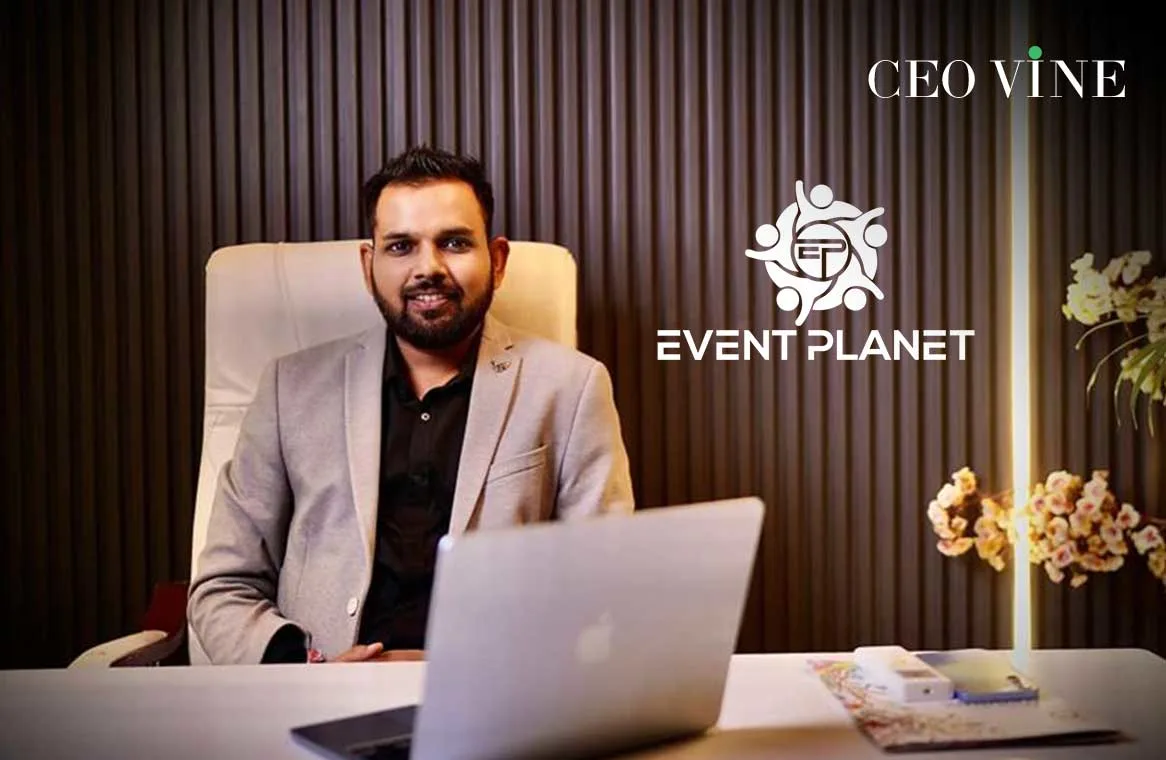
Event Planet Technologies, a global event and wedding aggregator platform, has raised $250,000 in angel funding from USA-based investor and NRI Virendra Prasad, valuing the company at ₹30 crore.
The Lucknow-based company plans to use the funds to expand into new markets and strengthen its package-based model that helps users plan events with greater transparency and convenience.
Founded in 2024 by Rohit Yagya, Event Planet Technologies simplifies how people plan and book celebrations. The platform partners with verified vendors and curated venues to offer structured and customized packages for weddings, birthdays, and corporate events.
“This investment supports our mission to make event planning simpler, smarter, and more transparent,” said Rohit Yagya, Founder and CEO of Event Planet Technologies. “Event planning has long been an unorganized space filled with uncertainty. We’re transforming this space by building a trusted digital ecosystem that makes event planning as simple as booking a vacation.”
Lead investor Virendra Prasad said, “Event Planet has created a completely new space in the event industry. Their package model delivers great value to customers and supports the vendor ecosystem with a scalable, tech-first approach.”
The company is currently active in 32 Indian cities and 8 international markets, gaining traction among overseas Indians planning destination celebrations. The platform connects curated venues, verified vendors, and ready-to-book packages, simplifying the event planning process for individuals and businesses.
India’s event industry, valued at over ₹6.5 lakh crore, is projected to cross ₹10.5 lakh crore by 2030. Despite this growth, the sector remains largely unorganized. Event Planet aims to address this by offering structured, customizable, and tech-enabled event solutions for today’s digital-first consumers.
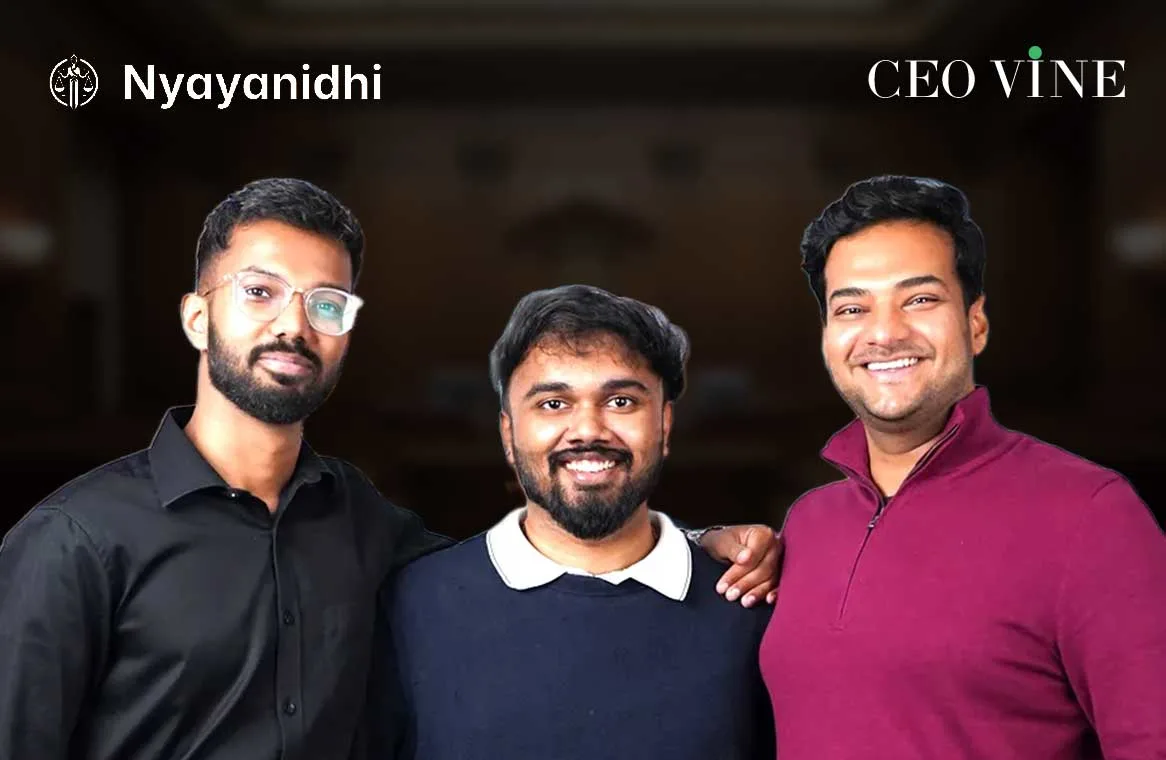
Legal technology startup Nyayanidhi has raised $2 million in a seed funding round led by 3one4 Capital, with participation from DeVC, PeerCheque, Force Ventures, and several angel investors, including Nishchay Ag, co-founder of Jar.
The Bengaluru-based company said the funds will be used to expand its network of advocate partners, strengthen its AI infrastructure, deepen collaborations with government bodies, and scale operations across more states.
Founded by Adithya LHS, Pratik Pany and Chakshu Masagali, Nyayanidhi is developing a litigation operating system that uses Generative AI (GenAI) to streamline and automate legal workflows.
The platform assists in areas such as legal research, document preparation, court filings, and multilingual translation, helping reduce the time and cost associated with litigation.
The company has already completed pilot programs, including operations within the High Court of Karnataka, and claims to have processed thousands of cases. By integrating AI with legal expertise, Nyayanidhi aims to address India’s backlog of over 50 million pending cases and make legal processes more efficient and accessible.
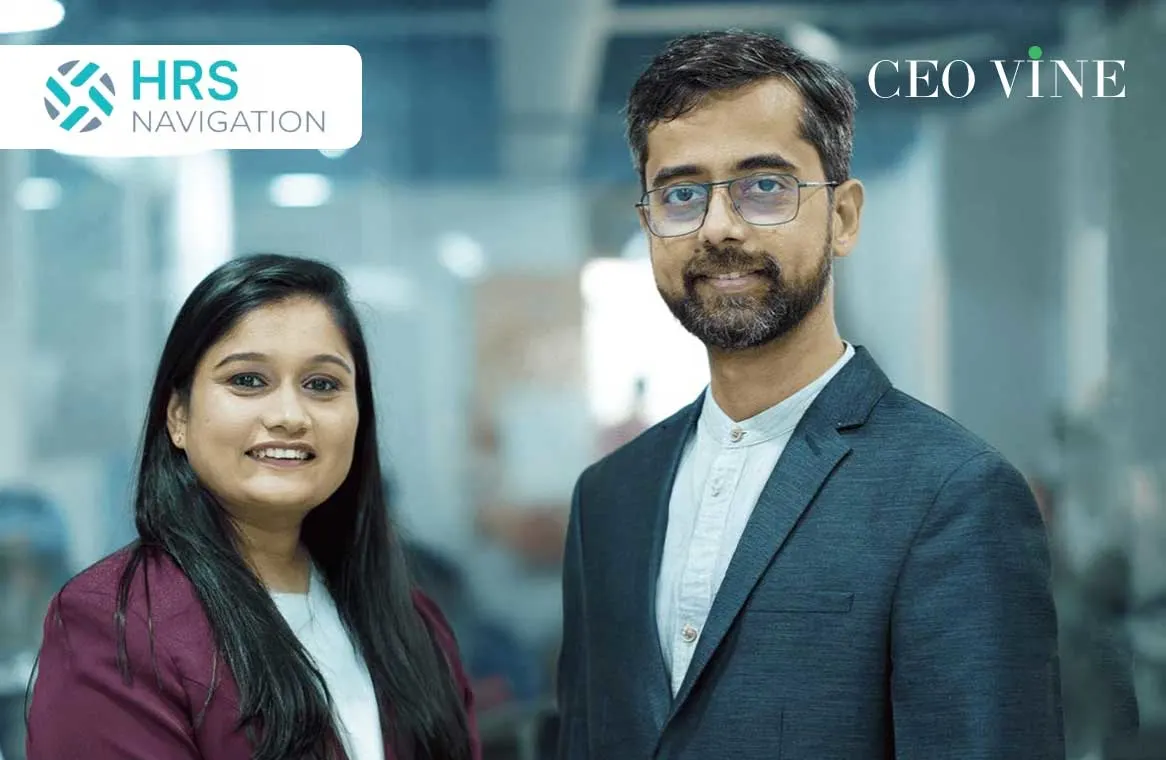
Bengaluru-based medtech company HRS Navigation has raised $5 million in a pre-Series A funding round led by GVFL, Physis Capital, and Sathguru Catalysers, with participation from India EXIM Bank and KITVEN.
The company said the new capital will be used to accelerate product innovation, scale manufacturing, and expand into global markets. The investment will also support the development of next-generation navigation systems and the integration of robotics into healthcare.
Founded in 2015 by Arpit Paliwal and Shweta Paliwal, HRS Navigation (Happy Reliable Surgeries Private Limited), develops affordable, high-precision surgical navigation systems. The company is recognized as the first Indian developer of computer-assisted surgery solutions.
Its flagship platform, easyNav, is an image-guided system that offers real-time navigation support to surgeons during procedures. The technology uses optical pattern recognition and operates without consumables, helping reduce costs compared to imported systems.
The easyNav system is currently used in cranial, spine, and ENT surgeries, and has supported over 20,000 operations across India. By offering a cost-effective alternative to imported systems, the company enables hospitals in smaller towns and cities to adopt advanced surgical technologies.
HRS Navigation’s easyNav Infinity platform has received international recognition, including the iF Design Award 2024 and the A’ Design Award.
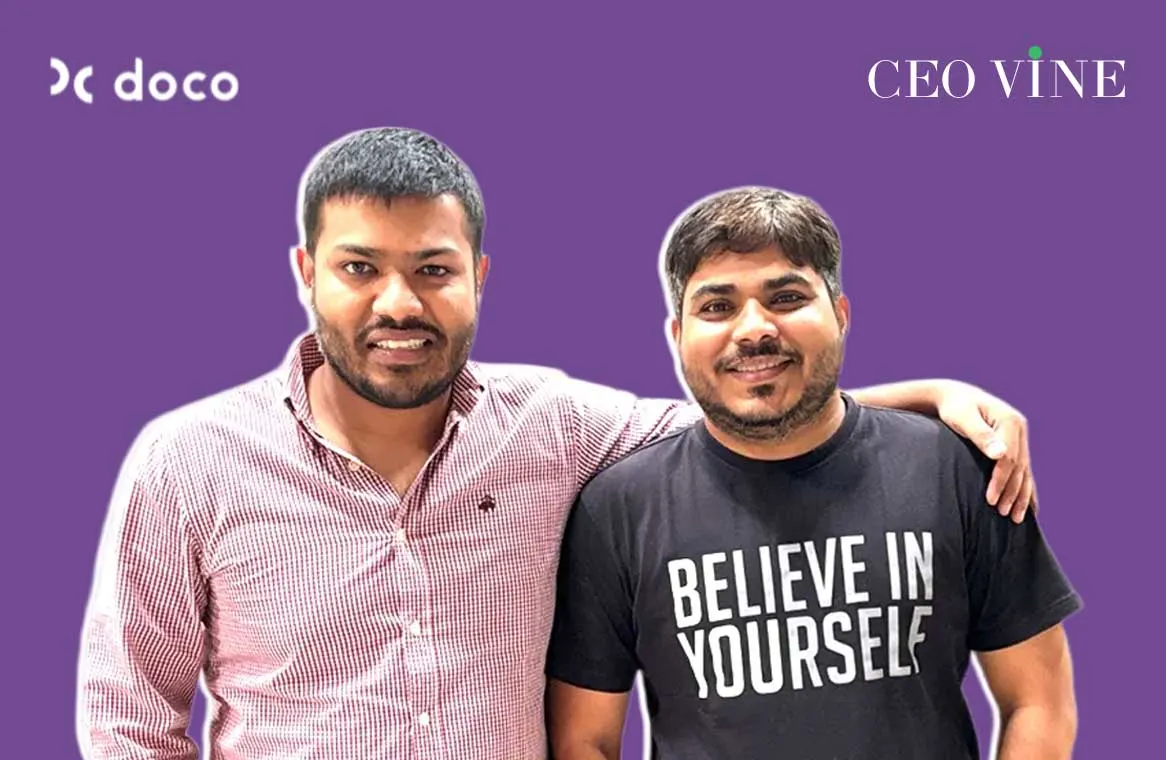
Rural distribution platform DOCO has raised ₹4.5 crore (around $540,000) in a pre-seed funding round led by GVFL and Malpani Ventures, with participation from existing investor Kunwar Asheesh Saxena, former co-founder and CTO of RedDoorz, and other angel investors.
The startup said the funds will be used to expand its technology platform, grow its dark store network, and scale operations across rural clusters. DOCO plans to operate 25 dark stores and reach 25,000 retailers over the next year.
Founded in 2022 by Jitendra Yadav, Nishant Agarwal, and Bhoopendra Kumar, DOCO runs a Rural Distribution-as-a-Service (Rural DaaS) model that helps FMCG brands expand into rural and semi-urban markets.
The platform’s goal is to connect regional and emerging brands with customers in Tier 2 towns and beyond, bridging a major gap left by quick commerce platforms.
DOCO’s AI- and ML-driven technology optimizes distributor networks, digitizes retailer operations, and provides real-time visibility into rural demand patterns. This data-driven approach helps brands plan inventory, reduce inefficiencies, and reach remote retail points with better accuracy.
The startup has already onboarded over 20 food and FMCG brands, connected with 10,000+ retail stores, and built a network of 60+ distributors in Western Uttar Pradesh.
The Cadabams Group, one of India’s largest mental healthcare providers, has announced an investment of $7.3 million (around ₹65 crore) in its digital mental health platform, MindTalk.
The funding will be deployed over the next 12 to 18 months to enhance MindTalk’s deep learning capabilities, strengthen its AI infrastructure, and accelerate clinical research integration.
MindTalk was launched by Cadabams as a digital extension of its decades-long commitment to mental health care. The platform aims to make mental health services more accessible and effective through technology.
Its key feature is an AI-powered therapist companion named “Dr. Riya”, available 24/7 to guide users with self-assessment tools, mood trackers, and guided meditations.
The platform also connects users with licensed therapists and psychologists for online and in-person consultations, bridging the gap between digital and human-led care.
The Cadabams Group aims to reach at least one million users in the coming years, addressing the growing demand for mental health services in India.
Founded more than three decades ago, the Cadabams Group has treated over 275,000 patients so far. The institution plans to expand to 150–160 centres with a total of 3,500 beds, integrating technology-driven platforms like MindTalk to extend its reach and impact.
Indian professional haircare brand &Done has raised ₹6.5 crore (around $780K) in a pre-seed funding round led by All In Capital, with participation from M.G. Investments and several angel investors.
The funds will be used to expand the team, accelerate product development, and strengthen the brand’s salon and D2C presence across India.
Founded in 2025 by Saumya Yadav and Atit Jain, &Done develops science-backed formulations tailored to Indian hair and climate conditions. The idea for the brand stemmed from Yadav’s personal struggle with postpartum hair loss and the realization that most available products were not suited to Indian consumers.
&Done’s products are built using 13 high-functioning active ingredients sourced from laboratories in Japan, the USA, and the UK, including Arginine-Glycerin Complex, Plant Protein-Silanol Complex, and Olive Squalane. These formulations are designed to address issues like humidity, hard water, and heat damage, common challenges for Indian hair.
The company follows a hybrid business model, combining professional salon partnerships with a direct-to-consumer (D2C) strategy. Through its salon network, &Done collaborates with stylists to provide professional validation, while its website enables consumers to access products directly.
With this funding, &Done plans to scale its distribution network and continue building a global-quality haircare brand designed for Indian consumers at home and abroad.