Author: Team CEO VINE

  • Nikhil Kamath: From Zerodha to Shaping India’s Next Wave of Innovation

    Nikhil Kamath: From Zerodha to Shaping India’s Next Wave of Innovation

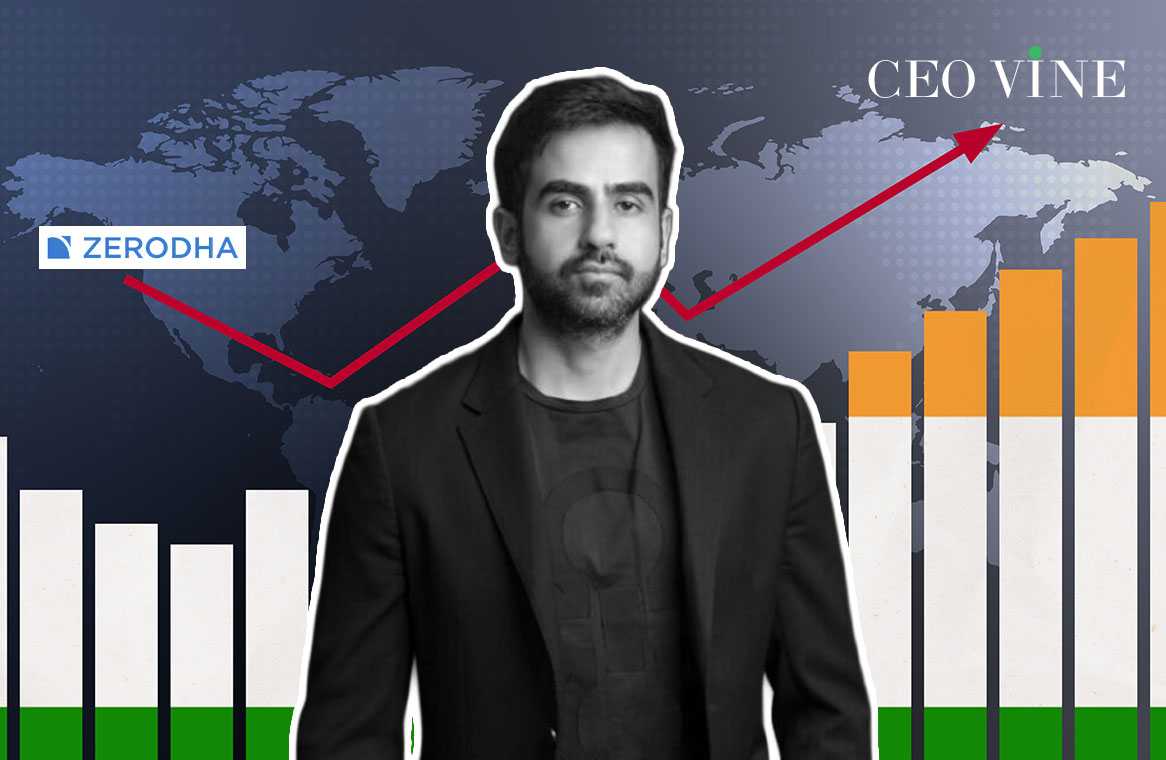
    Nikhil Kamath, co-founder of Zerodha, True Beacon, and Gruhas, is among India’s youngest billionaires, with a net worth of around $2.6 billion as of March 2025.

    His journey is often described as unconventional, he dropped out of school after the 10th grade, worked at a call center, and eventually built one of India’s largest brokerage firms. Beyond wealth, his story reflects adaptability, ecosystem-building, and long-term thinking.

    Nikhil Kamath – Early Life and Education

    Nikhil Kamath was born in Bangalore, Karnataka, in 1986. His father, U. R. Kamath, worked at Canara Bank, and his mother, Revathi Kamath, was a homemaker. The family moved often due to his father’s transferable job before finally settling in Bangalore when Nikhil was nine.

    While he showed an early aptitude for mathematics and problem-solving, he disliked conventional schooling. His school did not allow him to appear for the 10th board exams, citing his lack of interest in academics. With no formal higher education after that, Nikhil chose the path of self-learning.

    At 17, he took up a job at a call center, earning ₹8,000 per month. He worked nights at the call center and spent his mornings studying financial markets. His father entrusted him with a small amount of money to invest, marking the beginning of his trading career. Soon, colleagues and friends began letting him manage their portfolios.

    Zerodha: Democratizing Stock Trading

    In 2010, Nikhil and his elder brother Nithin Kamath launched Zerodha, a discount brokerage that disrupted India’s trading landscape. At a time when brokerages charged high commissions, Zerodha introduced a flat ₹20 per trade fee, making investing accessible to retail traders.

    The company name itself reflects its philosophy: “Zero” + “Rodha” (Sanskrit for barrier), symbolizing the removal of barriers for Indian investors.

    • Clients: Over 12 million as of FY24
    • Market Share: Handles 20%+ of India’s daily trading volume
    • Revenue (FY24): ₹8,320 crore
    • Profits (FY24): ₹4,700 crore (up 62% YoY)

    Zerodha has remained bootstrapped, never raising external funding or taking debt, a rarity in India’s startup ecosystem. Platforms like Kite (trading app) and Coin (mutual fund investing) further strengthened its dominance.

    In 2025, SEBI’s new rules on derivatives led to a 40% revenue decline in Q2 FY25, but Zerodha continues to hold its position as India’s largest stockbroker.

    Beyond Zerodha: Nikhil Kamath’s Ventures and Investments

    True Beacon

    Launched in 2019, True Beacon is an asset management firm for high-net-worth individuals (HNIs) and institutions. It provides zero-fee investment strategies and aims to create transparent wealth management solutions.

    Rainmatter

    Founded in 2016, Rainmatter is Zerodha’s fintech incubator and fund. As of 2024, it invested ₹275 crore across 47 startups, focusing on health-tech (30) and climate-tech (17) companies. Unlike traditional VCs, Rainmatter avoids board seats or exit pressures, positioning itself as patient capital. Its portfolio includes Smallcase, Ditto Insurance, and Streak.

    Recent Updates | Amwoodo Raises $4M Pre-Series A Round Led by Rainmatter

    Gruhas

    In partnership with Abhijeet Pai of the Puzzolana Group, Nikhil co-founded Gruhas, a venture capital fund focused on PropTech, CleanTech, Consumer, and Media Entertainment. Investments include Age Care Labs and Ossus Biorenewables.

    Personal Investments

    Nikhil Kamath has also made personal investments in startups like Licious, Growth School, Nourish You, Pee Safe, Mainstreet, and Third Wave Coffee. He also disclosed investing ₹400 crore in Radico Khaitan for a 1.6–1.7% stake.

    Recently, Nikhil invested ₹137.5 crore in Goldi Solar, one of India’s leading solar PV module manufacturers. The funding aims to support the company’s expansion into solar cell production and strengthen its renewable energy footprint.

    He also invested in One Hand Clap Media, a Mumbai-based digital-first creative agency, marking his entry into India’s fast-evolving creator and marketing ecosystem.

    WTF Podcast and WTFund

    In 2022, Nikhil launched his podcast, WTF is with Nikhil Kamath, where he hosts candid conversations with entrepreneurs, investors, celebrities, and policymakers. Guests include Narayan Murthy, AR Rehman, Sam Altman, and many startup leaders.

    In January 2025, the podcast featured Prime Minister Narendra Modi, marking the PM’s podcast debut. The two-hour episode covered governance, leadership, and India’s future.

    In 2024, Nikhil launched WTFund, India’s first non-equity grant fund, aimed at entrepreneurs under 25. At its first summit, 15 young innovators were funded, reinforcing his commitment to nurturing India’s next generation of founders.Philanthropy

    Nikhil Kamath is one of the youngest signatories of the Giving Pledge, committing to donate 50% of his wealth.

    He also founded the Young India Philanthropic Pledge (YIPP), where entrepreneurs under 45 pledge 25% of their wealth, with a minimum of ₹1 crore annually.

    In 2022, he and Nithin Kamath donated ₹100 crore, ranking on the EdelGive Hurun India Philanthropy List.

    Nikhil Kamath – Personal Life

    Nikhil Kamath lives in Bangalore. He was briefly married to Amanda Puravankara, director at Provident Housing Ltd., but the couple separated within a year.

    He is an avid reader, chess enthusiast, and fitness-conscious individual. He once played a charity match against Viswanathan Anand, though later admitted to using assistance during the game and issued a public apology.

    As of March 2025, Nikhil Kamath’s net worth stands at $2.6 billion. Most of his wealth comes from his stake in Zerodha, along with investments in True Beacon, Rainmatter, Gruhas, and personal holdings.

    Awards & Recognition

    • Forbes India 30 Under 30 (2016)
    • IIFL Wealth Hurun India 40 & Under Self-Made Rich List 2022 – youngest billionaire
    • Featured on Forbes Billionaires List (2023, 2024)
    • Ranked 8th in Hurun India Report 2024 alongside brother Nithin for Zerodha’s valuation (~₹64,800 crore).

    Next Read | Kunal Shah Success Story: The Relentless Entrepreneur Behind Freecharge and CRED

    Conclusion

    Nikhil Kamath’s story is not just about becoming India’s youngest billionaire. It is a journey that highlights how non-linear paths, self-learning, and resilience can redefine success. From working night shifts at a call center to building India’s most profitable brokerage, he has demonstrated how unconventional choices can lead to impactful outcomes.

    Through Zerodha, True Beacon, Rainmatter, Gruhas, WTFund, and philanthropy, he has expanded beyond personal wealth into ecosystem building—supporting startups, young innovators, and sustainable businesses.

    At just 38, Kamath continues to shape India’s entrepreneurial and financial landscape, proving that success can come without a conventional degree but not without vision, persistence, and the willingness to build for the long term.
  • Art of Time Raises ₹175 Crore to Expand Luxury Watch Retail

    Art of Time Raises ₹175 Crore to Expand Luxury Watch Retail

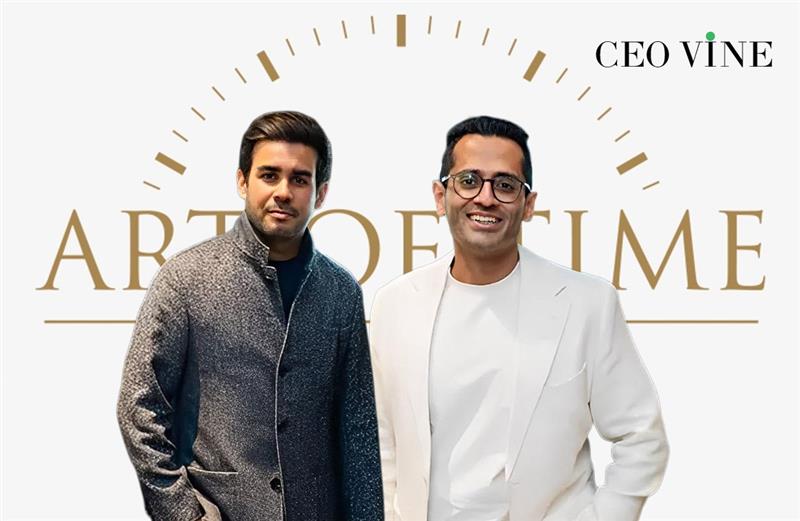
    India’s leading omnichannel luxury watch retailer, Art of Time, has raised ₹175 crore in a fresh funding round, backed by Mithun Sacheti (CaratLane founder), Siddhartha Sacheti (Jaipur Gems CEO), Girish Mathrubootham (Freshworks founder), and Plutus Wealth Management.

    The round included both primary and secondary transactions, bringing the company’s total capital raised to nearly ₹200 crore.

    The funds will be used to expand retail presence, launch new categories, enhance inventory and technology, and scale the leadership team. A significant focus will also be on growing the online channel, with digital sales targeted to increase from 15% to 30% over the next two years.

    Founded in 2015 by Gaurav Bhatia and Bharat Kapoor, Art of Time has established partnerships with 20 global luxury maisons, including Cartier, Montblanc, Piaget, and Jaeger-LeCoultre, positioning itself as a gateway to international horology in India.

    Also Read | SuperFam Raises $400K Pre-Seed Funding Led by Fundamental VC

    Currently operating 14 boutiques across Mumbai, Bengaluru, Chennai, and other metros, the company plans to open three new outlets in 2025: its first store in Hyderabad, a mono-brand boutique in Ahmedabad, and a new multi-brand retail concept, Circa, in Noida. Circa will cater to the bridge-to-luxury segment, targeting aspirational professionals earning between ₹50,000 and ₹4 lakh per month.

    By combining high-end boutiques with accessible offerings, Art of Time aims to broaden its customer base beyond ultra-affluent buyers while strengthening its position in the luxury watch retail market.

  • Fyno Raises $4 Million in Seed Funding Round

    Fyno Raises $4 Million in Seed Funding Round

    Enterprise communication startup Fyno has raised $4 million in a seed funding round, co-led by Arkam Ventures and 3one4 Capital. The fundraise comes as the company aims to strengthen its position in the rapidly growing compliance-driven enterprise messaging space.

    The fresh capital will be deployed to enhance AI capabilities, expand go-to-market operations across India and other emerging markets, deepen product functionality, and build a hybrid infrastructure to support large-scale enterprise transformation.

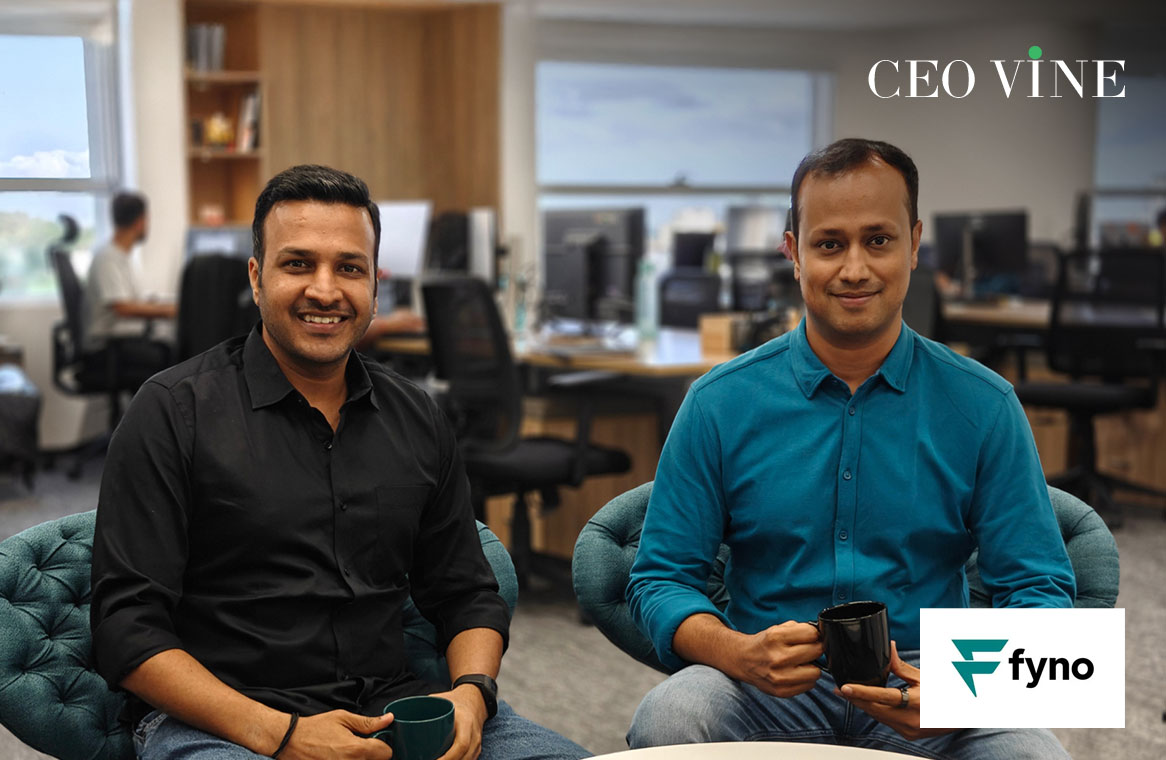
    Founded in 2022 by Aniketh Jain and Ashish Agarwal, Fyno has developed a compliance-first communication infrastructure enabling banks, financial institutions, and NBFCs to manage messaging across SMS, WhatsApp, email, push notifications, and voice.

    After 24 months of product development and a year of live deployments, Fyno exited stealth mode with strong traction — processing over five billion communications in 2025 and onboarding 45 banks, NBFCs, and fintech firms, including Karnataka Gramin Bank and Lendingkart.

    Also Read | Defence-Tech Startup Unmannd Raises $2M in Pre-Seed Funding

    The company expects to achieve $2 million in revenue by FY25–26, growing to $5 million by FY26–27, driven by rising BFSI adoption.

    Fyno’s platform ensures compliance with RBI, SEBI, TRAI, and DPDP mandates, while helping institutions reduce messaging costs by 20–30% and cut engineering effort by over 90%.

    The startup now aims to double its customer base within 18 months, with more than 10 banks already in advanced discussions. Other notable clients include Kerala Gramin Bank, Protium, and Scripbox.

  • SuperFam Raises $400K Pre-Seed Funding Led by Fundamental VC

    SuperFam Raises $400K Pre-Seed Funding Led by Fundamental VC

    SuperFam, a family-first digital platform, has raised $400,000 in a pre-seed funding round led by Fundamental VC, with participation from Untitled Ventures and SSV Fund.

    The funds will be used to scale user acquisition, accelerate product innovation, and introduce an AI-powered co-pilot to enhance it’s privacy-first family management tools.

    The company also plans to broaden its feature set while maintaining a strong focus on data protection and user security.

    Founded in 2024 by Jozzire Lyngdoh and Mohit Agrawal, SuperFam positions itself as a secure, all-in-one solution for family life, integrating household finances, safety features, and essential information management within a single encrypted environment.

    With end-to-end encryption and on-device storage, the app bridges the gap between generic productivity tools and family-specific needs.

    Also Read | Faith-Tech Startup Vama Raises ₹22 Cr Pre-Series A

    The startup aims to build strategic partnerships while leveraging AI to simplify household tasks and key decisions without compromising privacy. Over the next 12–18 months, SuperFam targets reaching 10 million families globally.

    Launched in March 2025, SuperFam has already crossed 30,000 active users. The app is free to use, and its early adoption highlights the growing demand for privacy-first digital tools tailored to family life.

  • Defence-Tech Startup Unmannd Raises $2M in Pre-Seed Funding

    Defence-Tech Startup Unmannd Raises $2M in Pre-Seed Funding

    Bengaluru-based defence-tech startup Unmannd is building next-generation autonomous drone systems, has raised $2 million (₹16.7 crore approx.) in its pre-seed funding round.

    The investment was co-led by Speciale Invest and Accel, making it one of the largest early-stage fundraises in the defence drone sector this year.

    The fresh capital will be used to commercialize its aerial logistics platform Titan, advance its interceptor system Fury from prototype to deployment, expand its engineering team, and explore international defence market opportunities.

    Founded in February 2025 by Yeshwanth Reddy and Hemaditya Prasad, Unmannd is developing cutting-edge solutions for defence logistics and aerial security.

    Also Read | Vaani AI Research Raises $400K Pre-Seed Round Led by Venture Catalysts

    Its flagship product, Titan, is a heavy-duty drone designed for supply delivery and has already been validated by the Indian defence forces, opening doors for potential defence contracts. Meanwhile, Fury is being developed as an interceptor system capable of detecting enemy drones up to 30 km away and neutralizing them using high-speed interceptors reaching 300 km/h.

  • Faith-Tech Startup Vama Raises ₹22 Cr Pre-Series A

    Faith-Tech Startup Vama Raises ₹22 Cr Pre-Series A

    Vama, a digital platform at the intersection of spirituality and technology, has raised ₹22 crore (about $2.47 million) in its Pre-Series A funding round.

    The round was led by Wavemaker Partners, with participation from 500 Global, Sadev Ventures, Venture Catalysts, Silverneedle Ventures, and multiple angel investors. Notably, this is 500 Global’s first investment in Vama, while Wavemaker has doubled down after backing the company last year.

    The funds will be used to broaden product categories, strengthen the e-commerce vertical, scale marketing initiatives, and lay the groundwork for international expansion.

    Founded in 2020 by Acharya Dev and Manu Jain, Vama is positioning itself as a leading faith-tech player, enabling devotees to access temple services, consult astrologers, and purchase authentic spiritual products through its platform.

    The company recently launched Vama Mall, which has seen rapid growth, and is now planning to enter offline spiritual travel experiences and services designed for the global NRI community.

    On the financial front, Vama doubled its revenue in FY24 to ₹19.5 crore and expects similar growth in FY25. Currently, temple services contribute 70% of revenue, with astrology and the e-commerce mall driving the rest.

    Also Read | iGoWise Mobility Raises ₹8.2 Cr in Pre-Seed Funding

    The platform has already onboarded over 150,000 paying users and is targeting 1 million users within the next two years, while also scaling temple partnerships from 250 to 500.

    Importantly, the startup maintains contribution margins above 10% and is aiming for EBITDA profitability as it accelerates growth.

  • Vaani AI Research Raises $400K Pre-Seed Round Led by Venture Catalysts

    Vaani AI Research Raises $400K Pre-Seed Round Led by Venture Catalysts

    Deeptech startup Vaani AI Research has raised $400,000 in a pre-seed funding round, led by Venture Catalysts with participation from several global operators and industry veterans.

    The fresh capital will be used to strengthen Vaani’s voice technology stack, advance its R&D efforts, and accelerate enterprise adoption.

    The company also plans to expand partnerships across India, the GCC region, and international markets while scaling its infrastructure.

    Founded in 2024 by Tushar Shinde, Nitesh Tripathi, and Nitish Mishra, Vaani AI combines research depth from IISc and IIT-Madras with over a decade of experience in AI and infrastructure building.

    Positioning itself as the “Stripe for Voice AI”, the startup is developing plug-and-play infrastructure with APIs, SDKs, and enterprise-ready models that enable BPOs, developers, and enterprises to launch multilingual, human-like voice agents within days.

    Vaani AI is part of the Google for Startups AI Accelerator 2025 and NASSCOM’s GenAI Foundry, and has been recognized among the Top 10 AI Infrastructure Companies globally by F6S.

    The firm is also building an advanced text-to-speech model designed to surpass benchmarks in naturalness, emotion, and resonance, setting new standards for conversational AI.

  • iGoWise Mobility Raises ₹8.2 Cr in Pre-Seed Funding

    iGoWise Mobility Raises ₹8.2 Cr in Pre-Seed Funding

    Smart mobility startup iGoWise Mobility (iGo) has raised ₹8.2 crore in a pre-seed investment round led by ISB Angels, 888VC, and Guptaji VC. The funding comes at a crucial stage as the company prepares to commercialize its first line of electric trikes in India.

    The capital infusion will be used for tooling, automation, and production cost optimization, while also enhancing after-sales infrastructure, customer touchpoints, and R&D for upcoming models.

    iGoWise also plans to strengthen its working capital position to meet existing order commitments.

    Founded in 2020 by Sravan K Appana, the Bengaluru-based startup focuses on developing rugged and smart EV platforms designed for both urban and rural mobility needs.

    Its flagship product, BeiGo, is positioned as India’s first electric pickup trike, bridging the gap between two-wheelers and oversized utility vehicles. Equipped with iGo’s patented anti-topple leaning system, BeiGo promises safer cornering, improved handling, and superior ride comfort.

    With over 1 lakh km of real-world usage data, iGo is gearing up to deploy its first 1,500 vehicles across Bengaluru, Hyderabad, Pune, and Panjim over the next 12–18 months, in partnership with Hala Mobility and Elektric Express.

    Also Read | Spacetech Startup Akashalabdhi Raises $1.2 Million in Pre-Seed Funding

    The company claims its trikes are 5x more cost-effective, 3x more energy-efficient, and 2x more compact compared to international peers. Built on its proprietary TwiiGo lightEV platform, the vehicles come with triple-disc anti-skid CBS for added safety, while being capable of handling slopes, potholes, and heavy traffic.

    iGoWise further projects that riders upgrading to its trikes could see a monthly income boost of up to ₹7,500, driven by fuel savings and greater utility.

  • Meet the 23 Startups Backed by Peak XV’s Surge 11

    Meet the 23 Startups Backed by Peak XV’s Surge 11

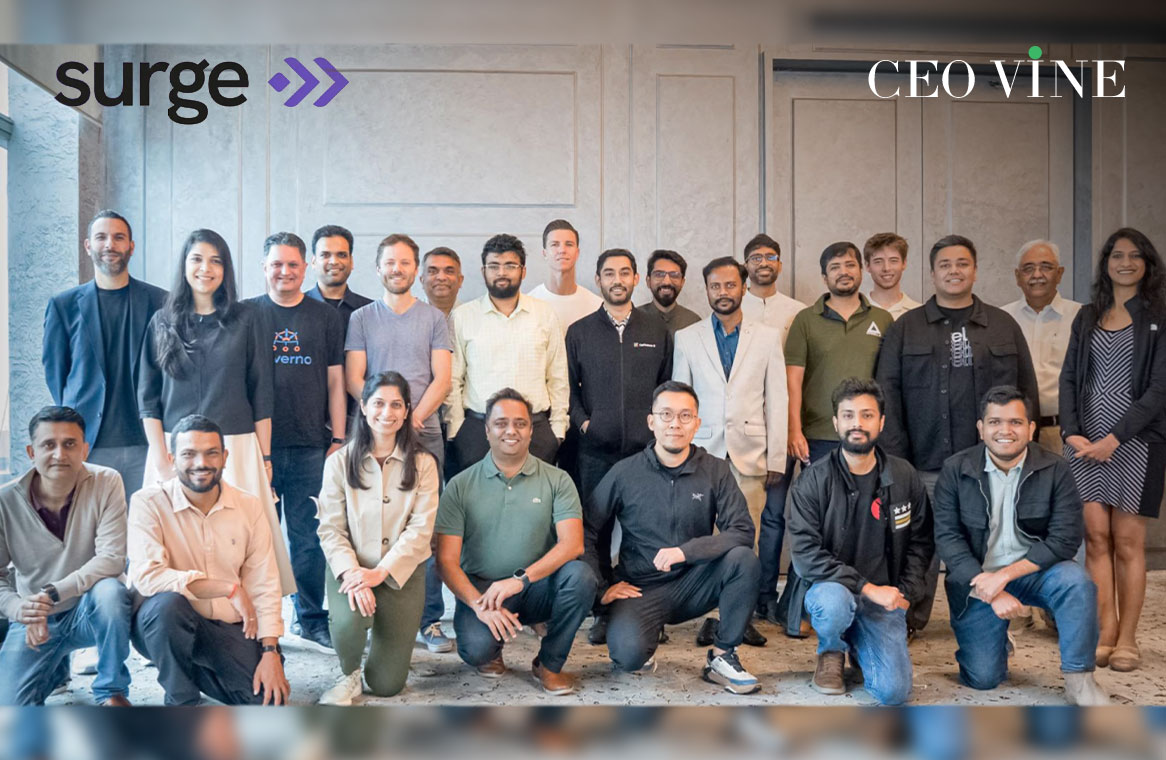
    Peak XV Partners (formerly Sequoia Capital India & SEA) has announced the eleventh edition of Surge, its flagship rapid-scale-up program designed for early-stage founders. Launched in 2019, Surge has grown into one of the most impactful startup platforms globally, with its portfolio now spanning over 170 companies, 400 founders, 17 nationalities, and 18 sectors.

    To date, Peak XV’s Surge startups have raised more than $3 billion in follow-on capital, and the top ten have already crossed $1 billion in combined annual revenues.

    The Peak XV Surge 11 cohort brings together 23 startups from India, Southeast Asia, the US, and beyond. This batch reflects the shifting priorities of the global startup ecosystem, where artificial intelligence continues to dominate.

    Out of the 23 startups, 12 are AI-first ventures building across verticals, enterprises, and consumer-focused use cases. They are joined by 4 fintech innovators, 4 consumer brands, and 3 infrastructure and developer tools companies. Interestingly, three of the selected startups are still operating in stealth mode, underlining the cutting-edge nature of the cohort.

    “AI is leading the charge, not just in enterprise applications but also in transforming traditional industries from banking and healthcare to semiconductors and manufacturing,” said Rajan Anandan, Managing Director at Peak XV Partners. “But AI is not the full story – we are now seeing the next wave of fintech companies and exciting new consumer companies in India and our region.”

    As with past cohorts, Surge 11 startups will benefit from up to $3 million in seed funding, along with mentorship, global immersion programs, and company-building workshops. The initiative combines hands-on guidance in product, engineering, fundraising, and culture, designed to accelerate growth during the most critical stage of a company’s journey.

    Meet the 23 Startups of Surge 11

    Here’s a closer look at the companies that made it to the latest Peak XV Surge batch:

    1. AIR Trading

    Founders: Grant Brits, Tim Blundy | Founded: 2025
    AIR Trading is building AI-native intelligent trading systems, aiming to create self-optimizing platforms that bring efficiency to financial markets through advanced algorithms.

    2. Aretto

    Founder: Satyajit Mittal | Founded: 2019
    Aretto is a growth-adaptive kids’ footwear brand, offering shoes that expand with children’s feet using SuperGrooves and Infi-Knit fabric. Available via D2C and major e-commerce platforms, Aretto promotes healthy foot development.

    3. Cybrilla

    Founders: Anchal Jajodia, Satish Perala | Founded: 2010
    Cybrilla powers the fintech ecosystem with its cloud-based API, Fintech Primitives, simplifying regulatory and technical workflows. It’s also a SEBI-registered Category I RTA.

    4. Finster AI

    Founder: Siddhant Jayakumar | Founded: 2023
    Finster AI is an AI-native platform for finance professionals, automating research workflows and delivering insights faster. It is led by an ex-Google DeepMind AI researcher.

    5. Ignosis

    Founders: Chintan Sheth, Nirav Prajapati | Founded: 2022
    Ignosis delivers financial data intelligence for the BFSI sector, empowering decision-making. It has already raised $1.5 million from Groww and LetsVenture.

    6. Just Words

    Founders: Jeff Hara, Neha Mittal | Founded: 2024
    Just Words optimizes digital marketing content with AI. From emails to websites, it replaces traditional A/B testing with continuous AI-driven optimization.

    7. NEAU

    Founders: CoCo, Hanson | Founded: — NA
    NEAU is a premium active and outdoor lifestyle brand, combining proprietary fabric technology with modern design to deliver high-performance products.

    8. Neude Skin

    Founders: Aayshya & Advay Jhunjhunwala | Founded: 2022
    Neude Skin is a milk-based skincare brand, blending natural ingredients with modern actives like hyaluronic acid and vitamin C. Its “Hi-Glaze Skin” concept targets sensitive skin.

    9. Nirmata

    Founders: Ritesh Patel, Damien Toledo, Jim Bugwadia | Founded: 2024
    Nirmata provides an AI-powered control hub for Kyverno, detecting misconfigurations, generating fixes, and enforcing policy-as-code with full audit trails.

    10. OnFinance

    Founders: Anuj & Priyesh Srivastava | Founded: 2022
    OnFinance is a GenAI SaaS platform for finance. Powered by its LLM NeoGPT, it offers AI copilots for research, wealth management, and sales. It recently closed a $4.2M Pre-Series A led by Peak XV.

    11. Palo

    Founders: Harry Jones, Jay Neo, Shivam Pankaj Kumar | Founded: — NA
    Palo equips short-form content creators with AI workflows, streamlining creation, tracking, and iteration with LLM-driven scalability.

    12. Pre6

    Founders: Amod Malviya, Rishi Kedia | Founded: 2024
    Founded by Udaan cofounder Amod Malviya, Pre6 applies AI to modernize manufacturing processes, enhancing efficiency and precision.

    13. Qbeast

    Founder: Srikanth Satya | Founded: 2020
    Qbeast is an optimization engine for Lakehouse platforms, enabling faster, more cost-efficient queries for Databricks, Snowflake, and Dremio.

    14. Round1 AI

    Founders: Jainam Talsania, Saumil Tripathi, Shreeyash Dharmadhikari | Founded: 2023
    Round1 AI transforms hiring with AI-powered candidate screening. Professionals give a single interview that unlocks multiple job opportunities for six months.

    15. SixSense

    Founders: Akanksha Jagwani, Avni Agarwal | Founded: 2018
    SixSense provides predictive insights for semiconductor manufacturing. Its no-code computer vision platform helps build and monitor deep learning models to boost yield and productivity.

    16. Supanote

    Founder: Samyukktha Thirumeni | Founded: 2024
    Supanote automates admin tasks for behavioral health clinics, generating session notes, tracking therapy, and offering an AI scribe for clinicians.

    17. Ten X You

    Founders: Karan Arora, Karthik Gurumurthy, Sachin Tendulkar | Founded: 2024
    Backed by cricket legend Sachin Tendulkar, Ten X You is an activewear and sports accessories brand, offering cricket gear, footwear, and apparel made in India.

    18. Thanks

    Founders: Cayley Ostrin, Doron Ostrin, Steven Tesoriero | Founded: — NA
    Thanks helps brands boost customer loyalty and revenue by designing personalized ad experiences and rewards programs.

    19. Tonbo.io

    Founders: Cream Tang, Tzu Gwo | Founded: 2022
    Tonbo.io offers a serverless, edge-first database, enabling real-time analytics and embedded data ownership, challenging centralized systems.

    20. Vault Wealth

    Founders: Bilal Abou-Diab, Sami Abdul Hadi | Founded: 2022
    Vault Wealth is a Dubai-based digital wealth management platform delivering institutional-grade advisory and personalized portfolios for high-net-worth individuals.

    21. [Stealth Startup #1] – Operating confidentially, building in the AI space.

    22. [Stealth Startup #2] – Operating confidentially, details undisclosed.

    23. [Stealth Startup #3] – Operating confidentially, details u

    Next Read | Google Unveils 20 AI Startups for 2025 ‘Google for Startups Accelerator’ Cohort in India

    Why Surge 11 Matters

    Peak XV Surge’s past cohorts have produced some of India and Southeast Asia’s most successful startups, including Plum, Atlan, MasterChow, and Elivaas. With the 11th batch, Peak XV is doubling down on AI while keeping a balanced focus on fintech, consumer brands, and infrastructure – sectors that continue to attract investor attention despite a challenging funding climate.

    For early-stage founders, getting into Surge provides not just capital but also credibility, connections, and global visibility. With India’s AI, fintech, and consumer innovation markets expanding rapidly, the Surge 11 startups are entering the ecosystem at a pivotal time.

  • Why Virat Kohli-Backed WROGN Faces Tough Market Reality in 2025

    Why Virat Kohli-Backed WROGN Faces Tough Market Reality in 2025

    Celebrity endorsements have long been a powerful marketing tool in India’s fashion industry, instantly driving visibility and consumer interest. WROGN, the men’s fashion brand co-created with cricket superstar Virat Kohli, is a prime example of this phenomenon.

    Launched in 2014 by sibling duo Vikram and Anjana Reddy, along with Bhavesh Madaan, Ankur Balaji, and Fasil Salahudeen, the brand positioned itself as a youth-centric men’s fashion destination, offering casual wear, footwear, and accessories through both online platforms like Myntra, Flipkart, and Meesho, as well as offline stores.

    However, FY25 financial results reveal that even celebrity backing is no guarantee of sustainable success. WROGN’s parent company reported a 9% decline in revenue from operations to INR 223 crore, down from INR 245 crore in FY24. Including INR 9 crore from interest and financial assets, total revenue stood at INR 232 crore, compared to INR 266 crore the previous year. This marks the second consecutive year of declining revenue, following a steep 29% drop in FY24.

    What’s Going Wrong for WROGN?

    While the brand continues to draw attention through high-profile collaborations, costs have surged significantly, contributing to mounting losses. Material procurement accounted for 40% of total expenditure, amounting to INR 126 crore, while employee benefits rose to INR 39 crore. Marketing and promotional expenses skyrocketed 63% to INR 49.2 crore, reflecting the brand’s aggressive attempt to maintain visibility amid softening demand.

    Overall, total expenses ballooned to INR 313 crore in FY25, pushing net losses up by 31.6% to INR 75 crore from INR 57 crore in FY24. As of March 2025, accumulated losses for WROGN reached a staggering INR 709 crore. Key financial ratios also remain under pressure, with ROCE at -70% and EBITDA margin at -27.5%.

    Brand’s parent company has raised over $90 million since its inception, including INR 125 crore from TMRW House of Brands, part of the Aditya Birla Group, in June 2024, and an additional $9 million infusion in October. Despite these investments, revenue growth remains elusive.

    Factors Marketers Believe Are Behind WROGN’s Struggles:

    The larger Indian fashion ecosystem amplifies WROGN’s challenges. The direct-to-consumer (D2C) menswear segment is crowded and fiercely competitive, with brands like Snitch, Rare Rabbit, Bewakoof, and The Pant Project rapidly scaling operations. Unlike WROGN, these online-first labels leverage rapid design cycles, sharper pricing, and robust social media strategies to engage Gen Z and millennial shoppers.

    WROGN has largely relied on Virat Kohli’s star power, a strategy that is increasingly insufficient as younger consumers prioritize trendy designs, affordability, and interactive digital engagement. Analysts suggest several reasons behind WROGN’s struggles:

    1. Slower Product Refresh Cycles – While competitors launch collections frequently to match fast-changing trends, WROGN’s refresh rate lags behind, impacting relevance.
    2. High Marketing vs. Softening Revenue – Despite a 63% jump in marketing spend, sales have not kept pace, indicating limited ROI from celebrity-backed campaigns alone.
    3. Rising Operational Costs – Employee benefits and procurement costs continue to eat into margins, contributing to negative ROCE and EBITDA.
    4. Digital Engagement Gaps – Younger shoppers increasingly rely on social media, influencer collaborations, and interactive campaigns, areas where WROGN has room to innovate.
    5. Intense Competition from Agile Startups – Online-first brands exploit e-commerce platforms and data-driven campaigns, offering sharper pricing and faster delivery, pressuring established players like WROGN.

    Next Read | Startup Shutdowns 2025: What Went Wrong for These Businesses

    Evolving Consumer Behavior Puts Pressure on Mass-Premium Fashion

    Consumer behavior in India’s mass-premium fashion segment is evolving at breakneck speed. A growing proportion of buyers now seek frequent product refreshes, Instagram-worthy collections, and value-driven purchases rather than relying solely on celebrity endorsements. With India’s fashion industry projected to surpass $100 billion by 2030, the stakes for brands like WROGN are high.

    Operationally, WROGN has tried to optimize inventory amid soft demand, slightly reducing stock-in-trade purchases while continuing to invest in talent acquisition, reflected in a 21% rise in employee costs. Despite these measures, accumulated losses indicate that scale and visibility alone do not automatically translate into profitability.

    For WROGN, the path forward involves more than celebrity endorsement. The brand may need to accelerate product cycles, adopt sharper pricing strategies, deepen social media engagement, and explore influencer collaborations beyond cricket or mainstream celebrities.