Confluxe, a technology-enabled platform designed to help global fashion and lifestyle brands expand into India, has raised $1.6 million in a pre-seed funding round led by Wavemaker Partners, with participation from Kriscore Capital.
The newly raised capital will be used to secure initial brand partnerships, strengthen the company’s technology and data infrastructure, and grow its core team across brand operations, commerce, and growth functions.
Founded by former Myntra and AJIO executive Rajesh Narkar and Louis Coucke, previously associated with H&M India, Confluxe aims to simplify how international brands enter and scale in the Indian market.
The platform is designed to address a structural challenge in India’s fashion and lifestyle sector, where rising consumer demand for global brands contrasts with the complex and resource-intensive process required for foreign brands to establish local operations.
Confluxe positions itself as an operating layer between global brands and the Indian market, offering services such as market entry strategy, digital commerce management, data-driven merchandising, and access to a localized “Make in India” supply chain.
Based in Bengaluru and Mumbai, the startup plans to initially focus on onboarding its first brand partners while building the technological and operational foundation needed to support their growth in India.
By integrating digital commerce, supply chain capabilities, and market insights, Confluxe aims to help international brands build a scalable and capital-efficient presence in the country.
Marbleous, a lifestyle brand specializing in handcrafted marble products, featured on Shark Tank India, where founders Shashank Sharma and Ayushi Sharma pitched their range of personalized home and kitchen essentials designed to bring artisanal craftsmanship into modern homes.
During the pitch, the founders highlighted the brand’s unique manufacturing base in Chhitroli, Rajasthan, where they work with a team of 15–20 artisans. Marbleous offers a variety of products, including personalized marble display plates, bunny-themed egg holders, yoga-themed coaster sets, and personalized bottle openers. By focusing on the “Kitchen Essentials” hero category, the brand aims to tap into India’s ₹36,000 crore marble market.
Entering the Tank, the founders sought ₹75 lakhs for 10% equity, valuing the company at ₹7.5 crores.
Since launching on marketplaces in 2023, Marbleous has demonstrated significant growth. After recording sales of ₹16 lakhs in FY 23-24, they scaled to ₹42 lakhs in FY 24-25, with a current Year-to-Date (YTD) revenue of ₹71 lakhs.
The business maintains healthy financials with a 70% Gross Margin and an EBITDA of 18%. Despite operational challenges regarding working capital, the brand has projected sales of ₹1.5–1.6 crores for FY 25-26.
After discussions regarding their B2C and bulk order sales channels and an Average Order Value (AOV) of ₹3,600, Kanika Tekriwal closed the deal by investing ₹75 lakhs for 20% equity plus a 2% royalty until the investment is recouped, valuing Marbleous at ₹3.75 crores.
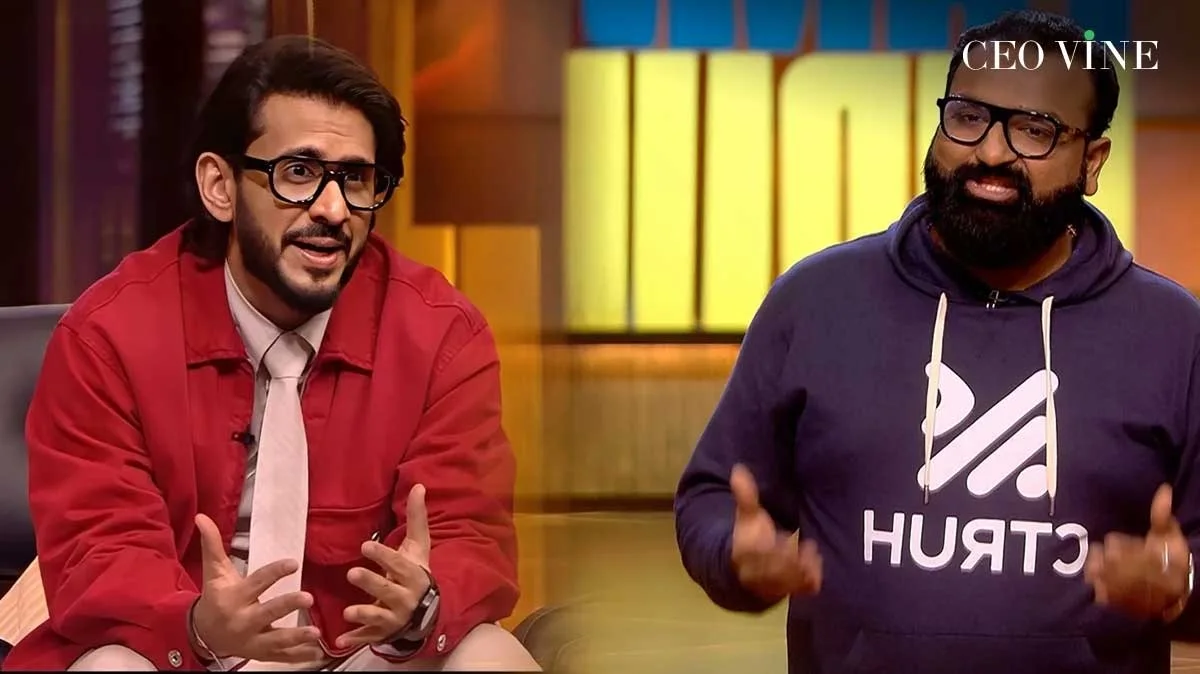
Ctruh, an immersive technology startup under Ctruh Technologies Pvt Ltd, featured on Shark Tank India, where founder Vinay Agastya pitched his advanced browser-based 3D and AR solutions designed to provide an interactive alternative to traditional e-commerce.
During the pitch, the founder highlighted the brand’s commitment to bridging the digital-physical gap, noting that online shopping often lacks a tactile experience. Ctruh’s primary offering is its proprietary no-code 3D engine, and their services include 4K Web Renders, Virtual Storefronts, AR Try-ons, and 3D Product Configurators that offer 2-hour deployment and seamless integration across mobile and XR headsets.
Entering the Tank, the founder sought ₹1 crore for 1.2% equity, valuing the company at ₹83.33 crores.
Since starting product development in October 2022 and officially beginning monetization in April 2025, Ctruh has shown promising early traction. After securing Lifetime Realised Sales of ₹2.1 crores, they reported a Monthly Run Rate (MRR) of ₹30 lakhs. Currently, the brand holds one granted patent and three filed patents for its 3D rendering tech. Prior to the Tank, the business had raised ₹15.5 crores from external investors.
After discussions regarding the scalability of XR platforms and the company’s rapid deployment capabilities, Anupam Mittal and Vineeta Singh closed the deal by investing ₹1 crore for 2.4% equity – mix of equity + advisory shares.
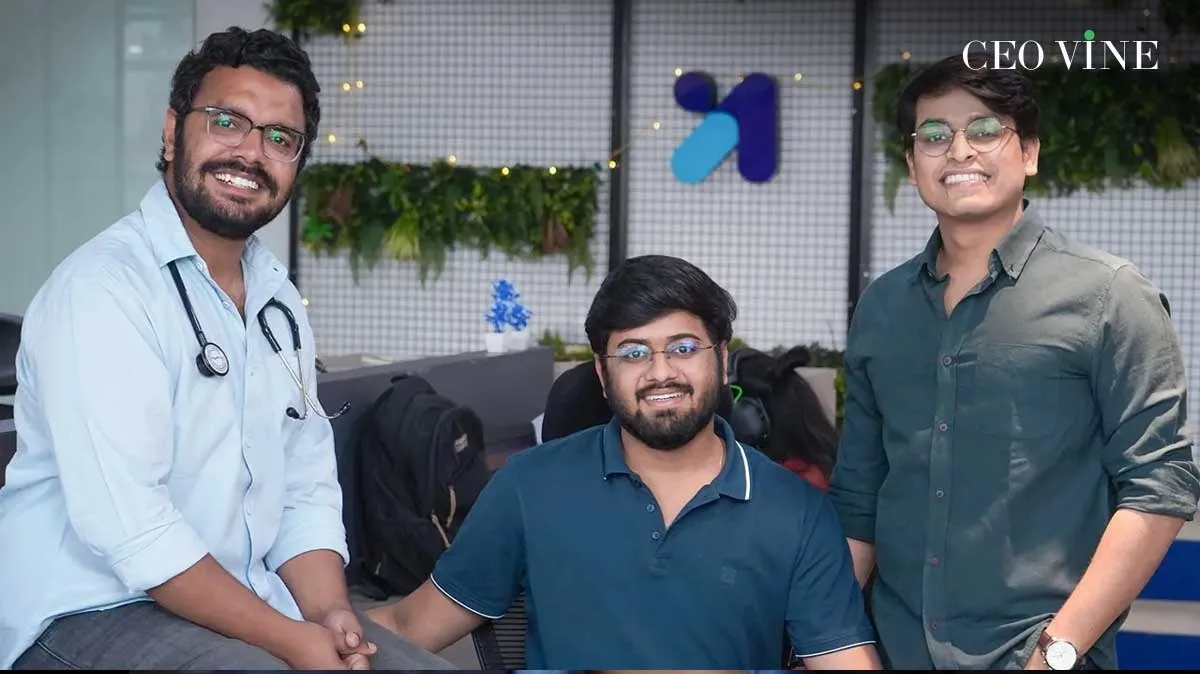
Jodhpur-based edtech startup NPrep has secured $1.5 million in a seed funding round led by Lumikai. The round also witnessed participation from existing investor All In Capital, along with Velo Partners, DSP Group Family Office, and angel investor Viren Shetty.
The newly raised capital will be used to enhance NPrep’s AI-powered learning platform, expand its exam-oriented content library, and increase its reach among nursing aspirants across India preparing for government and international healthcare opportunities.
Founded in 2024 by Prince Kaushik, Utkarsh Paliwal, and Gourav Khurana, NPrep is building a placement-focused skilling platform designed specifically for nursing students and professionals. The company aims to tackle the challenges faced by candidates from tier II and tier III cities by offering structured preparation tools tailored to nursing career pathways.
The platform provides more than 1,400 hours of exam-aligned video content along with personalised study plans and an AI-based mentor. It also uses historical exam datasets to deliver curated practice questions while tracking individual learning performance to help candidates improve exam outcomes.
Within ten months of launch, the company claims that more than 1 lakh nurses have joined its platform. During this period, users have consumed over 6 million minutes of video content and attempted more than 31 million practice questions.
NPrep said its learning platform converts the extensive content library into adaptive study pathways powered by artificial intelligence, enabling customised learning journeys for each user.
Fintech startup Coreworks.AI has raised $5 million in a seed funding round led by Together Fund.
The fresh capital will be used to launch and scale its AI SuperAnalyst platform, expand product development, and support the rollout of its autonomous agents designed to convert enterprise data into ready-to-use reports and presentations.
Founded in 2025 by Prashant Kumar and Pavan Sondur, the startup focuses on building AI-powered tools that automate financial analysis and enterprise reporting workflows. The founding team previously built Unbxd, an AI-based product discovery platform for e-commerce that exited in a $100 million acquisition.
Coreworks.AI has opened an early waitlist for AI SuperAnalyst, a suite of autonomous agents designed to transform business data into complete presentations and reports within minutes, while ensuring every number remains fully traceable to its original source.
The platform integrates directly with enterprise systems such as ERP software, CRM platforms, financial models, and spreadsheets. By analysing these connected data sources, it can automatically generate spreadsheet models, analytical narratives, and presentation-ready slides.
The product also features a collaborative canvas where teams can build reports and presentations using charts, tables, and structured insights aligned with a company’s internal templates and design standards.
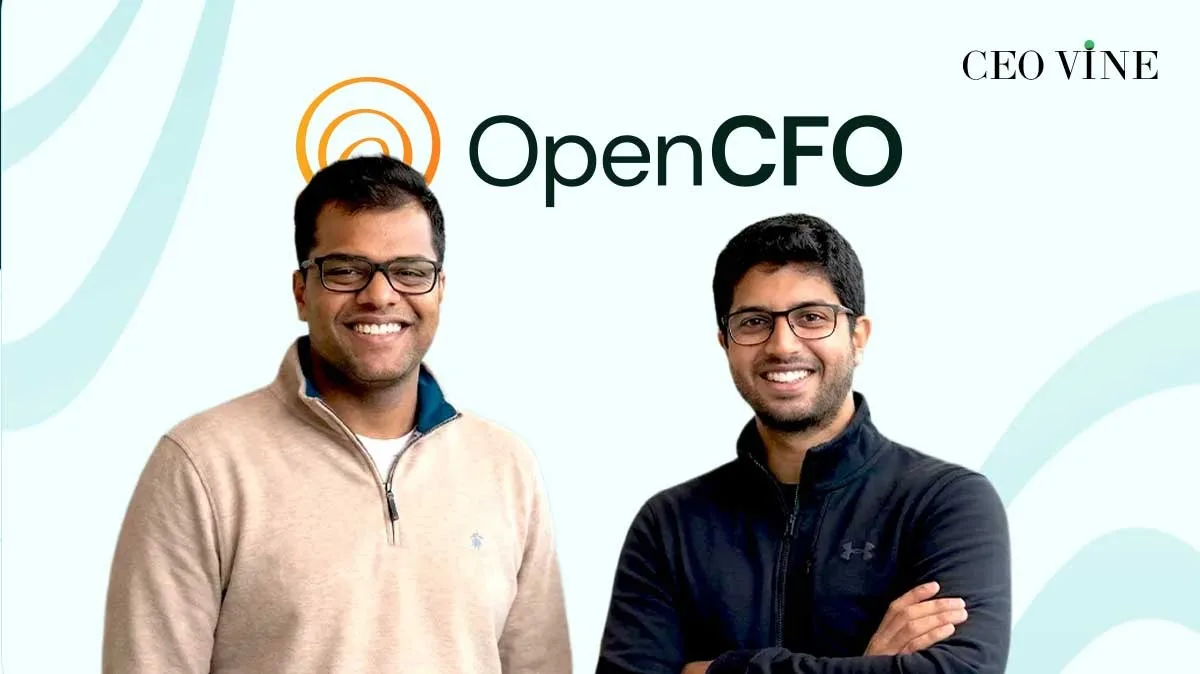
AI fintech startup OpenCFO has secured $2 million in its first institutional funding round led by Endiya Partners, with additional participation from angel investors based in the United States and India.
The newly raised funds will be used to strengthen the company’s engineering capabilities, advance the development of AI-driven automation agents for finance workflows, and expand customer acquisition across markets including the United States, India, the United Kingdom, the European Union, and Canada.
Founded in December 2025 by Prudhvi Rao Shedimbi and Sankalp Singayapally, OpenCFO is building an AI-native financial operations platform aimed at mid-market businesses operating globally. The platform is designed to unify core financial processes such as accounts payable, accounts receivable, and treasury management into a single AI-powered system.
The solution integrates directly with enterprise resource planning (ERP) systems, banking infrastructure, and payment networks to automate finance tasks including invoice processing, reconciliation, cross-border payments, and treasury operations.
According to the company, its platform can streamline invoice workflows while optimising treasury operations for international payments. Early pilot deployments suggest the technology can reduce foreign exchange costs and accelerate settlement times for cross-border transactions.
OpenCFO currently operates across the United States and India and primarily targets mid-market companies managing multi-country financial operations.
The startup aims to replace fragmented financial tools and manual processes with an integrated “system of intelligence” that automates high-volume finance tasks using agentic AI.
OpenCFO plans to launch its full agent-based financial operations platform by mid-2026.
HOOkd, a healthy snacking brand under Buzzinga Eco Foods Pvt Ltd, featured on Shark Tank India, where founders Akul Goel and Dia Goel pitched their “ready-to-eat” baked chicken chips designed to provide a high-protein alternative to traditional snacks.
During the pitch, the founders highlighted the brand’s commitment to nutrition, noting that over 70% of Indians consume some form of meat. HOOkd’s primary ingredient is chicken meat, and their products which include Classic Chicken Chips, Tandoori Chicken Chips, Peri Peri Chicken Chips, and BBQ Chilli Chicken Chips that offers 17g of protein and only 100 kcal per 30g pack.
Entering the Tank, the founders sought ₹50 lakhs for 7% equity, valuing the company at ₹7.14 crores.
Positioned as a premium yet accessible snack, the chips are priced at ₹120 for a 30g pack and ₹40 for a 10g pack. The startup has established a multi-channel presence, making products available on their own website, Flipkart, and Zepto (across 3 cities), as well as in offline retail stores in Dehradun, Delhi NCR, and Hyderabad.
Since starting product development in 2021 and officially launching the brand in May 2025, HOOHkdhas shown promising early traction. After launching in three stores in Dehradun in June 2025, they secured a Purchase Order (PO) of ₹2 lakhs from Quick Commerce in November 2025.
Currently, the brand reports a Monthly Run Rate (MRR) of ₹1.5 lakhs with an impressive Gross Margin of 74%. The company operates with a lean structure, reporting a monthly burn of ₹1.5 lakhs and a monthly salary expense of ₹80,000. Prior to the Tank, the business was entirely bootstrapped.
After discussions regarding the scalability of the meat-based snacking category and the brand’s high margins, Varun Alagh closed the deal by investing ₹50 lakhs for 20% equity, valuing HOOkd at ₹2.5 crores.
The eco-friendly home care startup Awenest recently featured on Shark Tank India, where founders Kinshuk Mishra, Atul Gupta, and Jahangir Mondal pitched their range of sustainable cleaning solutions designed to eliminate harmful chemicals from Indian households.
During the pitch, the founders emphasized their commitment to safety, maintaining an exclusion list of 15 harmful ingredients such as EDTA and Triclosan. Their products are backed by NABL certified labs and focus on high-performance cleaning, such as their hero products, “Bye Bye Food Stain” and “Bye Bye Doodle” which boast a stain removal time of just 20 minutes.
The brand operates with a multi-channel distribution strategy, moving from Amazon and Quick Commerce (Blinkit, Swiggy Instamart, Zepto) into General Trade, with a physical presence already established in 5 stores in Bengaluru.
Entering the Tank, the founders sought ₹70 lakhs for 2% equity, valuing the company at ₹35 crores.
Awenest has shown consistent growth, with Net Sales rising from ₹1.6 crores in FY 23-24 to ₹3.52 crores in FY 24-25. As of October 2025, the company reached a Monthly Run Rate (MRR) of ₹70 lakhs, up significantly from ₹25 lakhs in April 2025. While the company reported an EBITDA of -49% for FY 24-25, they have rapidly improved margins, bringing EBITDA down to -7% for the Sep-Oct ’25 period.
Their “Hero Products” maintain high profitability, with Gross Margins between 72% and 78%, contributing to a positive Contribution Margin 2 (CM2) and an estimated 6-month repeat customer rate of 30%.
The startup has previously raised ₹4.9 crores and maintains an equal equity split among the three founders. Currently, their sales are split between Amazon (40%), Blinkit (20%), their own website (2%), and other channels (38%).
After discussions regarding their marketing spend, which dropped from 50% in FY 24-25 to 30% YTD and their path to profitability, Viraj Bahl closed the deal by investing ₹70 lakhs for 5% equity, valuing Awenest at ₹14 crores.
The founders shared that the capital will be used to scale their distribution and reach their Projected Net Sales of ₹10 crores for FY 25-26.
The beauty and wellness tech startup Luzo recently featured on Shark Tank India, where founders Nikhil Kalwani, Anurav Dave, and Maan Jetley pitched their lead generation and booking platform designed to solve the chronic under-utilization of service capacity in the industry.
During the pitch, the founders highlighted a critical gap: salons and spas are currently functioning at only 50-60% capacity utilization. Luzo addresses this by connecting users with premium beauty services through an intuitive mobile interface.
Available on both Google Play and Apple App stores, the platform offers features such as custom booking requests, flexible appointment slots, and an integrated payment system that applies discounts upfront. A key driver for retention is their cashback system, which is redeemable across all partner locations.
Entering the Tank, the founders sought ₹1 crore for 1% equity, valuing the company at ₹100 crores.
Luzo has demonstrated significant operational scale, onboarding 1,600 vendors across Mumbai, Bengaluru, and Delhi with a remarkably low vendor attrition rate of 3%. The platform has amassed 4.5 lakh sign-ups, with 70,000 users having completed at least one transaction.
Financially, the company reported Net Sales of ₹9.9 crores and a Gross Merchandise Value (GMV) of ₹12.5 crores for FY 24-25. While the startup saw negative EBITDA margins in late 2025 (-6% in Oct; -2% in Nov), they are projecting Net Sales of ₹24 crores for FY 25-26 and expect to hit positive EBITDA by Q4.
The business model is built on high-velocity inventory management. By offering services at a 62.9% discounted price (down from an original price of ₹9k to ₹5.6k), Luzo maintains a 12-13% take rate. With an inventory turnover of less than 10 days and 3 turns per month, the startup achieves an effective monthly gross margin of 42%.
After discussions regarding the “preferred slot match rate” of 55% and the roadmap to becoming a full-stack appointment management tool, Kunal Bahl and Viraj Bahl closed the deal by investing ₹1 crore for 3% equity, valuing Luzo at ₹33.33 crores.
The founders shared that the capital will be used to fuel their 3-year roadmap, which targets ₹500 crores in net sales and a network of 10,000 vendors, aiming to digitize the fragmented salon and spa market across India.
In most parts of the world, protein is not just a nutritional conversation, it is a logistics problem.
While plant-based innovation has surged across the US and Europe, much of it has been built for refrigerated supermarket shelves and premium urban consumers. But what about kitchens without reliable cold storage? What about institutions, caterers, and restaurants that operate in high-temperature, infrastructure-constrained environments?
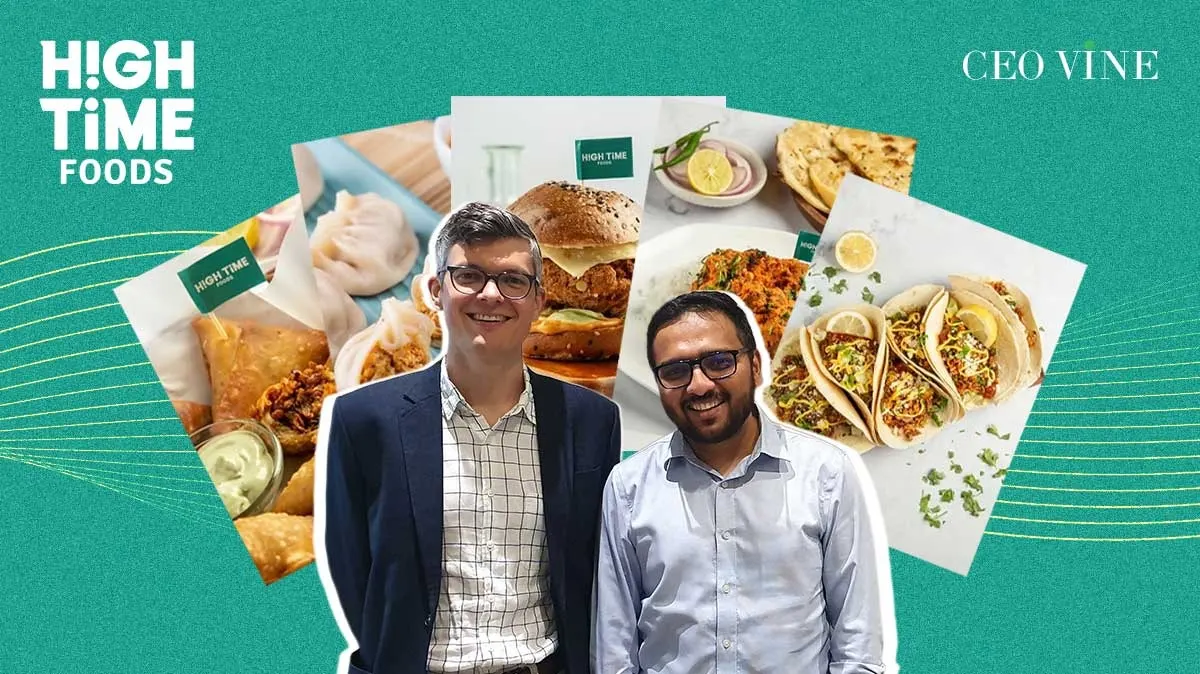
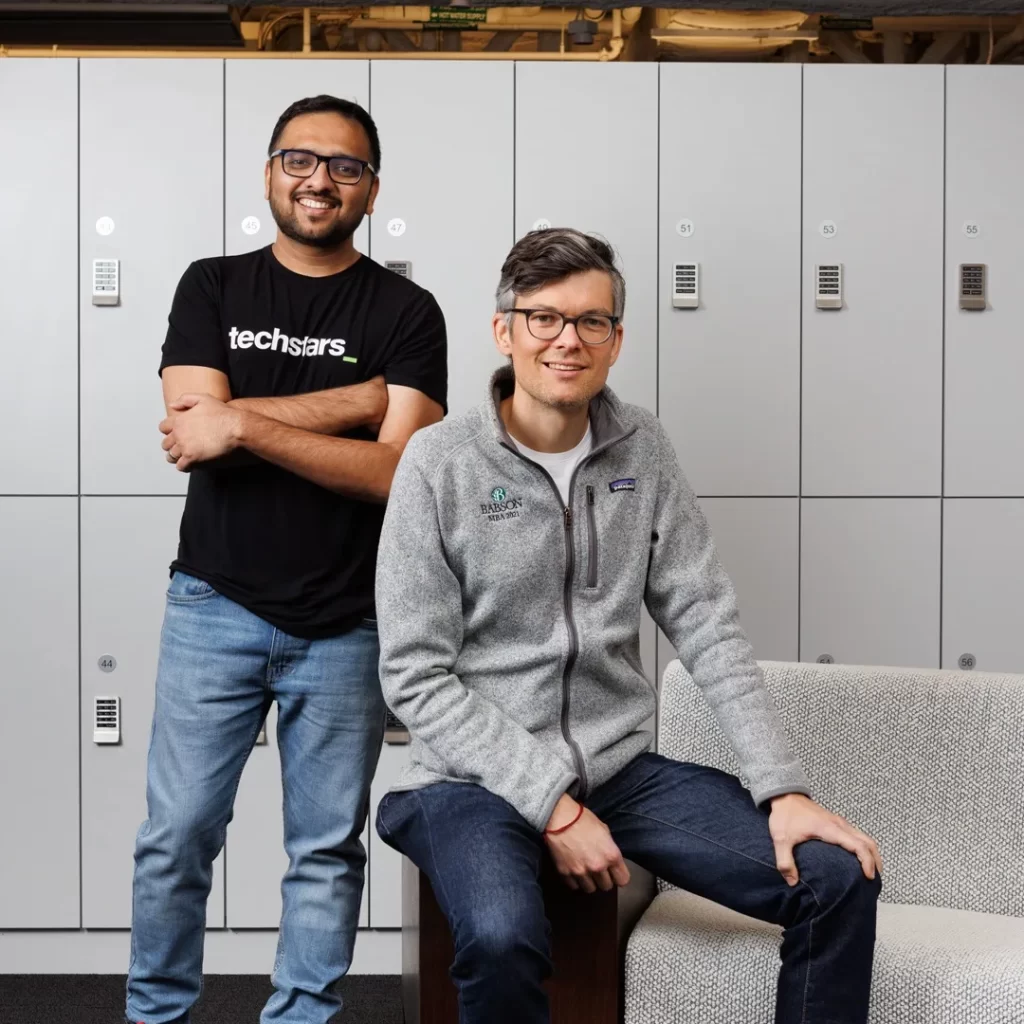
Founded by Aakash Shah (Co-Founder & CEO) and Damian Felchlin (Co-Founder & COO), both graduates of Babson College, the startup is building a shelf-stable, plant-based protein platform designed not for novelty, but for practicality.
“We realised that protein access is impossible without exceptional taste. Sustainability and logistics matter, but if it doesn’t taste good, nothing else matters,” says Aakash.
From MBA Classrooms To Commercial Kitchens
The idea took shape during their MBA at Babson, where both founders were immersed in entrepreneurship and food systems innovation. Aakash had prior experience in food technology sales and had launched and exited a cloud kitchen venture. Damian brought global trade expertise, having worked with major food importers in the US and served as a trade commissioner for the Swiss government, helping food brands enter North America.
What united them was a shared frustration: most alternative proteins depended heavily on cold-chain logistics and had limited applications, like burgers or nuggets, but food is so much more.
Aakash Shah (Co-Founder & CEO) and Damian Felchlin (Co-Founder & COO)
During his MBA, Aakash worked with the Good Food Institute and interviewed over 50 chefs and kitchen operators across India. The feedback was consistent, taste, affordability, versatility, and shelf life were non-negotiable.
Winning Babson’s annual startup pitch competition along with a $20,000 prize, allowed him to invest in early R&D. The breakthrough? A dehydrated, plant-based minced protein that requires no refrigeration and rehydrates in just two minutes.
“When our first commercial production run was completed, we literally jumped in the air,” Damian recalls.
Building A Protein That Travels Like Rice, Cooks Like Meat
The brand’s flagship product is a dry, plant-based minced protein blend made from pea, wheat, and mung bean proteins.
Because the product contains no water, it offers a shelf life of up to 2 years and requires zero refrigeration, significantly reducing storage and transportation costs while minimising food waste. This shelf-stable format also enables seamless global distribution without dependence on cold-chain infrastructure, making it particularly viable for emerging and high-temperature markets.
Once rehydrated with water and oil, it functions like a versatile protein base that can be shaped and cooked into dishes ranging from samosas and kebabs to tacos, momos, patties, curries, and pasta fillings. Each serving delivers approximately 19 grams of protein, comparable to chicken.
Unlike many plant-based startups focused on mimicking meat, High Time Foods positions itself differently.
“We are not a meat alternative brand. We are building a foundational protein ingredient — something chefs can adapt to any cuisine for both veg and non-veg consumers/eaters,” says Aakash.
This B2B-first model allows them to serve restaurants, institutional kitchens, food manufacturers, and HoReCa operators at scale.
Early Traction Across The US And India
Since launching commercially in 2022, the company has supplied its products to foodservice operators and manufacturers across the United States, including partnerships with the largest US food distributor, Sysco.
In 2025, the brand expanded aggressively into India, relocating its headquarters to Bengaluru after closing a $1.2 million seed round led by Avaana Capital. Earlier, it had raised $0.55 million through the Techstars accelerator program.
Today, the company serves over 30 B2B clients across India and the US.
Among its notable collaborations:
Vasantha Bhavan, a 65-year-old vegetarian restaurant chain
Birdy’s, which recently launched four high-protein dishes using High Time’s minced protein
Before India expansion, the company had already validated demand in US college dining halls, national burrito and dosa chains, and a leading momo manufacturer.
The startup is also exploring expansion into West Africa — markets where shelf stability is not just convenient but essential.
Engineering For Infrastructure Gaps
The plant-based protein market globally is expanding rapidly, driven by sustainability awareness and shifting consumer preferences. However, most products still rely on frozen or refrigerated formats, limiting accessibility in emerging economies.
High Time Foods is solving this structural bottleneck.
By eliminating cold-chain dependence, the company reduces emissions, cuts logistics costs, and improves affordability. Its low-moisture extrusion-based processing ensures texture and functionality even in spice-heavy, high-moisture cuisines.
“Shelf stability isn’t a feature for us, it’s the foundation. It opens markets that conventional alt-protein products simply can’t reach,” Damian explains.
The startup also offers an allergen-free variant (no wheat, soy, or nuts), expanding usability across institutional settings.
Scaling With Discipline
With a lean 10-member team, the brand is pursuing a phased expansion strategy focused on deepening its HoReCa penetration across India, expanding into institutional kitchens and food manufacturing partnerships, and exploring quick-commerce channels.
The company is also introducing new formats such as protein chunks and finished products, including high-protein Manchurian balls and momos.
Pricing remains a core differentiator. The brand aims to compete directly with conventional proteins like chicken or paneer by leveraging shelf stability and logistics savings.
“In markets like India, affordability is as important as innovation,” says Aakash.
A Human Moment Behind The Mission
Beyond numbers and funding rounds, some milestones remain deeply personal.
One Middle Eastern restaurant owner adapted her grandmother’s seekh kebab recipe using High Time’s protein base. When she tasted the final dish, she was moved to tears.
“That moment reminded us why we’re building this. Food is emotional. If we can preserve taste and tradition while making protein more accessible, that’s real impact,” Damian shares.
The Road Ahead
In the next 2–3 years, the brand aims to become a go-to plant protein platform across India and key global markets. Expansion into emerging economies, deeper B2B partnerships, and continued product innovation remain central to its roadmap.
But the long-term ambition goes further.
“We are building products for a future in which nutritious plant-based protein is affordable and accessible to everyone in the world,” says Aakash.
In a category crowded with retail-focused meat alternatives, High Time Foods is betting on something less glamorous but far more scalable for both veg and non-veg eaters.
If protein is one of the defining food challenges of this decade, the brand is positioning itself not as a trend-driven brand, but as a foundational solution.
And perhaps, as the founders believe, it really is high time.